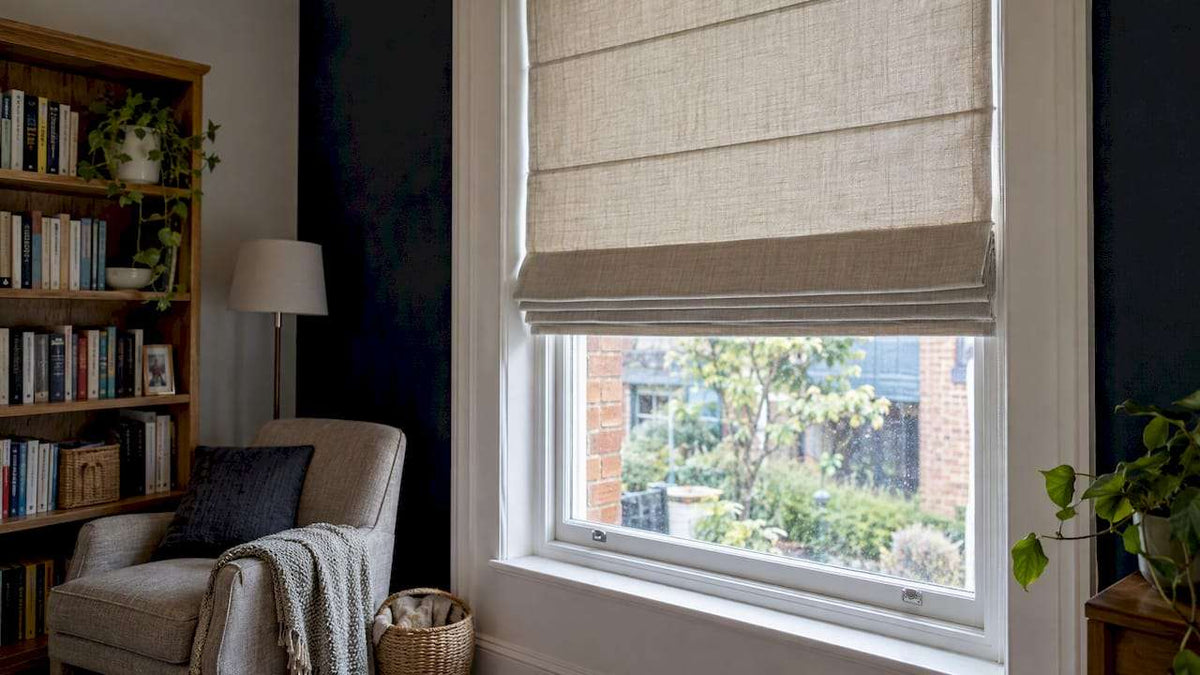

Article: Why Custom Shades Cost More, Explained
Why Custom Shades Cost More, Explained
Custom shades cost more because each one is made to order: cut to your exact window, in the fabric, lining, and lift system you picked, then assembled and shipped as a single item. Ready-made shades are mass-produced in a handful of sizes, so the price is spread across thousands of identical units. You pay for fit, choice, and performance. Whether that is worth it depends on your windows and your goals, so let’s walk through where the money goes. 😊
TL;DR
- Made to order, not off the shelf: custom shades are built to your measurements, so there is no bulk-production discount.
- Materials and features stack up: fabric, blackout or insulating construction, cordless lifts, and motors each add cost.
- Typical gap: standard roller shades run about $20 to $60 per window and cellular shades $40 to $100+ for materials, while custom sizes and materials cost significantly more.
- The payback is real but varies: a precise fit, better hardware, and (for cellular shades) measurable energy savings can justify the premium.
- Smart buying: measure carefully, compare at least two quotes, and spend on features you will actually use.
Table of Contents
- The short answer: you are buying one-of-one
- What ready-made versus custom actually costs
- Reason 1: Exact sizing and unusual windows
- Reason 2: Fabrics, linings, and light control
- Reason 3: Lift systems, safety, and hardware
- Reason 4: Motorization and smart features
- Reason 5: Measuring and installation labor
- Where the extra money pays you back
- Perspective: how we think about the price
- How to decide what is worth paying for
- Ready to see what custom looks like?
- FAQ
- Sources
The short answer: you are buying one-of-one
A ready-made shade is a compromise. It comes in a standard width, and you trim it, hang it, and hope. A custom shade starts with your numbers. Someone cuts the fabric to your width and height, builds the headrail to match, adds the lift system you chose, and checks it before it ships.
That difference shows up in the price in a few places:
- Production: made-to-order work is less efficient than running thousands of identical units.
- Materials: you choose from a wide range of fabrics, wood, bamboo, and more, instead of the one or two a big-box shelf carries.
- Hardware and features: better headrails, cordless or motorized lifts, and special linings cost more than basic parts.
- Measuring and installation: getting the numbers right (and mounting it right) takes skill and time.
None of these is a trick. They are real costs, and most of them also buy you something you can see or feel in your room.
What ready-made versus custom actually costs
Here is the range homeowners see. Today’s Homeowner reports that standard roller shades cost $20 to $60 and cellular shades $40 to $100+ per window for materials, and that custom sizes and materials are significantly more expensive than off-the-shelf models. The same guide says homeowners typically spend $1,500 to $5,000 to dress windows throughout a home, and custom treatments or nonstandard sizes can push that to $10,000 or higher.
Those are broad numbers, so treat them as a map, not a quote. A small bedroom window with a simple light-filtering shade sits at one end. A wall of floor-to-ceiling glass with motors sits at the other.
| Factor | Ready-made | Custom |
|---|---|---|
| Size | A few standard widths | Cut to your exact window |
| Fabric and color | Limited selection | Wide range, swatches available |
| Lift system | Usually corded | Cordless, motorized, top-down/bottom-up and more |
| Fit | Often gaps or trimming | Precise, edge to edge |
| Upfront price | Lowest | Higher |
Reason 1: Exact sizing and unusual windows
Standard shades fit standard windows. Many real windows are not standard. Extra-wide patio doors, tall stair windows, arches, bays, and tiny bathroom windows all fall outside the usual sizes.
The larger or odder the window, the more the cost climbs. A 2022 Federal Register rule on operating cords notes that custom window coverings include atypical sizes, extremely small or extremely large, which can bring retail prices as high as $5,000. Today’s Homeowner adds that large, floor-to-ceiling, bay, arched, or otherwise unusual windows may require custom work.
Why does size push the price up?
- More material: wider and taller shades use more fabric, wood, or aluminum.
- Stronger parts: a wide shade needs a sturdier headrail and tube so it does not sag. If sagging has bugged you before (ugh), our guide to window coverings for large windows explains what to look for.
- Tighter tolerances: a shade that is a quarter inch off on a big window shows.
If you have big glass, our piece on window treatments for large windows covers style and efficiency together.
Why accurate measuring matters so much
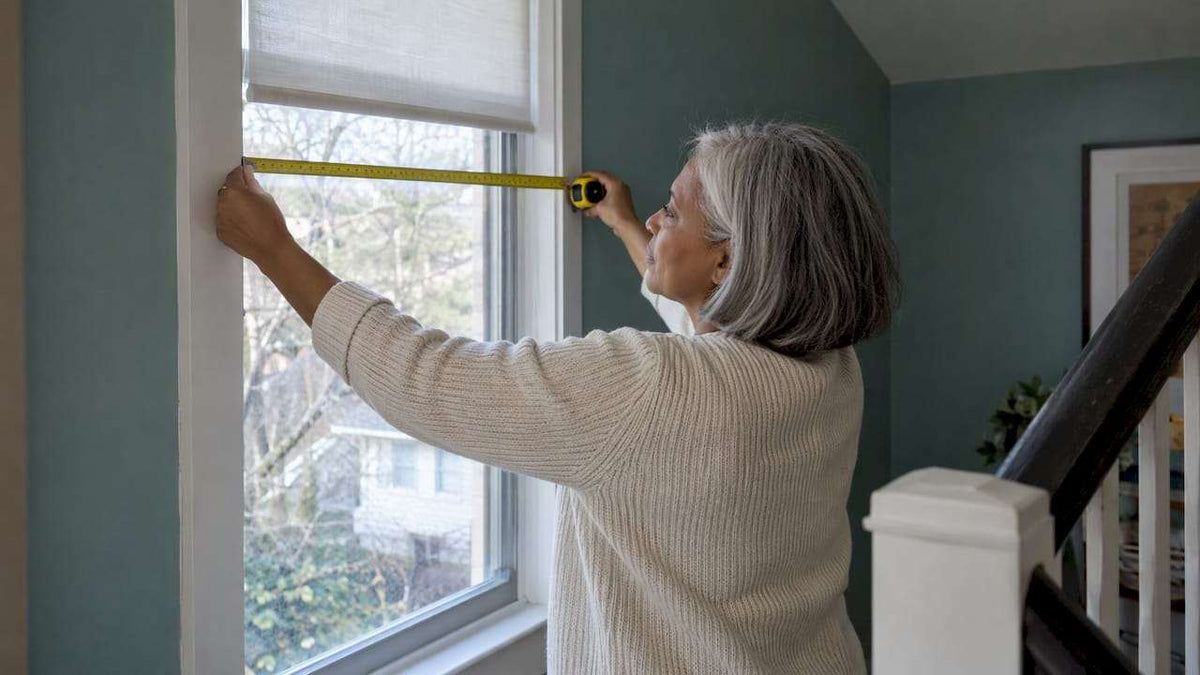
Because a custom shade is cut to your numbers, a wrong measurement is expensive: the shade is made for the wrong window. That is why guides recommend measuring width, height, and depth carefully before ordering. Our measuring guide for shades walks through it step by step, and if you would rather not risk it, professional measuring is available as a service.
Reason 2: Fabrics, linings, and light control
Material is the second big lever. Even within one shade type, the price moves a lot depending on what you pick.
- Light filtering vs. blackout: blackout fabrics add layers or coatings, which means more material and more manufacturing steps.
- Cell construction: cellular (honeycomb) shades trap air in pockets. Double-cell designs use more material than single-cell.
- Natural materials: solid wood and natural bamboo cost more to source and finish than vinyl or aluminum. Faux wood and aluminum blinds are typically the budget-friendly end of the blind family.
- Specialty performance: waterproof, UV-resistant, or solar fabrics are engineered for a job, and engineering costs money.
- Pattern and texture: woven textures, sheers, and dual-layer designs like zebra shades involve more complex fabric.
One cellular shade price guide shows how this plays out: a light-filtering shade at 46 by 60 inches ranges from about $150 to $520 per window, depending on cell density and lift option. That is a wide spread for the same size window, and fabric choice explains much of it.
If you like to understand how blended fibers behave and why some feel and wear differently, this fabric blends material guide is a handy way to get a feel for how material choices affect cost and durability.
Our tip: order free swatches before you commit. Fabric looks different in your light than on a screen, and swatches protect you from an expensive color miss.

Reason 3: Lift systems, safety, and hardware
How a shade goes up and down matters for both price and safety.
- Corded: the simplest, usually the cheapest.
- Cordless: no loose cords, which is great for kids and pets. It takes a spring or friction mechanism that costs more than a cord.
- Top-down/bottom-up: two moving rails give you privacy and light at once, with extra parts.
- Motorized: a motor, battery or power, and a controller. More on that below.
Hardware also adds up on bigger projects. Today’s Homeowner quotes an expert saying custom rods, rings, and brackets can add $1,000 to $2,000 to a window treatment project in larger homes. Shades usually need less hardware than drapery, but the principle holds: better parts cost more and last longer.
Reason 4: Motorization and smart features
Motors are the single biggest add-on, and they are the part we love talking about. 🙌 Imagine every shade in your house rising at sunrise, or closing by itself at 2 p.m. to stop the glare on your TV. That is what automation does, and it comes with a price.
Here is what U.S. sources show:
- Crestron’s budget guide lists MSRP examples for motorized roller shades of $900 to $1,400 for a 3-by-5-foot shade, $1,100 to $2,200 for 5 by 10 feet, and $1,400 to $3,200 for 10 by 10 feet. Control processors, wiring, power, and startup fees are extra. That is a high-end, fully integrated system, so DIY-friendly options cost less.
- A Cost to Renovate guide says battery versus hardwired motors can change the cost by $100 to $300 per shade, app control can add $80 to $150, and deeper smart-home integration can add $500 to $1,500 in professional programming.
- Professional installation and labor for motorized shades typically runs $110 to $520 per window, depending on mounting complexity and calibration.
A wire-free option can keep that bill down. Battery and solar-powered motors skip the electrician. Our remote control cellular shades post shows how remote operation fits a normal budget, and the solar-powered outdoor shade is motorized without any wiring at all.
Reason 5: Measuring and installation labor
Installation is where DIY and pro costs split. Hanging a simple shade yourself can cost nothing but your afternoon. A tall window, a ceiling mount, or a motor that needs calibrating is a different story.
Professional installation also protects your investment. A crooked bracket or a poorly calibrated motor can shorten a shade’s life. With custom products, a pro who measures and installs also owns the fit, so if something is off, it is not entirely on you.
We offer Pro Measure & Install and professional measuring and installation, so you can have someone else handle the tricky parts. Pricing depends on your project, so check the details when you build your order.
Where the extra money pays you back
A higher price is only fair if you get something for it. Here is what custom shades can give you.
Better fit and looks
Custom shades are measured to exact specifications, which gives you a precise fit, with fewer light gaps, no bunching, and clean edges. Realtor.com lists energy efficiency, UV protection, high-quality hardware and construction, and precise fit among the long-term advantages of custom window treatments.
Energy performance
This is where numbers help. In lab-home tests by Pacific Northwest National Laboratory, cellular shades cut HVAC energy use compared with standard vinyl blinds by 16.6% during heating and 15.3% during cooling under optimum operation (with margins of error of roughly 3 to 5 points). The U.S. Department of Energy’s Building America Program points to high-quality cellular shades as a way to improve thermal performance at a fraction of the cost of replacing windows.
Those are test-home results under ideal operation, so your savings will differ with your climate, windows, and habits. For the how and why, read our guide to cellular shades insulation.
Longevity and safety
Sturdier headrails, better fabrics, and cordless lifts tend to hold up longer and keep cords away from small hands. A shade that lasts years longer can cost less per year than a cheap one you replace.
Perspective: how we think about the price
We hear the same question a lot: “Why can’t I just buy the $30 version?” Sometimes you can, and that is okay! A rental, a closet, or a window you rarely look at may not need more.
But for the windows you live with every day, we think the extra spend is where the value is. A custom shade fits the window you have, not the window a factory imagined. You pick the fabric, the light control, and the lift that suits your family. Features like cordless operation, blackout, and motorization are not extras for show; they solve everyday annoyances like glare, hot rooms, dangling cords, and shades that never sit straight.
Our approach is to make custom less intimidating: free swatches so you can see the fabric, measuring guides so you can order with confidence, and optional pro measuring and installation if you want hands-off help. We would rather you spend on the two or three things that matter in your home than pay for a feature list you will never use.
— Sunny
How to decide what is worth paying for
Use this quick checklist before you order.
- Rank your windows. Bedroom and living room windows deserve the best fit. A pantry window can be simple.
- Pick one or two performance features. Blackout for bedrooms, cellular for energy savings, solar fabric for glare.
- Choose the lift on purpose. Cordless for homes with kids and pets, motorized for hard-to-reach or very large windows.
- Measure width, height, and depth. Write them down twice, and use our measuring guide.
- Get at least two quotes. Today’s Homeowner recommends comparing quotes and weighing purpose, materials, and installation.
- Mix and match. Spend on the main rooms, go simpler elsewhere. You can compare more cost advice in our custom window treatment cost guide.
Ready to see what custom looks like?
At Value Blinds, you can browse roller, zebra, cellular, Roman, solar, and natural woven shades, plus wood, faux wood, bamboo, aluminum, and vertical blinds, with exterior shades, retractable awnings, and pergolas for outdoor spaces. Start with free swatches, build your shade to your measurements, and add pro measuring and installation if you want it.
Want a good place to start? Our cellular shades are a favorite for insulation and quiet style, and you can see everything else on our home page.
FAQ
Are custom shades really worth the extra money?
For the windows you use daily, usually yes. You get an exact fit, your choice of material and features, and often better hardware and energy performance. For low-use windows, a simpler option may be enough.
Why are custom blinds more expensive than ready-made ones?
They are made to order for your measurements instead of mass-produced in standard sizes. That means more labor, more material choices, and better components. Larger and unusual windows add even more, since they need more material and stronger parts.
Which features add the most to the price?
Motorization and smart-home integration usually add the most. Battery versus hardwired motors can change the cost by $100 to $300 per shade, and app control can add more. Specialty fabrics and large sizes also push the price up.
How can I keep custom shades affordable?
Prioritize your main rooms, pick one or two key features, and choose budget-friendly materials like faux wood or aluminum where they fit. Measure carefully so you do not pay for a remake. Compare at least two quotes before ordering.
Do custom shades save energy?
Cellular shades can. In PNNL lab-home tests they reduced HVAC energy use by about 15% to 17% compared with standard vinyl blinds under optimum operation. Real savings depend on your home and climate.
Sources
- How Much Do Window Treatments Cost? (Today’s Homeowner)
- Safety Standard for Operating Cords on Custom Window Coverings (Federal Register)
- Crestron Shades Budgetary Estimation Guide
- Motorized Window Shades Installation Cost (Cost to Renovate)
- Motorized Shades Cost Guide (Current Cost)
- Cellular Shades Cost Guide (Current Cost)
- Is It Worth It: Custom Window Treatments (Realtor.com)
- Evaluation of Cellular Shades in the PNNL Lab Homes