
Custom Window Treatment Cost: What You Need to Know
Custom window treatments often carry a reputation for being expensive, but that perception doesn’t always match reality. When you factor in precise fit, design flexibility, and long-term durability, custom options can deliver better value than generic alternatives. Understanding what drives costs and how to navigate your choices empowers you to make smart decisions for your home. This guide breaks down pricing factors, compares options, and shares practical strategies to help you plan a window treatment project that fits both your style and budget.
Table of Contents
- Defining custom window treatments and their benefits
- Key factors that impact custom window treatment cost
- Price ranges: What to expect for different custom options
- Comparing custom and ready-made window treatments
- Saving tips: How to budget for custom window treatments
- Explore custom window treatments for your home
- Frequently asked questions
Key Takeaways
| Point | Details |
|---|---|
| Custom is not always costly | With smart planning, custom window treatments can fit a range of budgets. |
| Multiple cost factors | Choices like material, size, and features all influence the final price. |
| Compare with ready-made | Custom options often offer longer-term value, especially for unique needs. |
| Budget-saving strategies | Mixing custom and ready-made options or grouping installations can cut costs. |
| Consultation adds value | An expert design consultation helps you avoid costly mistakes and get a perfect fit. |
Defining custom window treatments and their benefits
Custom window treatments are made to your exact specifications, from measurements to materials to finishing details. Unlike ready-made options that come in standard sizes, custom treatments are tailored to fit your windows perfectly, no matter how unusual the dimensions. This precision eliminates gaps, ensures smooth operation, and creates a polished look that off-the-shelf products rarely achieve.
The benefits extend beyond fit. Custom treatments offer:
- Design freedom: Choose from hundreds of fabrics, colors, textures, and hardware options to match your interior vision
- Quality materials: Access premium fabrics and construction methods that outlast mass-produced alternatives
- Functional upgrades: Add motorization, blackout linings, or energy-efficient features tailored to your needs
- Professional support: Work with experts who guide you through selection, measurement, and installation
Custom treatments shine when you’re working with bay windows, arched openings, or floor-to-ceiling glass where standard sizes simply won’t work. They also make sense when you want a cohesive design across multiple rooms or need specific performance features like light control or insulation.
Pro Tip: If you’re renovating or building new, plan for custom treatments early in the design process. This allows you to coordinate colors, textures, and hardware with other finishes, creating a unified aesthetic that transforms your living space from ordinary to exceptional.
Understanding custom window treatment basics helps you evaluate whether the investment aligns with your project goals and timeline.
Key factors that impact custom window treatment cost
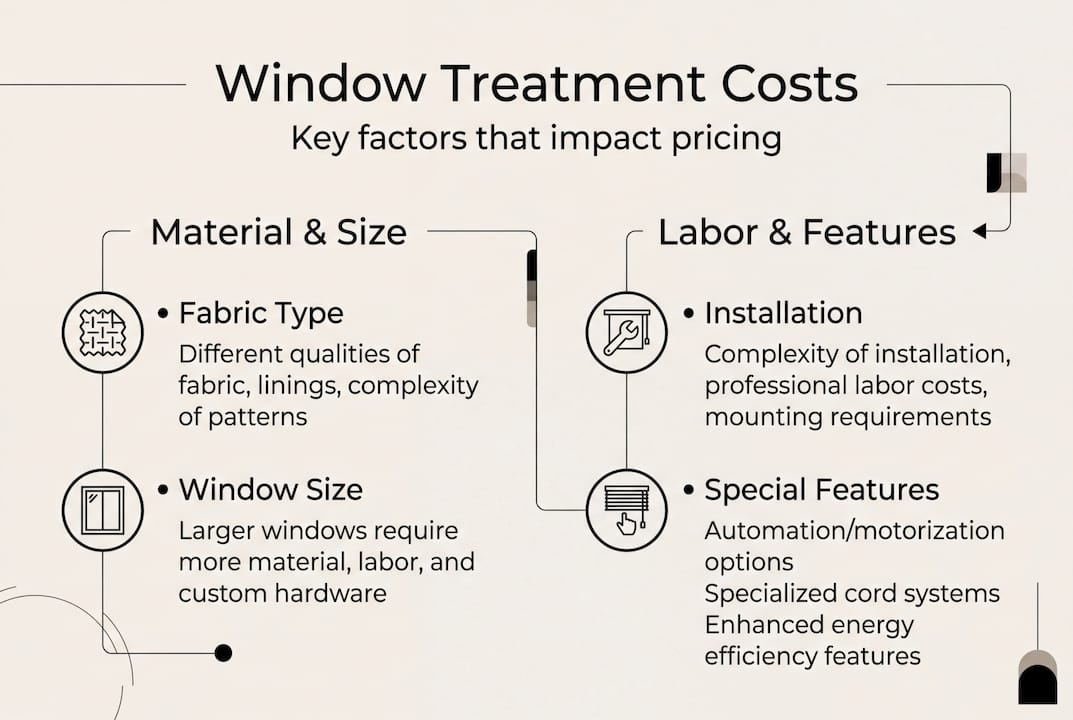
Understanding what makes a window treatment ‘custom’ sets the stage for a closer look at what actually determines the final price. Several variables combine to create the total cost, and knowing these factors helps you estimate expenses and make informed trade-offs.
Window size and quantity are the most obvious cost drivers. Larger windows require more material and labor, while treating multiple windows in a single order often unlocks volume discounts. A small bathroom window might cost $150 for custom roller shades, while a 96-inch patio door could run $800 or more for the same product line.
Treatment type significantly affects pricing. Soft treatments like roman shades or draperies involve fabric, lining, and complex construction. Hard treatments like wood blinds or shutters use solid materials and precision engineering. Shutters typically cost the most due to their permanent installation and premium materials.
Material choices create wide price ranges within each category. Polyester fabrics cost less than natural linens or silks. Faux wood blinds are more affordable than real hardwood. Premium materials often deliver better durability and appearance, but budget-friendly window treatments can still look great when chosen thoughtfully.
Special features add convenience and functionality at additional cost:
- Motorization for remote or automated control
- Cordless operation for child safety
- Blackout linings for bedrooms
- UV-protective fabrics to prevent fading
- Moisture-resistant materials for bathrooms
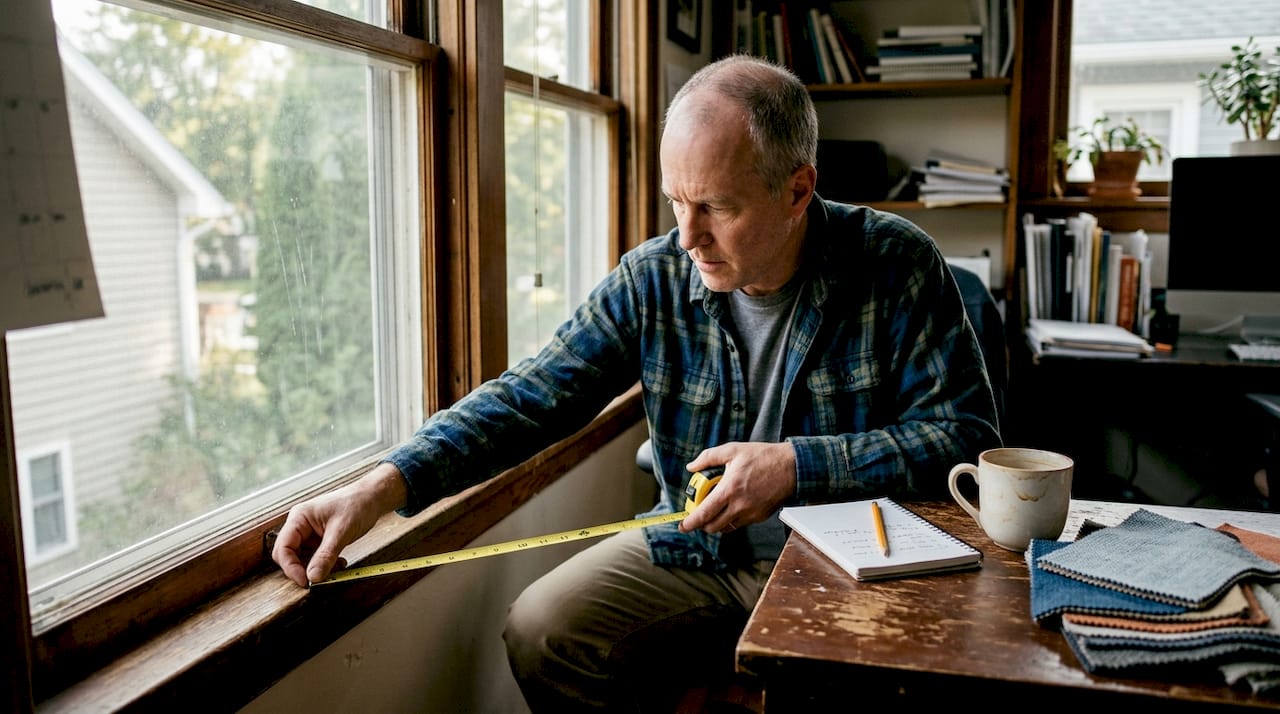
Professional measurement and installation ensure proper fit and operation. While some homeowners handle measurement themselves, professional services eliminate costly mistakes. Installation fees vary by complexity, typically ranging from $50 to $150 per window.
Pro Tip: Request itemized quotes that break down material costs, features, and labor separately. This transparency helps you identify where to adjust if you need to reduce expenses without sacrificing quality in areas that matter most.
The size of the window is a major cost driver, influencing both material usage and complexity. Understanding the cost of custom blinds helps you set realistic expectations before shopping.
Price ranges: What to expect for different custom options
Now that you’re familiar with the variables, let’s look at what these choices actually mean for your wallet. Blinds, shades, and shutters have typical price ranges based on customization and material.
| Treatment Type | Entry-Level Cost | Mid-Range Cost | Premium Cost | Best For |
|---|---|---|---|---|
| Roller Shades | $150-$250 | $250-$400 | $400-$600 | Modern spaces, easy operation |
| Cellular Shades | $200-$300 | $300-$500 | $500-$750 | Energy efficiency, insulation |
| Roman Shades | $250-$400 | $400-$650 | $650-$1,000 | Elegant rooms, soft aesthetics |
| Wood Blinds | $200-$350 | $350-$600 | $600-$900 | Traditional decor, natural warmth |
| Faux Wood Blinds | $150-$250 | $250-$400 | $400-$600 | Moisture-prone areas, durability |
| Plantation Shutters | $400-$600 | $600-$1,000 | $1,000-$1,500 | Permanent solutions, resale value |
These ranges reflect per-window costs for standard-sized windows (approximately 36x60 inches). Larger windows, specialty shapes, or additional features push prices toward the higher end of each range.
Entry-level options use basic materials and standard features. They’re functional and attractive but may lack premium fabrics or advanced mechanisms. Mid-range selections offer better materials, more color choices, and features like cordless operation or light-filtering linings. Premium treatments include designer fabrics, motorization, custom hardware, and superior construction that ensures decades of reliable use.
Adding motorization typically increases costs by $200 to $400 per window, depending on the system. Blackout linings add $50 to $150, while specialty fabrics can double the base price of soft treatments.
Key cost considerations:
- Grouping multiple windows in one order often reduces per-unit costs by 10-20%
- Simple rectangles cost less than arches, angles, or specialty shapes
- Standard colors and fabrics ship faster and cost less than custom dyes or patterns
Comparing price ranges for custom treatments across providers helps you identify competitive pricing. Exploring efficient custom window coverings reveals options that balance cost with performance.
Comparing custom and ready-made window treatments
Cost is only part of the equation. For a complete view, compare custom and ready-made solutions head-to-head. Each approach offers distinct advantages depending on your priorities, timeline, and window characteristics.
| Factor | Custom Treatments | Ready-Made Treatments |
|---|---|---|
| Initial Cost | Higher upfront investment | Lower purchase price |
| Fit | Exact measurements, no gaps | May require trimming or leave gaps |
| Design Options | Hundreds of fabrics, colors, features | Limited to available stock |
| Quality | Premium materials, superior construction | Variable quality, often basic materials |
| Timeline | 2-5 weeks from order to installation | Immediate availability |
| Lifespan | 10-20+ years with proper care | 3-7 years typical |
| Resale Value | Enhances home appeal and value | Minimal impact on resale |
| Installation | Professional recommended | DIY-friendly |
Custom treatments offer longer-term value, especially for uniquely sized windows or personalized design projects. When you calculate total cost over the product’s lifespan, custom options often prove more economical than replacing cheaper alternatives multiple times.
When custom makes sense:
- Odd-sized or specialty windows where standard dimensions don’t fit
- High-visibility rooms like living rooms or master bedrooms where aesthetics matter most
- Coordinated design projects requiring consistent colors and styles across multiple spaces
- Long-term homes where you’ll enjoy the investment for many years
- Energy efficiency goals where precise fit and quality materials reduce heating and cooling costs
When ready-made works well:
- Standard window sizes in secondary spaces like closets or laundry rooms
- Rental properties where you can’t modify permanently
- Temporary solutions while planning a larger renovation
- Tight budgets requiring immediate coverage at minimal cost
Many homeowners find success mixing both approaches. Invest in custom treatments for main living areas and bedrooms, then use ready-made options for utility spaces, closets, or guest rooms. This strategy maximizes your budget while maintaining a polished look where it counts.
Exploring DIY window treatment ideas can help you identify opportunities to save on labor while still achieving custom results.
Saving tips: How to budget for custom window treatments
Knowing that custom treatments are within reach, let’s discuss how to make the most out of your budget. Smart planning and strategic choices help you get the custom look you want without overspending.
-
Prioritize key rooms first: Start with high-impact spaces like the living room, master bedroom, or home office. These rooms benefit most from custom treatments and set the tone for your home’s overall aesthetic.
-
Phase your project: You don’t need to outfit every window at once. Tackle one or two rooms per quarter, spreading costs over time while maintaining cash flow for other priorities.
-
Mix custom and ready-made strategically: Use custom treatments in visible areas and ready-made options in closets, pantries, or rarely-used guest rooms. This hybrid approach delivers professional results where they matter most.
-
Time purchases for promotions: Many retailers offer seasonal sales, holiday discounts, or special promotions. Planning ahead lets you take advantage of these opportunities without rushing decisions.
-
Consider DIY measurement with professional installation: If you’re handy and detail-oriented, measuring your own windows can save consultation fees. Just ensure you follow manufacturer guidelines precisely to avoid costly remakes.
-
Choose mid-range materials: Premium fabrics and exotic woods look stunning, but mid-range options often deliver 90% of the aesthetic at 60% of the cost. Focus your budget on features that enhance daily use, like motorization or blackout linings.
-
Bundle multiple windows: Ordering treatments for several windows simultaneously often unlocks volume discounts. Even treating all windows in a single room together can reduce per-unit costs.
Pro Tip: Request free samples before committing to large orders. Seeing and touching materials in your actual lighting conditions prevents expensive mistakes and ensures you’re thrilled with the final result.
Cost-saving strategies include grouping installations, prioritizing key windows, and mixing high and low-end treatments. Learning about updating window coverings helps you refresh existing treatments affordably before replacing everything.
Additional budget-friendly tactics:
- Opt for cordless mechanisms instead of motorization initially, upgrading later if desired
- Choose neutral colors that work with multiple design schemes, extending their useful life
- Maintain treatments properly to maximize lifespan and avoid premature replacement
- Ask about floor models or discontinued fabrics that may be discounted
Explore custom window treatments for your home
With a plan and options in mind, finding the right provider makes the next step easy. Value Blinds offers a comprehensive selection of custom window treatments designed to fit any style, budget, and functional requirement. Our Window Treatment Design Studio simplifies the customization process, letting you visualize options, compare materials, and configure treatments that perfectly match your vision.
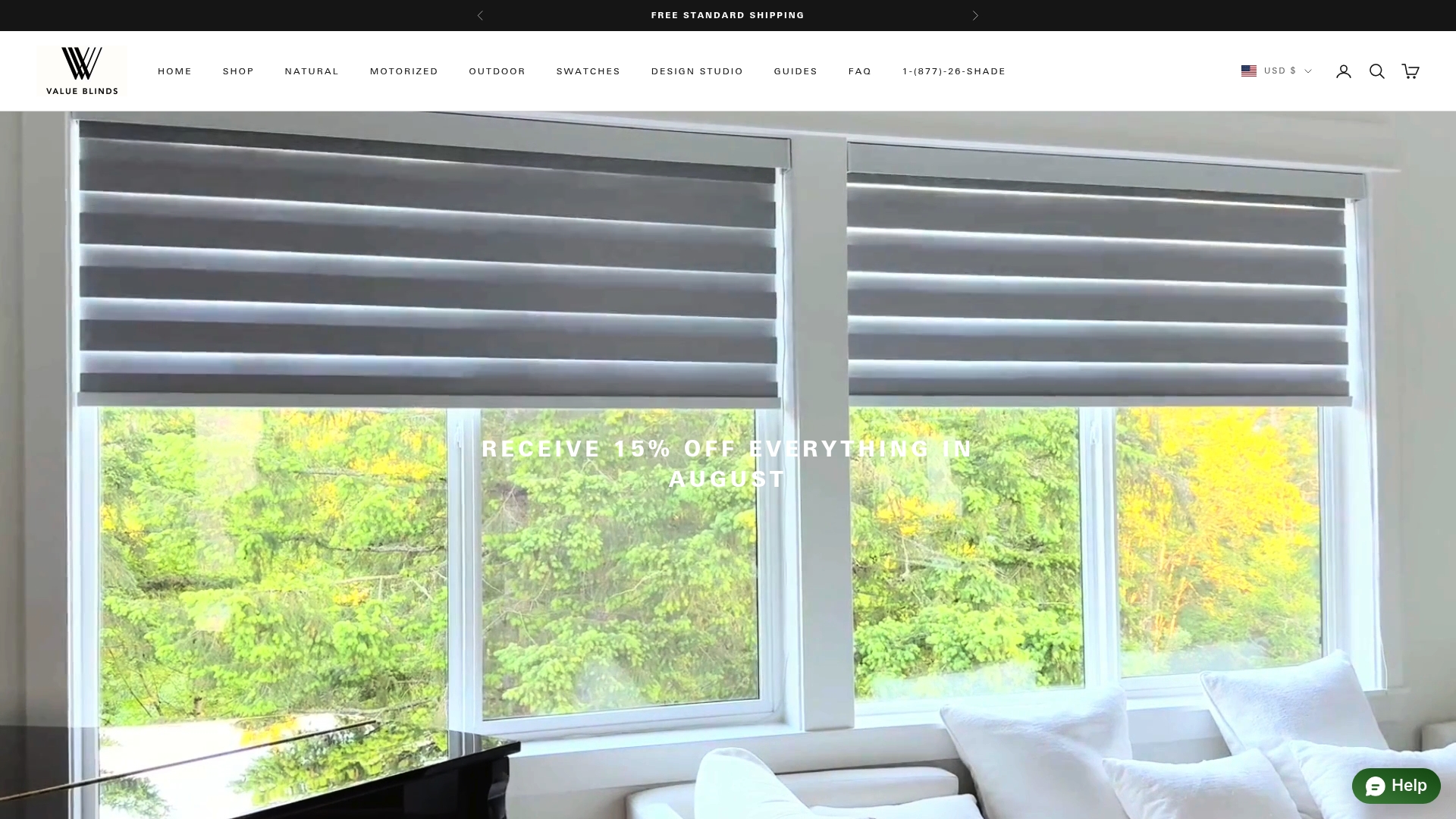
Whether you’re outfitting a single room or planning a whole-home project, our premium window treatments collection includes roller shades, cellular shades, roman shades, wood blinds, faux wood blinds, and plantation shutters. Each product line offers multiple customization levels, from budget-friendly basics to luxury options with motorization and designer fabrics. Free swatches let you test materials in your space before ordering, and our expert support team helps with measurement, selection, and installation planning. With transparent pricing, flexible shipping, and quality warranties, we make custom window treatments accessible and stress-free for homeowners ready to elevate their interiors.
Frequently asked questions
What is the average cost per window for custom blinds?
The average cost for custom blinds ranges from $200 to $600 per window, depending on material, features, and installation complexity. Blinds, shades, and shutters have typical price ranges based on customization and material.
Are professional installation fees included in the quoted price for custom window treatments?
Professional installation is often a separate charge and should be clarified when receiving quotes. Professional measurement and installation is a key additional expense that varies by provider and project complexity.
Can custom treatments help increase home value?
Yes, professionally designed custom window treatments can boost your home’s visual appeal and may increase overall resale value. Custom window treatments can provide a tailored look and superior fit for unique windows, enhancing buyer perception.
How long does it take to get custom window treatments installed?
From order to installation, most custom window treatments take 2-5 weeks, though timing varies by provider and materials. There’s a lead time for production and installation of custom window treatments that should be factored into project planning.