
Article: Window Shades That Open Top and Bottom: How TDBU Works
Window Shades That Open Top and Bottom: How TDBU Works
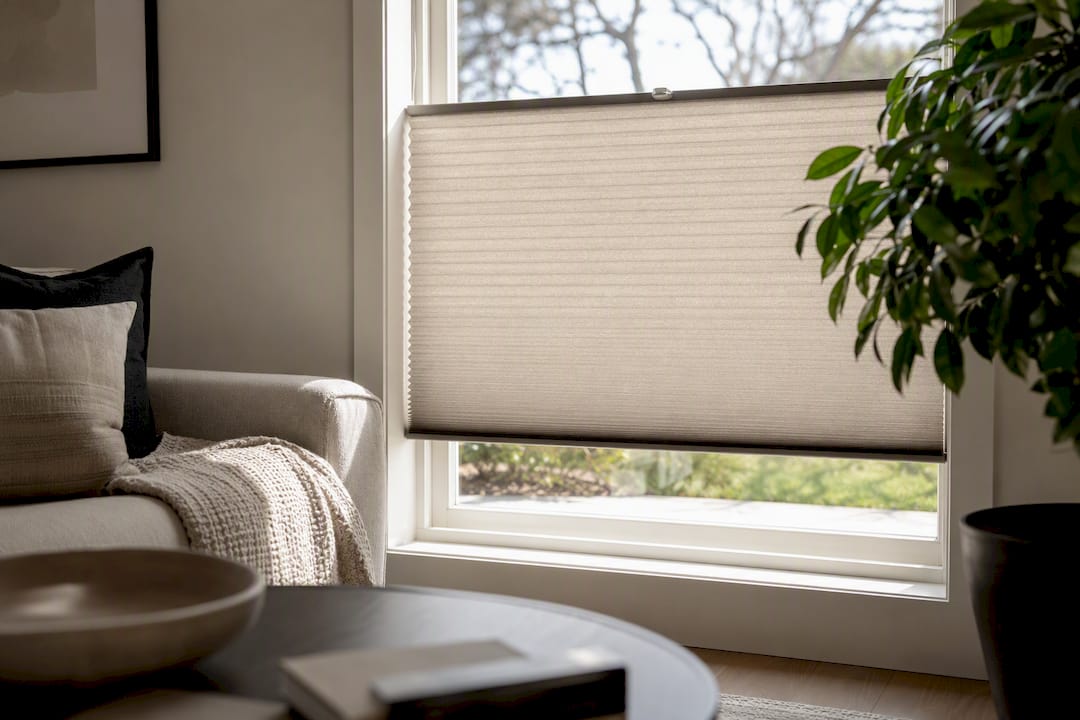
Top-down bottom-up (TDBU) shades let you lower the top of the shade or raise the bottom, so daylight can pour in while the street still can’t see your living room. That’s the whole trick, and it’s a good one. Perfect for living rooms, kitchens, and any street-facing bedroom where you want light without feeling like you’re on display.
Here’s the quick verdict before we get into the mechanics:
- Choose TDBU if: you want privacy at eye level but still want a sunny room, especially on ground-floor or street-facing windows.
- Skip it if: you need full blackout every single day and don’t care about middle-ground light control.
- Operation matters: cordless and tension-based systems are the safest bet for homes with kids or pets, and motorized versions exist for windows you’d rather not touch by hand.
TL;DR:
- Cellular honeycomb shades in TDBU design provide the best insulation and sound dampening for energy efficiency in daylight rooms.
- Motorized or cordless control systems are safer options for homes with kids or pets and are recommended as the default choice.
- Precise measurements at three points are crucial to ensure smooth operation and prevent binding or light leakage.
- TDBU shades are most beneficial on ground-floor or street-facing windows where privacy and daylight control are priorities.
- Choosing the right fabric depends on your room’s needs, with blackout options for bedrooms and light-filtering fabrics for softer daytime glow.
Table of Contents
- What Are Window Shades That Open Top and Bottom, and How Do They Work?
- Which Styles and Fabrics Come in Top-Down Bottom-Up Designs?
- Cordless, Motorized, or Manual: Which Control System Should You Pick?
- What Do You Gain (and Give Up) With Top-Down Bottom-Up Shades?
- How Do You Measure and Install TDBU Shades Correctly?
- How Do You Keep TDBU Shades Working Smoothly Over Time?
- Value Blinds’ Top-Down Bottom-Up Shade Lineup
- What Actually Matters When You’re Shopping for These Shades
- Ready to Choose Your Top-Down Bottom-Up Shades?
- Key Takeaways
- Sources
What Are Window Shades That Open Top and Bottom, and How Do They Work?
The magic is in the rails. A standard shade has one headrail at the top and a single shade panel that only drops down. TDBU shades add a second rail, called the floating or bottom rail, that slides independently along the same track as the top. Lower the top rail a few inches and you get a sunlight band near the ceiling. Raise the bottom rail instead, and you get privacy at eye level while daylight spills in from above. You can also meet them in the middle for a narrow slice of light, or fully close the whole thing when you want blackout.
That flexibility comes from how the shade is engineered internally. Here’s what’s actually happening behind the fabric:
- Dual rail tracks. Two rails run on parallel cord or tape systems inside the shade, each independently controlled, so one can move without disturbing the other.
- Tension or tab systems. Many cordless TDBU shades use spring tension or fabric tabs to hold the floating rail in place. These are simple and reliable, though the visible tabs or strings running through the fabric are the tradeoff for that simplicity.
- Cord-concealing designs. Some manufacturers use edge-mounted support strings or alternate bumper designs specifically to minimize visible cords and light leakage when the top rail is lowered, giving you a cleaner view through the top portion of the window.
- Manual vs. motorized lift. Manual versions rely on a light tug or a wand to reposition either rail. Motorized versions use a small motor housed in the headrail, controlled by remote, wall switch, or a smart-home app.
The practical upshot: if you hate seeing strings running through your fabric, look specifically at shades marketed with cord-hiding designs. If you just want function over form, a basic tension system does the job fine and usually costs less. Either way, you’re getting the same core benefit: two independently moving rails on one shade.
Which Styles and Fabrics Come in Top-Down Bottom-Up Designs?
Most popular shade categories now offer a TDBU version, but they don’t all perform the same way once you factor in insulation, privacy, and stack height (how much fabric bunches up when the shade is fully raised).
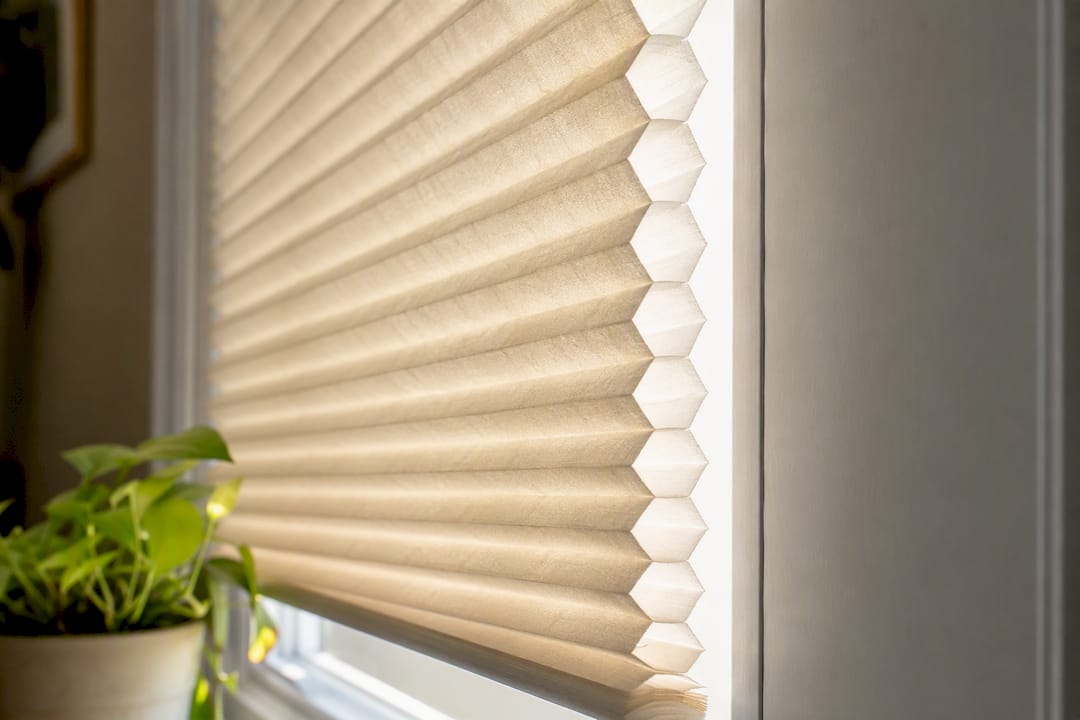
- Cellular (honeycomb) shades. These trap air in their honeycomb-shaped pockets, which gives them a real edge on insulation and sound dampening compared to flat fabrics. You can choose light-filtering fabric for a soft glow or blackout fabric for bedrooms and media rooms.
- Roman shades. These bring a tailored, fabric-forward look with visible folds when raised. TDBU Romans exist but tend to have a higher stack height, so they’re better suited to taller windows where a few extra inches of fabric bunching at the top or bottom won’t bother you.
- Roller shades. Clean, minimal, and low-profile even in TDBU form, though the mechanism to control two independent rails on a single roller can be bulkier than on cellular designs.
- Trilight or sheer combinations. These pair a sheer fabric section with a solid fabric section, so you get diffused daylight through the sheer part and full privacy from the solid part, without a separate top-down movement at all.
- Woven wood and outdoor fabrics. Natural woven shades bring texture for sunrooms and dens, while waterproof exterior fabrics handle patios, pergolas, and covered porches where humidity and UV exposure would wreck standard textiles.
If insulation and energy performance matter most to you, cellular shades are the strongest pick in the TDBU category. If you’re outfitting a kitchen or a busy family room where practicality wins, a low-profile roller or honeycomb tends to fit better than a fussier Roman fold, an approach echoed in general window-covering selection guidance for matching treatment type to room function.
Cordless, Motorized, or Manual: Which Control System Should You Pick?
Every TDBU shade needs some way to hold the floating rail exactly where you leave it, and the control method you choose affects both day-to-day convenience and safety in your home.
Cordless manual systems use spring tension or a simple pull tab, no dangling cords involved. They’re the safest option for households with young kids or pets, and testing consistently favors cordless honeycomb and roller shades for smooth movement and dependable privacy performance. The one tradeoff: tension systems can drift slightly over months of daily use, meaning the floating rail may creep down a half inch or so on its own.
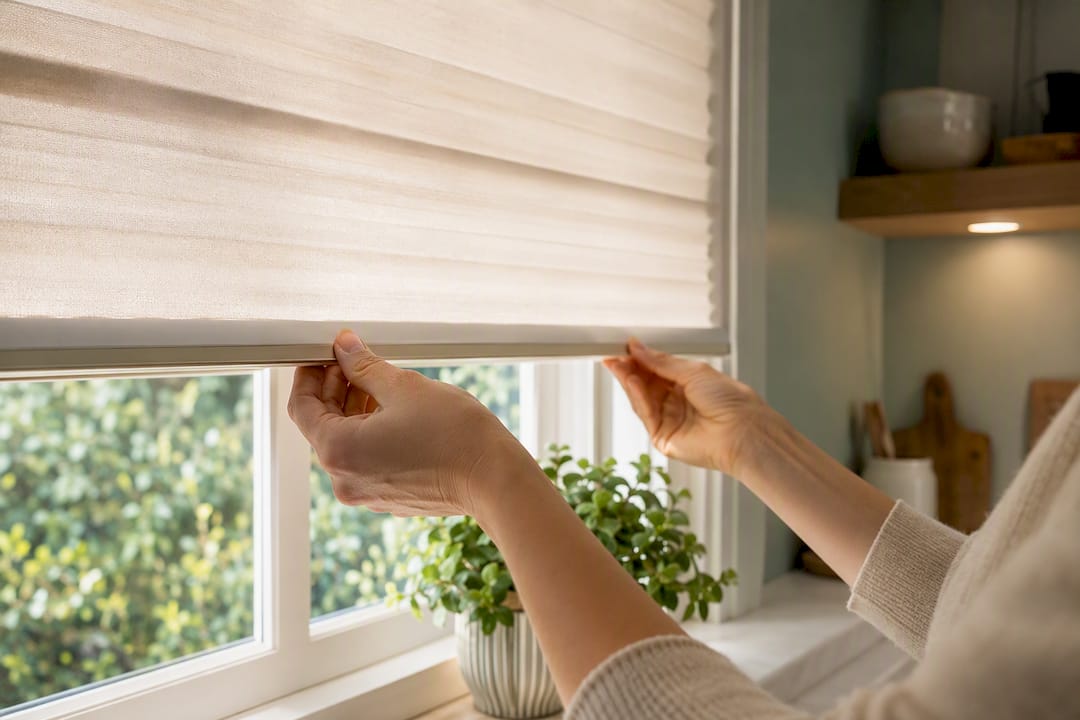
Motorized systems replace manual lifting with a small motor, controlled by remote, wall switch, or a smart-home app. They shine on windows you can’t easily reach, like over a kitchen sink or a stairwell landing, and consumer testing points to quiet motors and flexible power options (battery-powered versus hardwired) as the features that separate good motorized shades from mediocre ones. Battery versions install faster; hardwired versions need an electrician but skip the recharging routine entirely.
Quick comparison of what fits where:
- Nursery or playroom: cordless manual, hands down. No cords, no debate.
- Hard-to-reach window (stairwell, high transom): motorized, ideally battery-powered for simpler installation.
- Multiple windows you want to control together: motorized with smart-home integration, so one tap adjusts the whole room.
- Budget-conscious single window: cordless tension system, still safe, still smooth, just less automated.
Pro Tip: If you’re outfitting a nursery or a home with a dog that loves window-watching, go cordless or motorized every time. Skip anything with a loop cord, even a “child-safe” tensioned one, if you can avoid it entirely. Value Blinds’ cordless and no-drill collection is built specifically around that safety-first approach.
What Do You Gain (and Give Up) With Top-Down Bottom-Up Shades?
The headline benefit is obvious: daylight without sacrificing privacy. Raise the bottom rail a couple of feet and you’ve blocked the sightline from the sidewalk while still letting light wash across your ceiling. That’s a real win for street-facing rooms where you’d otherwise choose between “dark all day” and “everyone can see your living room.”
Insulation is the second, quieter benefit. Cellular shades in particular trap a layer of still air that resists heat transfer, which can translate into a noticeably more stable room temperature and a modest reduction in heating and cooling costs depending on your climate and how many windows you cover. It’s not a dramatic number you can promise on paper, but the physical mechanism behind it (trapped air resisting conductive heat loss) is well established.
The tradeoffs are worth naming honestly. Blackout fabric blocks light completely but eliminates the “soft glow” middle ground that light-filtering fabric offers. Tension and tab systems that keep costs down also mean visible hardware inside the fabric fold, something cord-concealing designs address, but usually at a higher price point. And motorization, while genuinely convenient, adds cost per window that adds up fast if you’re outfitting an entire house rather than one problem window.
How Do You Measure and Install TDBU Shades Correctly?
Getting the measurements right is the single biggest factor in whether your new shades operate smoothly or catch, bind, or leak light around the edges. Here’s the sequence that actually matters:
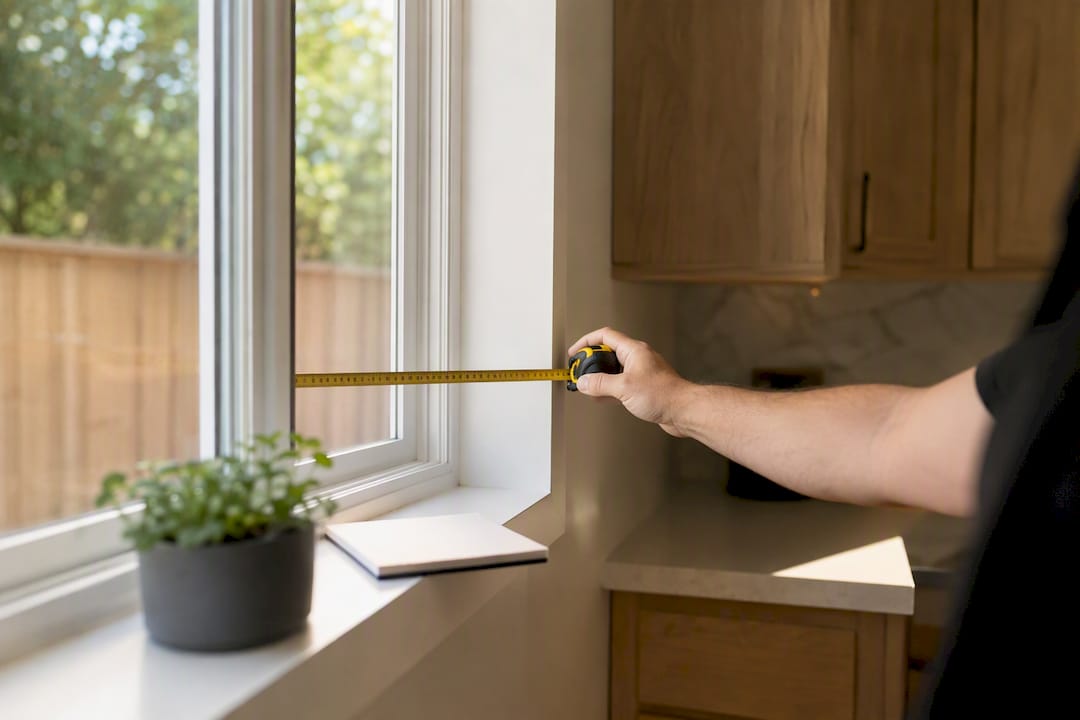
- Measure width at three points. Measure the width of your window opening at the top, middle, and bottom, then use the smallest of the three measurements to account for any frame irregularity. Older homes especially tend to have windows that aren’t perfectly square.
- Record inside-mount depth precisely. For an inside mount, you need at least a half inch of usable window depth for the headrail, and you should confirm the depth is consistent enough that the floating rail can travel its full range without scraping the sill.
- Measure height at both sides. Take height measurements on the left, center, and right, and use the longest measurement for ordering so the shade has room to fully extend.
- Note obstructions. Check for window cranks, locks, or trim that might interfere with either rail’s range of motion before you finalize your mount choice.
- Choose inside or outside mount deliberately. Inside mounts sit flush within the window frame for a clean, built-in look, but they show more light leakage around the edges. Outside mounts cover the frame entirely and block more light, which matters if the room is a bedroom or media space.
- Watch bumper alignment during install. The bumpers on TDBU brackets are designed to guide the rail smoothly. If a bumper gets trapped or misaligned inside the bracket during mounting, the floating rail can bind or refuse to move freely.
For anything oversized, oddly shaped, or motorized, professional measurement earns its cost back in avoided returns and reorders. A quarter-inch error on a standard window is annoying; the same error on a motorized triple-wide window is expensive.
How Do You Keep TDBU Shades Working Smoothly Over Time?
Routine care is minimal, but a few habits keep your shades operating the way they did on day one.
- Clean by material. Vacuum cellular and fabric shades with a soft brush attachment monthly, spot-clean stains with a damp cloth, and wipe down outdoor or waterproof fabrics with mild soap and water.
- Re-tension a drifting rail. If the floating rail slowly slides down over months, it usually means the tension mechanism needs a small adjustment, often just re-seating the tab or lightly tightening the internal spring per the manufacturer’s instructions.
- Check batteries first on motorized units. Before assuming a motor has failed, check battery charge or the hardwired connection. Most motorized shades also have a manual override for emergencies.
- Check your warranty before attempting a DIY fix. Opening a headrail or motor housing yourself can void coverage that would otherwise cover the repair for free.
Value Blinds’ Top-Down Bottom-Up Shade Lineup
Value Blinds builds its TDBU lineup around the two things readers ask about most: light control and safety. The premium honeycomb shades in light-filtering fabric handle daytime rooms where you want a soft glow, while the blackout duo-tone honeycomb line covers bedrooms that need full darkness on demand. Both come in motorized versions for windows you’d rather control from a remote or app than a step stool.
A few things worth knowing before you order:
- Free swatches ship before you commit, so you can check fabric color and opacity against your actual wall and light.
- Measurement guides and a design studio walk you through width, depth, and mount type so your order matches your window the first time.
- Optional professional measuring and installation is available for oversized, motorized, or awkward windows where a mismeasure gets expensive.
- Warranty coverage backs the hardware and motor components, so a mechanical issue down the line isn’t automatically an out-of-pocket repair.
| Point | Details |
|---|---|
| Best for insulation | Cellular honeycomb TDBU shades trap air for better temperature stability than flat fabrics. |
| Best for full darkness | Blackout duo-tone honeycomb shades block light completely for bedrooms and media rooms. |
| Safest control method | Cordless or motorized operation is recommended for homes with kids or pets. |
| Order confidence | Free swatches and measurement guides reduce the risk of a fit or color mismatch. |
What Actually Matters When You’re Shopping for These Shades
Most buying guides treat TDBU shades like a checkbox feature, something you either add or skip, when the real decision is about which rooms genuinely benefit from split light control. A ground-floor bedroom facing a busy sidewalk gets enormous value from raising the bottom rail. A north-facing home office with no direct sightline from outside gets almost none. Don’t pay the premium for TDBU functionality on windows where privacy was never actually a problem.
The bigger blind spot in conventional advice is safety framing. Cordless gets mentioned as a “nice bonus” instead of the default recommendation it should be. If you have kids, pets, or just don’t want to think about cord safety again, cordless or motorized isn’t a premium add-on, it’s the baseline you should start from, then add features on top of.
And measurement gets treated as an afterthought when it’s genuinely the difference between a shade that glides and one that catches on every use. Spend the extra ten minutes measuring at three points. It matters more than the fabric you pick.
— Sunny
Ready to Choose Your Top-Down Bottom-Up Shades?
If you’ve read this far, you already know TDBU shades solve a specific problem: daylight without losing your privacy. Value Blinds builds that exact functionality into its honeycomb lineup, with the added advantage of choosing light-filtering or blackout fabric depending on the room, and cordless or motorized control depending on how hands-off you want to be.
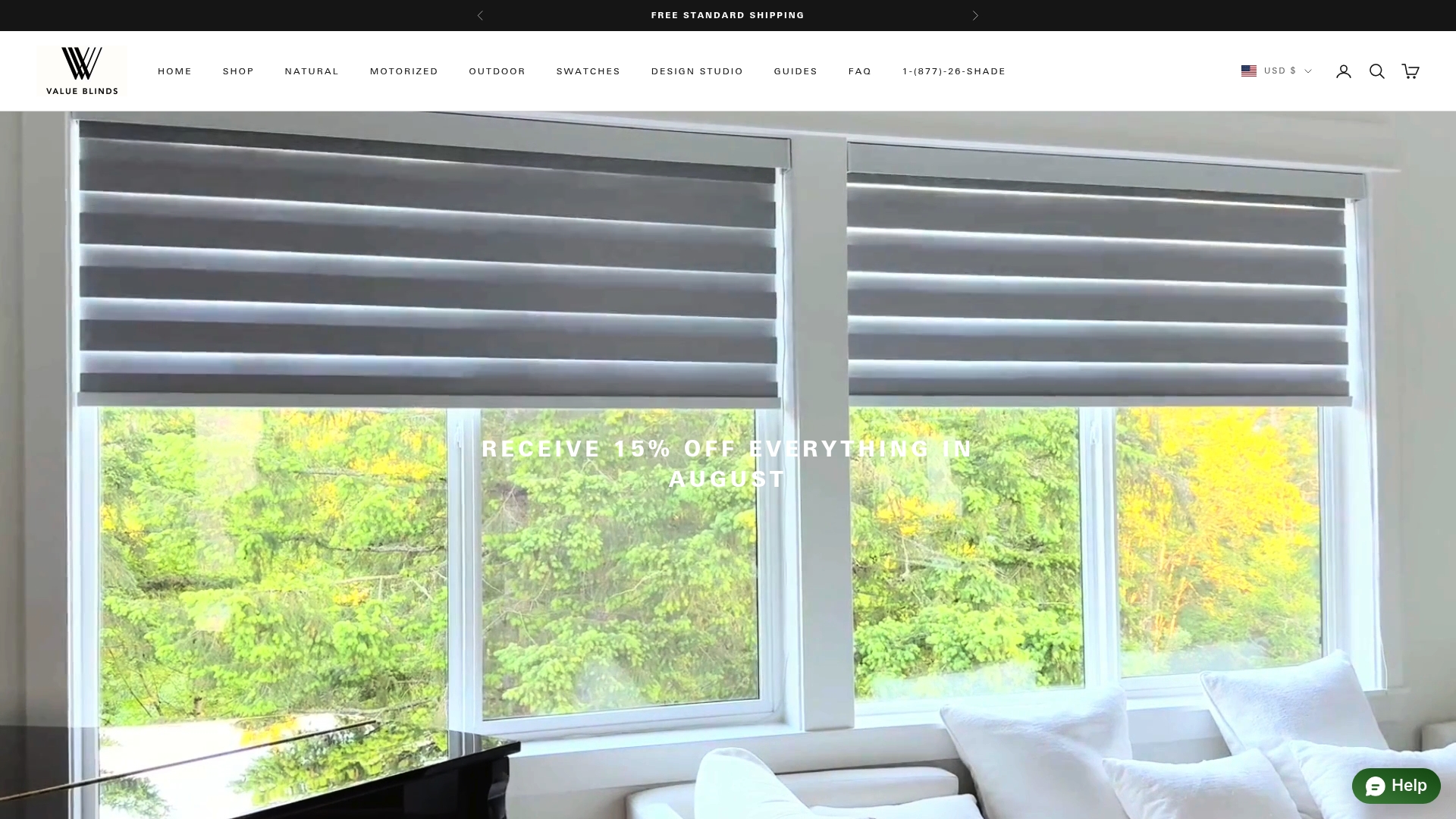
Start with a free swatch order if you’re still deciding on color and opacity, or head straight to the blackout duo-tone honeycomb shades if you already know you want a bedroom fully dark on command. Considering motorization for a hard-to-reach window? The motorized light-filtering cellular shades give you app or remote control without an electrician’s visit if you go battery-powered. Not sure which fabric or mount fits your window yet? Run your measurements through the window treatment design studio and get a clear recommendation before you order.
Key Takeaways
Top-down bottom-up shades solve daylight-versus-privacy tradeoffs that single-rail shades can’t, and cordless or motorized control is the safer default for most households.
| Point | Details |
|---|---|
| Core function | Two independent rails let you lower the top or raise the bottom for light and privacy together. |
| Best fabric for insulation | Cellular honeycomb shades trap air and outperform flat fabrics on temperature stability. |
| Safest control choice | Cordless tension systems or motorized lifts reduce cord hazards for kids and pets. |
| Measuring rule | Measure width at three points and use the smallest figure to avoid binding rails. |
| Where to start | Value Blinds’ honeycomb TDBU line offers light-filtering and blackout fabrics with free swatches and optional professional installation. |
Sources
- Top-Down Bottom-Up Shades — The Home Depot
- The Best Window Shades | Tested & Ranked — TechGearLab
- The 4 Best Smart Window Shades, Blinds, and Curtains of 2026 | Wirecutter




%20shades%20let%20you%20lower%20the%20top%20of%20the%20shade%20or%20raise%20the%20bottom,%20so%20daylight%20can%20pour%20in%20while%20the%20street%20still%20can%E2%80%99t%20see%20your%20living%20room.%20That%E2%80%99s%20the%20whole%20tr...)