
Budget-Friendly Blind Options for Every Room in 2026
TL;DR:
- Basic roller shades, vinyl mini blinds, and cellular shades are the most affordable window coverings. Ordering free swatches, measuring carefully, and choosing cordless or no-drill options help prevent costly mistakes.
The top budget-friendly blind options are basic roller shades, vinyl mini blinds, basic cellular/honeycomb shades, faux wood slats, and simple fabric Roman shades. If you want the fastest route to a finished window, order free swatches before you buy so color and opacity surprises don’t send you through a return process. Here’s a quick snapshot of where prices land:
- Entry-level (vinyl mini blinds, basic roller shades): roughly $10–$30 per window for standard off-the-shelf sizes
- Mid-range (faux wood slats, basic cellular shades, simple Roman shades): roughly $30–$80 per window
- Custom sizing: pricing typically starts around $50–$100+ depending on fabric and size
For renters or anyone who wants zero wall damage, a cordless no-drill model is the single easiest DIY install you’ll find. No tools, no landlord drama.
Table of Contents
- What are the best budget-friendly blind options for your home?
- How do you choose the cheapest blind that still works for your room?
- Where should you buy budget-friendly blinds to save the most money?
- DIY installation tips that prevent costly mistakes
- What do budget blinds actually cost, and how long does delivery take?
- Key Takeaways
- Why affordable blinds don’t have to mean settling
- Valueblindsdirect makes budget window shopping easier
- Useful sources and further reading
What are the best budget-friendly blind options for your home?
Not all cheap blinds are created equal, and the right pick depends on your room, your privacy needs, and how long you actually want them to last. Here’s an honest breakdown of the most popular low-cost window coverings.
| Type | Starting Cost | Best For | Light Control | Moisture Resistance | Install Difficulty | Energy Efficiency |
|---|---|---|---|---|---|---|
| Vinyl mini blinds | affordable price for any room, renters | Adjustable slats | Good (wipe-clean) | Easy | Low | |
| Basic roller shades | moderate price for living rooms, bedrooms | Light filtering or blackout | Moderate (fabric-dependent) | Easy | Low–Moderate | |
| Basic cellular shades | mid-range price for bedrooms, living rooms | Light filtering | Moderate | Easy | High | |
| Faux wood slats | moderate cost suitable for kitchens, bathrooms | Adjustable slats | Good | Easy–Moderate | Low | |
| Simple Roman shades | reasonably priced for living rooms, bedrooms | Light filtering | Low (fabric) | Easy | Low |
Vinyl mini blinds are the classic go-to for a reason. They’re wipe-clean, adjustable, and cost almost nothing per window. The downside? They can feel a little utilitarian, and the thin slats bend if you’re not careful.

Basic roller shades punch above their price point. A light-filtering fabric softens the room without blocking your view entirely, while a blackout version handles bedrooms or home offices where you need real darkness. Pairing an off-the-shelf roller shade with inexpensive curtain panels is one of the easiest ways to get a layered, higher-end look without custom spend. Valueblindsdirect’s guide on layering window treatments walks through exactly how to do this.

Cellular (honeycomb) shades are the budget pick that actually saves you money over time. Their air-pocket construction reduces heat transfer through windows, which means lower heating and cooling bills. The U.S. Department of Energy confirms that insulating shades cut energy losses at windows, so a slightly higher upfront cost on cellular shades can pay back part of that investment across seasons.
Faux wood slats are the smart call for kitchens and bathrooms. Real wood warps in humidity; faux wood doesn’t. For waterproof window coverings in wet rooms, vinyl or faux wood is the practical choice over untreated fabric every time.
Simple Roman shades add softness and a polished look at a price that won’t hurt. They work best in low-humidity spaces since most entry-level versions use fabric that doesn’t love moisture.
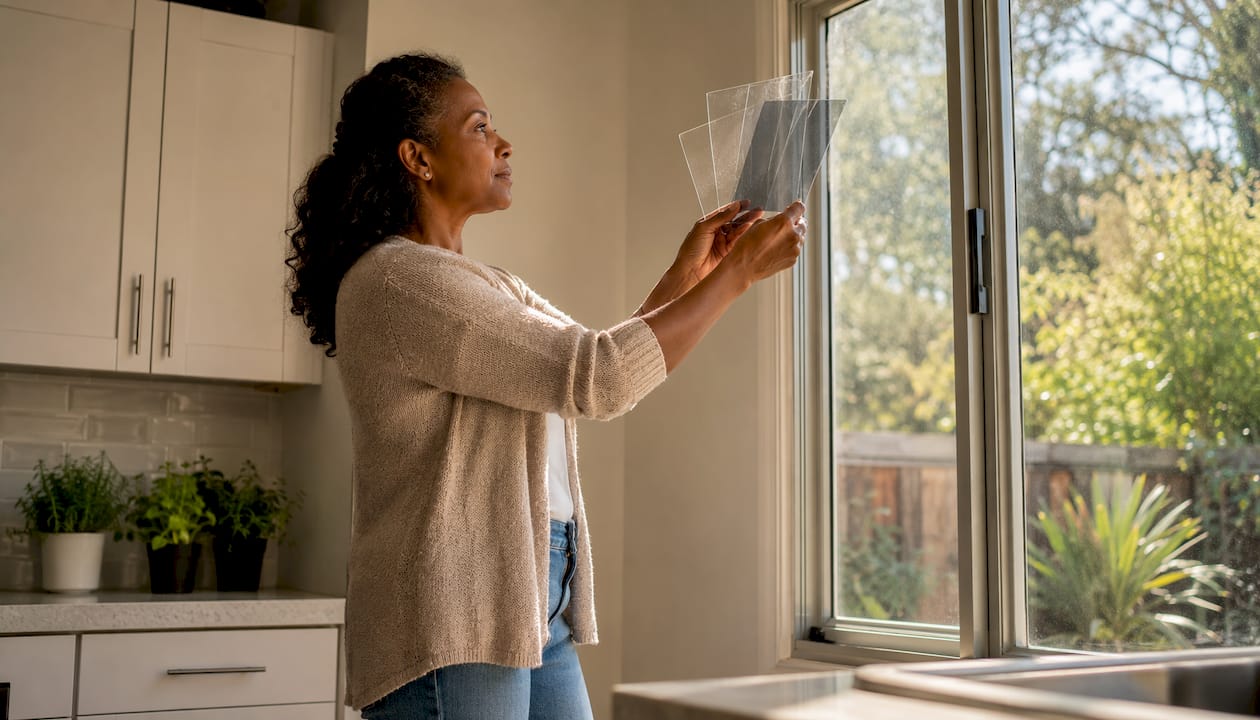
Affordable doesn’t mean flimsy. Free swatches let you feel the material before you commit, and a solid measurement guide removes the biggest source of wasted money: ordering the wrong size. Both steps cost you nothing but a few minutes.
What about alternatives to blinds?
Sometimes the most budget-friendly window treatment isn’t a blind at all. Window film runs $10–$30 for a standard window and gives you privacy or UV blocking with zero installation hardware. Premade curtain panels from a discount retailer can cover a window for under $20 and layer beautifully over a simple shade. For renters, tension rods and clip-on shades are low-cost, removable, and leave zero marks. Valueblindsdirect’s post on renter-friendly window treatments covers these temporary options in detail.
How do you choose the cheapest blind that still works for your room?
Price is only one part of the equation. A $15 vinyl blind in a bathroom beats a $60 fabric Roman shade that warps in six months. Run through this quick checklist before you buy.
Selection criteria checklist:
- Room type — Is it a bathroom, kitchen, bedroom, or living room? Humid rooms need moisture-resistant materials.
- Privacy level — Do you need full blackout, light filtering, or just a privacy screen?
- Light control — Do you want to adjust throughout the day, or is a fixed opacity fine?
- Insulation — Is the window drafty or in a sun-facing room? Cellular shades earn their cost here.
- Cleaning ease — Vinyl and faux wood wipe clean; fabric shades need spot cleaning or dry cleaning.
- Renter constraints — Can you drill? If not, cordless no-drill or tension-rod options are your lane.
Three diagnostic questions to ask before you click “buy”:
- Do you need blackout? If yes, confirm the product is rated blackout, not just “room darkening” (they’re different).
- Is the window a standard size? Standard sizes skip custom fees and ship faster.
- Is the room humid? If yes, skip untreated fabric and go vinyl, faux wood, or a waterproof roller fabric.
Red flags that make cheap blinds a false economy:
- No returns policy or a very short return window (measurement errors happen)
- Missing mounting hardware in the box (adds cost and a hardware store trip)
- No measurement guide from the retailer (you’re guessing, and guessing wrong is expensive)
- Fabric with no moisture rating for a bathroom or kitchen install
Making your home look polished on a budget is absolutely possible. A partner resource from One Day Doors & Closets on making your house look expensive covers complementary low-cost upgrades that pair well with affordable window treatments.
Where should you buy budget-friendly blinds to save the most money?
Your buying channel matters almost as much as the product itself. Here’s how the main options stack up.
Online direct-to-consumer (DTC) sites like Valueblindsdirect offer the best combination of price, customization, and support tools. Free swatches, measurement guides, and clear return policies reduce the risk of a bad order. You can browse the full blinds collection and filter by style, size, and price point without leaving your couch. The trade-off is a short lead time for made-to-measure orders (more on that in the cost section below).
Big-box home improvement stores (think hardware chains) let you walk out the same day with a standard-size blind for under $20. That’s genuinely useful when you need coverage fast. The limitation is selection: standard sizes only, limited fabric choices, and no customization.
Discount outlets and clearance sections are worth a look for standard-size windows. End-of-season sales and clearance events can cut prices by 30–50% on name-brand products. The catch is inconsistent stock — you can’t count on finding your size.
Secondhand and repurpose options (Facebook Marketplace, Habitat for Humanity ReStores, local buy-nothing groups) occasionally surface barely-used blinds for next to nothing. This works best for standard window sizes. Custom sizes are a gamble.
Money-saving tactics that actually work:
- Order free swatches first — color on a screen rarely matches color in your room
- Buy standard off-the-shelf sizes whenever your window allows; custom sizing adds cost
- Choose cordless or no-drill models for DIY install and skip the installer fee entirely
- Wait for holiday sales (Memorial Day, Labor Day, and Black Friday consistently bring the deepest discounts on window treatments)
- Check whether the retailer offers a measurement guarantee or free remeasure before ordering
Before you commit to any online order: confirm the return window (at least 30 days is reasonable), check whether return shipping is free or at your cost, and verify that a measurement guide is available. These three checks take two minutes and can save you a frustrating return process.
Pro Tip: If you’re buying for multiple windows in the same room, order all the blinds in one batch. Dye lots can vary between production runs, and a slight color difference between two blinds on the same wall is surprisingly noticeable.
DIY installation tips that prevent costly mistakes
Measuring wrong is the single biggest source of wasted money on budget blinds. Get this right and everything else is easy.
Step-by-step measuring guide:
- Decide: inside mount or outside mount. Inside mount sits inside the window frame for a clean look; outside mount covers the frame and is forgiving of irregular window sizes.
- For inside mount: measure the width at the top, middle, and bottom of the opening. Use the smallest measurement. Most manufacturers deduct a small amount (typically 1/4 to 3/8 inch) for clearance — check your specific brand’s guide.
- For outside mount: measure the width of the area you want covered and add at least 2–3 inches on each side for light blockage and a finished look.
- Measure height from where the bracket will sit to the sill (inside) or to where you want the blind to end (outside).
- Double-check every measurement before submitting your order. Measure twice, order once.
- Check the mounting surface. Hollow-core doors and some vinyl window frames need special anchors. Confirm before drilling.
Low-cost installation tactics:
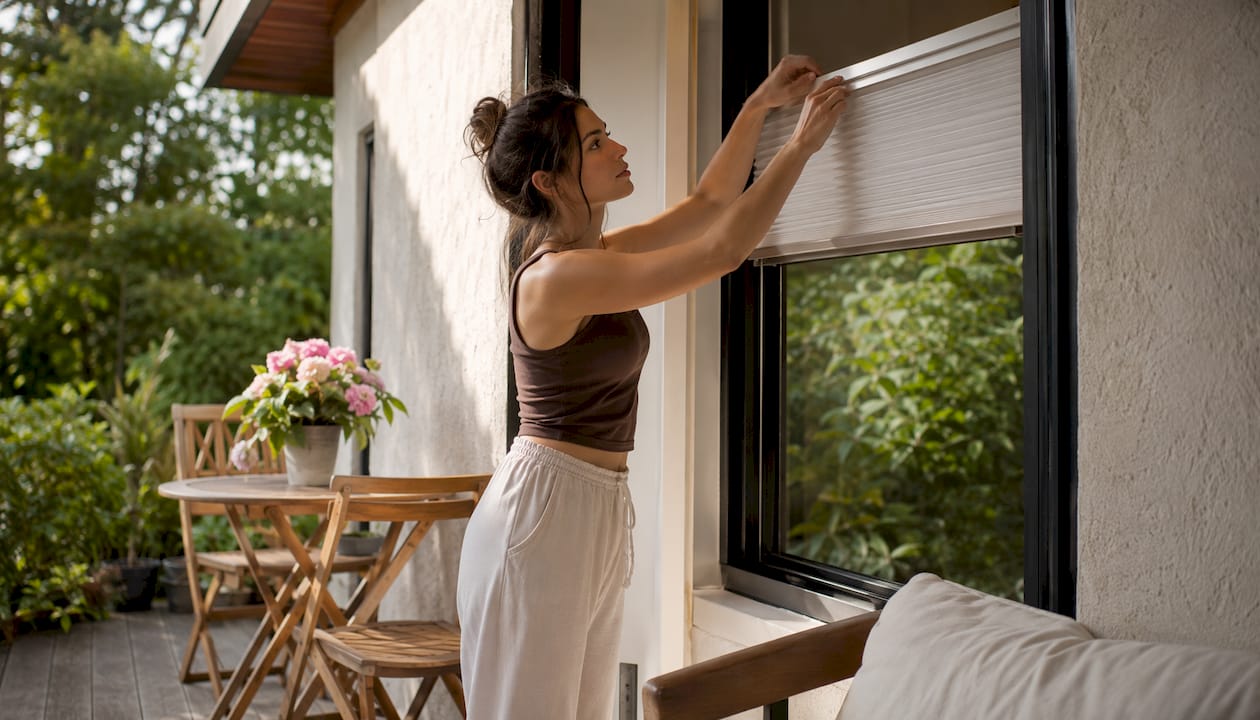
- Cordless and no-drill systems use tension or adhesive brackets — no holes, no tools, no problem for renters
- Universal mounting brackets work with most standard blinds and cost a few dollars at any hardware store
- A basic level and a pencil are all you need for a straight install on most standard windows
Pro Tip: Hang curtain rods 4–6 inches above the window frame and extend them 6–10 inches wider on each side. This simple trick, highlighted by The Spruce, makes inexpensive panels read as custom and makes your windows look noticeably larger.
For more DIY ideas, Valueblindsdirect’s DIY window treatment ideas post covers creative low-cost projects that go beyond basic installs.
What do budget blinds actually cost, and how long does delivery take?
Here’s a realistic picture so you can plan your budget and timeline without surprises.
Price ranges by category:
- Entry-level (vinyl mini blinds, basic roller shades, off-the-shelf standard sizes): low-cost pricing for standard windows
- Mid-range (faux wood slats, basic cellular shades, simple Roman shades, standard sizes): moderate pricing options
- Custom-sized online orders: pricing varies depending on fabric, opacity, and size; specialized shades cost more
- Professional installation: installation cost varies by region and number of windows
Timelines to expect:
- Off-the-shelf from a big-box store: same day
- Standard-size online order (in-stock): 3–7 business days shipping
- Made-to-measure custom order: typically 7–14 business days production plus shipping
- Free swatch samples: usually arrive within 5–7 business days
Shipping and returns to confirm before ordering:
- Is shipping free, or is there a flat fee? (Many DTC sites offer free shipping above a threshold)
- What is the return window? (30 days minimum is reasonable; confirm whether you pay return shipping)
- Does the retailer offer a measurement guarantee or credit if you order the wrong size?
Choosing standard sizes whenever your window allows skips the custom lead time entirely and keeps you in the entry-level price band. It’s the single fastest way to get covered without waiting.
Key Takeaways
The most cost-effective window covering for most rooms is a basic roller shade or vinyl mini blind in a standard size, bought online with free swatches to confirm color and opacity before committing.
| Point | Details |
|---|---|
| Top budget picks | Roller shades, vinyl mini blinds, cellular shades, and faux wood slats cover most rooms affordably. |
| Measure before you order | Measure width in three spots for inside mounts; use the smallest number to avoid sizing errors. |
| Three quick money-saving moves | Order free swatches, double-check measurements, and choose cordless/no-drill models when renting. |
| Warranty and returns matter | Confirm a 30-day return window and check whether return shipping is free before you buy. |
| Valueblindsdirect for budget shoppers | Valueblindsdirect offers free swatches, measurement guides, and a cordless/no-drill collection for easy DIY installs at entry-level prices. |
Why affordable blinds don’t have to mean settling
Here’s an opinion you won’t hear often: the biggest quality gap in budget blinds isn’t the product itself. It’s the buying process. Most people who end up with flimsy, ill-fitting blinds didn’t buy a bad product — they bought the right product in the wrong size, or they skipped the swatch and got a color that looked nothing like the photo.
The brands and retailers that actually serve budget shoppers well are the ones that invest in the support around the product: clear measurement guides, free samples, honest return policies, and installation help. Those tools cost the retailer almost nothing to provide, but they’re the difference between a window that looks finished and one that looks like an afterthought.
Valueblindsdirect’s approach — free swatches, a measurement guide, cordless options for renters, and a design studio to visualize before you buy — is exactly the kind of scaffolding that makes a $30 shade perform like a $90 one. Not because the materials are magic, but because you ordered the right thing the first time.
One more thing worth saying: layering is underrated at the budget end of the market. A $20 roller shade plus a $15 curtain panel from a discount retailer gives you better light control, better insulation, and a far more polished look than either piece alone. You don’t need a custom window treatment to get a custom result. You just need to know the trick.
Valueblindsdirect makes budget window shopping easier
Covering your windows on a budget is easier when you’re not guessing. Valueblindsdirect gives budget shoppers a real advantage: free swatches shipped to your door so you can check color and opacity in your actual light, a Window Treatment Design Studio to visualize options before you order, and a cordless and no-drill collection built for renters and DIYers who want a clean install without tools or wall damage.
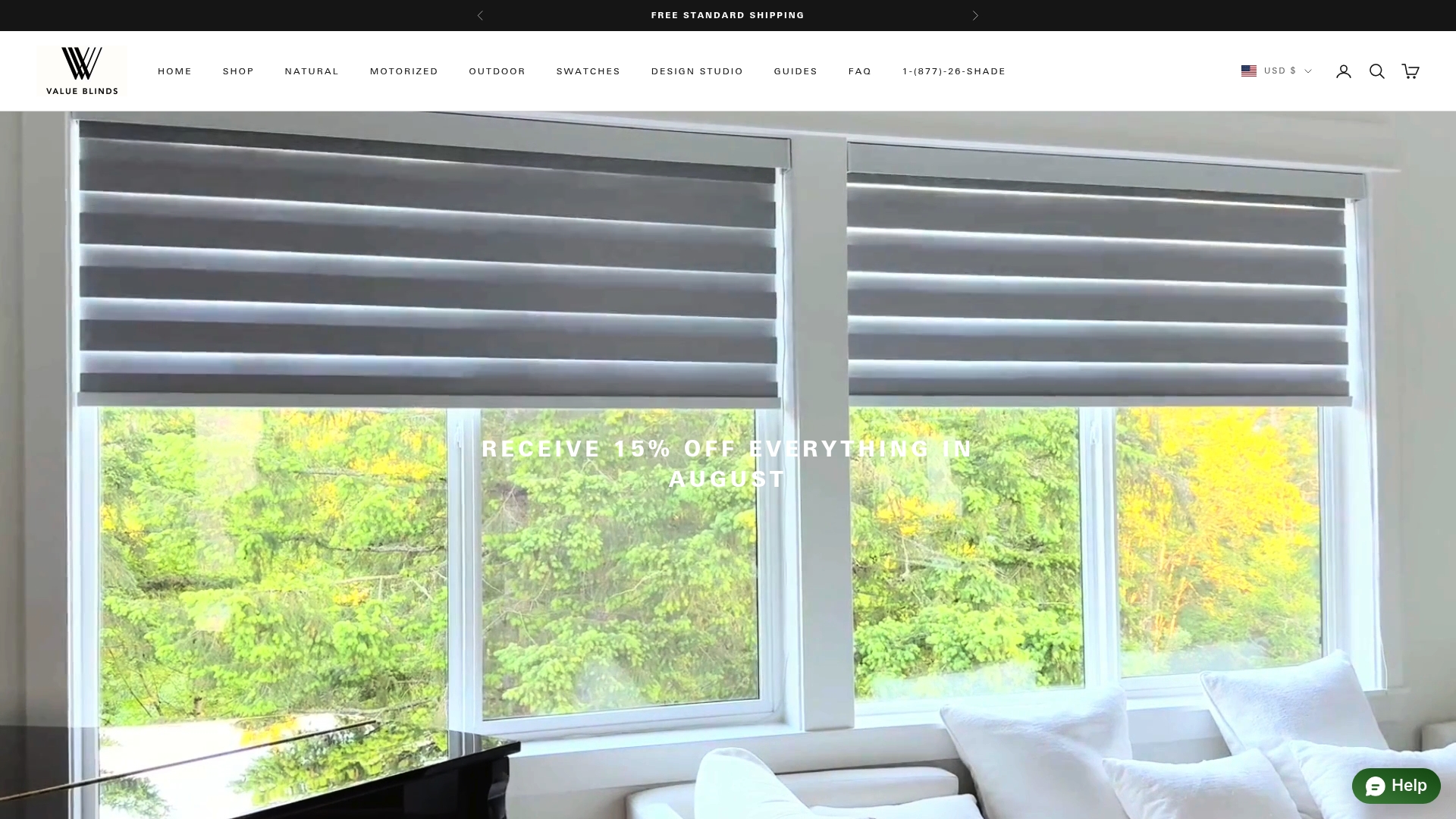
Entry-level roller shades and basic cellular shades are available at accessible price points, and every order comes with measurement guides to help you get the size right the first time. Returns and warranty details are clearly listed on each product page so there are no surprises after delivery. Ready to see what fits your windows and your budget? Browse the full collection and order your free swatches today.
Useful sources and further reading
- U.S. Department of Energy — Window Treatments and Coverings — authoritative guidance on energy efficiency and insulating window treatments
- The Spruce — 56 Window Treatment Ideas for Every Budget and Style — practical styling tips including the hang-higher-and-wider trick
- Valueblindsdirect — Budget-Friendly Window Treatments: Upgrade Your Home — free swatch guidance and inexpensive upgrade ideas
- Valueblindsdirect — Cordless and No-Drill Collection — renter-friendly, easy-install blind options
- Valueblindsdirect — Window Treatments for Rentals — temporary and no-damage solutions for renters
- Valueblindsdirect — Best Waterproof Window Coverings — moisture-resistant options for kitchens and bathrooms
- Valueblindsdirect — DIY Window Treatment Ideas — low-cost DIY projects and styling hacks
- One Day Doors & Closets — How to Make Your House Look Expensive — complementary low-cost home upgrade ideas