

What Is a Premium Window Treatment? A Buyer's Guide
TL;DR:
- A premium window treatment combines top-quality materials, precise custom fit, durable hardware, and motorization for superior performance and design. Proper installation and comprehensive warranties are essential, ensuring the system functions as intended and lasts over time. Such treatments improve light control, energy efficiency, and home value by integrating seamlessly into the overall aesthetic and architecture.
A premium window treatment is a purpose-built window covering whose materials, hardware, custom fit, motorization options, professional installation, and warranty work together as a complete system to deliver superior light control, energy performance, and lasting design impact. Not just a pretty panel or a shade you grab off a shelf.
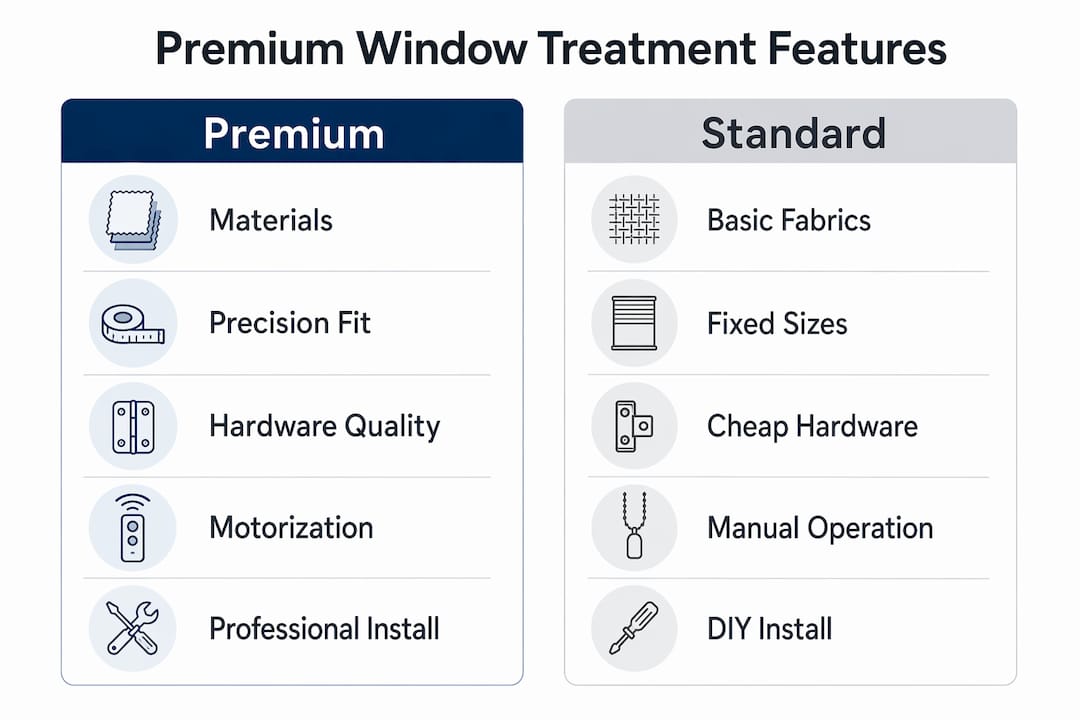
Here’s what separates premium from everything else at a glance:
- Materials: Top-tier fabrics, real or engineered wood, reinforced hems, and dual-cell construction
- Custom fit: Made-to-measure sizing for your exact window, not a standard box size
- Hardware: Quiet, durable tracks and components built to last and be serviced
- Motorization/smart-ready: Battery or wired motors with app or voice control compatibility
- Professional installation: Precise mounting that makes the treatment perform as designed
- Warranty and service: Long-term coverage with access to replacement parts and motor servicing
Valueblindsdirect offers cellular shades and motorized options that check every one of these boxes — but before you shop, let’s break down what each element actually means for your home.
Table of Contents
- What makes a window treatment truly premium?
- Which premium product types fit your style and room?
- Real benefits you get from going premium
- What do premium window treatments cost in the U.S.?
- How to choose the right premium treatment for each room
- What premium looks like in practice
- Key Takeaways
- What designers and installers wish you knew
- Valueblindsdirect makes premium window treatments approachable
- Useful sources and further reading
What makes a window treatment truly premium?
Premium pricing on window treatments isn’t about a fancy label. Industry experts are clear that it reflects the complete system: materials, proprietary hardware, and specialized installation that reduce mechanical failures over time. Each component earns its place.
Materials and construction
The fabric or slat material is where you feel the difference immediately. Premium treatments use top-tier woven textiles, genuine hardwoods, or high-density engineered alternatives with realistic grain finishes. Dual-cell (honeycomb) construction in cellular shades adds a second air pocket, boosting thermal performance beyond what a single-cell shade can offer. Reinforced bottom hems prevent warping and sagging over years of daily use.

Precision fit
Off-the-shelf shades come in fixed increments. Custom window treatments are cut to your exact measurements, which matters most for unusual window shapes, oversized openings, or tight inside-mount installs where even a quarter-inch gap kills the look and the light seal.
Hardware and tracks
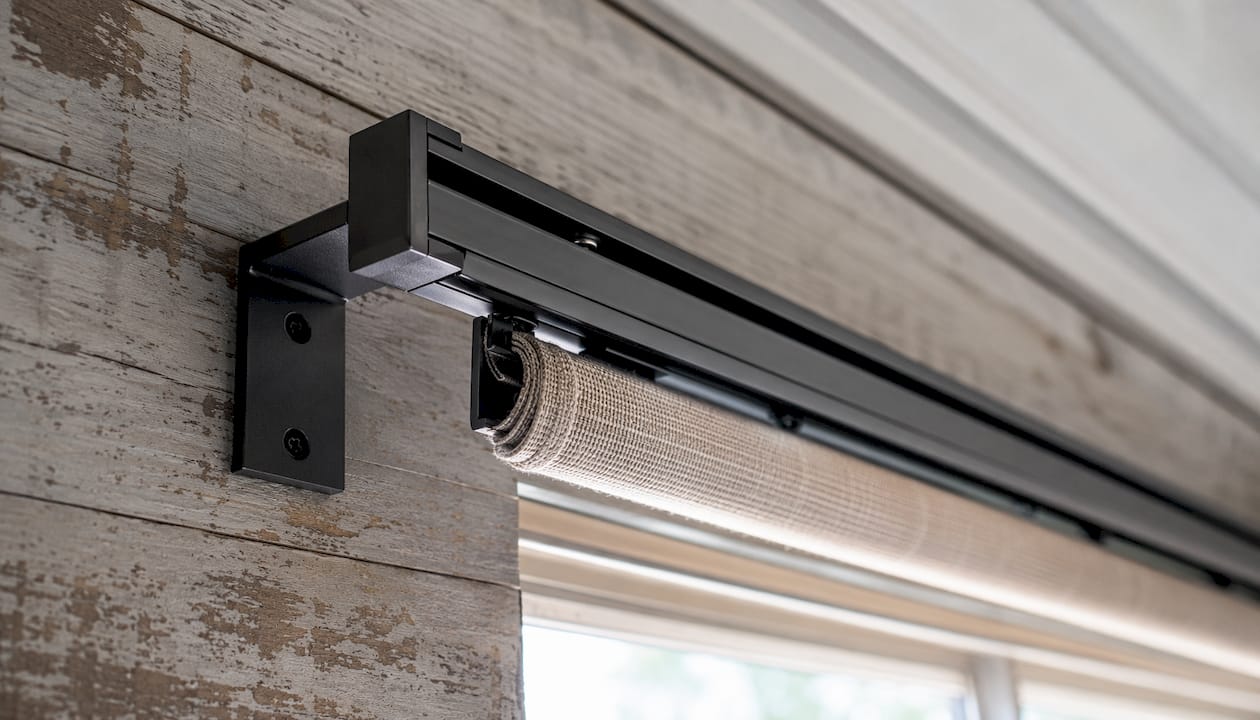
Cheap hardware is the silent killer of window treatments. Premium tracks glide quietly, resist corrosion, and are designed so a technician can replace a component without pulling the whole system down. That serviceability is a real differentiator.
Motorization and smart-home integration
Battery motors are the easiest entry point: no wiring, no electrician, and they work with most smart-home platforms. Hardwired motors are quieter and more powerful for heavy drapery or large panels. Either way, the motor’s quality and the brand’s service network determine how long the system stays reliable.
Premium window treatments are architectural elements that define mood, manage daylight, and enhance energy efficiency — but only when the full system (materials, hardware, installation) is executed correctly. A beautiful fabric on a flimsy track is just an expensive disappointment.
Pro Tip: Ask any vendor whether their motor components are proprietary or industry-standard. Proprietary parts can mean lower long-term serviceability if the brand discontinues a model.
Installation and warranty
Installation is part of the premium deliverable, not an afterthought. A treatment mounted at the wrong reveal depth or with uneven brackets will gap, bind, or look crooked no matter how good the product is. Free swatches, in-home consultations, and robust warranty coverage are the trust signals that separate serious premium vendors from everyone else.
Which premium product types fit your style and room?
Premium options span real-wood plantation shutters, custom drapery with designer fabrics, and motorized shade systems integrated with smart-home controls. Here’s how the main categories stack up:
| Treatment type | What makes it premium | Best room use | Motorization available? |
|---|---|---|---|
| Plantation shutters (real wood) | Architectural permanence, hardwood construction, adjustable louvers | Living room, dining room | Rarely; manual louver control |
| Cellular / honeycomb shades | Dual-cell insulation, blackout or light-filter fabrics, cordless lift | Bedroom, nursery, home office | Yes — battery or wired |
| Roman shades | Designer fabrics, flat or looped folds, custom lining options | Living room, study | Yes — motorized lift |
| Motorized roller shades | Precision fabric, quiet motor, solar or blackout options | Media room, large windows | Yes — core feature |
| Custom drapery | High-thread-count textiles, custom headers, blackout lining | Bedroom, formal living room | Yes — motorized track |
| Woven wood / natural shades | Bamboo, jute, or grass weaves with optional liner | Casual living, sunroom | Yes — motorized versions |
A few room-specific notes worth knowing:
- Bedrooms benefit most from blackout cellular shades or lined drapery. Layering both gives you full light control plus a soft, designed look.
- Media rooms are where motorized roller shades shine. One tap on your phone and the glare is gone.
- Bathrooms and kitchens need moisture-resistant materials. Faux wood, aluminum, or moisture-rated fabrics hold up where real wood warps.
- Living rooms are the place to invest in something architectural. Plantation shutters and custom drapery add perceived permanence that reads like built-in millwork.
Roller and honeycomb shades sit tight to the window, providing insulation, sound reduction, and a clean modern look — a strong pairing with contemporary interiors or large-format windows.
Real benefits you get from going premium
Beyond aesthetics, premium treatments deliver measurable returns. Here’s what actually changes when you upgrade:
- Light management: Blackout linings in cellular shades or drapery block light completely, while light-filtering fabrics diffuse glare without killing the view. You get granular control, not just “open or closed.”
- Energy efficiency: Cellular shades trap air in their honeycomb cells, improving thermal performance at the glass — the coldest or hottest surface in most rooms. Layered drapery adds a second insulating buffer. Check out energy-efficient window treatment tips to see how much difference the right product makes.
- UV protection: Solar fabrics and tightly woven textiles absorb or block UV rays that fade hardwood floors, rugs, and upholstery. This is a real long-term cost saver.
- Acoustic comfort: Cellular and woven-wood shades absorb sound, which makes a noticeable difference in rooms with hard floors and high ceilings.
- Durability and lower lifecycle cost: A premium treatment installed correctly and serviced when needed outlasts two or three economy replacements. Fewer trips to the store, less waste.
- Design impact and home value: A properly installed premium treatment functions as an architectural element that shapes how a room feels. Buyers notice quality window treatments during home showings — they read as permanent, considered finishes.
Premium window treatments also pair naturally with other high-quality home upgrades. If you’re already thinking about glass interior doors as architectural features, layering in premium treatments creates a cohesive, designed feel throughout the space.
What do premium window treatments cost in the U.S.?
Budgeting for premium treatments means understanding what drives the price up — and what hidden costs can catch you off guard.
| Treatment type | Typical range per window | Main cost drivers |
|---|---|---|
| Cellular shades (cordless) | — | Cell count, fabric grade, custom size |
| Cellular shades (motorized) | — | Motor type, smart-home integration |
| Roller shades (motorized) | — | Fabric weight, motor, custom width |
| Roman shades (custom) | — | Designer fabric, lining, custom fit |
| Plantation shutters (real wood) | — | Wood species, louver width, finish |
| Custom drapery | — | Fabric, header style, lining, length |
| Woven wood / natural shades | — | Material, motorization, liner |
Custom solutions carry higher prices and longer lead times — especially for oversized windows or unusual shapes — but the fit and performance justify the investment for most homeowners. Wood blinds and plantation shutters sit at the upper end because of natural material costs and finish work.
Hidden costs to watch for:
- Trim modifications or structural adapters for non-standard window frames
- Wiring and electrical work for hardwired motors (budget for an electrician)
- Professional installation labor (varies by region)
- Valances, cornices, or decorative hardware not included in the shade price
Timeline-wise, custom treatments typically take 2–4 weeks from order to delivery, with professional installation scheduled separately. Motorized systems may need an additional setup visit for smart-home pairing.
How to choose the right premium treatment for each room
Follow this sequence and you’ll avoid the most common (and expensive) mistakes.
- Define your functional goals first. Do you need full blackout, glare reduction, moisture resistance, or insulation? Design professionals recommend mapping these environmental goals before choosing materials or following trends — aesthetics come after function, not before.
- Measure carefully — or hire someone to do it. Decide between inside mount (clean, built-in look) and outside mount (hides the frame, makes windows look larger). A quarter-inch error on an inside mount can mean the shade won’t fit or will gap at the sides.
- Request free swatches before committing. Colors and textures look different in your actual room lighting. Any premium vendor worth considering offers free fabric samples.
- Choose your control type. Cordless lift is the baseline for safety and clean aesthetics. Motorized is worth the upgrade for hard-to-reach windows, large panels, or anyone who wants smart-home integration.
- Ask about warranty and motor serviceability. How long is the warranty? Does it cover the motor? Can you get replacement parts in five years? Vague answers here are a red flag.
- Confirm installation support. Does the vendor offer a measurement guide, professional installation, or both? Premium treatments need precise installation to perform as designed.
Red flags to avoid:
- Warranty language that excludes “normal wear” without defining it
- No installation guidance or professional measure option
- Proprietary motor parts with no stated service path
- No swatches or sample program
- Prices that seem too low for the claimed materials (real wood at roller-shade prices is almost never real wood)
What premium looks like in practice
Picture a primary bedroom with east-facing windows. The goal: sleep past sunrise, keep the room cool in summer, and still have a polished look for the rest of the day. The solution that checks every box: motorized blackout cellular shades on an inside mount, layered with linen drapery panels on a ceiling-mounted track. The shades handle the thermal and blackout work; the drapery adds softness and frames the window architecturally. One tap on a phone app raises both at 7 AM. That’s premium in practice.
What to expect from a vendor at this level:
- Free swatches so you can confirm fabric color and opacity in your room
- Measurement guide or professional measure option before ordering
- Motorization setup support including smart-home pairing instructions
- Warranty coverage on both the shade and the motor
- Replacement part availability for hardware and motor components
Valueblindsdirect covers all of these. The product line includes cordless and motorized cellular shades, motorized zebra shades, and natural woven shades with motorization — all available with free swatches, a design studio, and installation resources.
Key Takeaways
A premium window treatment is defined by its complete system: materials, hardware, custom fit, motorization, installation, and warranty working together — not by any single feature alone.
| Point | Details |
|---|---|
| System over single features | Premium means materials, hardware, fit, and service all working together — not just a nice fabric. |
| Custom fit is non-negotiable | Made-to-measure sizing prevents gaps, binding, and light leaks that off-the-shelf products can’t avoid. |
| Motorization needs a service plan | Battery or wired motors add real convenience, but confirm part availability and motor access before buying. |
| Installation is part of the product | Precise mounting determines whether a premium treatment performs or just looks expensive. |
| Valueblindsdirect as a starting point | Valueblindsdirect offers motorized cellular shades, free swatches, a design studio, and warranty support for a complete premium purchase. |
What designers and installers wish you knew
The most common mistake homeowners make is falling for a trend before defining what the window actually needs to do. A gorgeous linen Roman shade in a west-facing bathroom sounds beautiful until it warps from humidity in six months. Defining function first — blackout, moisture resistance, glare control — is the single piece of advice design professionals repeat most often, and it’s the one most buyers skip.
From the installer’s side, measurement details determine performance more than any other variable. The difference between a 2-inch inside-mount reveal and a 3-inch reveal changes which products fit and how they stack when raised. Small errors compound. Getting a professional measure, or at least following a detailed guide before ordering, is worth every minute.
Pro Tip: When motorizing, plan for future motor access before installation. A battery motor tucked permanently behind a cornice or inside a sealed headrail becomes a real headache when the battery dies in year two. Leave a service panel or choose a design that allows easy access.
Valueblindsdirect makes premium window treatments approachable
Custom, motorized, and energy-efficient window treatments used to mean hiring a designer, waiting months, and spending a small fortune. Valueblindsdirect changes that equation by putting the full premium experience online — without the showroom markup. ️
You get free fabric swatches shipped to your door, a Window Treatment Design Studio that walks you through custom sizing and style choices, and a product line that covers everything from cordless blackout cellular shades to motorized zebra shades and natural woven options. Every order comes with measurement guides and installation support, so you’re never left guessing. Warranties cover both product and motor components, and replacement parts are available — the kind of after-sale support that actually makes a purchase feel premium. Start with free swatches or head straight to the design studio to configure your first window.
Useful sources and further reading
- The art of window treatment design | SIBA — Design-school perspective on function-first selection and how premium treatments act as architectural elements. Useful for understanding the professional design process.
- How to choose window treatments | Apartment Therapy — Practical buyer guide covering cellular shade construction, insulation performance, and style matching.
- What do window treatments cost? | Angi — U.S.-focused cost breakdown explaining what premium pricing actually buys, including installation and hardware.
- Complete guide to window treatments | JJones Design Co. — Covers the custom vs. standard distinction and when custom sizing is worth the investment.
- What is a window treatment? | Essentra Living — Broad style guide listing premium product categories and smart-integration options.
- Which window blinds are more expensive? | Vista Fashions — Explains why wood blinds and plantation shutters carry higher price points.
- Your whole-home cheat sheet to window coverings | Emily Henderson — Room-by-room recommendations with honest tradeoffs between treatment types.
- Custom window treatments for style and efficiency | Valueblindsdirect — Valueblindsdirect’s own guide to premium custom options, energy efficiency, and service features. Strong E-E-A-T anchor for vendor-specific details.