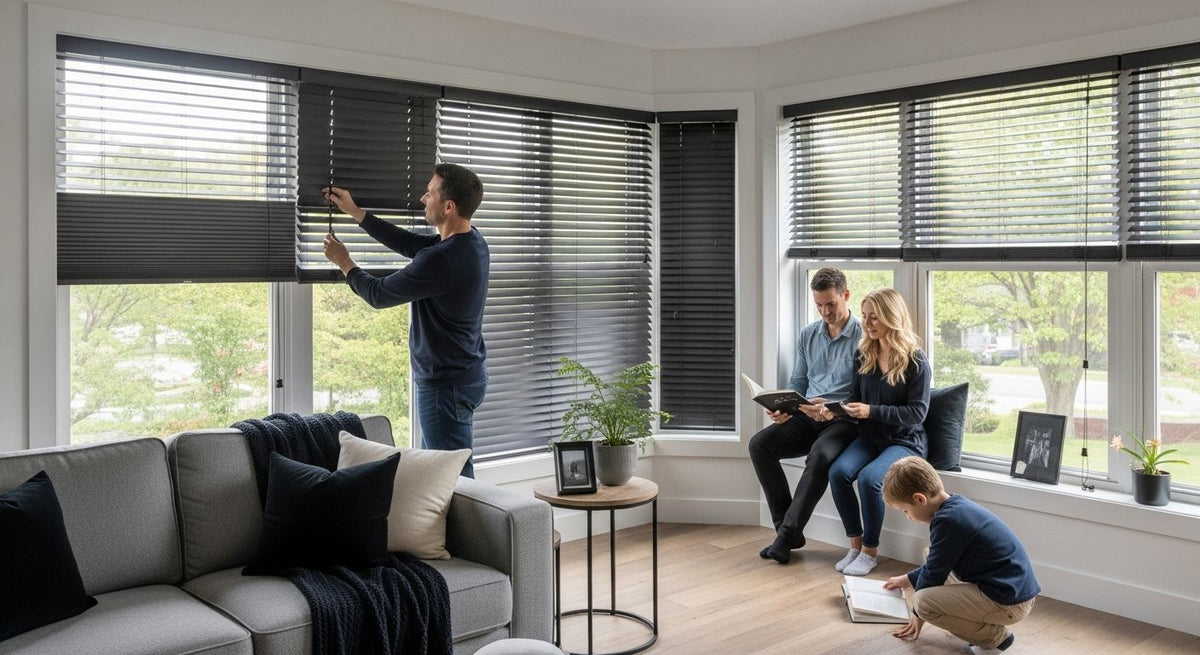


Homeowners: Add a 1–2 Week Buffer to Custom Blind Lead Times
Most custom blinds take 1 to 2 weeks for simple roller shades and up to 6 to 8 weeks for shutters, wood blinds, or motorized treatments. That’s the honest range, but the real planning move is padding whatever number your supplier quotes with an extra 1 to 2 weeks of buffer. Renovations rarely run on schedule, and blinds are usually the last domino to fall.
TL;DR:
- Padding your quoted lead time by one to two weeks minimizes scheduling risks caused by delays in measurement, manufacturing, or shipping.
- Customization complexity, material sourcing, seasonal demand, measurement revisions, and international shipping can extend manufacturing times significantly.
- Expedited or rush services typically prioritize production queue placement and limit customization options, often at additional costs.
- Ordering after finishing work like painting and flooring ensures window measurements remain accurate, preventing costly remeasurements and delays.
- Coordinating installation and measurement with your renovation timeline demands clear communication about delivery windows and contractor availability to stay on schedule.
Table of Contents
- Custom Blind Lead Times Explained: The Phase-By-Phase Breakdown
- What Actually Changes Your Blind Manufacturing Lead Time
- Can You Get Custom Blinds Faster? Expedited Options Explained
- A Renovation-Ready Blind Ordering Checklist
- How Value Blinds Helps You Cut Lead-Time Risk
- Planning Your Order Around Your Renovation Timeline
- An Editorial Take: Why “Just Order Early” Isn’t Enough Advice
- Get Your Blinds Ordered With Fewer Surprises
- Sources
- FAQ
Custom Blind Lead Times Explained: The Phase-By-Phase Breakdown
A lead time isn’t one number. It’s four separate phases stacked on top of each other, and each one can quietly add days you didn’t plan for.
Consultation and measuring kicks things off, and it usually takes anywhere from same-day to about a week, depending on whether you measure yourself or schedule a professional visit. This is the phase people rush the most, and it’s the one that causes the most rework later. Get it wrong here and you restart the clock entirely.
Manufacturing is where the bulk of your wait happens. Here’s roughly what to expect by product type:
- Roller shades and basic fabric shades: typically require a few weeks for manufacturing
- Cellular (honeycomb) shades: 2 to 4 weeks
- Solid wood or faux wood blinds: need more manufacturing time due to materials
- Shutters and heavily customized treatments: require extended lead times
- Motorized versions of any product: add 1 to 2 weeks on top of the manual version
Shipping typically adds 3 to 10 business days once the order leaves the factory floor, longer if you’re outside a major metro area or if a carrier hits a weather delay. Domestic transit is usually predictable, but it’s rarely instant, and treating it as a same-week guarantee is how installation dates slip.
Installation is the phase most homeowners forget to schedule in advance. If hiring a professional installer, availability may extend your finish date by some additional time, especially during busy renovation seasons. Line up your installer while your order is still in production, not after it arrives at your door.

What Actually Changes Your Blind Manufacturing Lead Time
Two orders for the exact same room can ship weeks apart, and the reason almost always comes down to five variables.
- Customization complexity. Oversized windows, unusual shapes, or multiple fabric layers (like blackout linings on roman shades) require extra fabrication steps that standard sizes skip entirely.
- Material sourcing. Specialty fabrics, imported wood slats, and motor components often come from a smaller pool of suppliers, which stretches manufacturing time when demand is high.
- Seasonal demand. Spring and late summer are peak renovation seasons, and factories run closer to capacity, which slows turnaround across every product line.
- Measurement revisions. A remeasure after the order is placed resets your position in the production queue, sometimes by a week or more.
- Shipping and customs. Components sourced internationally, particularly motorized hardware, can face customs delays that domestic-only products never encounter.
Motorized product lines require sourcing motors and testing them before the unit ships, which is a real, mechanical reason motorized options run longer than manual ones, not just a pricing upsell.
Pro Tip: Order your fabric swatches before you finalize your window measurements. Confirming the material you want in hand avoids a mid-order fabric swap that can add a full production cycle to your timeline.

Can You Get Custom Blinds Faster? Expedited Options Explained
If your calendar can’t absorb an 8-week wait, rush service is worth asking about, but go in with realistic expectations about what it actually buys you.
- Priority queueing. Most suppliers that offer rush manufacturing move your order ahead in the production line rather than skipping steps, which typically shaves 1 to 2 weeks off standard cellular or roller shade timelines.
- Limited customization. Rush service usually restricts your fabric and color choices to in-stock inventory. Fully custom shutters or specialty motorized units rarely qualify for expedited handling at all.
- Added fees. Expect a rush surcharge on top of the standard price, and confirm it before you commit since it varies widely by supplier and product complexity.
- Ready-made alternatives. If your timeline truly can’t bend, a stock-sized shade from local inventory covers the window today while your custom order finishes on its normal schedule for a different room.
A Renovation-Ready Blind Ordering Checklist
The single biggest planning mistake is measuring for blinds too early. Measure after paint, flooring, and trim work are finished, not before, since even small dimensional shifts during finishing work can throw off your fit and force a costly remeasure.
Once you’re ready to order, confirm four things with your supplier before you check out:
- The exact lead-time window in writing, not just a verbal estimate
- The shipping method and expected transit time to your zip code
- Installer availability that lines up with your projected delivery date
- Whether rush orders carry different return or exchange terms than standard orders
Add 1 to 2 weeks of buffer to whatever lead time your supplier quotes. That single habit resolves more scheduling conflicts than any other adjustment you can make, because it absorbs the small, common delays (a missed measurement, a slow courier day, a booked installer) before they cascade into a bigger problem.
If you’re coordinating with contractors or painters, tell them your blind delivery window up front. A step-by-step ordering guide can help you sequence the order against the rest of your renovation so nobody’s schedule gets caught by surprise.
How Value Blinds Helps You Cut Lead-Time Risk
A lot of delay in this process isn’t manufacturing at all. It’s measurement error and last-minute product swaps that send an order back to square one. Some suppliers offer free swatch programs that let you settle on fabric and finish before you measure, helping to reduce the chance of remeasures.
- Free swatches mean you’re choosing your final material early, not guessing from a screen and swapping later
- Professional measuring through Pro Measure & Install reduces the fit errors that trigger a full remake
- Motorized product lines, like the motorized wood blinds, and cordless cellular shades each carry their own manufacturing considerations worth asking about upfront
- Detailed measurement guides, including how to measure windows for a proper fit, help you get it right the first time
Planning Your Order Around Your Renovation Timeline
The best advice here isn’t complicated: work backward from your installation date, not forward from your order date. Decide when you want blinds hung, then subtract manufacturing time, shipping time, and your buffer to find your actual order deadline. Most people do this in reverse, order whenever they feel ready, and then scramble when the finish date doesn’t match the rest of the renovation.
When you’re talking to a supplier or installer, ask specific questions instead of general ones. Don’t just ask “how long will this take?” Ask for the manufacturing window in writing, the carrier they use, and whether that carrier has a track record of on-time delivery in your region. Ask whether the installer they recommend is affiliated with a recognized trade association, since membership listings are a quick way to verify a supplier’s standing before you commit money to them.
Coordinate with anyone else touching your windows. If painters or trim carpenters are still finishing a room, tell your blind supplier that measurement day depends on their schedule, not a fixed date. A one-week slip in painting shouldn’t turn into a one-week slip in your blind order too, and it won’t if you build the dependency into your plan from day one.
An Editorial Take: Why “Just Order Early” Isn’t Enough Advice
Most guidance on this topic stops at “order early,” which is true but useless on its own. Early compared to what? The real skill isn’t ordering early. It’s sequencing correctly, and that’s where most homeowners and even some decorators get tripped up.
The conventional wisdom treats lead time as a single countdown clock. It isn’t. It’s four separate clocks (measuring, manufacturing, shipping, installing) running one after another, and a delay in any one resets the ones behind it. A remeasure three weeks in doesn’t cost you three weeks. It can cost you the full manufacturing cycle over again, because you’re back at the start of the queue.
If I had to pick the one habit that prevents the most damage, it’s this: measure after your finishes are done, not before. That single sequencing choice, more than any rush fee or expedited service, is what keeps a renovation on schedule. Everything else is secondary.
— Sunny
Get Your Blinds Ordered With Fewer Surprises
Certain companies provide services to shorten the guesswork in custom blind orders, such as free fabric swatches to commit to a material before measuring, and professional measure-and-install options to reduce errors.
Whether you’re outfitting one room or coordinating a full renovation, the full collection of blinds and shades covers roller, cellular, wood, and motorized options in one place, so you’re not juggling multiple suppliers with multiple timelines. If motorization is on your list, the motorized cellular shades line gives you a sense of what that added manufacturing step looks like in a finished product. Start by browsing the full product lineup and requesting your swatches now, so your fabric decision is locked in before your measurement appointment.
FAQ
How long does it take to make custom blinds?
Manufacturing alone usually takes several weeks for roller shades and longer for shutters or heavily customized treatments. Add consultation, shipping, and installation time on top, and a full project from order to installed blind commonly spans 3 to 10 weeks depending on the product.
What is the lead time for DIY blinds?
DIY custom blinds follow the same manufacturing and shipping timeline as professionally installed ones since the wait is on the factory side, not the installer. The only time you save is skipping the installer scheduling step, which can shave a week or more off your total project timeline.
Are blinds out of style in 2026?
No. Blinds remain one of the most common window treatment choices for homeowners because they cover a wide range of budgets, styles, and functions, from basic roller shades to motorized wood blinds. What has changed is the demand for features like cordless operation and motorization, not interest in blinds themselves.
How quickly do custom blind suppliers typically deliver?
Delivery speed depends heavily on product type and whether you choose standard or rush manufacturing. Standard orders usually land within the ranges covered above, while rush service can shave 1 to 2 weeks off, though with limited fabric and color choices.
What should I ask a supplier about lead times before ordering?
Ask for the exact manufacturing window in writing, the shipping carrier and expected transit time, and whether their installer partners can meet your target date. It’s also worth checking whether the supplier or installer is listed with a recognized industry directory as a quick trust check before you commit.