
Article: Windows Over 96 Inches? Measure and Order Large Roman Shades Safely
Windows Over 96 Inches? Measure and Order Large Roman Shades Safely
For most spans over 96 inches wide, two or three coordinated Roman shades beat one giant panel. A single custom shade can work up to a manufacturer’s max width, but seams, lift reliability, and installation get trickier fast. Measure your window first, then either use Value Blinds’ measurement tool or request a pro measure before you commit to either layout.
TL;DR:
- Most wide windows over 96 inches should be covered with two or three Roman shades for better lift reliability and easier installation.
- Flat fold styles balance clean appearance and manageable stack height on large windows, while hobbled folds add bulk and may cause stacking issues.
- Fabric choices should match window exposure and room function, with thermal linings recommended for large glass walls to improve insulation.
- Motorized and cordless lift systems are safer and more practical for oversized shades, especially when spanning large or heavy windows, due to updated safety standards.
- Accurate measurement and reinforced headrails are essential for large shades to prevent sagging, and involving a professional is highly advised for windows wider than 72 inches.
Table of Contents
- How Do You Choose Between a Single Large Roman Shade and Multiple Shades?
- Which Roman Shade Fold Style Works Best on a Large Window?
- What Fabric and Lining Should You Pick for a Large Roman Shade?
- What Lift System Is Safest for Oversized Roman Shades?
- How Do You Measure and Mount Roman Shades for Extra-Wide Windows?
- Why Do Large Roman Shades Sag or Fold Unevenly, and How Do You Fix It?
- What Does a Custom Large Roman Shade Cost, and How Long Does It Take?
- Why Order Large Roman Shades Through Value Blinds
- Styling Large Windows: A Practical Take
- Sources
- FAQ
How Do You Choose Between a Single Large Roman Shade and Multiple Shades?
Most manufacturers cap a single Roman shade at a width generally considered suitable for wide windows, depending on the fabric and lift system. Beyond that, you’re either paying for a specialty oversized product or splitting the window into two or three shades that work together. Some makers do build genuinely huge single panels for expansive openings, but those products need reinforced headrail support to keep the fabric from sagging in the middle, and fabric choice narrows once you’re asking one piece of cloth to span 10 or 12 feet.
Here’s the honest trade-off breakdown:
- One shade gives you a clean, seamless look with no visible break, but heavier fabric and a longer headrail put more strain on the lift mechanism.
- Multiple shades distribute weight and stress across separate lift systems, which usually means fewer repairs down the road.
- Seams, when unavoidable on a single wide panel, get matched at pattern repeats by good manufacturers, but solid colors and light-filtering fabrics hide seams far better than bold prints.
- Motorization on one oversized shade means one motor doing a lot of lifting; splitting the window lets you run smaller, cheaper motors per unit.
Designers often solve the “which looks better” question without picking either option outright. They hang stationary drapery panels on the outer edges and let the Roman shades handle the actual light control in the middle. That combination reads as one continuous treatment even when you’re technically running two or three separate shades behind the drapery.
Pro Tip: If your window is wider than about 10 feet, ask about splitting it into shades with a shared control system rather than betting everything on one oversized panel and its single motor.
Which Roman Shade Fold Style Works Best on a Large Window?
Fold style changes how a big window reads, and it’s not a purely aesthetic call. It affects fabric strain and stack height too.
- Flat folds stay crisp and tailored, and they scale up cleanly on wide or tall drops without adding bulk when raised.
- Hobbled (soft) folds create rounded, cascading pleats that look luxurious, but the extra fabric they carry adds significant stack height at the top when the shade is fully raised.
- Relaxed (cascade) folds soften the bottom edge into a gentle scoop. They’re forgiving on large windows because slight width variances don’t show as much.
- Tulip (pleated) folds give a formal, structured look that reads best on tall, narrow-feeling openings rather than very wide ones.
Tighter fold spacing means more fabric bunched at the headrail, so a hobbled shade on a 10-foot drop can stack up 12 to 18 inches before it clears the glass. Heavier cotton and linen blends hold folds crisply at scale, while very lightweight sheers tend to sag between pleats on wide panels. For most large windows, flat or relaxed folds strike the best balance of clean appearance and manageable stack height.
What Fabric and Lining Should You Pick for a Large Roman Shade?
Room function and window exposure should decide fabric before style does.
- Blackout fabric suits bedrooms and media rooms, and it’s especially useful on west-facing glass walls where afternoon glare is a problem.
- Light-filtering fabric works well in living rooms and kitchens, letting daylight through while cutting direct sun and UV fade.
- Sheer fabric fits formal spaces where you want softness and privacy without blocking the view entirely.
Insulated or thermal lining pays off most on large glass walls, since bigger glass surfaces lose and gain more heat than standard windows. A thermal liner adds a buffer layer that helps stabilize room temperature near the glass. For fabric weight, mid to heavy weaves with fade-resistant treatments hold up better across continuous large panels than thin decorator fabrics, which show wear and light streaking faster at scale. Natural woven materials like bamboo or linen look great in casual, low-glare rooms, but performance textiles with UV and stain treatments make more sense for kitchens, sunrooms, or anywhere the fabric takes a beating.
What Lift System Is Safest for Oversized Roman Shades?
Cordless and motorized lifts are the better call on large shades, and it’s not just a style preference. A federal safety standard for operating cords on custom window coverings, effective since May 30, 2023, requires safer cord mechanisms like retractable cords, rigid shrouds, or cordless and motorized alternatives to cut strangulation risk. On a shade that’s already wide and heavy, a long corded lift multiplies both the safety concern and the everyday hassle of managing loose cord length.
- Cordless lift works well on shades up to a moderate width and gives you a completely clean look with no dangling hardware.
- Motorized lift is usually the smarter choice on very wide or heavy panels, since it removes manual strain entirely and pairs with remote or smart-home control.
- Continuous loop systems remain an option where cords are secured close to the wall, but they still require the safety features the standard mandates.
Statistic Callout: The CPSC’s operating cord standard applies to custom window coverings sold after May 30, 2023, pushing the market toward cordless and motorized defaults rather than treating them as premium add-ons.
Motorization adds lead time because the shade needs limits programmed to the exact drop, but for a span where you’d otherwise be hauling a heavy corded lift up and down daily, it’s often worth the wait. If you want the full rundown on how motorized systems work and what programming involves, Value Blinds’ motorized Roman shade guide walks through it in detail.
How Do You Measure and Mount Roman Shades for Extra-Wide Windows?
Getting the measurement right on a big window matters more than on a standard one, because small errors compound across a wider fabric span and a heavier lift system.
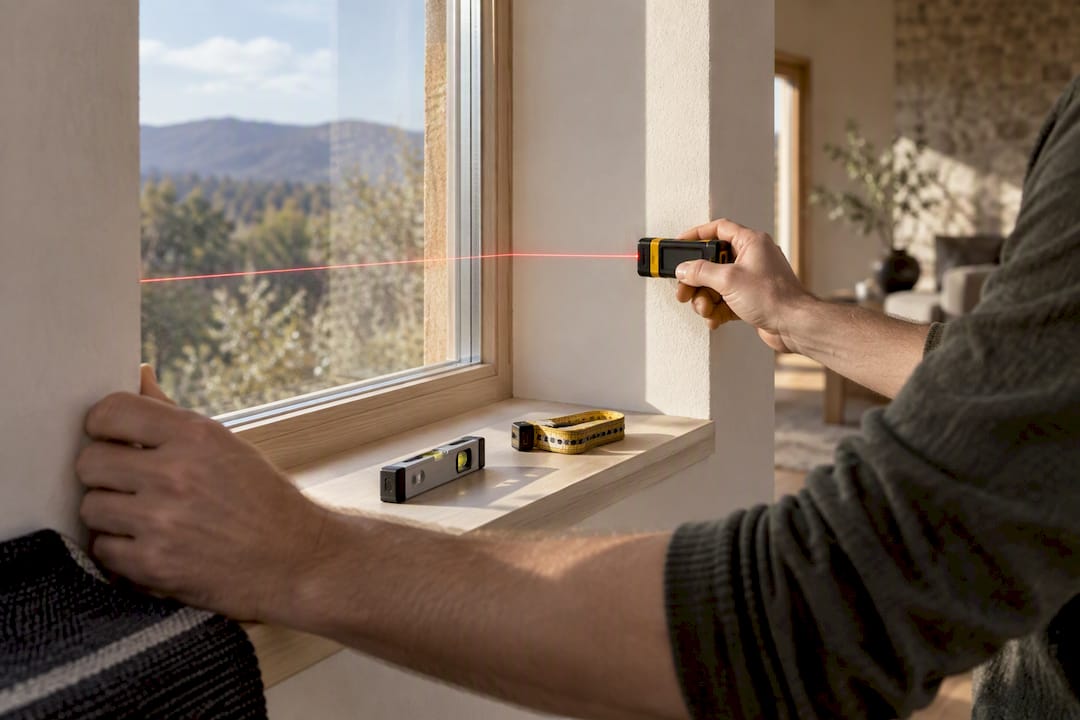
- Measure width at three points (top, middle, bottom) since older or larger frames are rarely perfectly square, and use the narrowest measurement for inside mount.
- Choose inside mount when your frame depth allows it for a built-in look, or outside mount when you want to cover more glass or hide an uneven frame.
- Mount higher than the frame on outside-mount installs. Designers recommend hanging the shade a few inches above the window to add visual height and make a wide span read as taller rather than squat.
- Check the manufacturer’s maximum single-panel width before ordering. Once you cross that threshold, expect a seam, and ask how the maker matches pattern repeats across the seam line.
- Confirm headrail reinforcement and extra lift points on any order wider than about 72 inches. Wide shades with too few lift points sag mid-span, and that’s one of the most common complaints on oversized installs.
- Schedule a pro measure for anything unusually wide, tall, or out of square. Note in your order any special requirements like motorization, reinforced brackets, or a specific stack height limit.
Pro Tip: Write your motorization and reinforcement requests directly in the order notes. A shade quoted without knowing it needs extra lift points often arrives underbuilt for its own width.
If you’d rather not eyeball any of this yourself, Value Blinds’ DIY measuring guide for Roman shades covers the exact steps, and the Perfect Fit measurement guide is built specifically for getting custom orders right the first time.
Why Do Large Roman Shades Sag or Fold Unevenly, and How Do You Fix It?
Uneven folds and mid-span sag are the two complaints installers see most often on wide shades, and both usually trace back to one of a few causes.
- Unlevel headrail throws off the whole shade. Check it with a level before blaming the fabric or lift.
- Uneven lift happens when cords or motor tension pull unevenly across a wide span. Corded systems may need cord tension adjusted, cordless spools often re-seat after a few full cycles, and motorized units usually need limits reprogrammed rather than any physical repair.
- Detached or loose rings on the back of the shade cause visible fold irregularities, and these are simple to re-sew once spotted.
- Too few lift points across a wide headrail is a design issue, not a wear issue. It shows up as sagging fabric between support points and generally means a warranty claim or a request to add lift points.
Before scheduling a repair call, run through headrail level and ring attachment first. Most uneven-fold complaints on wide installs resolve without a warranty claim once those two things check out.
What Does a Custom Large Roman Shade Cost, and How Long Does It Take?
Fabric grade, lining, lift system, and any seam or reinforcement work all stack into the final price on an oversized shade, and custom window coverings command different pricing than stock units across the industry, sometimes by a wide margin.
- Fabric and lining tier is usually the first cost driver. Blackout and thermal linings cost more than basic light-filtering fabric.
- Lift system matters too. Motorized units cost more upfront than cordless, but they save wear on very heavy panels.
- Reinforcement and seams add cost on any shade crossing standard width maximums, since extra lift points and headrail hardware aren’t optional at that scale.
- Pro measure and install is worth budgeting for on wide or unusually shaped windows, where a measuring mistake is expensive to fix afterwards.
Lead times for custom orders typically run longer than stock, and motorized units add extra time for limits programming before shipping. If your budget is tight, spend on lift and reinforcement first. Those affect how long the shade lasts. Save on fabric tier or trim detail if something has to flex.
Why Order Large Roman Shades Through Value Blinds
Custom Roman shades can be built to the exact width and drop your window needs, with cordless and motorized lift options designed for wide spans that challenge standard corded systems. Ordering free fabric swatches before committing to a large-scale purchase is a helpful option, especially for big windows where a color mistake can be costly to correct.
For anything wider than a standard opening, lean on the Perfect Fit measurement guide or the measurement tool to get your numbers right before you order. If your window is unusually wide, tall, or out of square, Professional Measuring and Installation takes that risk off your plate entirely, with a technician confirming reinforcement and lift-point needs on site. Once you know your fold style and fabric direction, browse the full Roman shades and window treatment catalog to start building your order, and note any motorization or reinforcement requests directly in your order comments so the shade arrives built for its actual size.
Styling Large Windows: A Practical Take
The seamless single-shade look is tempting, but it’s the wrong default for most big windows. Pair stationary drapery at the edges with a functional shade in the middle, or split the span into two coordinated shades when structural sense outweighs the fantasy of one flawless panel.
— Sunny
Sources
- Safety standard for operating cords on custom window coverings — Federal Register
- 13 ways to dress wide windows — Houzz
- Colossal FlexShade — Draper, Inc.
- Blindshades
FAQ
What Is the Maximum Width for a Single Roman Shade?
Most standard Roman shades top out around 96 inches wide before manufacturers require a seam or recommend splitting the window into multiple shades. Specialty oversized products exist for wider spans, but they need reinforced headrail support to prevent sagging.
Are Cordless or Motorized Shades Required by Law for Large Windows?
Federal safety rules don’t ban corded shades outright, but the operating cord standard effective since May 30, 2023 requires custom window coverings to use safer cord mechanisms, which has pushed cordless and motorized options to become the practical default, especially on large or heavy shades.
How Do You Clean Large Roman Shades?
Vacuum the fabric with a soft brush attachment regularly to remove dust before it settles into the folds, and spot clean stains with a mild fabric cleaner rather than soaking the panel. For heavier fabrics or lined shades, professional cleaning is usually safer than home washing since large panels can shrink or warp unevenly if fully wetted.
How Much Does a Custom Large Roman Shade Cost?
Pricing depends on fabric grade, lining, lift system, and reinforcement needs, so it varies significantly by configuration. Current pricing for Value Blinds’ Roman shade line is available directly on the Value Blinds storefront, where you can build a quote based on your exact measurements.
Should I Use One Shade or Two for a Very Wide Window?
Two coordinated shades are usually the safer, more durable choice once a window exceeds about 96 to 120 inches wide, since splitting the span distributes weight across separate lift systems. A single oversized shade can work, but it needs specific reinforcement and a manufacturer built for that scale.