
Article: Stop Sagging Shades: Window Coverings for Large Windows Homeowners Trust
Stop Sagging Shades: Window Coverings for Large Windows Homeowners Trust
Your best bets for big openings are motorized roller shades, panel track blinds, cellular honeycomb shades, and full-length drapery panels. Each one handles wide or tall spans without sagging or feeling flimsy. Before you buy anything, measure three width points and three height points, and confirm the vendor’s max width and weight limits. If your window tops 84 inches, motorization or a cordless system isn’t a splurge. It’s how you avoid a treatment that warps in a year.
TL;DR:
- Motorized roller shades and panel track blinds are best suited for large windows to minimize sagging and mechanical issues in wide spans.
- Inside and outside mount options, along with precise measurements at multiple points, are essential to avoid fitting and alignment problems.
- Fabric choices like blackout, light-filtering, and solar screens impact insulation, glare reduction, and UV protection, especially on floor-to-ceiling windows.
- Motorization becomes necessary for windows wider than 84 inches to ensure smooth operation and safety, with motorized systems also aiding alignment in multi-panel setups.
- Proper structural reinforcement and accurate sizing are critical to prevent distortion, sagging, and ensure longevity in large-window treatments.
Table of Contents
- What Are the Best Window Coverings for Large Windows?
- What’s the Best Window Treatment for Your Window’s Shape?
- How Do Fabric and Material Choices Perform at Scale?
- Should You Choose Motorized, Cordless, or Manual Operation?
- How Do You Measure and Plan for a Large-Window Order?
- How Do You Style a Large Window Without It Looking Bare?
- What Does It Cost to Cover a Large Window?
- Value Blinds’ Take: What Actually Reduces Risk on Large-Window Projects
- Ready to Order? Here’s How to Get Your Large Windows Covered Right
- Sources
What Are the Best Window Coverings for Large Windows?
Big windows are gorgeous until you try to cover them. Standard blinds weren’t built for the job, and picking the wrong style means sagging fabric, a headrail that bows, or a remote you wish you’d bought in the first place. Here’s how the main categories stack up. 🪟
Panel track blinds work like sliding door panels. They’re the go-to for sliding glass doors and wide walls of glass because they glide on a track instead of tilting or rolling. Operation is smooth, either wand or motorized, and mounting is straightforward since the track carries the load, not a single roller tube.
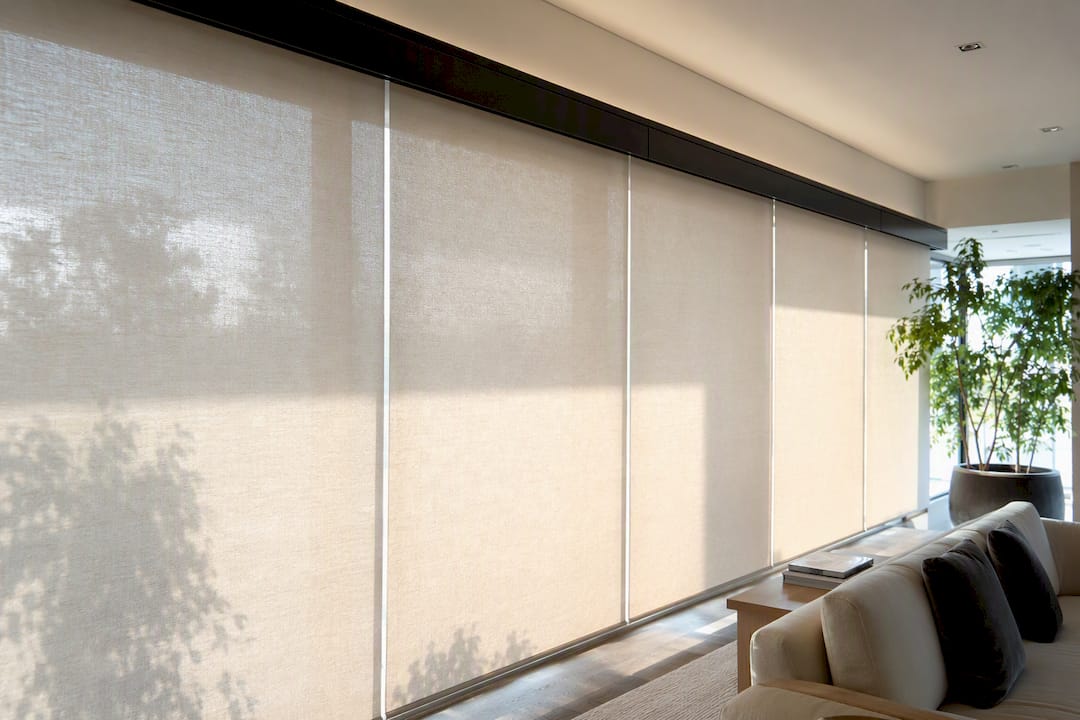
Motorized roller shades are the current favorite for wide single windows and picture windows. A motor does the lifting, literally, so you’re not wrestling a cord across an 8-foot span. Fabric options range from sheer to full blackout, and the motorized roller shades built for large-window use tend to handle wide widths far better than manual versions.
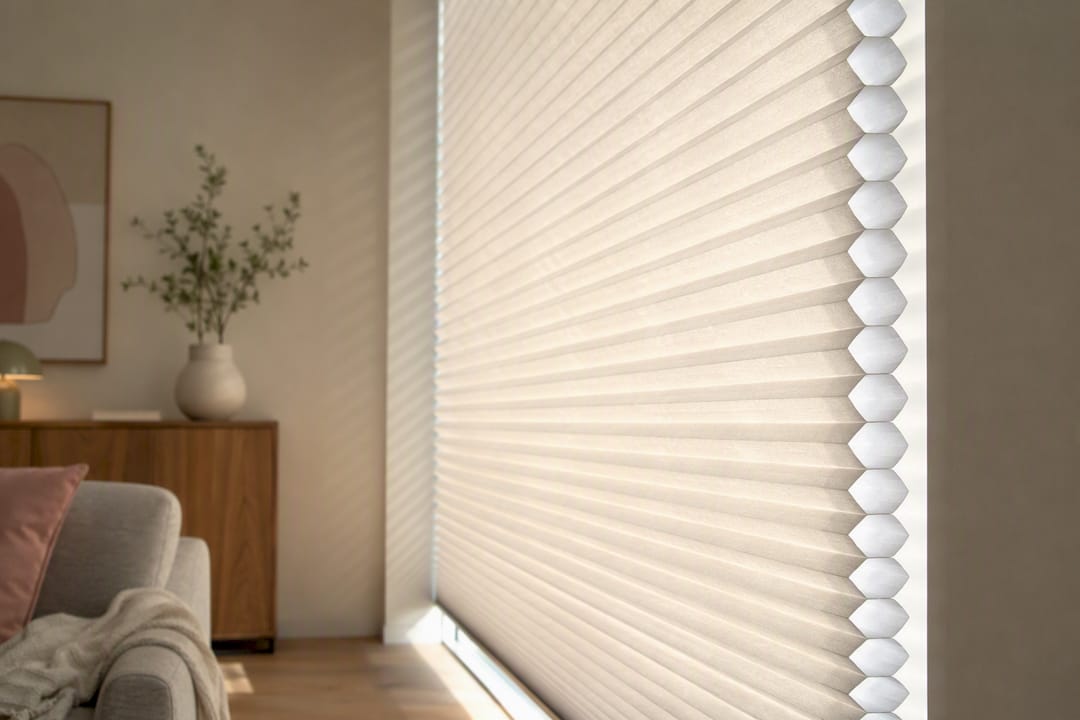
Cellular (honeycomb) shades trap air in their pockets, giving you real insulation along with light control. They shine on tall or floor-to-ceiling windows where you want energy savings without losing style.
Long drapery panels solve the visual problem more than the mechanical one. Floor-to-ceiling curtains make a room feel taller and can layer over a functional shade for a finished look.
Vertical blinds and shutters round out the list, though they come with caveats for scale:
- Vertical blinds handle width well and suit sliding doors, but the vanes can feel dated unless updated to fabric or woven styles.
- Plantation shutters look sharp on medium windows but get heavy and expensive fast once you scale them past 60 to 70 inches wide.
- Manual roller and cellular shades work fine on smaller large windows but often need a cord loop or continuous cord system once width climbs past 6 feet, which raises child-safety concerns.
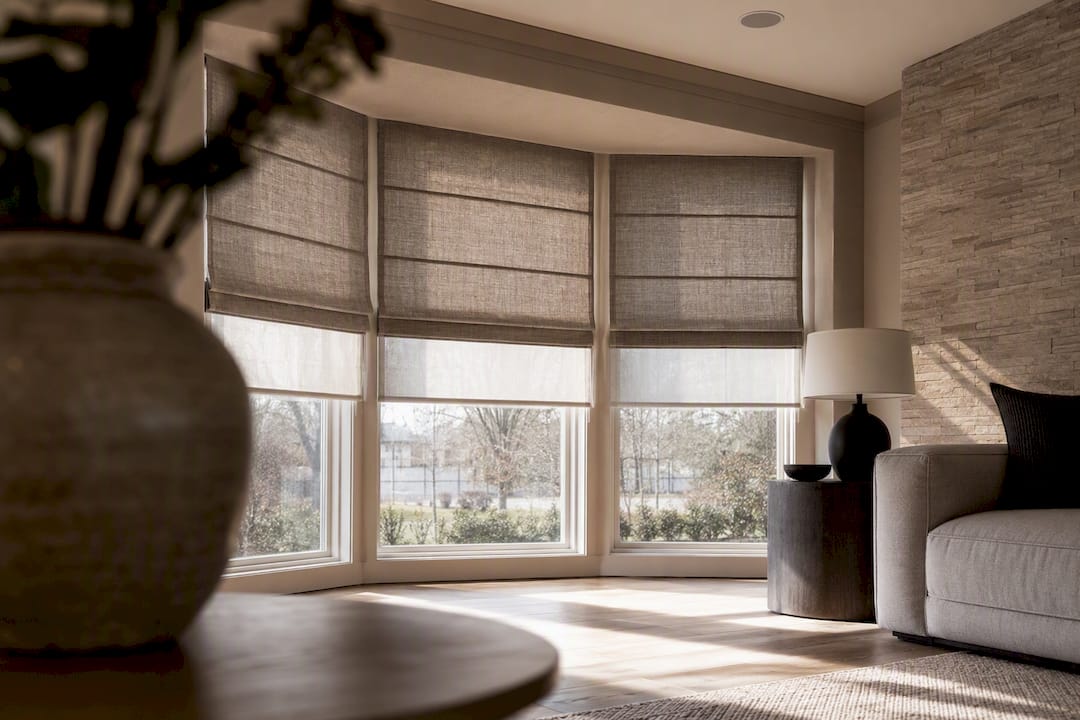
- Woven wood shades bring texture and warmth, and they’re trending for a reason, but they add weight, so check the max width your fabric can support.
The right pick depends less on personal taste and more on the window’s actual dimensions and how much daily operation it needs to survive.
What’s the Best Window Treatment for Your Window’s Shape?
Not every large window is large in the same way, and that distinction matters more than most buyers realize. A window that’s 100 inches wide and 40 inches tall needs a different solution than one that’s 40 inches wide and 108 inches tall. Match the treatment to the geometry, not just the square footage.
-
Tall, skinny windows (over 80 inches tall, under 36 inches wide): go with a single motorized roller shade or a cellular shade mounted inside the frame. Avoid horizontal blinds here. The slats look chopped up on a narrow, elongated opening, and the ladder cords tend to bow over that length.
-
Floor-to-ceiling windows: pair a motorized roller shade for daily light control with a sheer or light-filtering layer behind it. This combination gives you privacy during the day and full blackout at night without swapping hardware. A continuous headrail across the full height keeps the look clean.
-
Multi-panel walls of glass (think three or four windows in a row): use a continuous headrail system rather than separate treatments per pane. Coupled panels on one track keep sightlines even and avoid the “patchwork” look you get when three separate shades don’t align.
-
Sliding patio doors: panel track blinds are the standard answer, and long drapery works as a softer alternative if you don’t need daily light-blocking. Vertical blinds still work here too, though they read as more utilitarian than decorative.
-
Oversized picture windows (wide and short, like a 120 by 48 inch bay-style window): motorized roller shades or panel track systems both work, but confirm the fabric’s max width before ordering. A single-piece roller shade past a certain width needs reinforced tubing or it will bow in the middle.
The common thread across all five: coupling multiple panels or using a continuous headrail keeps your window looking intentional instead of assembled from mismatched parts.
How Do Fabric and Material Choices Perform at Scale?
Lighter fabrics almost always outperform heavy slats once you’re covering serious square footage. A 100-inch-wide wood blind carries a lot of dead weight across its tilt mechanism, and that weight is exactly what causes sagging, uneven tilting, and a shortened lifespan. Woven fabric, on the other hand, distributes tension differently and holds up better across a wide roller tube.
Opacity is where you’ll make your biggest functional decision:
- Blackout fabric suits bedrooms and media rooms where you want zero light bleed, and it’s the fabric manufacturer buyer’s guides recommend for rooms where sleep quality matters.
- Light-filtering fabric softens harsh sun without killing the daylight, a solid pick for living rooms and kitchens.
- Solar/screen fabric cuts glare and UV while keeping your view intact, ideal for sunrooms or west-facing walls.
- Sheer fabric adds privacy during daylight hours with minimal light loss, often layered under a heavier shade.
Pro Tip: If a room gets brutal afternoon sun, don’t default straight to blackout. A solar shade with a tight weave cuts glare and heat gain while still letting you see outside, which most people actually prefer over a totally dark room.
Cellular shades deserve a specific callout for energy performance. Their honeycomb structure traps a layer of air against the glass, and that trapped air is what buyer’s guides for large window treatments point to as a meaningful factor in reducing heat transfer through big expanses of glass, which tend to be the weakest link in a home’s insulation.
On durability: UV exposure fades fabric over time no matter what you choose, but tightly woven synthetics and solution-dyed fabrics resist fading better than natural fibers. Cleaning-wise, roller and cellular shades wipe down easily with a microfiber cloth, while drapery needs occasional dry cleaning or a gentle vacuum with a brush attachment.
Should You Choose Motorized, Cordless, or Manual Operation?
Once a window crosses roughly 84 inches in width, motorization stops being a nice-to-have and starts being a practical necessity. Community-tested experience from home design professionals backs this up: standard off-the-shelf blinds that rely on a manual lift cord routinely sag or warp once they cross that threshold, because the cord and lift system just weren’t engineered for that much fabric.
Cordless systems solve a different problem: child safety. Any home with kids or pets benefits from a spring-lift or motorized system with no dangling cord loop. Manual lift-cord systems are cheaper up front but come with a real safety tradeoff on wide windows where cord length increases.
For multi-panel setups, hembar alignment and coupling hardware matter more than people expect. Premium motorized roller systems use alignment technology to keep multiple panels synced within a fraction of an inch, which is exactly what premium wired roller shade systems are engineered to do across very wide spans. Without that syncing, one panel drifts lower than its neighbor and the whole wall of glass looks off.
Control systems have gotten simple. Most motorized lines now offer app control alongside a physical remote, and many integrate with smart-home platforms so your shades open on a schedule or with a voice command.
Mounting matters just as much as the fabric. A wide or heavy shade needs a headrail anchored into real structural blocking, not just drywall. Ask your installer to confirm this before drilling anything.
How Do You Measure and Plan for a Large-Window Order?
Measuring a large window wrong is the single most common reason custom treatments end up returned or reordered. Here’s the process that avoids that headache:
-
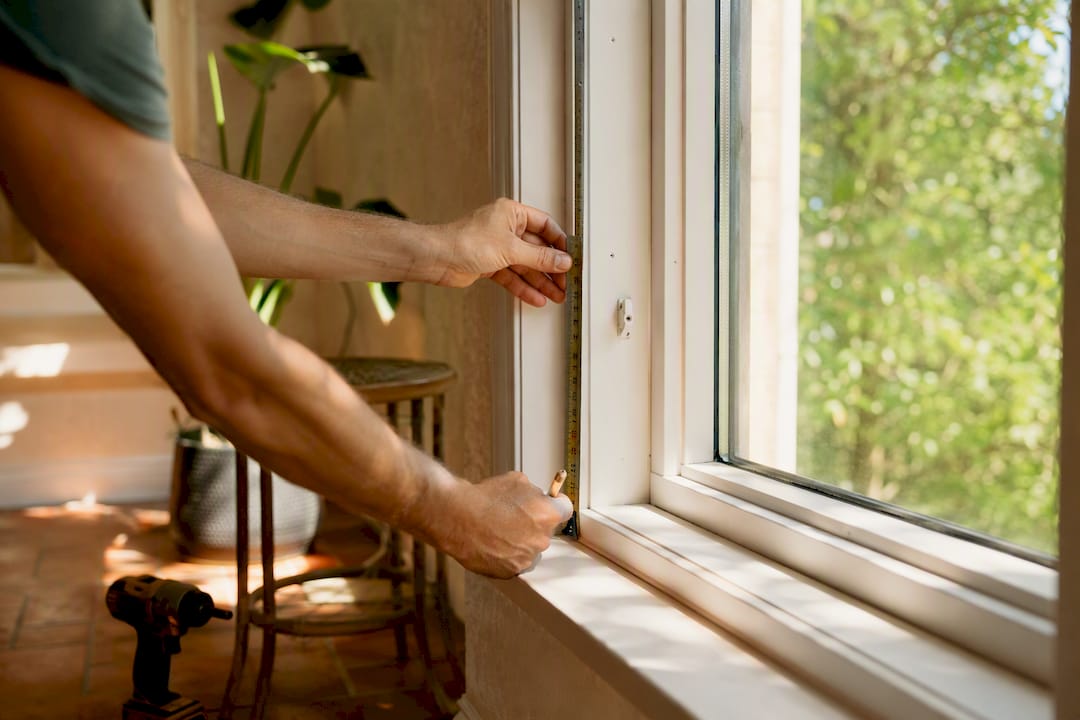
Measure width at three points: top, middle, and bottom of the opening. Older homes especially can be out of square by half an inch or more, and that discrepancy changes your order.
-
Measure height at three points: left, center, and right. Log the smallest width and the largest height for an inside mount, since that keeps the shade from binding against the frame.
-
Decide inside versus outside mount. Inside mount looks cleaner but requires enough frame depth. Outside mount hides an uneven frame and typically needs 3 to 4 inches of overlap on each side for full light blockage.
-
Confirm the vendor’s max width and weight specs before ordering. Ask directly whether your fabric choice needs a reinforced or dual-tube headrail, since some fabrics simply weigh more per square foot than others.
-
Photograph the window straight-on and from an angle, and note any obstructions like handles, trim, or outlet placement. Send these photos along with your measurements when requesting a quote.
A step-by-step measuring guide for custom blinds walks through each of these points in more detail, and it’s worth a slow read before you pick up a tape measure. Manufacturer technical specs also matter here: installation notes for large roller shade systems call out that very wide shades often need structural blocking and sometimes carbon-fiber reinforcement tubes to prevent the fabric from bowing at the center.
How Do You Style a Large Window Without It Looking Bare?
Scale is the whole game here. A large window with a short, skimpy curtain rod looks unfinished, no matter how nice the fabric is. Mount your drapery hardware close to the ceiling, extending well beyond the window frame on each side, and let the panels run all the way to the floor. That extra height and width tricks the eye into seeing a taller, grander room.
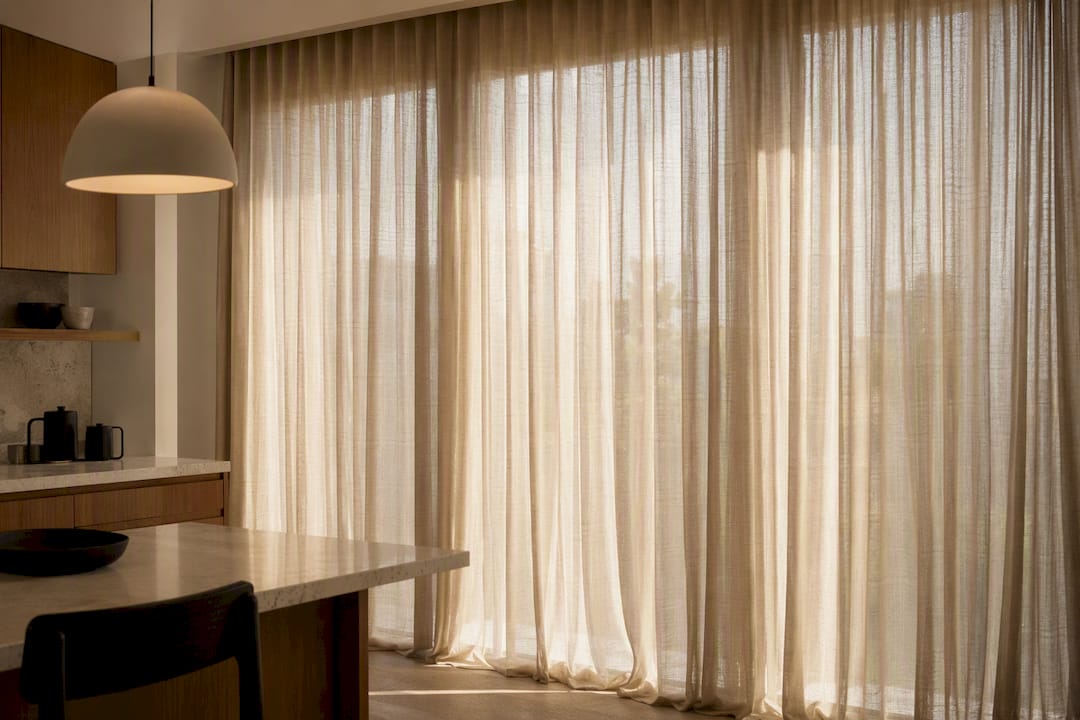
Layering gives you flexibility that a single treatment can’t. A sheer panel behind a heavier drape, or a light-filtering roller shade under a decorative curtain, lets you dial privacy and light up or down depending on the hour.
A few more styling notes worth keeping in mind:
- Scale your pattern to the window. A tiny print disappears on a wall of glass, while an oversized pattern can overwhelm a smaller large window.
- Solid or subtly textured fabrics tend to age better visually than bold prints on very large spans.
- Decide early whether you want the headrail visible as a design element or hidden with a fabric-wrapped cornice or valance.
- If you’re covering a sliding door alongside a nearby window, coordinate the treatments so the transition doesn’t look like two unrelated projects. Interior designers pairing large-window treatments with glass door installations often treat the whole wall as one visual unit rather than window and door separately.
Getting the proportions right the first time saves you from redoing the whole wall in a year.
What Does It Cost to Cover a Large Window?
Price on large-window treatments swings widely, and the biggest drivers are custom sizing, motorization, fabric grade, and whether you need structural reinforcement for the headrail. A basic manual roller shade in a standard fabric costs far less than the same shade in blackout fabric with a motor and app control.
Rough budget bands to plan around:
- Economy: manual roller or cellular shades in standard light-filtering fabric, cordless lift, basic mounting hardware.
- Mid-range: motorized roller or cellular shades, premium fabric options like solar screen or blackout, standard headrail.
- Premium: panel track systems or motorized cellular shades with app and smart-home integration, reinforced headrails, and coupled multi-panel setups for very wide spans.
Cellular shades carry one advantage worth weighing against sticker price: their insulating honeycomb structure can chip away at heating and cooling costs over time, which partially offsets the higher upfront cost compared to a basic roller shade.
Value Blinds’ Take: What Actually Reduces Risk on Large-Window Projects
Most guides tell you what to buy without addressing what actually goes wrong: buyers underestimate weight, skip the measuring step, and assume a standard product will just “work” on an oversized opening. It rarely does. The technical constraints on large windows, fabric weight, headrail strength, panel coupling, aren’t fine print. They’re the entire ballgame.
That’s why Value Blinds leans so heavily on its measurement guides, free swatches, and design studio tools before a customer ever finalizes an order. Custom sizing paired with motorized cellular and roller lines exists specifically to solve the sagging, misalignment, and light-gap problems that plague off-the-shelf products on wide or tall openings. Reducing buyer risk isn’t a marketing line. It’s the actual product strategy.
— Sunny
Ready to Order? Here’s How to Get Your Large Windows Covered Right
You’ve got the categories, the measuring steps, and the material tradeoffs. The next move is turning that into an actual order without the guesswork of picking fabric off a tiny screen swatch. Value Blinds gives you free fabric swatches shipped to your door, so you can hold the real material up against your wall before committing to blackout, solar, or light-filtering.
Start in the Window Treatment Design Studio to plan your exact configuration, whether that’s a single motorized roller across a picture window or a coupled panel track for sliding doors. If you already know your specs, browse the full blinds collection or go straight to a cordless option if child safety is a priority in your home. Every custom order comes backed by warranty coverage and expert support, so if something’s off with the fit or the mechanism, you’re not stuck troubleshooting alone. Request your swatches, run your measurements through the design studio, and get a quote that accounts for your window’s actual weight and width limits, not a generic size chart.