

Eco Blinds: Enhancing Homes With Sustainable Style
Finding window treatments that reflect your values no longer means sacrificing design or comfort. As eco-conscious trends grow across North America, more homeowners and interior decorators want options that blend style with true environmental responsibility. Eco blinds stand out for their use of sustainable materials and customizable features, offering insulation that supports both lower energy bills and a healthier planet, all while enhancing the unique look of your space.
Table of Contents
- Eco Blinds Defined: Materials And Concepts
- Major Types Of Eco-Friendly Blinds Explained
- How Eco Blinds Boost Energy Efficiency
- Choosing Eco Blinds: Costs And Certifications
- Comparing Eco Blinds To Conventional Alternatives
Key Takeaways
| Point | Details |
|---|---|
| Eco Blinds Prioritize Sustainability | They utilize sustainable materials like bamboo and hemp, reducing environmental impact through responsible sourcing and manufacturing processes. |
| Energy Efficiency Benefits | Eco blinds significantly minimize heating and cooling costs by providing superior insulation, maintaining comfortable home temperatures year-round. |
| Importance of Certifications | Look for reliable certifications like FSC and GOTS to ensure materials meet genuine environmental standards and combat greenwashing. |
| Long-Term Investment Value | Although eco blinds may have a higher upfront cost, their durability and energy-saving benefits typically result in lower lifetime expenses compared to conventional options. |
Eco Blinds Defined: Materials and Concepts
Eco blinds represent a shift toward window treatments that minimize environmental damage while maintaining style and performance. Unlike conventional blinds, eco blinds prioritize sustainable sourcing, reduced manufacturing impact, and end-of-life recyclability or biodegradability. They blend environmental responsibility with the customization and functionality homeowners expect.
The foundation of eco blinds lies in material selection. Natural fibers like bamboo, hemp, and organic cotton dominate the market for good reason. Bamboo grows rapidly, regenerating in just 3-5 years without requiring pesticides or fertilizers. Hemp offers durability with minimal chemical processing. Organic cotton eliminates synthetic pesticides used in conventional cotton production.
Recycled and upcycled materials form another pillar of eco blinds. Post-consumer recycled plastics and reclaimed wood reduce landfill waste while delivering performance. This approach transforms waste streams into functional window coverings. Sustainable materials increasingly feature responsibly harvested wood certified by organizations like FSC, ensuring forests remain intact for future generations.
Key material categories include:
- Biomaterials – naturally renewable fibers that break down without persistent environmental impact
- Green composites – engineered materials combining natural fibers with low-impact binders
- Recycled content fabrics – woven from reclaimed textiles and plastic recovery programs
- Certified wood – sourced from managed forests maintaining biodiversity
Beyond materials, eco blinds incorporate innovative design principles. Minimal waste manufacturing reduces production byproducts. Biomimicry and nanotechnology enable manufacturers to create durable, lightweight treatments using less material overall. Energy-efficient designs enhance insulation, reducing heating and cooling loads year-round.
The manufacturing process itself reflects sustainability values. Responsible companies minimize water usage, eliminate toxic dyes, and employ closed-loop production systems where waste streams get repurposed rather than discarded.
Eco blinds aren’t a compromise between style and sustainability—they’re window treatments engineered to deliver both without sacrificing performance or aesthetic appeal.
When selecting eco blinds, verify that manufacturers provide transparent sourcing information and third-party certifications. Labels from organizations like FSC, GOTS (Global Organic Textile Standard), or Cradle to Cradle indicate genuine environmental commitment rather than marketing language.
Understanding these foundational concepts helps you make informed decisions that align your home aesthetic with environmental values. Your window treatments can reflect both personal style and planetary responsibility.
Pro tip: Request material samples and verify certifications before purchasing—this ensures you receive genuinely eco-friendly products rather than greenwashed alternatives that merely appear sustainable.
Here’s how common eco blind materials stack up in sustainability and benefits:
| Material Type | Environmental Impact | Durability | Best Use Location |
|---|---|---|---|
| Bamboo | Rapidly renewable, low chemicals | High | Living rooms, offices |
| Hemp | Minimal processing, low water | Very high | Bedrooms, dens |
| Organic Cotton | Pesticide-free growing | Moderate | Bedrooms, nurseries |
| Recycled Plastics | Diverts waste, recyclable | High | Bathrooms, kitchens |
| FSC-certified Wood | Forest-friendly, verified | Very high | Dining rooms, studies |
Major Types of Eco-Friendly Blinds Explained
Eco-friendly blinds come in several distinct styles, each offering unique benefits for different rooms and preferences. Understanding these options helps you choose treatments that match your home’s aesthetic while delivering genuine environmental value.
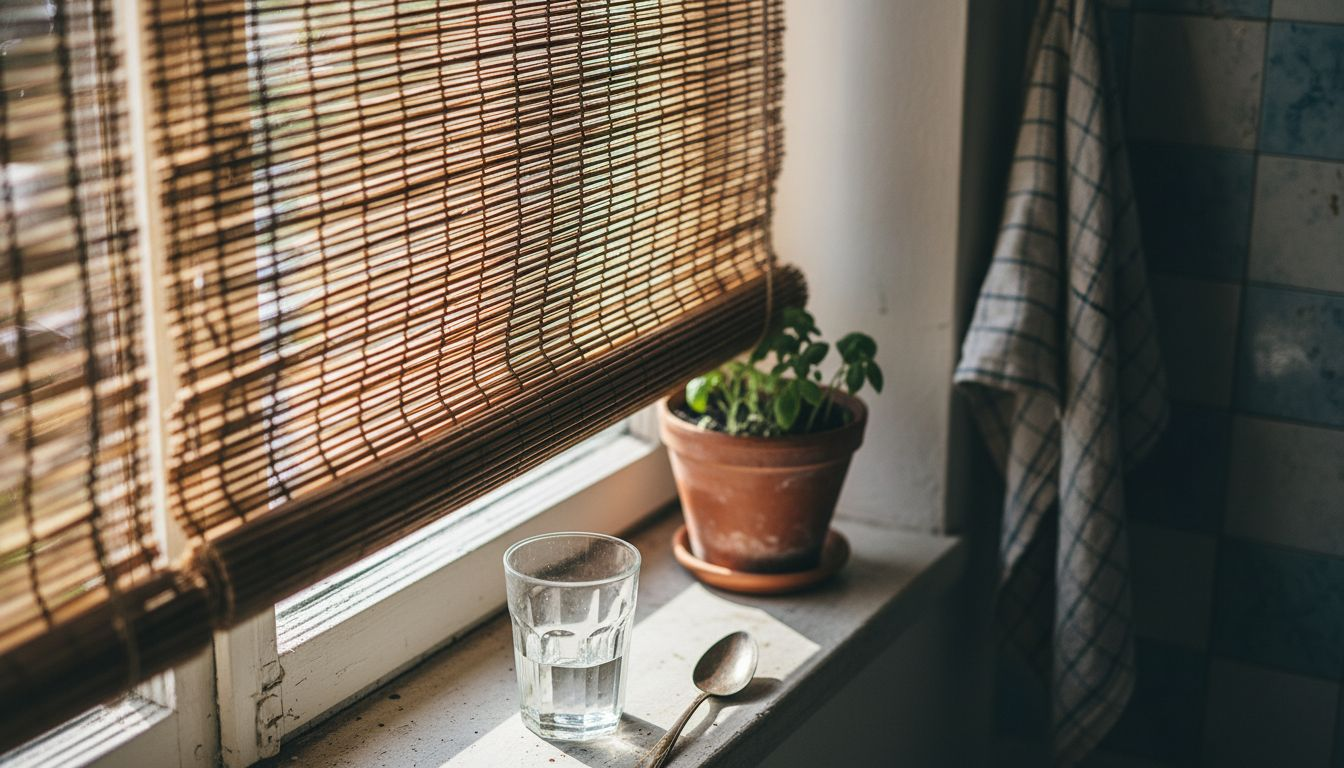
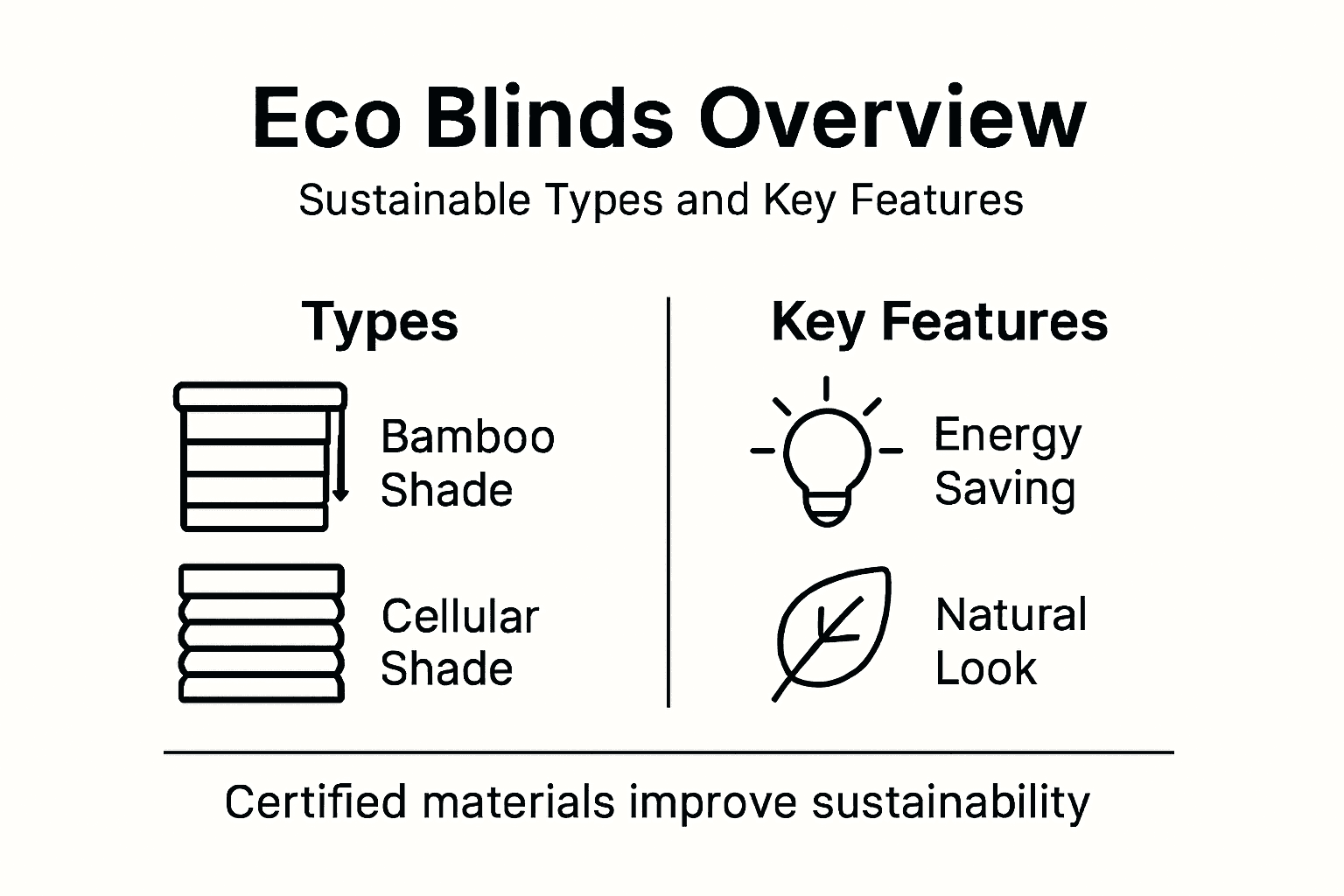
Bamboo roller shades represent one of the most popular eco choices. Bamboo grows rapidly without pesticides, making it inherently sustainable. These shades roll smoothly for easy light control and pair seamlessly with modern or minimalist decor. They’re durable enough to last years while remaining lightweight and simple to install.
Natural fiber cellular shades use organic materials like hemp or cotton to create insulating air pockets. These shades excel at temperature regulation, keeping heat in during winter and blocking it during summer. Your energy bills drop noticeably when cellular shades replace older window coverings.
Common eco-friendly blind types include:
- Bamboo roller shades – fast-growing material with minimal environmental impact
- Organic cotton cellular shades – natural insulation that reduces energy consumption
- Hemp roman shades – durable fabric with timeless aesthetic appeal
- Recycled plastic vertical blinds – transforms waste into functional window treatments
- FSC-certified wood blinds – responsibly harvested with forest preservation verified
Roman shades crafted from sustainable fabrics offer elegant, tailored styling. They fold neatly when raised and hang flat when lowered, creating clean lines. Organic linen or hemp versions provide texture while maintaining eco-conscious values.
Recycled content shades give new life to plastic waste. Post-consumer recycled materials create durable, waterproof options ideal for kitchens and bathrooms. These shades perform like conventional plastics without the virgin material extraction.
The choice depends on your room’s function and your style preferences. Living rooms often showcase statement pieces like roman shades, while bathrooms benefit from moisture-resistant recycled options.
The best eco-friendly blind isn’t the greenest material—it’s the one you’ll actually use for the next decade, reducing the need for replacements.
Each type offers distinct advantages beyond sustainability. Roller shades maximize light control, cellular shades optimize insulation, and roman shades deliver sophisticated elegance. Many homeowners layer multiple types throughout their homes.
Pro tip: Match your blind type to each room’s primary function: choose insulating cellular shades for bedrooms, moisture-resistant recycled options for bathrooms, and statement-making roman shades for living spaces to maximize both performance and aesthetic impact.
How Eco Blinds Boost Energy Efficiency
Eco blinds do more than look good—they actively reduce the energy your home consumes for heating and cooling. This dual benefit of style and performance makes them a smart investment for eco-conscious homeowners seeking lower utility bills.
Windows represent one of the biggest sources of energy loss in most homes. Heat escapes through glass during winter, and sunlight floods in during summer, forcing your HVAC system to work overtime. Eco blinds block these temperature transfers, creating an invisible insulation layer at your windows.
Cellular shades excel at this job because of their honeycomb structure. Air pockets trapped within the fabric resist heat flow, keeping warmth inside during winter and blocking solar gain during summer. Heat loss reduction through windows drops by up to 33% when quality blinds are installed, according to independent research.
Key energy efficiency benefits include:
- Reduced heating costs – insulating blinds minimize warmth escape during cold months
- Lower cooling expenses – blocking sunlight reduces air conditioning demand in summer
- Better temperature control – maintains consistent comfort without constant thermostat adjustments
- Year-round savings – benefits accumulate across all seasons
- Occupant comfort – eliminates cold spots and drafts near windows
Smart, motorized eco blinds take efficiency further. Automated shades equipped with sensors adjust throughout the day, optimizing natural light and temperature. Research shows automated insulating shades can reduce energy consumption by approximately 25% in heating and cooling seasons.
The material matters too. Natural fiber blinds like bamboo and organic cotton provide moderate insulation, while cellular designs with multiple honeycomb layers deliver superior performance. Thicker fabrics block more solar radiation without blocking all natural light.
Your geographic location influences savings potential. Homes in extreme climates see the most dramatic reductions in energy use. Even moderate climates benefit from year-round efficiency gains.
Every percentage point of energy reduction translates directly into lower utility bills—and eco blinds accomplish this while eliminating the need for heavy curtains or awkward layering.
Installation matters. Blinds must fit snugly within your window frame to prevent warm or cool air from leaking around edges. Proper measurement and installation ensure maximum thermal performance.
The payback period varies based on energy costs in your area and climate severity. Most homeowners recover their investment within 3 to 7 years through reduced utility expenses.
Pro tip: Combine cellular eco blinds with light-colored exterior roller shades during summer to maximize cooling efficiency, and use insulated roman shades at night in winter to trap warm air that would otherwise escape through windows.
Choosing Eco Blinds: Costs and Certifications
Eco blinds cost more upfront than conventional options, but certifications and quality considerations determine whether that premium delivers genuine environmental value. Understanding pricing and verification standards helps you make informed purchases that align with your budget and values.
Price varies significantly based on materials and construction. Bamboo roller shades typically range from $150 to $400 per window, while organic cotton cellular shades cost $200 to $600. Natural fiber roman shades run $250 to $700 depending on fabric quality and customization. Recycled plastic options fall in the mid-range at $180 to $500.
Certifications matter tremendously when evaluating eco claims. Not all green-sounding products are genuinely sustainable. Third-party verification prevents greenwashing and ensures manufacturers meet actual environmental standards.
Key certifications to verify include:
- FSC (Forest Stewardship Council) – confirms responsibly harvested wood from managed forests
- GOTS (Global Organic Textile Standard) – verifies organic fiber production without synthetic pesticides
- Cradle to Cradle – assesses entire product lifecycle from material sourcing through end-of-life
- OEKO-TEX – ensures textiles meet strict chemical safety requirements
- GreenGuard Gold – certifies low volatile organic compound emissions
Why certifications cost more is straightforward. Manufacturers undergo rigorous audits, pay certification fees, and source materials through verified sustainable channels. These expenses get passed to consumers, but they guarantee you’re purchasing genuine eco products.
Understanding the cost of custom blinds helps you budget appropriately while recognizing that quality craftsmanship and sustainable practices require investment. Cheaper alternatives often cut corners on environmental standards.
The payback calculation extends beyond energy savings. Consider durability—quality eco blinds last 10 to 15 years, while budget options might need replacement in 5 to 7 years. Longevity reduces waste and environmental impact per year of use.
A certified eco blind that lasts 12 years delivers better environmental and financial value than an uncertified alternative lasting 6 years, even at higher initial cost.
Look for manufacturers providing transparent documentation. Legitimate eco blinds companies publish certification details, material sourcing information, and manufacturing practices openly. Red flags include vague environmental claims without third-party verification.
Customization adds cost but increases sustainability. Made-to-measure blinds fit precisely, eliminating gaps that waste energy and reducing the likelihood of future replacements due to improper fit.
When comparing prices, factor in warranty coverage. Eco blind manufacturers often provide longer warranties reflecting confidence in durability. Ten-year warranties signal quality craftsmanship.
Pro tip: Request free material samples and certification documentation before purchasing to verify authenticity, then calculate the 10-year cost difference between certified eco blinds and conventional options—the environmental investment typically pays for itself through energy savings within 5 to 7 years.
Comparing Eco Blinds to Conventional Alternatives
The choice between eco blinds and conventional alternatives extends beyond aesthetics. Environmental impact, durability, health considerations, and long-term costs distinguish sustainable options from standard window treatments.
Conventional blinds typically use vinyl, polyester, or non-certified wood. Manufacturing these materials relies on petroleum extraction, synthetic chemical processing, and energy-intensive production. Disposal creates landfill waste that persists for decades, as vinyl and synthetic fabrics rarely biodegrade.
Environmental lifecycle differences tell the real story. Eco-friendly systems demonstrate improved sustainability performance by reducing resource extraction, lowering emissions throughout manufacturing, and enabling recyclability or biodegradation at end-of-life. Conventional blinds accumulate environmental debt at every production stage.
Key comparison areas include:
- Material sourcing – eco blinds use renewable or recycled inputs; conventional rely on virgin petroleum and non-renewable resources
- Manufacturing emissions – sustainable production minimizes chemical processing and energy consumption
- Indoor air quality – eco blinds release fewer volatile organic compounds than synthetic alternatives
- Durability – quality eco blinds often outlast budget conventional options by 5+ years
- End-of-life impact – sustainable materials biodegrade or recycle; conventional blinds persist in landfills
- Energy efficiency – natural fiber and cellular eco blinds outperform thin vinyl in thermal performance
Conventional blinds often seem cheaper initially. A basic vinyl blind costs $80 to $150 per window. But replacement frequency changes the equation. Budget conventional blinds deteriorate in 5 to 7 years from UV exposure and material brittleness. Eco blinds lasting 12 to 15 years reduce replacement waste and total cost per year of use.
Health considerations matter too. Conventional synthetic blinds release off-gassing chemicals into your home’s air for months after installation. Eco blinds made from natural fibers eliminate this concern, benefiting families with chemical sensitivities.
Comparing only purchase price ignores durability, replacement cycles, energy savings, and health benefits—the real financial advantage shifts decisively toward eco blinds when calculated over 10 years.
Understanding roller shades versus blinds helps you evaluate which style performs best for your needs. Style choice matters less than material quality when assessing environmental impact.
Maintenance requirements differ too. Eco blinds typically need gentle dusting and occasional spot-cleaning, similar to conventional options. But their longevity means fewer cleaning cycles over their lifetime.
The sustainability gap widens with each passing year. Your home’s window treatments represent an environmental choice you make once but live with for over a decade.
Pro tip: Calculate the true cost per year of use by dividing total investment by expected lifespan, then compare eco blinds (12-15 years) to conventional options (5-7 years) to reveal the financial advantage of sustainable choices.
Compare eco blinds and conventional blinds across key decision factors:
| Factor | Eco Blinds | Conventional Blinds |
|---|---|---|
| Material Origin | Renewable/recycled sources | Petroleum-based, virgin wood |
| Lifespan | 10-15 years | 5-7 years |
| Indoor Air Quality | Low chemicals, better for health | Often emits VOCs |
| Energy Efficiency | Superior insulation properties | Limited thermal performance |
Elevate Your Home with Sustainable and Stylish Eco Blinds
Choosing eco blinds is about solving real challenges like reducing energy loss, improving indoor air quality, and committing to materials that protect the planet without sacrificing your home’s beauty. You want window treatments that offer durability, energize your space, and align with your values around sustainability. With options like bamboo and organic cotton cellular shades, plus smart designs engineered to minimize waste and maximize insulation, your blinds become more than decor—they become a statement of responsible living.
Discover how you can blend eco-conscious materials and innovative craftsmanship by exploring our exclusive collection of Natural Bamboo Blinds - Eco-Friendly Window Treatments for Stylish Homes or browse our full range of High-Quality Blinds - Upgrade Your Space with Stylish & Functional Blinds to find the perfect fit for your home’s style and thermal needs. Every choice you make supports healthier air, energy savings, and lasting beauty.
Take control of your home’s comfort and environmental impact today. Visit Value Blinds to customize your eco-friendly window treatments with free samples, expert guidance, and simple online ordering. Start your journey toward sustainable style now and experience the difference that premium, conscious blinds bring to your living space.
Frequently Asked Questions
What are eco blinds made of?
Eco blinds are typically made from sustainable materials such as natural fibers like bamboo, hemp, and organic cotton, as well as recycled and upcycled materials like post-consumer plastics and reclaimed wood.
How do eco blinds improve energy efficiency in homes?
Eco blinds help reduce energy consumption by providing insulation that limits heat transfer through windows. Cellular shades, for instance, trap air pockets that enhance thermal performance, leading to lower heating and cooling costs.
Are eco blinds durable compared to conventional blinds?
Yes, eco blinds often have a longer lifespan compared to conventional blinds. Many eco options, like those made from bamboo or FSC-certified wood, can last 10-15 years, whereas conventional blinds might need replacement every 5-7 years.
What certifications should I look for when choosing eco blinds?
When selecting eco blinds, look for certifications such as FSC (Forest Stewardship Council), GOTS (Global Organic Textile Standard), and Cradle to Cradle. These labels verify that the products meet specific environmental and sustainability standards.