


Interior Design with Blinds: Style Every Window Right
The smartest move you can make with window treatments is layering blinds with curtains. Blinds handle the performance side (light control, privacy, glare reduction), while curtains bring the mood, texture, and visual height that make a room feel finished. Get that pairing right, and your windows stop being an afterthought and start being one of the best design features in the house.
Here’s what the layered approach actually involves:
- Blinds as the performance layer: Choose a blind type suited to the room’s light needs, whether that’s a solar shade for a sun-drenched living room or a blackout cellular shade for a bedroom.
- Curtains as the mood layer: Hang curtain panels high below the ceiling and wide to add softness, frame the window, and visually lift the room.
- Mounting matters: Position the blind tight against the glass for maximum light control, and hang curtains wider than the window frame so panels park off the glass during the day.
- Match blind type to room function: Moisture-prone kitchens and bathrooms call for easy-clean blinds; living rooms and bedrooms benefit from layered fabric treatments.
- Budget strategically: Start with a quality blind, then add curtain panels later. The blind does the heavy lifting; the curtains add the polish.
Table of Contents
- 1. What are the main blind types and how do you style them?
- 2. Design tips and current trends for styling blinds in your home
- 3. How to choose, measure, and install blinds the right way
- Key Takeaways
- Valueblindsdirect makes custom window treatments easy
1. What are the main blind types and how do you style them?
Knowing your blind options is the foundation of any good window treatment plan. Each type has a distinct personality, and pairing it with the right curtain fabric takes the whole look from functional to genuinely beautiful. Here’s a breakdown of the most popular styles and how to work with them. ✨
Honeycomb (cellular) shades
Cellular shades are the workhorses of the blind world. Their honeycomb cell structure provides excellent insulation and sound dampening, which makes them especially useful in street-facing rooms or urban apartments where noise and drafts are real concerns. They come in light-filtering and blackout versions, so you can pick the right opacity for each room.
Styling tip: Pair a light-filtering cellular shade with floor-length linen panels in a warm neutral. The shade disappears into the window during the day, and the panels do all the decorative work.
- Best rooms: bedrooms, nurseries, home offices, street-facing living rooms
- Curtain pairing: soft linen, cotton voile, or textured weaves
Roman shades
Roman shades fold into clean horizontal pleats when raised, giving windows a tailored, architectural look without the bulk of full drapery. They work beautifully in kitchens, breakfast nooks, and smaller windows where curtain panels would feel oversized or awkward.
Styling tip: Layer a woven Roman shade under slim pinch-pleat side panels for a look that’s layered but not heavy. Keep the Roman in a solid or subtle texture so the panels can carry any pattern.
- Best rooms: kitchens, dining rooms, small bedrooms, bay windows
- Curtain pairing: pleated drapes, ripplefold panels, or sheer voiles
Wood and faux wood blinds
Wood blinds bring warmth and structure to a room in a way that few other window treatments can match. Wider slats (2–2.5 inches) create fewer horizontal lines and give a cleaner view when the blind is open. Faux wood is the smarter pick for kitchens and bathrooms since it handles moisture without warping.
Styling tip: Pair walnut or espresso slats with warm beige or caramel curtain panels for a cozy, transitional feel. Pale oak slats work beautifully with cool grays and soft whites for a more Scandinavian look.
- Best rooms: living rooms, home offices, traditional or transitional spaces
- Curtain pairing: textured linen, velvet, or woven panels
Solar and screen shades
Solar shades are the go-to for contemporary rooms and media spaces. They filter glare and reduce UV exposure while keeping your outdoor view intact, which is something blackout blinds simply can’t do. On south- and west-facing windows, a solar shade with a lower openness factor cuts afternoon glare without turning the room dark.
Styling tip: Keep the curtain panels simple and light when using solar shades. A sheer or semi-sheer panel adds softness without competing with the shade’s clean, minimal profile.
- Best rooms: living rooms, home offices, media rooms, sun-facing windows
- Curtain pairing: sheer voiles, leno weaves, or lightweight linen
Roller shades
Roller shades are the most versatile and budget-friendly option in the blind category. They roll up into a slim profile at the top of the window, making them ideal when ceiling height is limited or when you want the window treatment to disappear when not in use. They come in everything from sheer to full blackout.
Styling tip: A blackout roller shade behind curtain panels is the classic bedroom combo. The shade gives you full darkness when you need it; the panels add softness and style when you don’t.
- Best rooms: bedrooms, bathrooms, kitchens, rental spaces
- Curtain pairing: any fabric panel works since the roller shade handles all the function
Pro Tip: A dual-shade system inside a single headrail, combining a solar shade for daytime glare control and a blackout layer for nighttime privacy, gives you three distinct light states without any extra hardware on the wall.
2. Design tips and current trends for styling blinds in your home
Interior design with window coverings has shifted noticeably in recent years. The “just throw up some blinds” approach is out. What’s in is a thoughtful, layered system that treats each window as its own design moment. Here’s what’s trending and what actually works.
Natural materials are having a moment
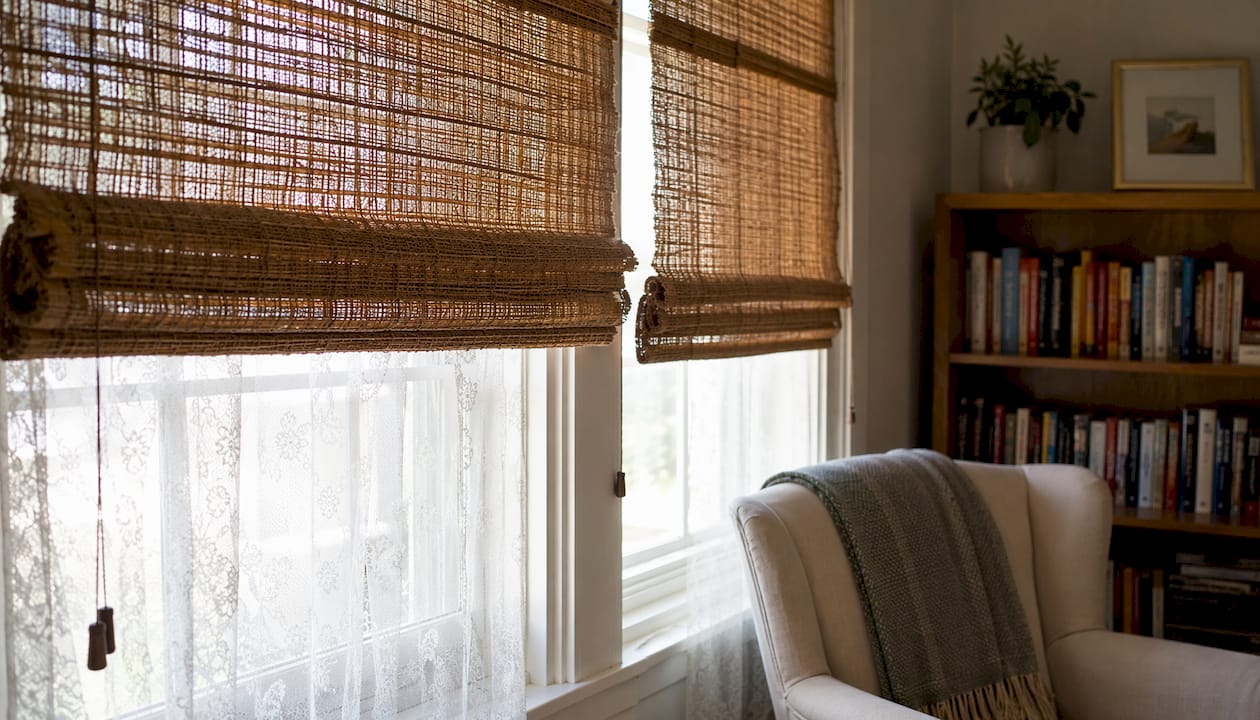
Bamboo, wood, hemp, and woven grass shades are everywhere right now, and for good reason. They bring organic texture into a room without adding visual noise. Natural woven shades work especially well in spaces with warm wood tones, rattan furniture, or earthy color palettes. They filter light beautifully, casting a warm, dappled glow rather than a harsh beam.
Cordless and motorized controls are the new standard
Ugh, tangled cords. Nobody misses them. Cordless and motorized blinds have become the preferred choice for family homes, both for child safety and for the clean, minimal look they create. Motorized options are particularly worth the investment on large or hard-to-reach windows, where consistent operation also extends the life of the fabric by eliminating tugging and uneven wear.

Tone-on-tone palettes create depth without drama
One of the most effective (and underused) tricks in window treatment design is layering three values of the same hue. Think stone, mushroom, and charcoal in the same room. The blind sits in the mid-tone, the curtains go slightly lighter or darker, and the wall ties it together. It reads as intentional and sophisticated without requiring any bold color commitments.
Mounting height changes everything
This is the single most impactful (and most ignored) installation detail. Hanging curtains 6–12 inches above the window frame and extending the rod 8–12 inches beyond each side makes windows look dramatically larger and ceilings feel taller. The blind sits tight against the glass for performance; the curtains frame the whole wall.
Pro Tip: For south- and west-facing windows that get brutal afternoon sun, choose a solar shade for daytime glare control and pair it with lined curtains to block late-afternoon light. The lined curtain also adds acoustic absorption, which is a real bonus in rooms with hard floors.
Acoustic and thermal benefits are part of the design conversation
Cellular shades contribute to both thermal insulation and sound absorption, and layered fabric treatments amplify that effect. A lined drape across a glazed wall can reduce echo noticeably in rooms with hardwood or tile floors. If you live in a noisy urban area, stacking a cellular shade with heavy drapery on a ceiling track is one of the most practical design moves you can make.
Color psychology in window treatments
Warm neutrals on curtains (oat, sand, warm gray) balance skin tones and complement most wood species. Cool neutrals (dove gray, pale taupe) keep a room calm and visually expansive, which is useful in smaller or very sunny spaces. The blind can carry the contrast: matte-black solar shades for a crisp, graphic outline, or pale oak slats to brighten a darker room.
3. How to choose, measure, and install blinds the right way
Getting the design right matters, but getting the fit right is what makes it last. Here’s a practical, step-by-step guide to choosing, measuring, and installing blinds so they look and function exactly as intended. ️
Step 1: Choose your blind type by room function
Before you think about color or material, answer these questions:
- How much light control do you need? Bedrooms typically need blackout or near-blackout options. Living rooms and offices usually work well with light-filtering or solar shades.
- Is moisture a factor? Kitchens and bathrooms need moisture-resistant materials like faux wood, aluminum, or vinyl roller shades. Fabric blinds will warp or mildew in high-humidity spaces.
- Do you have children or pets? Cordless or motorized controls are the safe, practical choice. They also look cleaner and last longer since there’s no cord to tangle or snap.
- What’s your budget? Basic roller shades are the most affordable entry point. Custom wood blinds and motorized options sit at the higher end, but they also add the most design value and longevity.
Step 2: Decide on inside mount vs. outside mount
This decision affects both the look and the light control of your finished window treatment.
- Inside mount sits within the window frame for a clean, recessed look. You need at least 2–3 inches of window sill depth for most roller shades, and 3.5 inches or more if you’re stacking dual shades.
- Outside mount covers the frame and extends beyond it, which is ideal for shallow sills or when you want to maximize light blockage. Add 2–3 inches beyond the frame on all sides for better coverage.
Step 3: Measure your windows accurately
Measure twice. Seriously. A blind that’s even a quarter-inch too wide won’t fit inside the frame.
- For inside mount: Measure the width at the top, middle, and bottom of the opening. Use the narrowest measurement. Measure the height on the left, center, and right. Use the longest measurement.
- For outside mount: Measure the full width you want the blind to cover, including any overlap beyond the frame. Add at least 2 inches on each side. Measure the height from where you’ll mount the bracket to the sill or floor.
- Double-check for plumb: Use a level to confirm the window frame is straight before ordering. An out-of-plumb frame can cause gaps on one side of an inside-mounted blind.
Step 4: Install with the design in mind
- Mount the blind tight to the glass for maximum light control and to minimize gaps at the sides.
- Install curtain hardware separately, positioned 4–8 inches below the ceiling and extending 8–12 inches past the window on each side.
- Use a ceiling-mounted track for drapery in rooms where you want the cleanest possible look and the best light control at the top of the window.
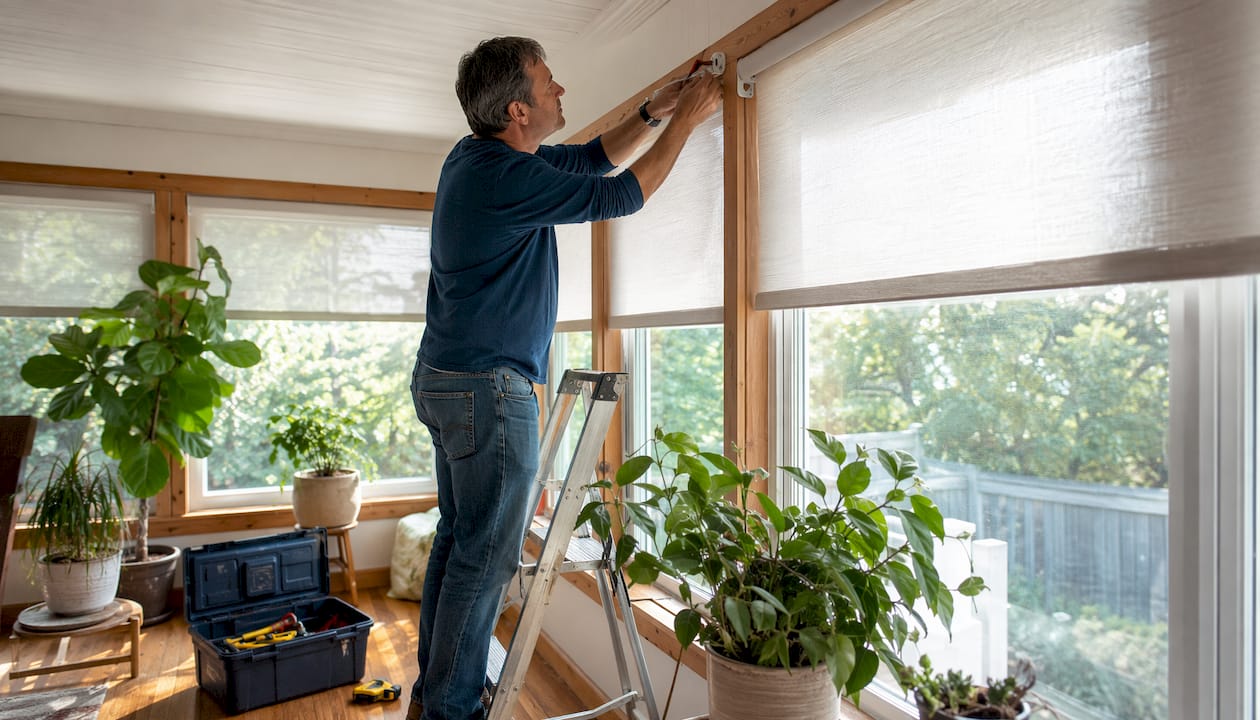
- Check the stack height before finalizing placement. Roller shades need clear headroom when fully raised; if ceiling height is limited, recess the headbox or use a slim fascia to keep the profile tight.
Step 5: Maintain your blinds to preserve their look
Blinds are genuinely easy to care for, which is one of their biggest practical advantages over curtains. Blinds don’t need to be removed for cleaning and resist cooking smells far better than fabric curtains. A simple wipe-down with a damp cloth handles most dust and grime on wood, faux wood, and aluminum slats. Fabric cellular shades and Roman shades can be spot-cleaned or gently vacuumed. For motorized blinds, check the battery or power connection annually and test the remote or app controls to catch any issues early.
Pro Tip: Use Valueblindsdirect’s measurement guide and design studio before you order. Getting expert input on mount type, sizing, and material before you commit saves you from costly remeasures and returns.
Key Takeaways
Layering blinds with curtains, where the blind controls light and privacy and the curtain adds texture, height, and warmth, is the most effective approach to interior design with window treatments.
| Point | Details |
|---|---|
| Layer for function and style | Use blinds as the performance layer and curtains as the mood layer for the best results. |
| Mount high and wide | Hang curtains 6–12 inches above the frame and extend the rod 8–12 inches beyond each side to visually lift the room. |
| Match blind type to room | Cellular shades for insulation and sound, solar shades for glare control, faux wood for moisture-prone spaces. |
| Cordless and motorized are trending | Cordless and motorized controls improve child safety, reduce wear, and create a cleaner visual profile. |
| Valueblindsdirect for custom fit | Valueblindsdirect offers custom blinds, motorized options, and a design studio to help you get the sizing and style right the first time. |
Valueblindsdirect makes custom window treatments easy
Custom blinds that actually fit your windows, your style, and your lifestyle shouldn’t require a trip to a showroom or a designer on retainer. Valueblindsdirect gives you a full catalog of stylish, custom-fit blinds including cellular shades, solar shades, Roman shades, wood blinds, motorized options, and natural woven shades, all orderable online with precise customization at every step.
What sets the experience apart is the support built around the products. The Window Treatment Design Studio helps you match blind type, material, and sizing to your specific rooms before you order. Free swatches let you test colors and textures in your actual lighting conditions. And measurement guides walk you through inside vs. outside mount decisions so your blinds arrive ready to install correctly the first time.
Whether you’re layering a blackout cellular shade behind linen panels in a bedroom or picking a solar shade for a sun-drenched living room, Valueblindsdirect has the options and the tools to get it right. Visit the design studio, request your free swatches, and start building window treatments that actually work for your home.





,%20while%20curtains%20br...)