
Bay Window Blinds: Best Types, Fit, and Style Tips
TL;DR:
- Bay window blinds are custom-designed to fit each angled pane, improving light control, privacy, and energy efficiency. Proper measurement and installation are essential to prevent hardware clashes and ensure a precise fit, especially when using individual headrails for each pane. Layering blinds with curtains enhances privacy, warmth, and style, while choosing the right type depends on your room’s specific needs.
Bay window blinds are window coverings tailored to fit each individual angled pane of a bay window, giving you control over natural light, privacy, and energy efficiency in a single treatment. Unlike standard flat windows, bay windows project outward at angles, which means off-the-shelf blinds rarely fit correctly. The right window treatments for bay windows account for those angles, the depth of each pane, and the hardware clearance at every corner. Valueblindsdirect specializes in custom bay window shades and blinds built to those exact specifications, so you get a clean, functional result without the guesswork that comes with generic sizing.
What are the best types of bay window blinds?
The best type of bay window blind depends on your room’s light needs, privacy requirements, and the depth of each window pane. Five types consistently perform well in bay window configurations, each with a distinct strength.
Cellular (honeycomb) shades
Cellular shades offer superior insulation and a slim profile that fits tight bay window corners without crowding the frame. Their honeycomb structure traps air, reducing heat loss in winter and heat gain in summer. That makes them the top pick for homeowners focused on energy bills. They also come in light-filtering and blackout versions, so you can choose the right opacity for each room.
Venetian and faux wood blinds
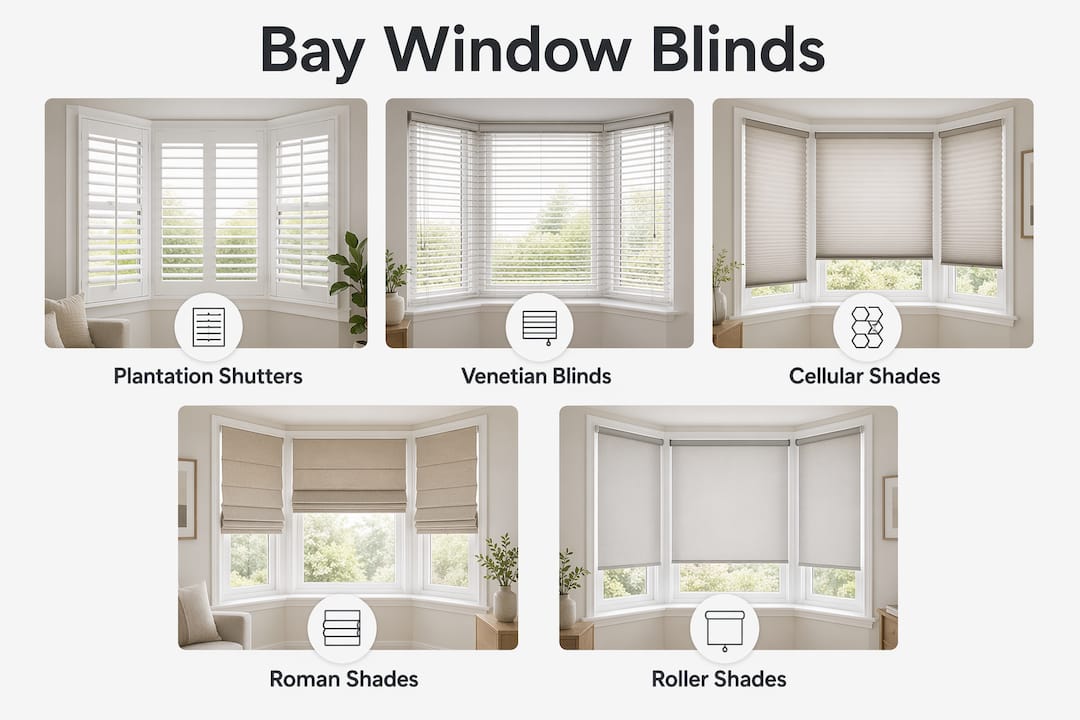
Venetian and faux wood blinds are the most versatile option for street-facing or high-traffic rooms. You tilt the slats to dial in exactly how much light enters without sacrificing privacy. In tight bay window configurations, 1-inch slat sizes reduce corner conflicts and visible gaps compared to larger slats. That smaller slat width also gives you finer light control when the sun hits at a low angle. Faux wood resists warping in humid rooms, making it a better long-term choice than real wood near kitchens or bathrooms.
Roman shades
Roman shades add a soft, tailored aesthetic that works well in living rooms and reading nooks. They fold neatly when raised, but the stack height can block part of your view. That trade-off is worth it in design-forward spaces where warmth and texture matter more than a clear sightline. Roman shades work best on the larger center pane of a bay window, paired with a simpler treatment on the side panels.
Roller shades
Roller blinds provide a clean, minimal look that suits modern interiors. The trade-off is light leakage at the edges of angled panes, which requires careful measurement to manage. Blackout roller blinds are effective for bedrooms where early morning sunlight through a bay window disrupts sleep. Using separate made-to-measure blinds for each pane reduces those light gaps significantly.
Plantation shutters
Plantation shutters are the premium option. They mount directly to each pane’s frame, look architecturally finished, and last for decades. The upfront cost is higher, but they add resale value and require almost no maintenance. They work in any room but shine in formal living rooms and dining spaces where a polished look is the priority.
Pro Tip: If you are unsure which style fits your space, order free fabric swatches from Valueblindsdirect before committing to a full set. Seeing the material in your actual light conditions prevents costly mismatches.
How to measure and mount bay window blinds correctly
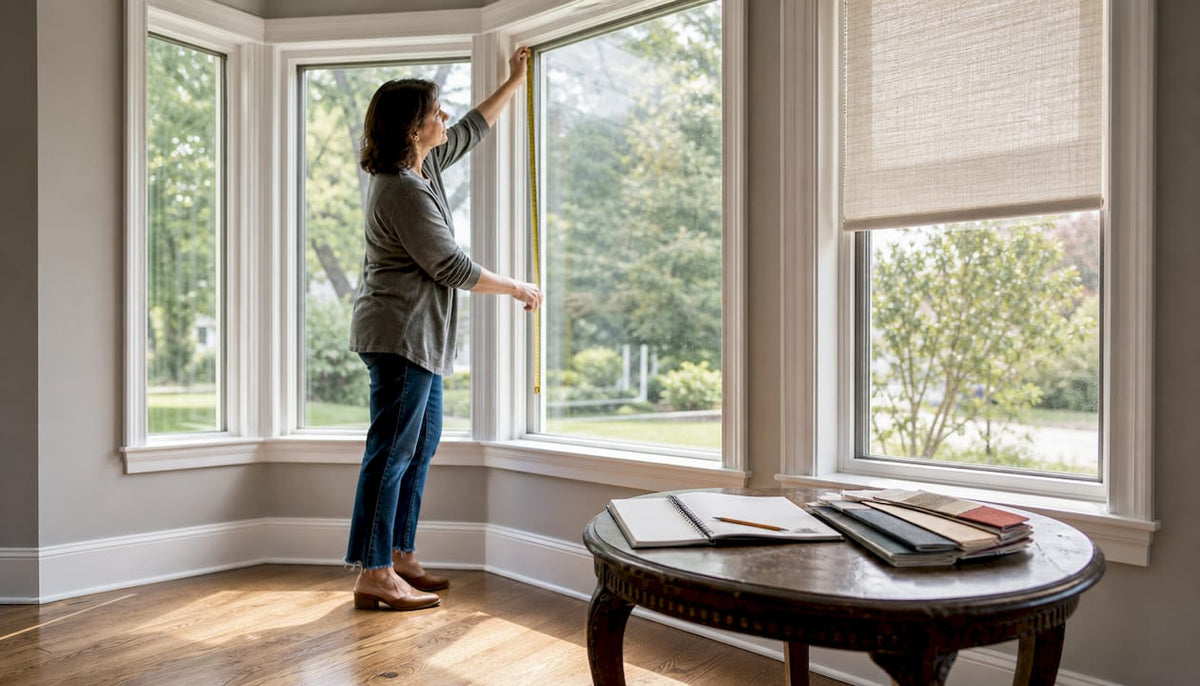
Accurate measurement is the single most important step in a bay window blind project. A gap of even half an inch changes how the blind sits, how much light leaks in, and whether the headrail clears the adjacent panel.
Follow these steps for a reliable result:
- Measure each pane separately. Bay windows have two or more angled side panels and a larger center pane. Each one has its own width and height. Never assume they match.
- Decide on inside mount or outside mount. An inside mount sits within the window frame for a clean, built-in look. An outside mount covers the frame and wall above, which works when the frame depth is too shallow for hardware.
- Check frame depth before ordering. Inside mounts need at least 2 inches of depth to seat the headrail properly. Measure the depth at the top, middle, and bottom of each pane and use the shallowest number.
- Account for handle clearance. Measuring bay windows correctly keeps window handles accessible and prevents the blind from blocking the latch when you need to open the window.
- Plan headrail placement at the corners. A continuous headrail spanning multiple panels causes installation and operational problems at angled joints. Order each panel as a separate blind with its own headrail.
- Install each blind independently. Inside mounts on individual panels keep headrails flush and contained, preventing rubbing or clashing hardware at the corners.
Pro Tip: Use a digital angle finder to record the exact angle of each side pane. That number matters if you order plantation shutters or any treatment that mounts flush to the frame.
The DIY route works well for roller shades and cellular shades with standard headrails. Plantation shutters and motorized systems benefit from professional installation because the tolerances are tighter and the hardware is heavier.
How do you balance style, privacy, and energy efficiency?
Choosing bay window shades that look good and perform well requires thinking about three things at once: your room’s light pattern, your privacy exposure, and your heating and cooling costs.
Design integration starts with matching the blind material to your existing palette. Warm wood tones in faux wood blinds complement traditional or transitional interiors. Crisp white or gray cellular shades suit contemporary spaces. Roman shades in linen or velvet add texture to rooms that already have soft furnishings.
Privacy for street-facing windows is best handled with tilting slats or light-filtering fabrics. Venetian blinds let you angle the slats upward so light enters from above while blocking the view from the street. Light-filtering roller shades diffuse sunlight without creating a clear silhouette from outside, which matters most in ground-floor living rooms.
“Layering blinds with curtains enhances privacy, style, and insulation for bay windows. Combining treatments balances light filtering, softness, and room decor in a way that a single treatment rarely achieves on its own.”
Layering blinds with curtains is the most effective way to get both function and softness from a bay window. A cellular shade handles the insulation and privacy work, while a floor-length curtain panel on a curved rod adds visual warmth and frames the window as a focal point.
Energy efficiency is where cellular shades earn their reputation. The honeycomb cells create a buffer zone between the glass and the room, reducing drafts in winter and blocking radiant heat in summer. For homeowners in climates with extreme temperatures, energy-efficient window treatments pay back their cost over time through lower utility bills.
Consider your daily routine when choosing opacity. A home office bay window needs light-filtering shades that reduce glare on screens without requiring you to close the blinds entirely. A bedroom bay window benefits from blackout or room-darkening options that block early light.
Maintenance and troubleshooting common issues
Bay window blinds last longer when you clean and adjust them on a regular schedule. The right approach depends on the material.
- Faux wood and Venetian blinds: Wipe each slat with a damp microfiber cloth every few weeks. Faux wood is more resistant to warping than real wood in humid environments, so it needs less careful handling near moisture sources.
- Fabric and cellular shades: Use a vacuum with a brush attachment on low suction to remove dust from the honeycomb cells. Spot-clean stains with a mild detergent and cold water. Avoid soaking the fabric, which can distort the cell structure.
- Roman shades: Dust regularly with a soft brush. Most Roman shade fabrics are not machine washable, so check the manufacturer’s care label before attempting a deeper clean.
- Roller shades: Wipe the surface with a lightly damp cloth. Roll the shade down fully before cleaning so you can reach the entire panel without creasing it.
Headrail rubbing at corners is the most common mechanical problem in bay window installations. It happens when two headrails are mounted too close together at an angle. The fix is to remount one or both headrails slightly further back into the frame, or to trim the headrail end cap if the design allows it.
Slat warping in real wood blinds near south-facing bay windows is a fading and heat issue. Rotating the slats closed during peak afternoon sun hours slows the damage. Switching to faux wood eliminates the problem entirely.
Pro Tip: Apply a UV-protective fabric spray to Roman shades and roller shades that face direct sunlight. Reapply every six months to slow color fading and fiber breakdown.
Cords and lift mechanisms should be checked twice a year. A cord that frays or sticks is a safety hazard and a sign the mechanism needs lubrication or replacement. Cordless and motorized options from Valueblindsdirect remove that maintenance step entirely.
Key Takeaways
The best bay window blinds fit each angled pane individually, balance light control with privacy, and use insulating materials like cellular shades to reduce energy costs year-round.
| Point | Details |
|---|---|
| Measure each pane separately | Bay window panes differ in width and height; never assume uniform sizing across panels. |
| Use individual headrails per panel | Separate headrails prevent corner collisions and keep hardware operating smoothly. |
| Cellular shades lead on insulation | Honeycomb construction reduces drafts and heat transfer better than most other blind types. |
| Layer blinds with curtains for full function | Combining treatments delivers privacy, light control, and visual warmth that one treatment alone cannot match. |
| Match slat size to pane depth | One-inch slats reduce corner conflicts and light gaps in tight bay window configurations. |
What I’ve learned from watching homeowners get bay windows wrong
The most common mistake I see is treating a bay window like three separate flat windows that happen to be next to each other. Homeowners order three identical blinds in the same size, mount them independently without thinking about the corner angles, and end up with headrails that grind against each other every time they raise or lower a blind. The fix costs more than getting it right the first time.
The second mistake is prioritizing style over fit. A beautiful Roman shade that is half an inch too wide will buckle at the frame edge and never hang straight. A roller shade ordered without checking the pane depth will sit proud of the frame and look unfinished. Fit is not a secondary concern. It is the whole job.
What I tell every homeowner who asks: measure three times, order once, and treat the corner angles as the most important numbers in the project. If you are not confident with a tape measure and a digital angle finder, use a professional measuring service or follow a detailed DIY guide before placing your order. The cost of remeasuring is zero. The cost of reordering is real.
Investing in custom bay window shades rather than cutting standard blinds to size is always worth it. Custom sizing means the blind fills the pane edge to edge, the headrail seats properly, and the treatment operates the way it was designed to. That is the difference between a window that looks finished and one that looks like a workaround.
— Sunny
Valueblindsdirect makes custom bay window blinds straightforward
Finding the right fit for a bay window does not have to mean weeks of research and multiple measuring attempts.
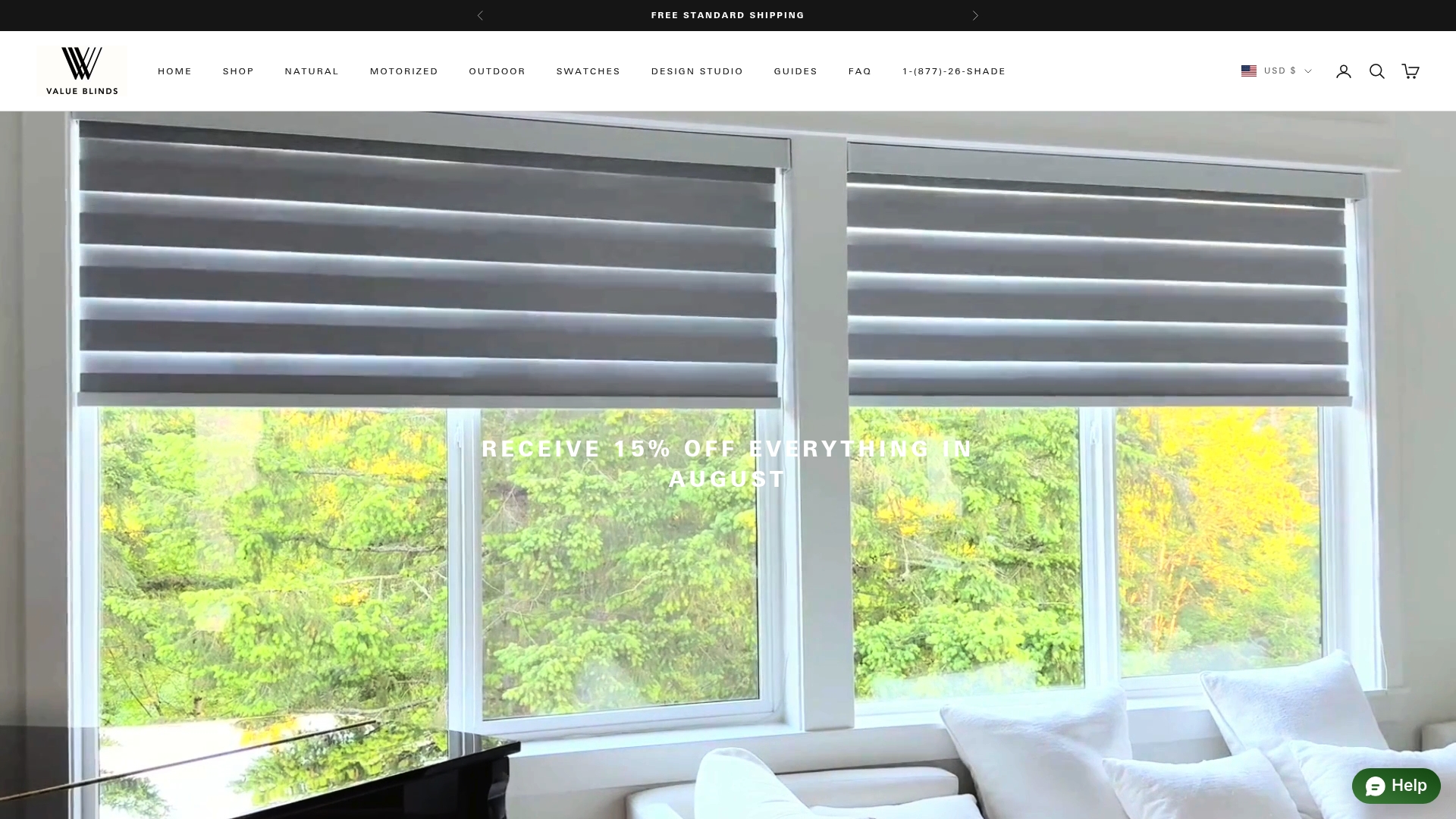
Valueblindsdirect’s Window Treatment Design Studio walks you through material selection, sizing, and mounting options for every pane in your bay window. The catalog includes cordless cellular shades, faux wood blinds, roller shades, and motorized options, all available in custom sizes. Free swatches let you confirm color and texture before ordering. Expert support is available if your measurements raise questions. Every product ships with clear installation guidance so your first attempt is your only attempt.
FAQ
What are the best blinds for bay windows?
Cellular shades are the top choice for insulation and tight corners, while faux wood Venetian blinds offer the most versatile light and privacy control. The best option depends on your room’s light exposure and privacy needs.
How do I measure a bay window for blinds?
Measure each pane’s width and height separately, check the frame depth for inside mounts, and record the angle of each side panel. Never assume the side panes match the center pane in size.
Should I use inside mount or outside mount for bay window blinds?
Inside mounts give a cleaner, built-in look and work when the frame depth is at least 2 inches. Outside mounts are better when the frame is too shallow or when you want to make the window appear larger.
How do I stop headrails from colliding at bay window corners?
Order a separate blind with its own headrail for each pane rather than a single spanning unit. Individual inside-mounted headrails stay flush within each frame and do not contact adjacent hardware.
Can I use curtains with bay window blinds?
Layering curtains over blinds adds privacy, softness, and insulation. A curved curtain rod that follows the bay window’s shape keeps the look cohesive while letting you draw the curtains independently of the blinds.
Recommended
- Made to Measure Window Blinds: Style, Fit, and Efficiency
- Custom Window Blinds: Style, Comfort, and Efficiency
- Stylish shades for bay windows: complete selection guide
- How to Choose Blinds for Large Windows: Style, Fit, Function

Value Blinds®
Trusted window treatments provider
Value Blinds® is a trusted provider of Greenguard, OEKO-TEX, and FSC-certified window treatments based in Portland, Oregon. Specializing in sustainable, motorized, smart-controlled, and outdoor-ready blinds and shades, the company is built on a foundation of simplified shopping, premium eco-friendly materials, and transparent pricing without the inflated cost.