

Stylish shades for bay windows: complete selection guide
Bay windows are one of the most striking architectural features a home can have. They flood rooms with natural light, create cozy reading nooks, and add real curb appeal. Yet when it comes time to dress them, many homeowners hit a wall. Standard shades don’t fit the angles, off-the-shelf options leave awkward gaps, and the whole project starts to feel overwhelming. Here’s the good news: choosing shades for bay windows doesn’t have to be complicated or expensive. With the right approach, you can find treatments that look intentional, work beautifully, and fit every panel precisely.
Table of Contents
- Why bay windows need special shade solutions
- Top shade styles for bay windows: Comparisons and features
- How to measure bay windows for perfect-fit shades
- Installation made simple: DIY tips or when to hire a pro
- What most guides miss about bay window shades
- Find your perfect bay window shades at Value Blinds®
- Frequently asked questions
Key Takeaways
| Point | Details |
|---|---|
| Tailored fit matters | Custom shades ensure bay windows look polished and work smoothly. |
| Shade style sets the tone | Choose between cellular, Roman, and more for the balance of function and aesthetics. |
| Accurate measurement is key | Measuring each panel correctly guarantees a seamless fit and easy installation. |
| DIY or pro install | Most shades are DIY-ready, but complex designs may need expert help. |
Why bay windows need special shade solutions
Bay windows are not just wider versions of standard windows. They project outward from the wall and typically consist of three or more angled panels arranged in a shallow arc or box shape. That geometry creates a unique framing challenge that flat, rectangular shades simply aren’t built to handle.
When you hang a single standard shade across a bay window opening, you lose the architectural definition that makes the bay special in the first place. Worse, the shade often floats awkwardly in front of the glass, leaving light gaps at the sides and corners. The result looks unfinished and lets in drafts, glare, and unwanted visibility from outside.
Custom shades solve this by treating each panel of the bay as its own window. Each shade is cut to the exact width and height of its panel, so every section closes cleanly without overlap or gaps. As noted in the custom solutions for bay windows guide, custom solutions ensure proper fit on angled and multi-panel bay windows.
Beyond fit, bay windows also demand more thought about function. They face multiple directions, which means different panels may receive direct sun at different times of day. A shade that works for a south-facing center panel may be too heavy or too sheer for the flanking panels. Understanding why custom window treatments matter helps you think through each panel’s needs individually.
Here’s what makes bay windows genuinely different from standard windows:
- Angled side panels require shades mounted at non-standard angles
- Varying panel widths mean each shade must be measured and ordered separately
- Deeper sills create clearance issues for inside-mount shades
- Multiple light exposures call for different opacity levels across the bay
- Architectural detail should be framed, not hidden, by the treatment
“The bay window is not one window. It’s a composition. Treat each panel as its own design decision, and the whole thing comes together beautifully.”
Once it’s clear that bay windows have special requirements, it’s critical to understand the available shade options.
Top shade styles for bay windows: Comparisons and features
Not every shade style works equally well in a bay window. The best choices are those that can be mounted independently per panel, offer good light control, and complement the room’s overall aesthetic. Here’s how the most popular styles stack up.
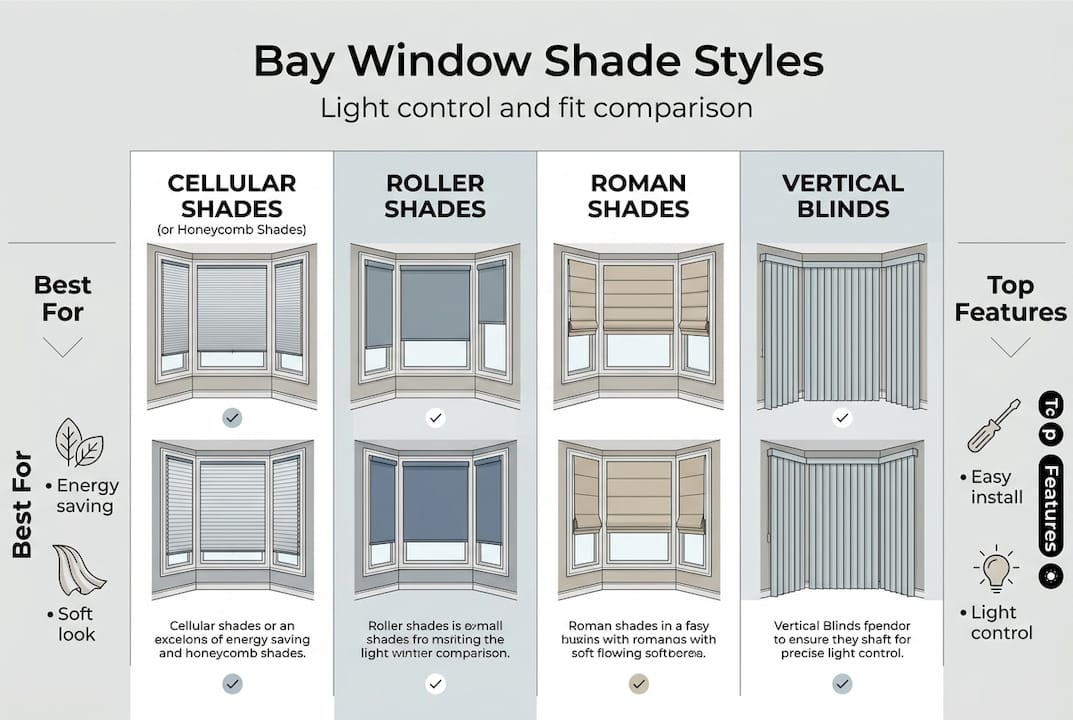
| Shade style | Best for | Light control | Insulation | Ease of install |
|---|---|---|---|---|
| Cellular | Energy efficiency | High | Excellent | Moderate |
| Roman | Classic elegance | Medium to high | Good | Moderate |
| Roller | Modern, minimal | Adjustable | Low | Easy |
| Zebra | Layered light | Dual zone | Low to medium | Easy |
| Woven wood | Natural texture | Low to medium | Low | Moderate |
Cellular shades and Roman shades are particularly effective for insulation and light control in bay windows. Cellular shades trap air in their honeycomb pockets, which reduces heat transfer through the glass. This is especially valuable in bay windows, which often lose more energy than flat walls due to their larger glass surface area.
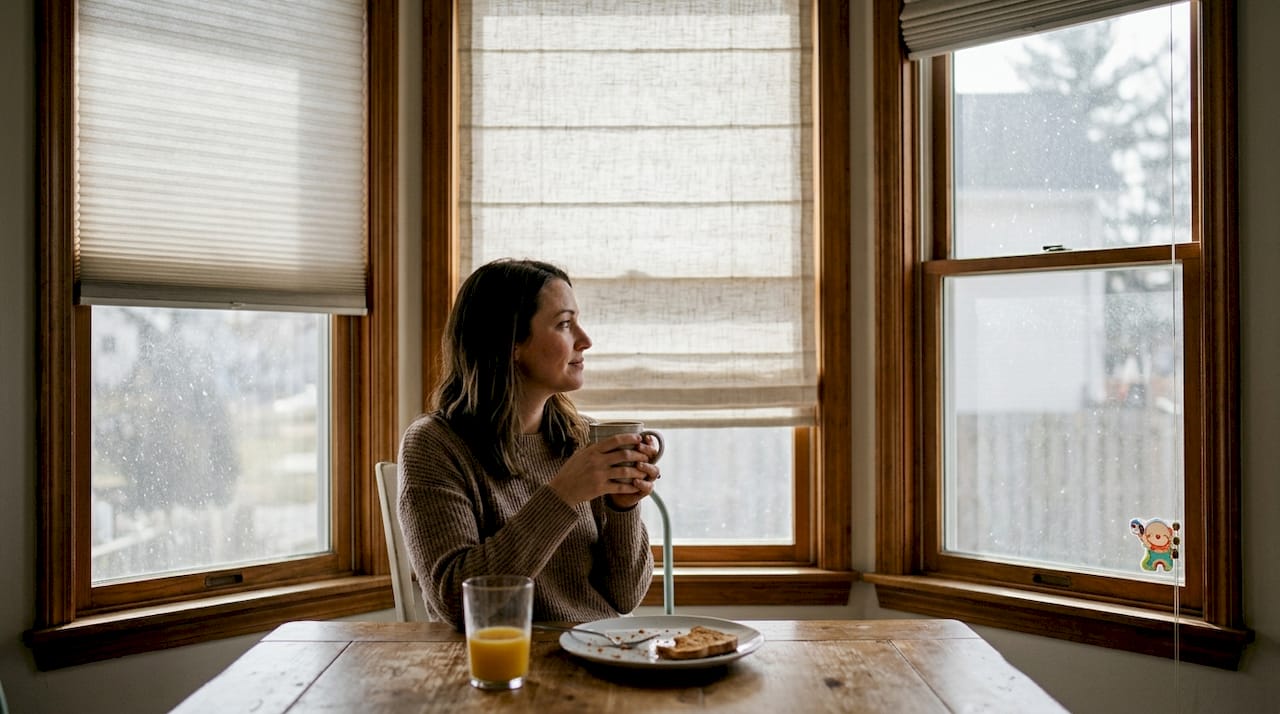
Roman shades bring softness and texture. When raised, they fold into neat horizontal pleats that frame the view without blocking it. When lowered, they create a clean, tailored look that suits both traditional and transitional interiors.
Roller shades are the most versatile in terms of opacity. You can order them in sheer, light-filtering, or blackout fabrics, and they roll up to a compact tube that disappears above the window frame. They work especially well in modern or minimalist spaces where you want the bay’s architecture to stay front and center.
Zebra shades alternate between sheer and solid fabric bands, giving you precise control over how much light enters the room. Slide the bands to align the solid sections for privacy, or offset them for a diffused glow. They’re a great middle ground between a sheer curtain and a blackout shade.
Pro Tip: If your bay window is hard to reach, consider motorized Roman shades for the center panel. Motorization lets you raise and lower shades with a remote or smartphone app, which is a genuine quality-of-life upgrade for deep or tall bay windows.
Key things to consider when choosing your shade style:
- Privacy needs: Bedrooms and street-facing bays need higher opacity options
- Room style: Match the shade fabric and color to your existing decor palette
- Layering: Combining a light-filtering shade with a sheer panel adds depth and flexibility
- Cord safety: Cordless options are safer for homes with children or pets
Now that you know which shades suit bay windows, consider how to measure and install them for a flawless result.
How to measure bay windows for perfect-fit shades
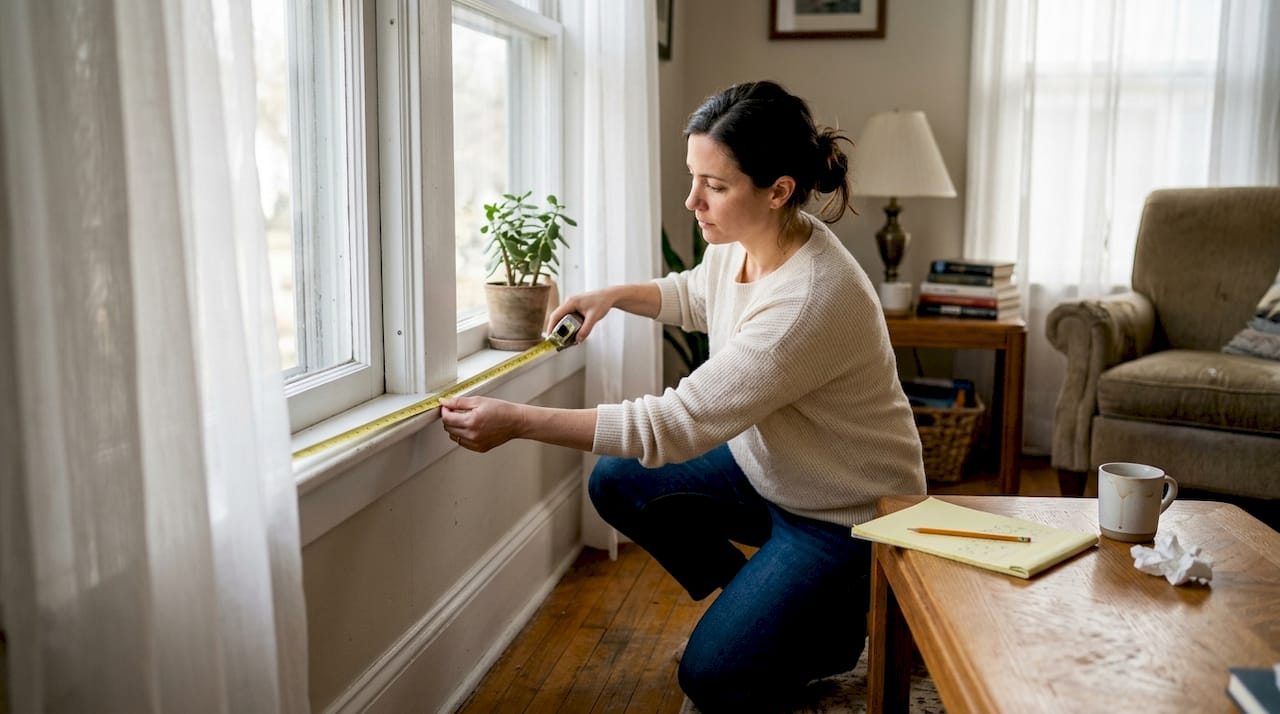
Measuring a bay window correctly is the single most important step in the entire process. Get it right, and your shades will fit like they were born there. Get it wrong, and even the most beautiful shade will look off.
The key principle is simple: measure each panel separately. Never assume the panels are the same width, even if they look identical. Bay windows are often installed with slight variations in framing, and even a quarter inch of difference will affect how a shade sits in the opening.
As highlighted in the measuring bay windows accurately guide, accurate measurement is essential for custom bay window treatments. Follow these steps for each panel:
- Decide on mount type first. Inside mount (shade sits inside the window frame) gives a cleaner look but requires adequate depth. Outside mount (shade hangs on the wall above the frame) works when depth is limited or you want to make the window appear larger.
- Measure the width at three points. Measure across the top, middle, and bottom of the window opening. Record the narrowest measurement for inside mounts. This accounts for any variation in the frame.
- Measure the height at three points. Measure left, center, and right. Use the longest measurement for inside mounts so the shade covers the full opening.
- Check the depth. For inside mounts, you need at least 2 to 3 inches of depth to accommodate the shade hardware. Use a tape measure to check from the front of the frame to the glass.
- Note the angle of the side panels. Most bay windows have side panels set at 30 or 45 degrees. This affects how the shade bracket sits against the frame. Some brackets are adjustable; others are not.
- Record everything in a table. Label each panel (left, center, right) and write down width, height, and depth for each one before you order.
Pro Tip: Use a DIY measurement guide as a reference while you measure, and double-check your numbers against the blinds measurement tips before placing your order. A second set of eyes on your numbers is always worth it.
One common mistake is measuring the glass only and ignoring the frame. For inside mounts, you measure the frame opening, not the glass. For outside mounts, you add 2 to 4 inches on each side to ensure full coverage and prevent light bleed around the edges.
With measurements in hand, the next hurdle is ensuring smooth shade installation.
Installation made simple: DIY tips or when to hire a pro
Installing bay window shades is a realistic DIY project for most homeowners, especially when the shades are ordered correctly and the right tools are on hand. That said, some situations genuinely call for professional help, and knowing the difference saves you time, frustration, and potential damage to your new shades.
According to the window shade installation guide, many custom shades are easy to install with the right tools, but complex designs may require a professional. Most roller, cellular, and zebra shades come with straightforward bracket systems that attach with just a few screws. The easy install shade tips page walks through the process in detail.
Here’s a quick comparison to help you decide:
| Situation | DIY or pro? |
|---|---|
| Standard roller or cellular shades | DIY-friendly |
| Roman shades with cord system | DIY with care |
| Motorized shades with wiring | Pro recommended |
| Angled side panels with custom brackets | Pro recommended |
| Simple inside-mount installation | DIY-friendly |
Before you start, run through this installation prep checklist:
- Gather tools: drill, level, measuring tape, pencil, and the correct drill bit for your wall type
- Check the hardware: confirm all brackets, screws, and end caps are included in the packaging
- Mark bracket positions: use a level to ensure brackets are perfectly horizontal before drilling
- Test the fit: hold the shade up to the opening before drilling to confirm placement
- Allow for clearance: make sure the shade won’t hit the window handle or crank when lowered
The most common DIY mistake is skipping the level check. A shade that’s even slightly off-horizontal will be noticeable every time you look at it. Take the extra two minutes to get it right.
For motorized systems, the wiring needs to connect to a power source, which often means routing cables through the wall or using a rechargeable battery system. Battery-operated motors have improved significantly and are now a practical option for most bay windows without requiring any electrical work.
Having covered why, what, and how, it’s time to offer a real-world, experience-driven perspective on bay window shades.
What most guides miss about bay window shades
Most articles on bay window shades focus on the technical side: measure this, mount that, choose cellular for insulation. That’s all useful. But what gets overlooked is how deeply personal this decision actually is.
We’ve seen homeowners spend weeks agonizing over shade style only to choose based on price, then regret it six months later when the room never quite feels right. The truth is, the shade you live with every day should reflect how you actually use the space, not just what’s trending or what fits the budget by the smallest margin.
The importance of customization goes beyond fit. It’s about choosing a fabric weight, opacity, and color that makes the room feel the way you want it to feel at 7 a.m. with morning light pouring in and at 9 p.m. with the lamps on. Those are two very different lighting scenarios, and the best bay window shade handles both gracefully.
Layering treatments, such as pairing a light-filtering cellular shade with a simple linen drape, gives you flexibility that no single shade can match. It also adds visual depth that makes the bay window feel like a true design feature rather than just a functional opening. Don’t let anyone tell you that one shade is always enough.
Find your perfect bay window shades at Value Blinds®
You’ve done the research. Now it’s time to put it into practice with shades that are made to fit your specific bay window, not a generic approximation of it.
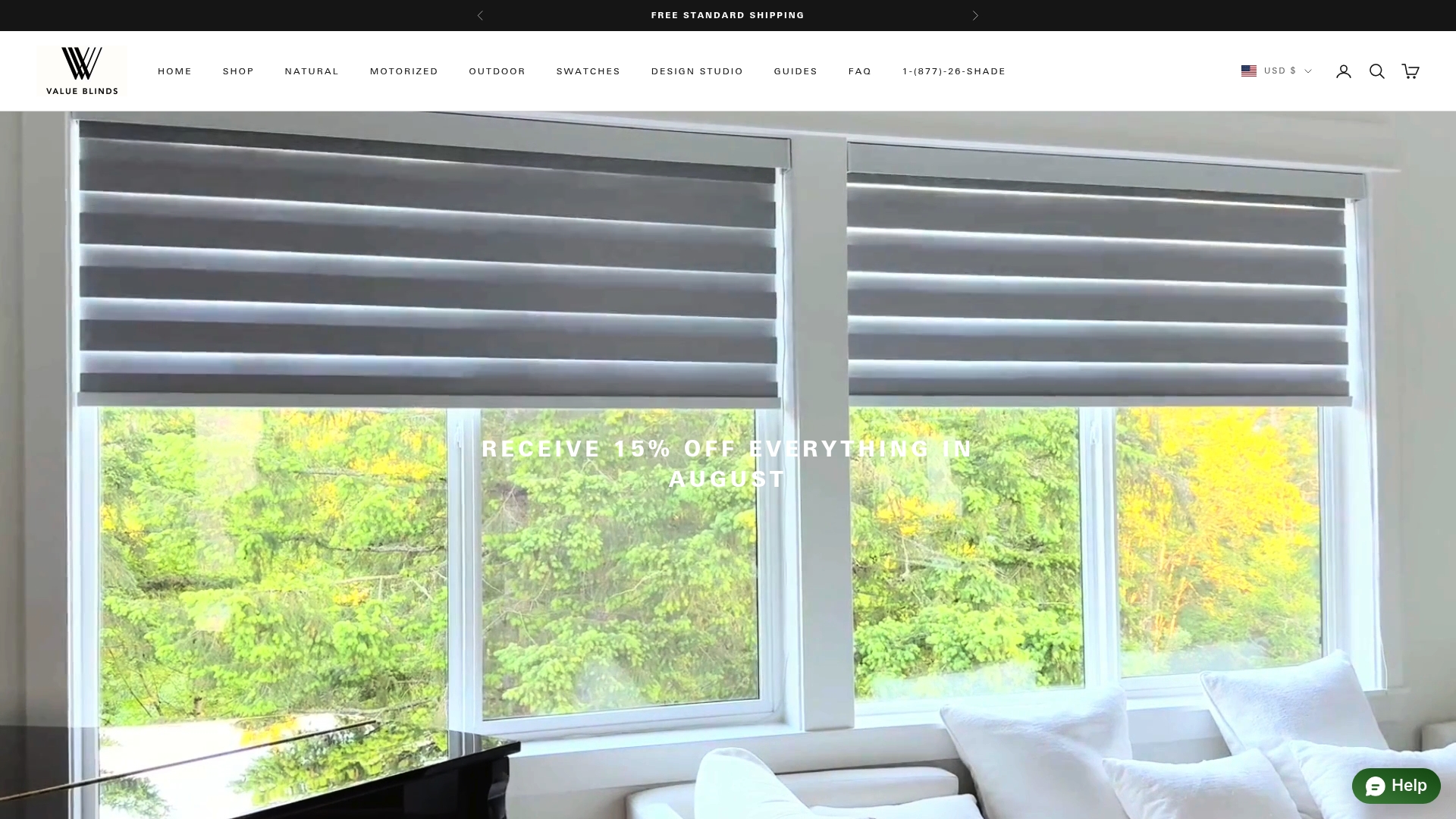
At Value Blinds, we specialize in custom window treatments built for real homes with real architectural quirks. Use our window treatment design studio to visualize how different shade styles will look in your space before you order. Browse our full stylish blinds collection to find cellular, Roman, roller, zebra, and woven options in hundreds of fabrics and colors. Free swatches, expert support, and a satisfaction guarantee mean you can order with confidence. Your bay window deserves treatments that were made for it.
Frequently asked questions
What shades work best for bay windows?
Cellular, Roman, zebra, and woven shades are top choices for bay windows due to their flexible fit and wide range of style options.
Can I install bay window shades myself or do I need a professional?
Many custom shades are DIY-friendly, but expert installation is best for tricky angles or motorized systems that require wiring.
How do I measure a bay window for custom shades?
Measure each window section separately, accounting for depth and angles, to ensure a precise custom fit every time.
Are there shade options that block light but still look stylish?
Yes, light-blocking shades like cellular blackout or layered zebra and Roman styles deliver both privacy and elegance without sacrificing design.