8–15 Years: Moisture Resistant Blinds Homeowners Can Trust
For bathrooms, kitchens, and any window that catches steam, PVC/vinyl and powder-coated aluminum are your most reliable bets, with engineered faux wood a close third. Solid wood and untreated bamboo, however charming, tend to warp or mold within a couple of humid seasons. If your window sits in a direct-splash zone (right next to the tub or sink), you need waterproof rated materials, not just moisture-resistant ones, and the hardware grade matters almost as much as the slat itself.
TL;DR:
- Moisture absorption rates of PVC and engineered faux wood remain below 0.5%, ensuring shape retention after extensive humidity exposure.
- Waterproof-rated materials are essential for windows in splash zones, while moisture-resistant options suffice for steam-only exposure.
- Hardware quality, such as stainless steel fasteners, significantly extends the lifespan of blinds in wet environments beyond material properties alone.
- Organic materials like solid wood and bamboo deteriorate within a year or two in humid conditions, often warping or growing mold.
- Proper testing, hardware specifications, and matching the material to the room’s exposure type are crucial for reliable, long-lasting bathroom and kitchen blinds.
Table of Contents
- Moisture Resistant Blinds Properties Explained by Material
- Moisture Resistant vs. Waterproof: Why the Distinction Matters
- Why Standard Blinds Fail in Bathrooms and Kitchens
- Cleaning, Inspection, and Realistic Lifespan by Material
- Choosing Blinds for Humid Rooms: A Quick Checklist
- How Moisture Resistance Actually Varies Across Products
- How to Verify Moisture Resistance Before You Buy
- What I’ve Learned Watching Blind Choices Play Out
- Value Blinds Makes Humidity-Proofing Your Windows Simple
- Sources
Moisture Resistant Blinds Properties Explained by Material
Not all “moisture resistant” claims mean the same thing once you dig into the material science. Here’s how the common options actually behave when your bathroom fan can’t keep up with a hot shower.
PVC and vinyl are essentially plastic, which means they don’t absorb water the way organic materials do. Industry testing on PVC-based faux wood slats has shown moisture absorption rates under 0.5%, with slats retaining their shape and finish after 500 hours at 95% humidity and elevated temperatures. That’s roughly the equivalent of years of steamy showers compressed into a lab test. Clean PVC with mild soap and water. Skip ammonia-based glass cleaners, which can dull the finish over time.
Engineered faux wood uses a PVC or composite core, sometimes wrapped with a wood-grain finish layer. The core is what does the heavy lifting against humidity, giving you dimensional stability that real wood can’t match while still looking like a warmer, more traditional slat. The finish layer is the weak point. Cheap coatings peel or yellow years before the core degrades.
Solid wood is hygroscopic, meaning it pulls moisture from the air and swells, then releases it and shrinks as conditions change. In a bathroom, that swell/shrink cycle repeats daily. Slats bind in their brackets, cords stick, and paint or stain cracks along grain lines, often within a year or two of installation. Sealing helps marginally, but no topical sealant fully blocks a material that’s designed by nature to breathe.
Aluminum blinds resist water outright since metal doesn’t absorb moisture, but the finish and fasteners determine how long that resistance lasts. A quality powder coating seals the metal against oxidation; without it, aluminum can pit and corrode, especially near chlorinated pools or salty coastal air. Fastener grade matters more than most buyers realize: stainless steel grade 316 resists corrosion far longer than standard steel screws or clips, which can rust and stain the slats beneath them within months in a steamy bathroom.
Bamboo and natural woven shades are the riskiest choice for wet rooms. These materials absorb moisture readily and shift shape fast when humidity swings, and unless heavily treated, they’re prone to mold growth in their woven fibers. Treatments extend their life somewhat, but they don’t turn bamboo into a bathroom material.
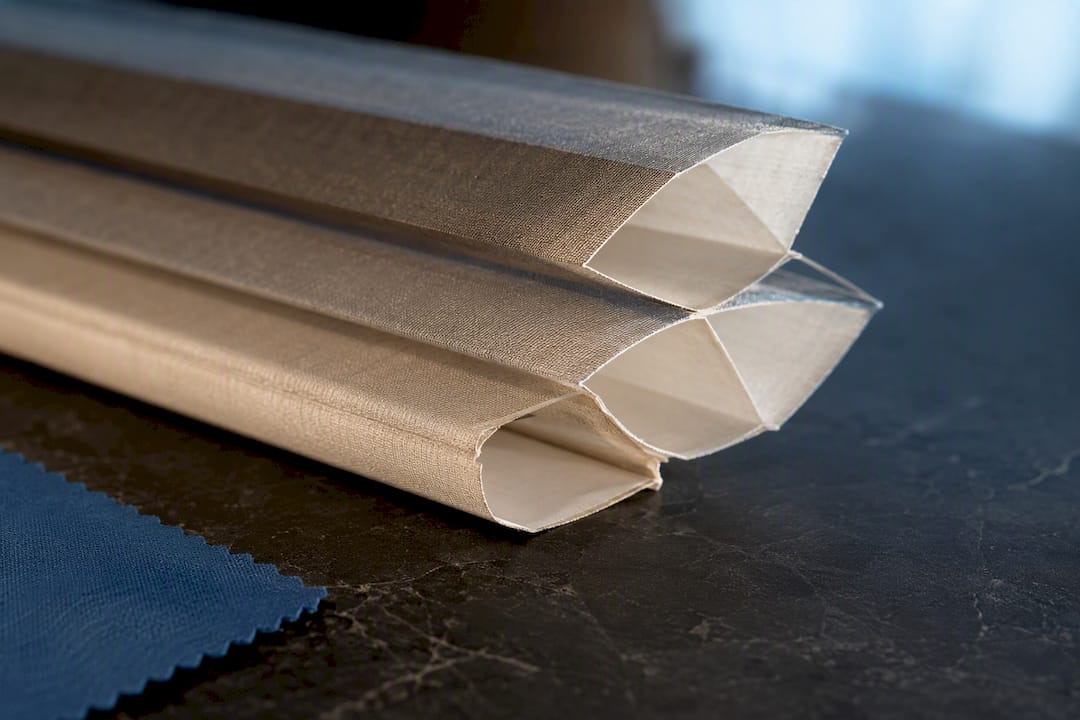
Fabric and roller shades can work in humid rooms, but only with the right backing. Manufacturers increasingly offer moisture-barrier laminates and mildew-resistant face fabrics built for exactly this problem. Without that treatment, fabric absorbs humidity like a sponge and becomes a mildew magnet within a season.
Moisture Resistant vs. Waterproof: Why the Distinction Matters
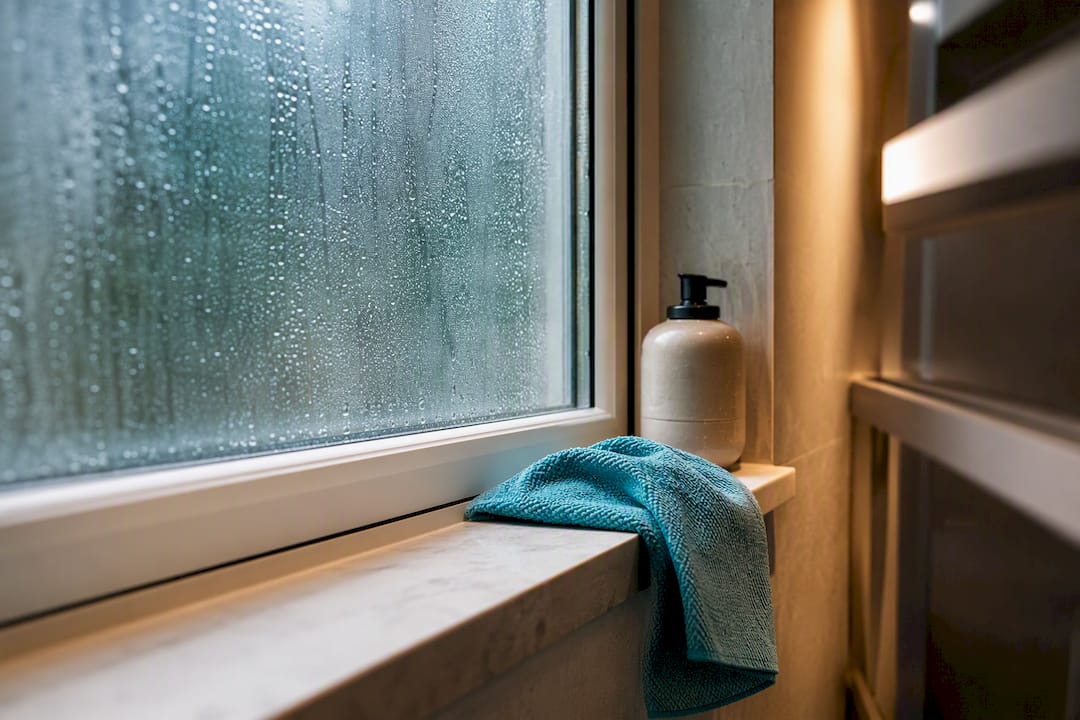
“Moisture resistant” and “waterproof” get used interchangeably in marketing copy, and that’s where a lot of buyers get burned. Moisture resistant means a material tolerates ambient humidity and light condensation, like steam from a shower with the door closed. Waterproof means the material shrugs off direct water contact, splashes, and even occasional soaking without degrading.
Here’s how to match the class to your window’s actual exposure:
- Steam-only exposure (a bathroom window across the room from the shower): moisture resistant PVC, faux wood, or coated aluminum works fine.
- Splash zone (a window right next to the tub, sink, or shower spray): you need genuinely waterproof window coverings, not just resistant ones.
- Kitchen sink windows: grease and water splash together, so look for wipeable, sealed-surface materials rather than anything with texture or seams that trap residue.
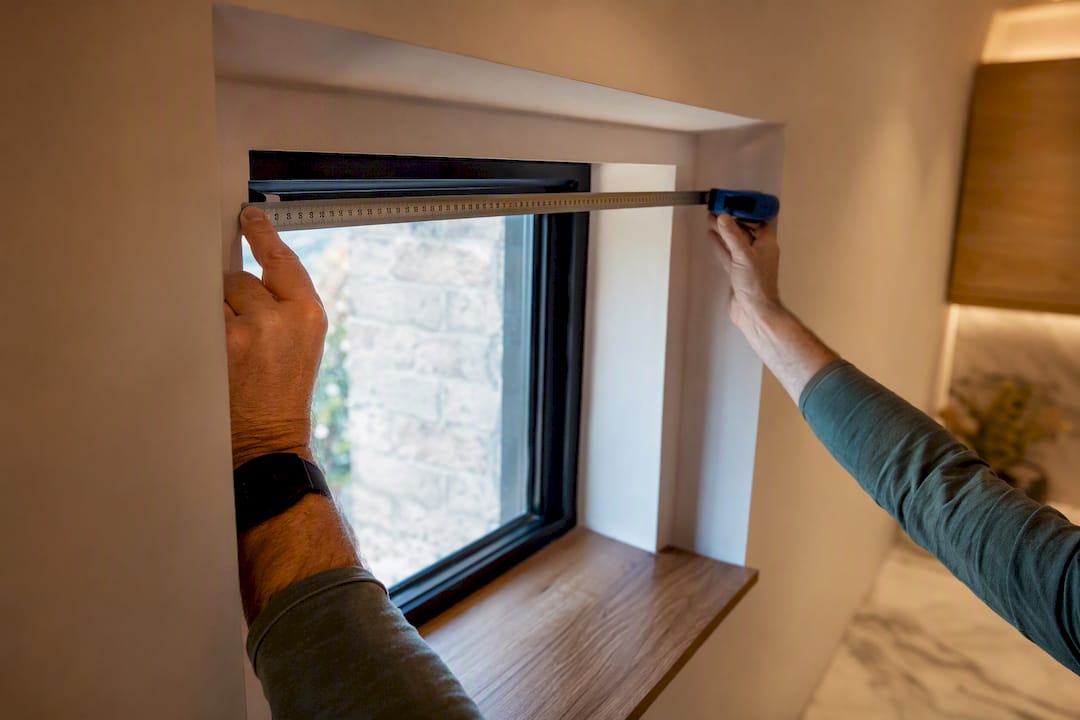
Mounting style changes the math too. An outside mount that keeps the headrail away from a wet wall, combined with good ventilation, often outperforms an inside-mounted “waterproof” product crammed into a damp recess. Sealed mounting hardware and corrosion-resistant fasteners do real work here, not just the slat material itself.
Why Standard Blinds Fail in Bathrooms and Kitchens
Standard blinds built for a dry living room hit trouble fast once you hang them somewhere humid. The failures follow a predictable pattern:
- Hygroscopic swelling. Wood and bamboo slats absorb moisture, expand unevenly, and bind against brackets or each other, which is why bathroom blinds often get harder to raise and lower within months.
- Finish and adhesive breakdown. Repeated wetting, plus whatever cleaner you’re using, breaks down laminate finishes and the adhesives holding trim or ladder tape in place.
- Hardware corrosion. Standard steel screws, brackets, and chain mechanisms rust in humid air, staining slats and eventually failing structurally.
- Mold colonization. Organic materials and untreated fabrics give mold spores something to latch onto, and once established, mold growth can affect indoor air quality and health, not just appearance.
Cleaning, Inspection, and Realistic Lifespan by Material
A little routine care goes a long way toward stretching the life of humidity-rated blinds, and the schedule differs depending on what’s hanging in your window.
Monthly, wipe PVC, faux wood, and aluminum slats with a damp microfiber cloth and mild soap. Skip this on fabric shades. Vacuum them gently on a low setting instead to avoid pushing moisture into the weave.
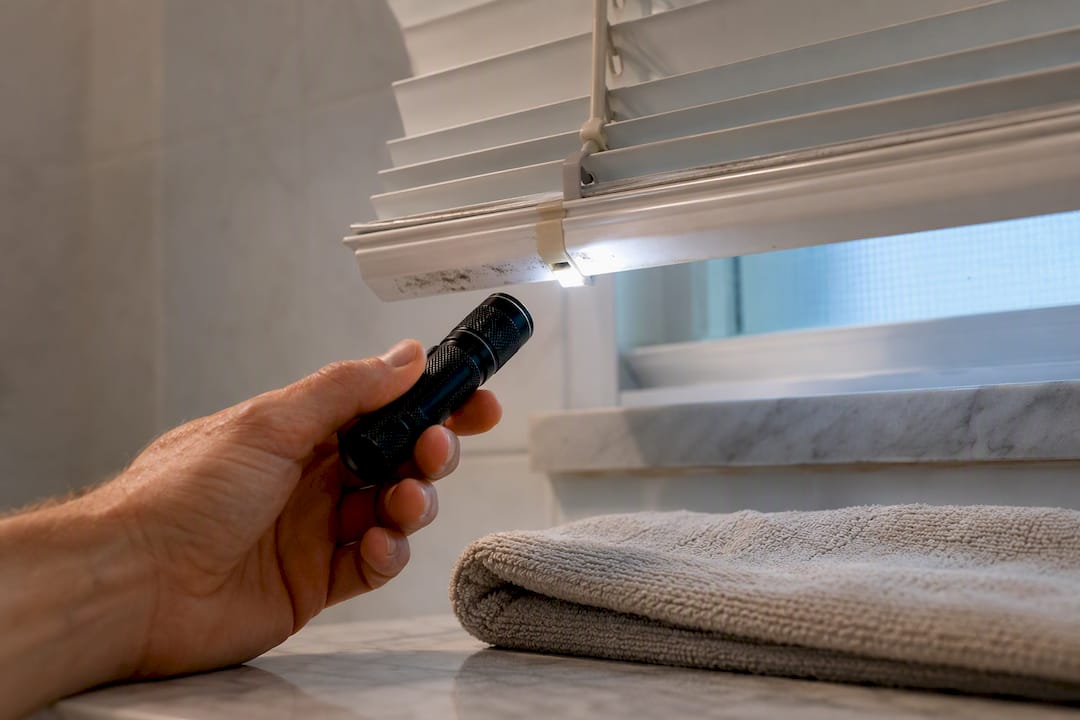
Quarterly, check for binding at the tilt mechanism, look closely at the underside of slats for surface mold (a common blind spot, literally), and confirm mounting brackets haven’t loosened from repeated humidity-driven expansion and contraction.
Avoid ammonia, bleach concentrate, and abrasive scrub pads on any coated surface. They strip the finish that’s doing the actual moisture-resistant work, leaving raw material exposed to the next humid cycle.
Pro Tip: If you spot a faint musty smell before you see visible mold, that’s your cue to inspect immediately. Odor almost always shows up before the discoloration does.
Here’s what realistic lifespans look like when materials are matched correctly to the room:
- PVC and engineered faux wood: 8 to 12 years with basic monthly cleaning.
- Powder-coated aluminum: 10 to 15 years, longer with stainless steel hardware.
- Untreated bamboo or solid wood in bathrooms: often under 3 years before warping or mold forces replacement.
A periodic professional check-up on hardware and mounts, even just every few years, catches early corrosion before it becomes a full teardown. For something more involved than a wipe-down, our step-by-step blind repair guide walks through fixing binding slats and loose brackets before you write the whole unit off.
Choosing Blinds for Humid Rooms: A Quick Checklist
Before you order anything, run through this list against your actual window and room conditions.
- Exposure type: steam-only, splash zone, or direct water contact?
- Ventilation: does the room have an exhaust fan, and does it actually get used?
- Mount style: outside mount for airflow, or inside mount tucked into a damp recess?
- Finish and hardware spec: powder coating on metal, stainless steel fasteners, sealed edges on PVC?
- Cleaning tolerance: can you commit to monthly wipe-downs, or do you need something closer to maintenance-free?
- Warranty length: does it specifically cover humidity-related failure, or just general defects?
Three quick scenarios to make this concrete: for a small window right beside the shower, go with waterproof PVC and a sealed outside mount. For a steam-only family bathroom with decent ventilation, powder-coated aluminum or faux wood covers you comfortably. For a kitchen sink window, prioritize a wipeable, non-textured PVC or coated aluminum slat that shrugs off grease as easily as water.
Antimicrobial surface treatments are worth asking about directly. Silver ion or copper-based coatings reduce microbial growth on treated surfaces compared with untreated equivalents, and that’s a meaningful edge in a room that’s damp more often than dry. When you’re evaluating bathroom window covering options, ask the seller point-blank about coating specs, alloy grade on hardware, and whether the warranty explicitly names humidity or moisture damage.
How Moisture Resistance Actually Varies Across Products
Not every blind labeled “moisture resistant” performs the same way once it’s hanging in a real bathroom for a few years. The differences usually come down to three things: the base polymer or metal alloy used, the quality of the surface coating, and whether the hardware was upgraded to match the slat material.
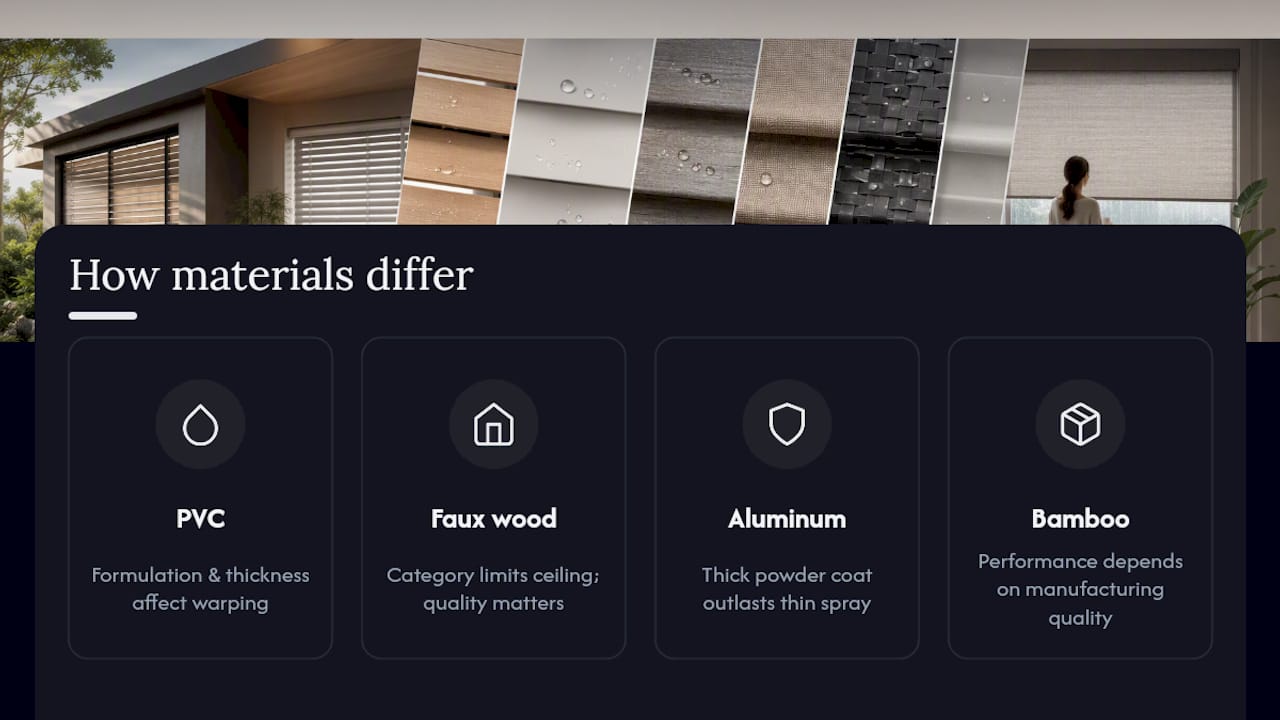
Budget PVC blinds and premium PVC blinds can look nearly identical on a product page, but the plastic formulation and slat thickness affect how well they resist warping under repeated heat and humidity cycles. Thinner, cheaper vinyl flexes more and can develop a permanent curl over time. Aluminum products vary just as much. A powder-coated finish applied thickly and evenly outlasts a thin spray coat by years, and that’s rarely something you can judge from a photo.
The honest takeaway is that material category (PVC, faux wood, aluminum, bamboo) tells you the ceiling of what’s possible, but manufacturing quality and hardware grade determine whether a given product actually reaches that ceiling. A well-made PVC blind from a mid-tier line often outperforms a poorly finished product using the same base material.
How to Verify Moisture Resistance Before You Buy
Marketing language alone won’t tell you whether a blind will hold up in your bathroom. A few practical checks will get you closer to the truth than any product description.
Ask for the specific coating or treatment name, not just the word “coated.” A vague answer usually means there isn’t a real spec behind the claim. Request the fastener and hardware material in writing. If a seller can’t tell you whether brackets are stainless steel or standard steel, treat that as a red flag rather than an oversight.
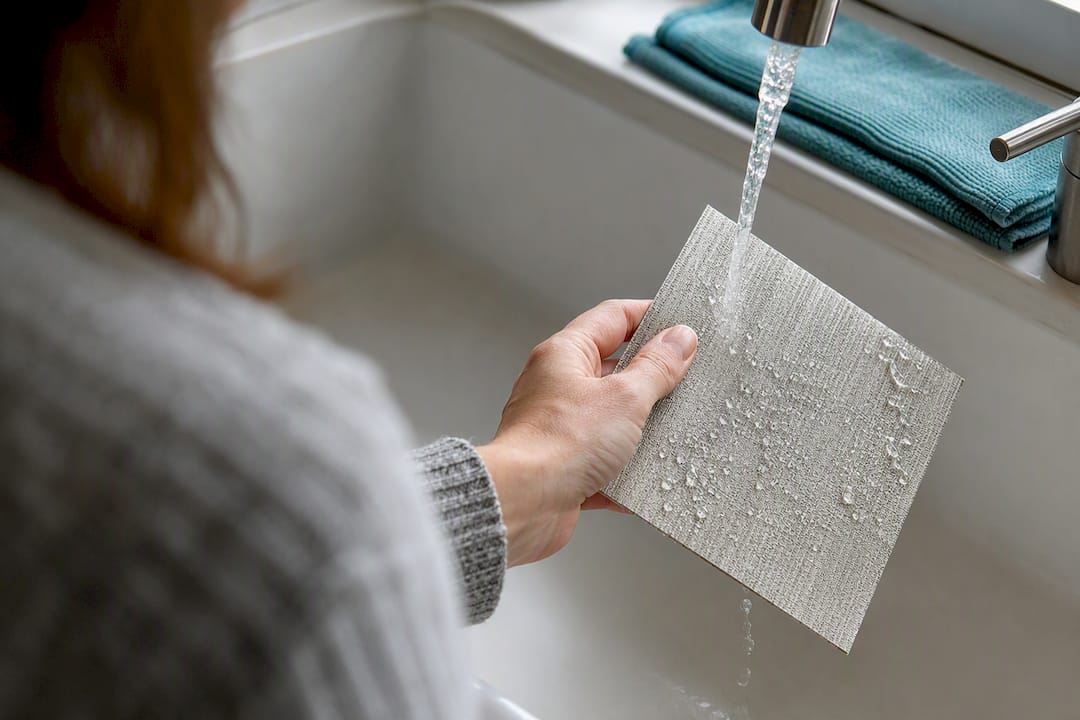
Look for any reference to humidity or thermal-cycle testing, even informal manufacturer data, and compare it against what you learned above about how PVC and aluminum are supposed to perform. Order a physical swatch before committing to a full custom order, and test it yourself: run it under warm water, let it air dry, and check for warping, discoloration, or a lingering odor after a day or two. A material that holds its shape and color through that simple test has cleared the first real hurdle.
What I’ve Learned Watching Blind Choices Play Out
The homeowners who get this right aren’t the ones who chase the prettiest slat. They’re the ones who match material to exposure honestly, even when that means giving up a wood look they wanted. I’ve seen plenty of gorgeous bamboo shades pulled down moldy within a year, right next to PVC blinds in the same house still holding up a decade later. If you want a straightforward path to getting this right, Value Blinds builds moisture-resistant options specifically for rooms like these.
— Sunny
Value Blinds Makes Humidity-Proofing Your Windows Simple
Value Blinds is built for exactly the tradeoffs covered above, without forcing you to choose between good looks and material science that actually holds up. Our PVC faux-wood slats deliver that warm wood aesthetic with the moisture performance real wood can’t offer, our cordless cellular shades eliminate cord mechanisms that trap moisture and grime, and our powder-coated metal blinds pair corrosion-resistant finishes with upgraded hardware as standard, not an upsell.
Every order comes with free fabric and slat swatches, so you can run your own humidity test at home before committing to a full custom order. Our Window Treatment Design Studio walks you through matching material to room exposure, and professional installation options make sure mounting hardware is sealed and set up correctly the first time. Browse the full blinds collection and order your free swatches today to see how the materials feel before they go up on your wall.
Sources
Recommended
- Durable Window Treatments: What Lasts and Why
- Best Waterproof Window Coverings – Expert Comparison 2025
- 7 Expert Tips for Choosing Low Maintenance Window Coverings

Value Blinds®
Trusted window treatments provider
Value Blinds® is a trusted provider of Greenguard, OEKO-TEX, and FSC-certified window treatments based in Portland, Oregon. Specializing in sustainable, motorized, smart-controlled, and outdoor-ready blinds and shades, the company is built on a foundation of simplified shopping, premium eco-friendly materials, and transparent pricing without the inflated cost.