
Motorized Outdoor Shades: Enhance Comfort, Style, and Efficiency
TL;DR:
- Modern motorized outdoor shades are engineered to withstand weather, offering wind stabilization, smart automation, and durable materials. Their effectiveness depends on proper stabilization hardware, reliable wind sensors, and tailored control systems aligned with your site conditions. Prioritizing installation quality, conservative safety margins, and ongoing maintenance ensures long-lasting performance and energy efficiency.
Motorized outdoor shades have a reputation problem. Many homeowners assume they’re fragile, complicated to install, or just a luxury upgrade that underperforms the moment a real storm rolls in. That thinking is outdated. Modern motorized outdoor shade systems are engineered with wind stabilization hardware, smart automation, and outdoor-rated materials that stand up to genuine weather conditions while delivering measurable energy savings and serious curb appeal. This guide cuts through the marketing noise and gives you a clear picture of how these systems work, what the specs actually mean, and how to choose and care for the right setup for your home or property.
Table of Contents
- How motorized outdoor shades work
- Wind safety and performance: What matters most
- Energy efficiency: How motorized shades improve comfort and reduce costs
- Choosing and maintaining the right outdoor shade
- Our perspective: Why ‘wind rated’ isn’t enough (and what actually matters)
- Explore value and style with premium motorized outdoor shades
- Frequently asked questions
Key Takeaways
| Point | Details |
|---|---|
| Understand wind limits | Wind ratings alone aren’t universal; always set shades to retract before local risks exceed safe thresholds. |
| Enhance energy efficiency | Motorized outdoor shades reduce indoor heat and AC bills when used with smart controls and efficient power systems. |
| Prioritize safety features | Choose systems with wind sensors, robust stabilization, and automated safeguards for peace of mind. |
| Match shade to need | Select motorization, fabric, and controls that fit your climate, installation constraints, and style goals. |
| Routine maintenance is key | Consistent, simple upkeep ensures motorized shades perform reliably for years. |
How motorized outdoor shades work
At the core, a motorized outdoor shade is a rolling shade powered by an electric motor instead of a manual crank or pull cord. But the category covers a wide range of setups, and understanding the differences helps you choose wisely.
Motorization types fall into three main groups. Wired (line-voltage) motors connect directly to your home’s electrical system and offer consistent power without ever needing a battery swap. Low-voltage systems, often running at 24V DC, draw less power, integrate more cleanly with building automation systems, and are easier to run through conduit without a licensed electrician in many jurisdictions. Wireless battery-operated or solar-charged motors eliminate wiring altogether, making them ideal for pergolas, detached structures, or retrofit situations where running electrical lines is impractical or expensive.
What makes outdoor shades different from their indoor cousins is their additional structural engineering. Because they face wind, rain, UV exposure, and temperature swings, quality systems incorporate several layers of protection. Wind stabilization systems such as cable guides or side channels keep the fabric tracking straight and prevent it from billowing or detaching in gusts. A weighted hem bar along the bottom edge holds the shade taut and reduces flutter. Outdoor-rated fabrics resist UV degradation, moisture, mold, and fading in ways that standard interior shade materials simply cannot.
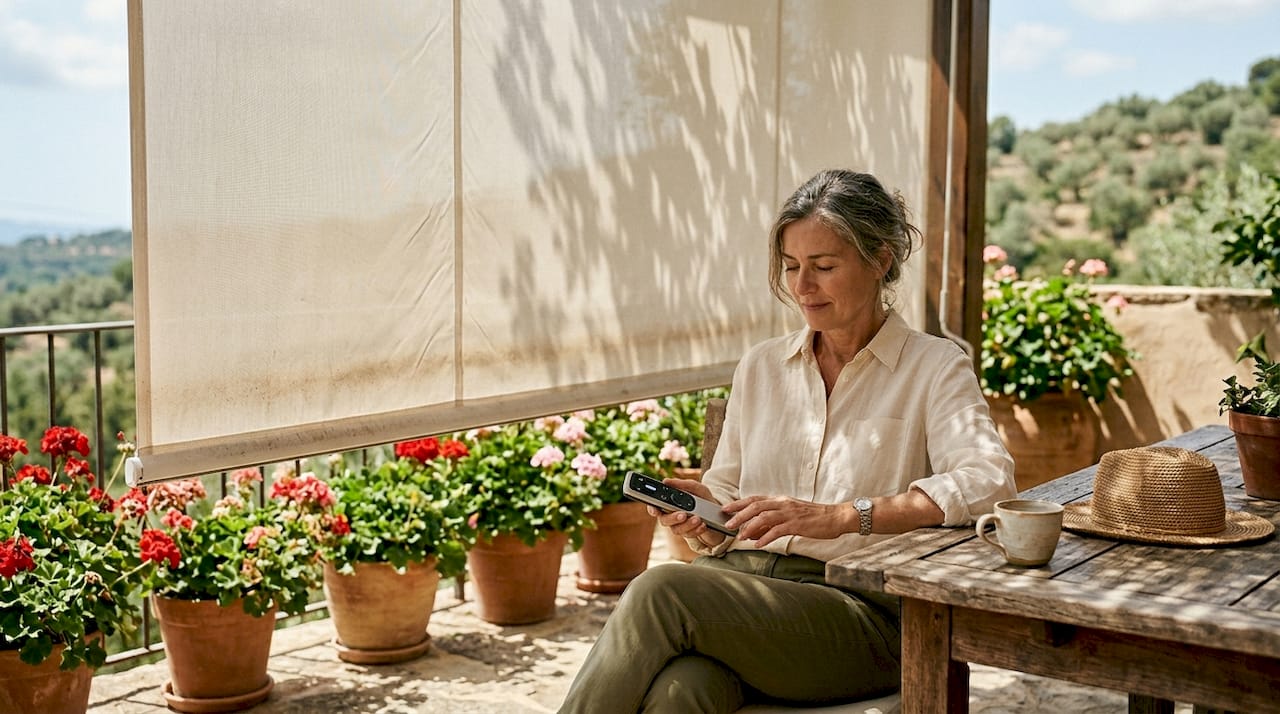
Control options have become impressively versatile. You can operate shades with a wall switch, a handheld remote, a smartphone app, or a building management system. Automation features let you schedule shades to drop at noon and retract at sunset, or link them to wind and sun sensors for fully hands-free operation. Many systems integrate with popular smart home platforms, giving you voice control and scene-based automation.
Here’s a quick overview of the core features that define a quality motorized outdoor shade system:
- Motorized lift mechanism rated for outdoor duty cycles and temperature ranges
- Outdoor-rated fabrics with UV resistance, moisture tolerance, and long-term color stability
- Reinforced stabilization hardware such as cable guides, side channels, and hem bars
- Smart controls including remotes, timers, app integration, and sensor inputs
- Optional smart home integration for automation, voice control, and scheduling
If you’re shopping for windproof motorized sunshades for a large patio or deck, these features aren’t optional extras. They’re the foundation of a system that will actually perform over the long haul.
Wind safety and performance: What matters most
Wind resistance is where outdoor shade marketing tends to get fuzzy, and it’s where homeowners get burned most often. A number on a spec sheet does not automatically translate to reliable real-world performance at your specific property.
Wind resistance ratings for exterior shades and awnings are typically developed through standardized wind-performance testing conducted in controlled lab conditions. Those numbers represent performance in a specific test setup, not necessarily the chaotic, turbulent gusts that funnel between buildings in an urban canyon or sweep across an elevated hillside lot. The same 20 mph rating means something very different on a sheltered suburban patio than it does on an exposed rooftop terrace.
Mechanical stabilization is your first line of defense. Cable guide systems thread the shade fabric through vertical cables anchored at the top and bottom of the installation, keeping the fabric constrained even in turbulent conditions. Side channel systems enclose the fabric edges inside a track, offering even stronger containment. Both approaches address the fundamental problem of wind load acting on a large, flexible surface. However, some stabilization systems focus on anchoring the hem bar rather than constraining the fabric across its full width, which means the fabric itself can still experience stress in extreme gusts. Knowing exactly what a system stabilizes and how is critical before you buy.
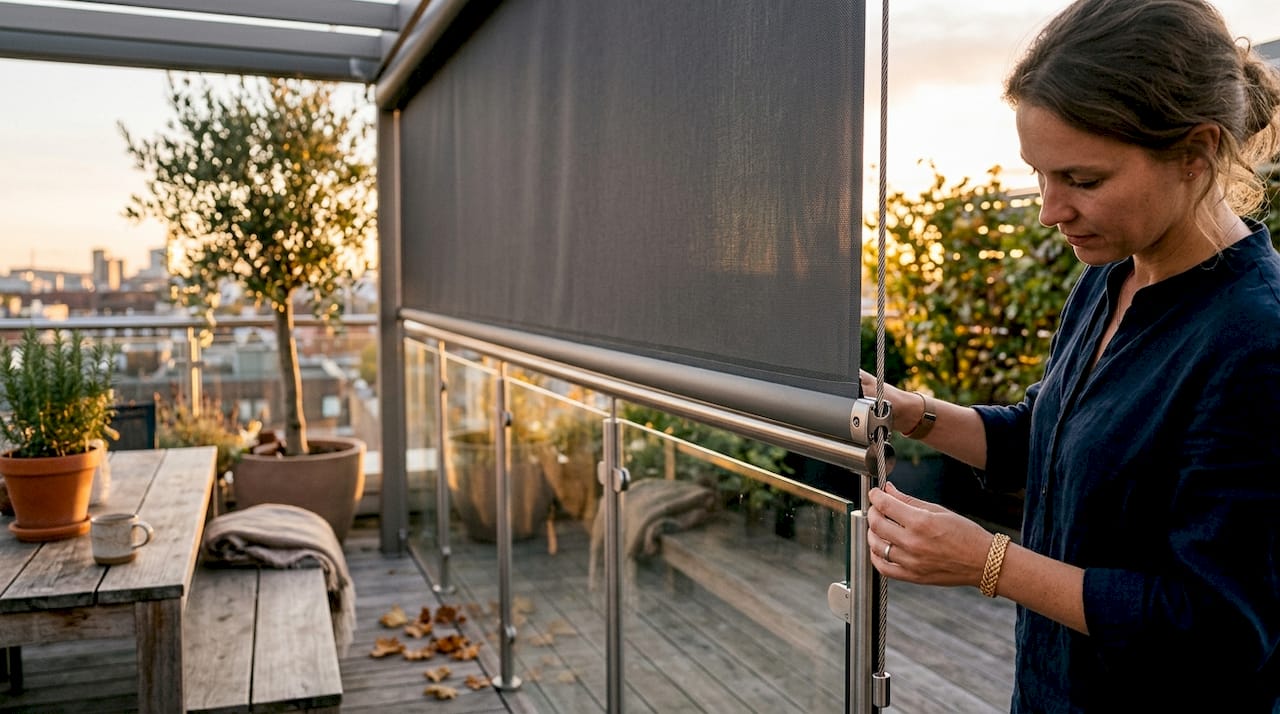
Automatic wind sensors add another layer of protection. Wind sensors that automatically retract shades when gusts exceed a preset safety threshold are one of the most practical investments you can make for an outdoor shade system. Wireless models are easy to mount in an exposed location and communicate directly with your shade’s motor controller. You set the threshold, and the system retracts before the wind does damage.
Here’s a comparison of the main wind stabilization approaches:
| Method | How it works | Best for | Limitation |
|---|---|---|---|
| Cable guides | Fabric threads through tensioned vertical cables | Wide spans, strong winds | Requires precise tensioning and anchoring |
| Side channels | Fabric edges run inside enclosed tracks | Maximum containment, consistent deployment | More complex to install; limits fabric removal |
| Hem bar weighting | Heavy bar at the bottom holds fabric taut | Reducing flutter in moderate winds | Less effective in high gusts without guide systems |
| Wind sensors (auto-retract) | Motor retracts shade when wind exceeds threshold | All installations as a backup safety layer | Requires power and proper sensor placement |
Key guidance: No wind rating is a guarantee of survival for every site. Match the system’s rating to your local wind exposure, and always build in a conservative safety margin. A system rated to 25 mph is not one you want to leave deployed during a 22 mph sustained wind event.
Pro Tip: Before finalizing your purchase, ask the manufacturer or retailer for the exact test conditions behind their wind rating. If they can’t tell you, treat the number with skepticism.
For customers who want maximum sun and wind performance together, windproof outdoor sunshades with side channel systems offer the most reliable configuration. For areas that need total light blocking along with weather resistance, blackout sunshades for large patios combine dense fabric with reinforced hardware for the most demanding applications.
Energy efficiency: How motorized shades improve comfort and reduce costs
Beyond comfort and protection, motorized outdoor shades are a genuine energy management tool. The mechanics are straightforward: shading your windows and patio surfaces before heat enters is far more effective than trying to cool air that’s already been heated by direct sun exposure.
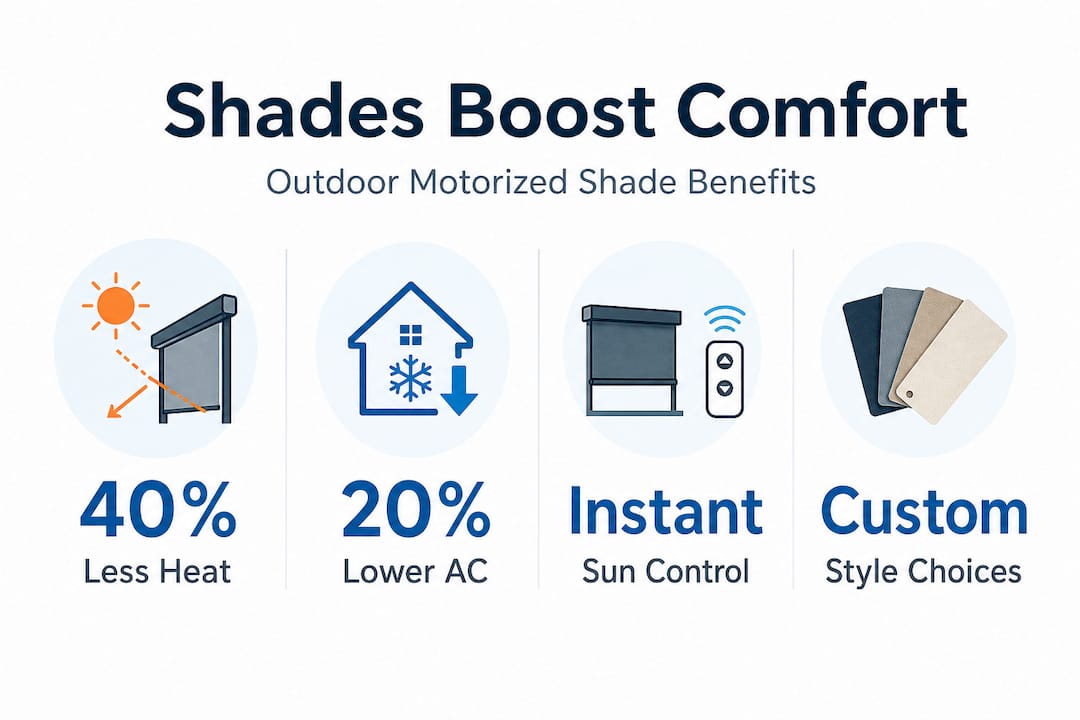
Solar gain control is the technical term for managing how much sunlight enters a building and converts to heat. On a hot afternoon, an unshaded west-facing window can add significant heat load to a room, forcing your air conditioning system to work harder. A properly deployed outdoor shade intercepts that solar radiation before it hits the glass, cutting heat transfer dramatically. Studies on reducing AC bills consistently show that external shading outperforms internal window treatments for heat management because it stops heat before it enters, rather than after.
Low-voltage motorization makes the energy equation even better. 24V DC motorization systems draw minimal power during operation and near-zero power at rest, making them cost-effective to run continuously in an automated setup. When integrated with a building management system or smart home platform, these motors respond to occupancy sensors, thermostats, and weather data to deploy shades exactly when needed and retract them when natural light or warmth is welcome.
The custom hybrid outdoor solar shade option is worth noting here: it combines manual and motorized operation in a single system, giving you flexibility without full commitment to a powered setup. For properties in areas with frequent power outages, or for budget-conscious projects, hybrid systems offer a smart middle ground.
Here’s a data comparison of how different shade and motorization approaches affect energy performance:
| Shade type | Heat gain reduction | Automation potential | Best energy scenario |
|---|---|---|---|
| Manual outdoor solar shade | High (up to 70%) | None | Owner-occupied homes, consistent users |
| Motorized with timer | High | Moderate | Regular schedules, predictable sun patterns |
| Motorized with sun sensor | Very high | High | Variable climates, large glazed areas |
| Motorized with building automation | Maximum | Full | Commercial properties, multi-zone management |
The full spectrum of smart sun shade solutions is worth exploring if you’re managing multiple exposure directions or a commercial property with large glazed facades. The combination of automation and quality fabric openness ratings lets you balance heat control with preserved views and natural daylight.
Key ways motorized outdoor shades improve building efficiency include:
- Blocking heat and glare before it enters the building envelope
- Enabling passive cooling by shading thermal mass surfaces like concrete and decking
- Reducing misuse through automation: shades deploy and retract on schedule, not based on who remembers
- Preserving views and outdoor usability while still cutting solar load
- Protecting furnishings, flooring, and artwork from UV fade, extending the life of interior investments
The full case for exterior shade benefits goes well beyond summer cooling: winter sun management, glare reduction for home offices, and outdoor comfort extension into shoulder seasons all contribute to a compelling return on investment.
Choosing and maintaining the right outdoor shade
Picking the right motorized outdoor shade comes down to matching system features to your specific site, lifestyle, and goals. Here’s a practical step-by-step approach:
- Assess your site. Measure the width and drop height you need. Note sun exposure angles, wind exposure level, and whether the mounting surface is solid masonry, framing, or a pergola structure.
- Define your wind and safety needs. Research typical wind speeds in your area and identify whether your site has any features that concentrate or amplify gusts. Choose a stabilization system rated conservatively for those conditions.
- Select your controls. Decide whether wired, battery, or solar power is realistic for your install location. Some systems use platforms like Zigbee or other wireless protocols that connect to broader smart home ecosystems, which is worth considering if you want seamless integration with other automated features in your home.
- Choose your fabric. Match openness factor to your goals. A 2% openness fabric blocks most light and provides strong privacy. A 6% openness lets in more natural light while still cutting glare and heat. For total blackout conditions, a 0% openness fabric eliminates all light transmission.
- Confirm power compatibility. Wired installations should be planned with an electrician. Battery and solar options need assessment for charge capacity relative to how often the shades will cycle.
- Consider aesthetics. Fabric color, hardware finish, and cassette style all contribute to your home’s visual appeal. Order free swatches before committing to a color.
- Plan for maintenance from day one. A system you can easily clean, inspect, and service will outlast one that requires disassembly for routine care.
For blackout outdoor sunshades in particular, fabric maintenance matters more because the denser weave can trap more debris and moisture if not cleaned regularly.
Pro Tip: Set your wind sensor threshold at least 20% below the system’s stated maximum wind rating. This gives you a meaningful safety buffer and reduces wear from stress cycling near the system’s limits.
Maintenance basics are simple but important. Brush debris off fabric monthly during active use seasons. Inspect cable tension and track alignment twice a year. Test sensor function after any major storm. If the motor sounds different than usual during operation, schedule a professional check before it becomes a failure. Most quality systems include service-accessible components specifically designed for field adjustment.
Our perspective: Why ‘wind rated’ isn’t enough (and what actually matters)
Here’s the honest conversation most brands won’t have with you: a wind rating number is a starting point, not a guarantee. We’ve seen installations where a system rated well above local average wind speeds failed because the installation site had an architectural feature that created a wind vortex nobody anticipated. We’ve also seen modest systems outlast expensive ones because the owners set up conservative sensor thresholds and actually followed retraction guidance when weather turned.
The real variables are installation quality, user habits, and sensor configuration, not the spec sheet. A shade deployed in defiance of a sensor warning during a sudden storm doesn’t care about its lab rating. The spec only performs when the system is used as designed.
Our contrarian advice: prioritize service accessibility and conservative safety margins over the highest wind numbers in a brochure. A system you trust to retract before stress occurs, and that you can maintain without drama, will serve you better than a theoretically superior system you never quite trust to handle your specific conditions.
The “living with automation” mindset matters here. Smart outdoor shade systems work best when you treat them as active participants in your home’s environment management, not set-and-forget installations. Spend time dialing in your schedules and sensor thresholds in the first few weeks. Check the real-world shade benefits against your actual energy use and comfort levels after a month. Adjust. That iterative process, not the purchase decision alone, is what makes motorized outdoor shades a genuinely worthwhile investment.
Explore value and style with premium motorized outdoor shades
Everything covered in this guide points toward one practical next step: finding a shade system that matches your real-world conditions, not just your wishlist. At Value Blinds, we specialize in exactly that kind of match.
Our motorized exterior shades feature side rail systems, premium outdoor fabrics, and flexible control options designed for real residential and commercial applications. Whether you’re upgrading a single patio or outfitting a multi-unit property, our customization tools let you dial in the right dimensions, fabric, and hardware for your project. You’ll also find an extensive selection of vertical blinds and other high-quality blinds to complete your interior and exterior window treatment plan. Free swatches, expert support, and detailed measurement guides make the process straightforward from first click to final install.
Frequently asked questions
How much wind can motorized outdoor shades handle?
Most quality motorized outdoor shades are designed to retract automatically when gusts exceed a preset safety threshold, typically in the 15 to 25 mph range, though actual performance depends heavily on site exposure and installation quality. The Draper FlexShade XL, for example, recommends retraction at 15 mph, which is a conservative and sensible real-world guideline.
Can motorized outdoor shades help lower air conditioning costs?
Yes, external shading cuts solar heat gain before it enters the building, which reduces the load on your AC system and lowers energy bills over time. Low-voltage 24V motors add to those savings by drawing minimal electricity themselves, especially when paired with automated scheduling.
What’s the best control option for motorized outdoor shades?
The best setup combines remote or app-based control with a wind sensor for safety, matched to your available power source. Wireless Zigbee-compatible systems work well for retrofit installs or locations where running new wiring is impractical, while wired systems suit new construction or major renovation projects.
How do I maintain motorized outdoor shades for long-term use?
Brush off fabric debris monthly, inspect hardware alignment and sensor function twice a year, and always retract shades before storms or whenever wind approaches your system’s rated threshold. Catching small issues early, like unusual motor sounds or misaligned tracks, prevents expensive repairs down the line.