
Motorized Roller Shades: Smart Comfort at Home
Finding the perfect window treatment can seem confusing when you want both comfort and control in your home. For homeowners seeking a blend of energy-efficient automation and modern design, motorized roller shades stand out for their quiet operation, style flexibility, and seamless smart home compatibility. Whether you prioritize personalizing your home’s look or crave the simplicity of voice and app control, you’ll discover how today’s solutions meet diverse needs without sacrificing convenience or budget.
Table of Contents
- Motorized Roller Shades Defined And Debunked
- Key Features And Technology Explained
- Motor Quality And Performance
- Smart Features That Add Value
- Types And Styles For Custom Needs
- Fabric Options For Every Situation
- Sizing And Customization
- Matching Your Home’s Aesthetic
- Benefits For Energy, Safety, And Automation
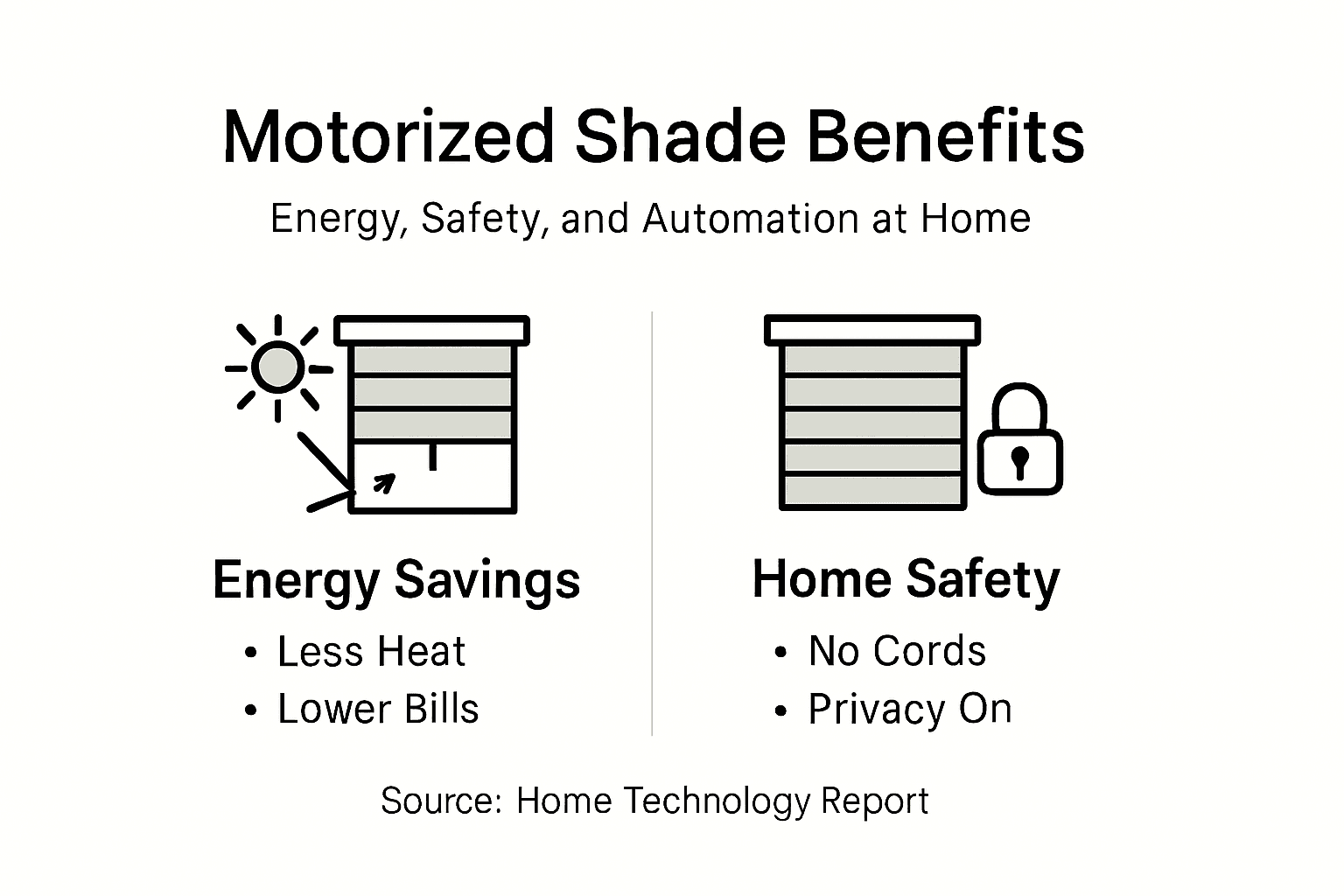
- Energy Efficiency And Cost Savings
- Safety And Security Benefits
- Smart Home Automation Integration
- Cost, Maintenance, And What To Avoid
- Installation And Professional Help
- Maintenance Requirements And Longevity
- Common Mistakes To Avoid
- Long-Term Value Assessment
Key Takeaways
| Point | Details |
|---|---|
| Affordability and Options | Motorized roller shades are available for various budgets, debunking the myth that they’re solely luxury items. |
| Easy Installation | Battery-powered versions can be installed like regular shades, while hardwired ones require professional help. |
| Energy Efficiency | Properly managed motorized shades can reduce heating and cooling costs significantly, making them a smart investment. |
| Safety and Convenience | Cordless operation improves safety for families with children, while automation enhances daily convenience and home security. |
Motorized Roller Shades Defined and Debunked
Motorized roller shades are window coverings that combine traditional roller shade design with automated controls, allowing you to open and close them at the push of a button, via smartphone app, or through voice commands. Unlike standard roller shades that require manual pulling, these shades house a quiet motor inside the roller tube that retracts or extends fabric with precision. The motor connects to a power source (either battery powered or hardwired) and pairs with a control system, whether that’s a remote control, wall switch, smartphone application, or smart home integration like Amazon Alexa or Google Home. The fabric itself rolls up horizontally onto the motorized tube, creating a clean, minimalist look when fully extended and complete light blocking when fully retracted. What makes them distinct from other motorized window treatments is their simplicity and sleek profile. There’s no complex mechanism, chain system, or bulky components visible. The motor does all the work internally.
Now let’s address what motorized roller shades actually are versus the myths circulating about them. Many homeowners assume motorized shades are exclusively luxury products reserved for high-end smart homes. False. Modern options serve multiple budgets, from affordable basic motorized models to feature-rich systems. Another common misconception is that they’re complicated to install and require professional electricians. While hardwired versions do need electrical work, battery-powered motorized roller shades install similarly to standard roller shades. You’re also probably heard that motorized shades are unreliable and constantly malfunction. Battery-powered systems from reputable manufacturers operate reliably for years with minimal maintenance, and motorized blinds and shades guide covers what to expect in terms of performance and longevity. Some assume they consume enormous amounts of electricity, yet a single set of AA batteries can operate motorized shades hundreds of times before needing replacement. The energy consumption is genuinely minimal.
Here’s what separates quality motorized roller shades from disappointing ones: the motor’s noise level, speed of operation, and integration capabilities. Premium systems operate nearly silently at around 20-30 decibels, while cheaper models can sound like a small vacuum running in your bedroom. Speed matters too. Slow operation takes 30-45 seconds to fully open or close, while better systems complete the same action in 10-15 seconds. Integration capabilities determine whether your shades work with your existing smart home ecosystem. Does the remote require line-of-sight, or does it work through walls? Can you control them from anywhere via app, or only when home? Can you set schedules so shades automatically open at sunrise and close at sunset? These details differentiate a convenient addition to your home from a genuinely transformative upgrade. Battery type also matters significantly. Lithium batteries last considerably longer than alkaline alternatives and maintain consistent performance throughout their lifespan, whereas alkaline batteries fade gradually and lose power in cold weather.
Pro tip: Before purchasing, verify that the motorized shade system uses rechargeable lithium batteries rather than disposable alkaline ones, as this reduces long-term costs and ensures consistent performance across all seasons.
Key Features and Technology Explained
Motorized roller shades operate through a combination of simple yet effective components that work together seamlessly. At the core sits the motor, which is the heart of the entire system. This motor is remarkably quiet, typically operating at sound levels comparable to a whisper or soft conversation. The motor connects to a power source, which gives you flexibility in installation. You can choose battery-operated systems that run on AA or rechargeable lithium batteries, making them perfect if you want to avoid electrical work entirely. Alternatively, hardwired options plug directly into your home’s electrical system, eliminating the need for battery replacements but requiring professional installation. The fabric attached to the motorized tube determines how your shades perform. Different fabric options handle light filtration differently, some allowing filtered natural light while others provide complete blackout capabilities. The choice between privacy, light control, and aesthetic appeal influences which fabric you select. Beyond the physical components, motorized shade convenience features encompass the automation capabilities that transform basic shades into intelligent home elements.
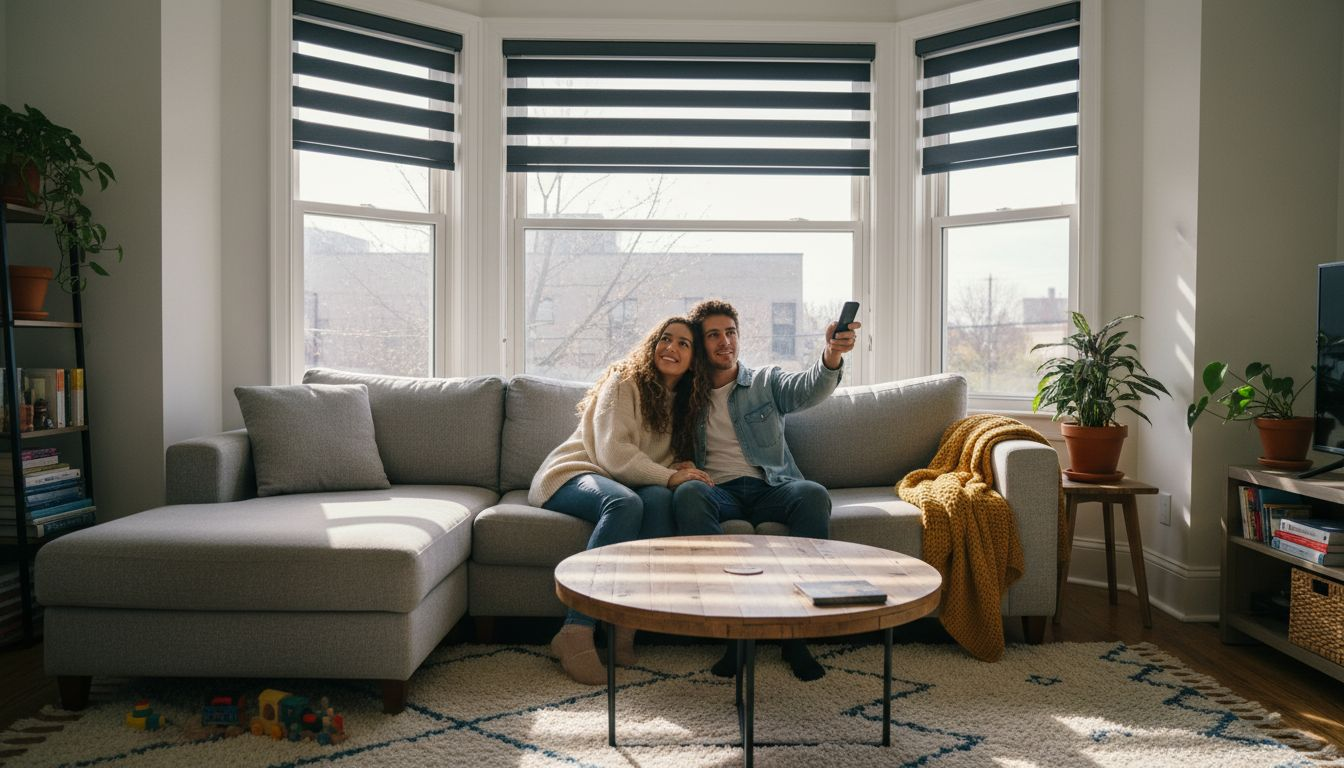
Control systems determine how you interact with your motorized shades daily. The most basic option is a wireless remote control, which offers simplicity and instant access without requiring smartphone setup. Wall-mounted switches provide a permanent fixture in your home for quick adjustments without reaching for a remote. For tech-forward homeowners, smartphone app control lets you open and close shades from anywhere, whether you’re at work, on vacation, or lying in bed. This flexibility means you can adjust your home’s light and privacy remotely, which is particularly useful when you’re away and want to simulate occupancy for security. Voice command integration through devices like Amazon Alexa or Google Home adds another layer of convenience. You can simply say “Alexa, close the living room shades” without touching anything. The most powerful feature across all quality motorized systems is automation scheduling. You set rules based on time, sunlight intensity, or temperature. Your shades can automatically open at sunrise to let in natural light and close at sunset for privacy and insulation. Some systems detect cloud cover and adjust accordingly, optimizing natural light throughout the day.
Motor Quality and Performance
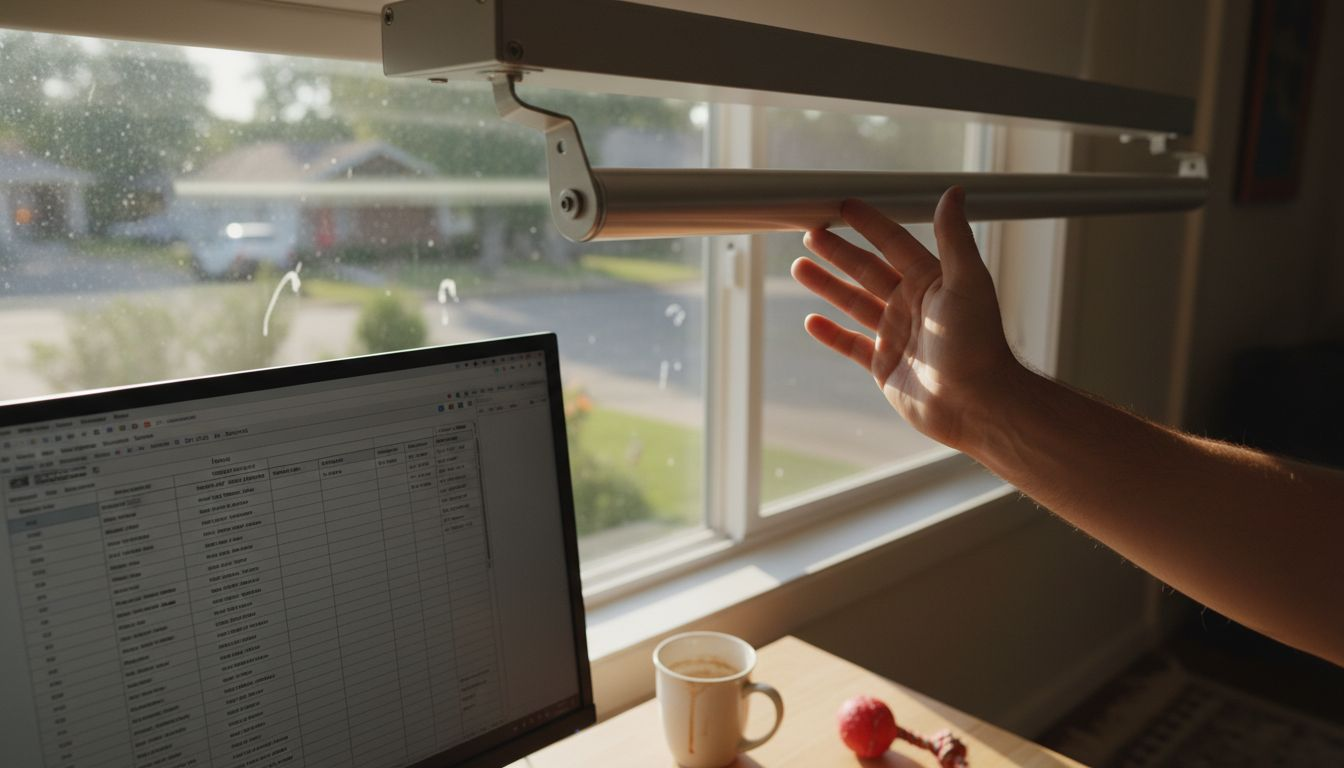
Not all motors are created equal, and this distinction directly impacts your experience. Premium motors operate faster, completing a full open or close cycle in 10-15 seconds compared to 30-45 seconds for budget options. Speed matters when you’re adjusting multiple sets of shades or responding to changing light conditions. Motor longevity depends on build quality and materials. Better motors use reinforced internal components and superior bearings that resist wear over thousands of cycles. A quality motor can handle 300-500 open and close cycles per year for a decade or longer without performance degradation. Budget motors may struggle after a few years of regular use. Stall protection is another technical feature that matters. This safety mechanism stops the motor if it encounters resistance, preventing damage to the shade or injury if something blocks the path. Smart integration capabilities vary significantly too. Some systems only work within your home network, while others connect through cloud-based platforms, allowing control from anywhere globally. Compatibility with your existing smart home ecosystem determines whether everything works together smoothly or requires multiple separate apps.
Smart Features That Add Value
The best motorized roller shade systems include features that adapt to your lifestyle. Geofencing uses your smartphone’s location to automatically adjust shades when you arrive home or leave. Tired of coming home to a dark house in winter? Geofencing can open your shades 15 minutes before you arrive. Temperature sensors coordinate with your thermostat, closing shades during peak sun hours to reduce cooling costs in summer or opening them on winter mornings to gain passive solar heat. Scene settings let you program multiple shades to act together. Press one button and your bedroom shades close while living room shades open to half position. This orchestrated control feels premium and dramatically improves daily convenience. Battery backup on hardwired systems ensures you can still operate shades manually during power outages, preventing you from being trapped without light or privacy. Dual motor options for extra-large windows distribute weight and ensure smooth, level operation on wider installations.
Pro tip: Choose motorized shades with rechargeable lithium batteries if going battery-powered, and verify the system supports scheduling and automation, as these features provide the most value and convenience for everyday living.
Types and Styles for Custom Needs
Motorized window treatments come in several distinct styles, each suited to different room aesthetics and functional requirements. Motorized roller shades are the most popular option, offering clean lines and minimalist appeal that work in contemporary, modern, or transitional homes. They roll smoothly onto a horizontal tube when opened, disappearing into a compact headrail. This design is perfect for rooms where you want an uncluttered look when shades are open. Motorized Roman shades provide a more traditional and elegant appearance with soft fabric folds that descend as the shade lowers. They work beautifully in formal living rooms, bedrooms, or studies where you want a sophisticated aesthetic. The layered fabric creates visual interest and can add warmth to a space. Motorized cellular shades offer exceptional insulation benefits alongside style. These honeycomb-structured shades trap air in their chambers, reducing heat transfer through windows by up to 25 percent in winter and blocking solar heat in summer. They’re excellent for energy-conscious homeowners who want both comfort and efficiency. Motorized vertical blinds suit large windows or glass doors, offering easy operation and a commercial-yet-refined appearance. Motorized roller blinds, Roman shades, cellular shades, and vertical blinds each provide unique design and functional benefits depending on your window dimensions and room style preferences.
To help you select the ideal motorized shade style, here’s a comparison of popular types and their unique benefits:
| Shade Type | Best Room Match | Insulation Level | Visual Style |
|---|---|---|---|
| Roller Shade | Living rooms, offices | Moderate | Minimal, clean lines |
| Roman Shade | Formal spaces, bedrooms | Low | Elegant, textured folds |
| Cellular Shade | Bedrooms, sunrooms | High | Soft, honeycomb pattern |
| Vertical Blind | Large windows, glass doors | Low | Tall, modern panels |
Fabric Options for Every Situation
Beyond shade type, fabric selection dramatically influences both appearance and performance. Light-filtering fabrics allow soft, diffused natural light into your room while maintaining privacy. These work well in living rooms and kitchens where you want brightness without glare or visibility from outside. Blackout fabrics block nearly all light, making them ideal for bedrooms, media rooms, or nurseries where darkness is essential. Some blackout fabrics are also thermal insulated, adding an extra layer of energy efficiency. Room-darkening fabrics fall between light-filtering and blackout options, blocking about 90 percent of light while still allowing some glow. Waterproof fabrics are specifically designed for kitchens and bathrooms where moisture exposure is constant. They resist mildew, staining, and moisture damage, maintaining appearance and functionality in humid environments. Sheer fabrics provide a delicate, airy feel while allowing plenty of natural light, perfect for spaces where you prioritize brightness over privacy. Color and pattern choices matter too. Neutral tones work with any decor, while bolder colors or patterns can serve as a design statement. Consider your existing furnishings, wall colors, and overall room aesthetic when selecting fabric appearance. The motorized mechanism works identically across all fabric types, so your choice is purely about achieving the look and light control you want.
For an at-a-glance guide to motorized shade fabric options and their ideal use cases, review the table below:
| Fabric Type | Light Control | Recommended Use | Durability & Care |
|---|---|---|---|
| Light-filtering | Soft natural light | Kitchens, living rooms | Easy, brush vacuuming |
| Blackout | Blocks nearly all | Bedrooms, media rooms | High, occasional spot clean |
| Room-darkening | Reduces most light | Home theaters, nurseries | Moderate, low-maintenance |
| Waterproof | Moisture resistance | Baths, laundry rooms | Excellent, resists mildew |
| Sheer | Maximum brightness | Sunrooms, reading nooks | Delicate, gentle cleaning |
Sizing and Customization
One of the greatest advantages of motorized roller shades is their ability to accommodate virtually any window configuration. Standard rectangular windows measure straightforwardly and install easily. Shaped windows like arches, circles, or angled skylights require custom fabrication but are absolutely possible with motorized options. Oddly-sized windows, bay windows, or multiple windows that you want to operate as one system all work with motorized solutions. Custom fabrication means you specify exact measurements for your specific window, ensuring perfect fit and operation. This customization extends to color matching your existing decor. You’re not limited to standard colors. Many manufacturers offer extensive color palettes or can color-match samples from your room. Width and height customization means you can choose inside mounting (shades fit within the window frame) or outside mounting (shades cover the entire window and some wall area). Outside mounting typically provides better light blocking and a bolder visual statement, while inside mounting offers a cleaner, minimalist look. Multiple window treatments in one room can all be motorized and controlled together through a single app or remote. Your bedroom could have motorized roller shades on the windows and motorized blackout shades on the glass doors, all operating on the same system for unified convenience.
Matching Your Home’s Aesthetic
Your choice of motorized shade style should align with your home’s overall design language. A mid-century modern home benefits from the clean lines of motorized roller shades in warm neutrals or subtle patterns. A traditional home looks beautiful with motorized Roman shades in elegant fabrics like linen or jacquard. A contemporary home with lots of glass might feature motorized cellular shades that maintain sightlines while providing insulation. Consider your window frames too. If you have attractive wood frames or architectural details, inside mounting keeps focus on those elements. If your frames are less distinctive, outside mounting creates a stronger visual statement with the shade itself. The motorized aspect should feel invisible in your home’s design, serving as functional elegance rather than a tech centerpiece. When motorized shades work well, visitors notice the beauty and smoothness of operation without thinking about the technology underneath.
Pro tip: Select fabric samples and test them in your actual space at different times of day before ordering, since lighting conditions dramatically affect how colors and light-filtering qualities appear in your specific room.
Benefits for Energy, Safety, and Automation
Motorized roller shades deliver tangible benefits across three critical areas that North American homeowners care about most: energy savings, household safety, and daily convenience through smart automation. Understanding these advantages helps explain why motorized shades represent a meaningful upgrade beyond standard window treatments. The investment pays dividends through lower utility bills, enhanced security, and the simple pleasure of seamless home control.
Energy Efficiency and Cost Savings
Motorized shades dramatically reduce heat transfer through windows, which accounts for approximately 30 percent of residential heating and cooling loss. By closing shades during peak summer heat, you block solar gain and reduce air conditioning load. During winter, opening shades during the day captures free solar warmth, while closing them at night prevents heat escape. This automated cycle, especially when scheduled to run without your intervention, compounds savings month after month. Cellular and insulated fabric options amplify these benefits. The honeycomb structure traps air, creating an insulating barrier that reduces thermal transfer by 25 to 40 percent compared to standard fabrics. A typical North American household can reduce annual cooling costs by 10 to 15 percent through intelligent shade management. Over 10 years, that’s thousands of dollars in savings. The payback period for motorized shades typically ranges from 3 to 7 years depending on climate zone, shade type, and energy prices in your region. Consider energy efficient window treatments as a long-term investment in home comfort and operational costs. Better yet, many utility companies offer rebates for homeowners who install motorized or cellular window treatments, offsetting initial purchase costs significantly.
Automation amplifies energy benefits. Instead of remembering to close shades at sunset or open them at dawn, your system handles it automatically based on time, sunlight intensity, or outdoor temperature. You can’t forget to close shades when you’re away, meaning your home maintains thermal efficiency throughout the day without effort. Geofencing ensures shades adjust when you leave for work and prepare your home before you arrive, creating an optimized environment without manual intervention. Over months and years, this consistency generates measurable energy reductions that basic motorized shades without scheduling cannot match.
Safety and Security Benefits
Motorized shades eliminate cord hazards, a critical safety improvement for homes with children or pets. Traditional corded shades pose strangulation risks, particularly for young children. Motorized systems eliminate cords entirely, creating a safer environment. This benefit alone makes motorized shades worth considering for families with young children. Hospitals and childcare facilities almost exclusively use cordless or motorized options for exactly this reason.
Security simulation through automated shade operation deters burglars by making your home appear occupied when you’re away. Burglars target homes that look empty. Shades that open in the morning, close at midday, and reopen in the evening create the appearance of occupancy during your week-long vacation. Combined with smart lighting, this makes your home a less attractive target. Geofencing adds another layer by detecting when you leave the neighborhood and triggering security patterns automatically.
Privacy control from anywhere means you’re never caught off guard. If you’re away and remember you left shades open, you simply open your app and close them. Unexpected guests arriving early? Close your shades before they see inside. This remote access provides peace of mind that manual shades simply cannot match.
Smart Home Automation Integration
Voice command control represents the most satisfying daily benefit for many users. Saying “Alexa, close the living room shades” while holding a coffee cup beats getting up to manually adjust them. This simplicity transforms your home from a collection of individual devices into a cohesive automated ecosystem. Popular platforms include Amazon Alexa, Google Home, and Apple Siri, with most quality motorized systems supporting multiple voice assistants.
Scene creation lets you program multiple actions simultaneously. Create a “Movie Time” scene that closes all bedroom shades, dims living room shades to 50 percent, and adjusts lighting. One command executes everything. Create a “Leaving Home” scene that closes all shades, locks doors, and adjusts thermostat. These scenes eliminate the need to adjust each element individually.
Integration with broader home automation systems means your motorized shades coordinate with thermostats, lighting, security systems, and appliances. Your smart home becomes genuinely intelligent, with different systems communicating and adapting together. Shade operation data feeds into energy management algorithms that optimize overall home efficiency.
Scheduling and time-based automation handles routine adjustments automatically. Shades open at 7 AM on weekdays and 9 AM on weekends. They close during your typical lunch hour to reduce midday heat. They fully close at sunset for privacy. This baseline automation runs whether you remember it or not, consistently optimizing comfort and efficiency.
Pro tip: Set up automation schedules that align with your local sunrise and sunset times rather than fixed times, since daylight hours change dramatically across seasons and automated adjustment to natural light patterns generates the most energy savings year-round.
Cost, Maintenance, and What to Avoid
Motorized roller shades represent a significant investment compared to standard manual shades, but understanding the cost structure helps you make informed decisions and avoid overpaying for features you don’t need. Prices range dramatically based on several factors, so knowing what drives costs allows you to find the right balance between budget and functionality. Battery-powered motorized shades typically start around $300 to $500 per shade for basic models and climb to $800 to $1,500 for feature-rich systems with advanced automation. Hardwired options often cost $100 to $300 more per shade because professional installation is required. Larger windows command higher prices due to increased fabric and motor requirements. Custom colors, blackout fabrics, and premium control systems add $200 to $600 per shade. A typical living room with three large windows could cost $2,000 to $4,500 for a complete motorized setup, while a master bedroom with two windows might run $1,200 to $2,500. Compared to replacing flooring or countertops, motorized shades represent moderate home improvement costs with significant long-term returns through energy savings and enhanced home value.
Installation and Professional Help
Battery-powered motorized shades install similarly to standard roller shades, requiring only basic tools and mounting brackets. Most homeowners with moderate DIY experience can handle installation in 30 to 60 minutes per shade. The motor and fabric roll arrives pre-assembled, so you’re primarily concerned with proper mounting height and ensuring the roller tube sits level. Hardwired systems demand professional installation because they require running electrical conduit through walls, connecting to power sources, and potentially involving permit requirements depending on your location. Never attempt hardwired installation yourself unless you’re a licensed electrician. Hardwired installation typically costs $150 to $300 per shade when contracted through professional installers. This upfront expense must be weighed against the convenience of never replacing batteries.
Maintenance Requirements and Longevity
Motorized roller shades require minimal maintenance compared to many home systems. Battery-powered systems need battery replacements every 1 to 3 years depending on usage frequency and battery type. Lithium batteries last substantially longer than alkaline alternatives, justifying the higher initial cost. A set of batteries costs $15 to $40, making annual maintenance expenses negligible. The motor itself rarely requires attention if you’ve selected quality equipment. Avoid cheap motorized systems from unknown manufacturers, as these frequently experience motor failure within 2 to 3 years. Fabric care depends on your specific choice, but most motorized shade fabrics simply need occasional gentle vacuuming with a brush attachment to remove dust. Avoid spraying cleaners directly on motorized shades, as moisture can damage the motor. If fabric becomes visibly soiled, consult the manufacturer’s cleaning recommendations or consider professional fabric cleaning services.
Mechanical wear on the motor and rolling mechanism occurs gradually over thousands of cycles. Quality motors maintain smooth operation through 300 to 500 annual cycles for 10 to 15 years with minimal performance degradation. As motors age, operation may slow slightly or become marginally noisier, but complete failure is rare if you’ve invested in reputable brands. This longevity far exceeds the typical lifespan of cordless shades or basic manual window treatments. Budget-friendly motorized systems sometimes experience issues after 3 to 5 years, making them poor long-term values despite lower upfront costs.
Common Mistakes to Avoid
Don’t buy the cheapest motorized system available thinking you’re saving money. Budget systems often fail within years, leaving you frustrated and requiring replacement. This false economy costs more than investing properly upfront. Don’t forget to factor installation costs into your budget, especially for hardwired systems where professional help is essential. Don’t install motorized shades that lack proper smart home integration if home automation matters to you, or you’ll regret the inability to control them via app or voice commands. Don’t choose blackout fabric for rooms where filtered light would suffice, as this limits future flexibility and increases costs unnecessarily. Don’t ignore battery type specifications, assuming all motorized shades use identical power sources. Understanding home automation blinds helps clarify which systems truly integrate with your smart home versus those that operate independently. Don’t mount shades inside the window frame if you want maximum light blocking and thermal efficiency; outside mounting performs significantly better. Don’t attempt to repair motorized mechanisms yourself beyond battery replacement, as this typically voids warranties and risks permanent damage.
Long-Term Value Assessment
When evaluating motorized shade costs, calculate the full picture. Energy savings of 10 to 15 percent annually across your home add up significantly. If your annual cooling and heating costs total $2,400, motorized shades could save $240 to $360 yearly. Over a 10-year period, that’s $2,400 to $3,600 in energy savings alone. Add the convenience factor, security benefits, and enhanced home aesthetic, and the investment becomes increasingly rational. Motorized shades also increase home value and appeal to potential buyers, making them a legitimate home improvement investment rather than merely an operational expense.
Pro tip: Request quotes from multiple providers and ask specifically whether pricing includes installation, batteries, and warranty coverage, as these variations significantly impact true total cost of ownership.
Experience Smart Comfort and Energy Savings with Motorized Roller Shades
If you are ready to eliminate the hassle of manual window treatments and embrace true convenience, motorized roller shades provide a perfect solution. These shades solve the common challenges of difficult installation, unreliable motors, and limited control options with quiet operation, seamless integration, and effortless scheduling. Whether seeking energy efficiency through insulated fabrics or enhanced safety by eliminating cords, Value Blinds offers custom options tailored to your home’s unique needs.
Discover our range of motorized shades and step into a smarter, more comfortable home today. Visit New Arrivals for the latest in innovative window treatment technology. Explore how motorized shades can transform your living space at Value Blinds. For versatile outdoor solutions that complement your indoor upgrades, browse Retractable Awnings for Versatile Outdoor Shade Solutions | Enhance Your Space. Don’t wait to enjoy effortless control, energy savings, and elevated style. Customize your motorized roller shades now and take the first step toward a truly smart home.
Frequently Asked Questions
What are motorized roller shades?
Motorized roller shades are automated window coverings that can be controlled with a button, smartphone app, or voice commands. Unlike manual shades, they use a quiet motor to open and close smoothly and have a sleek, minimalist design.
Are motorized roller shades suitable for all budgets?
Yes, motorized roller shades come in a variety of price ranges, making them accessible for different budgets. There are both basic models and more advanced systems with additional features.
How do I install motorized roller shades?
Battery-powered motorized roller shades can be installed using basic tools and typically require no electrical work, similar to standard shades. Hardwired versions need professional installation due to electrical connections.
Do motorized roller shades consume a lot of energy?
No, motorized roller shades consume minimal energy. For battery-operated models, a single set of AA batteries can operate the shades hundreds of times before needing replacement, making them efficient and cost-effective.