
Motorized Vertical Blinds Cut Energy Bills by 25%
Many homeowners assume motorized vertical blinds are an expensive luxury reserved for high-end smart homes. In reality, prices have dropped 30-40% over the past decade, making them accessible to average budgets. These blinds combine style, convenience, and energy savings, offering practical benefits that extend beyond automated control. This guide explains how motorized vertical blinds work, the energy efficiency they deliver, customization choices available, and how to integrate them into your home confidently.
Table of Contents
- Understanding Motorized Vertical Blinds
- Energy Efficiency Benefits
- Customization Options And Design Versatility
- Smart Home Integration
- Common Misconceptions About Motorized Vertical Blinds
- Installation And Maintenance Considerations
- Durability, Longevity, And Safety
- Making The Right Choice: Final Considerations
- Explore Stylish Motorized Vertical Blinds At Value Blinds Direct
- Frequently Asked Questions
Key Takeaways
| Point | Details |
|---|---|
| Automated Control | Motorized vertical blinds offer cordless operation via remotes, apps, or voice commands for effortless light management. |
| Energy Savings | Properly used motorized blinds with thermal linings can reduce heating and cooling costs by up to 25%. |
| Customization | Choose from diverse fabrics, colors, slat widths, and smart home integrations to match your décor and lifestyle. |
| Safety and Durability | Cordless design reduces strangulation risks by 75% and extends blind lifespan by 20% compared to manual options. |
| Smart Integration | Compatible with Alexa, Google Home, and Apple HomeKit for seamless automation and scheduling. |
Understanding Motorized Vertical Blinds
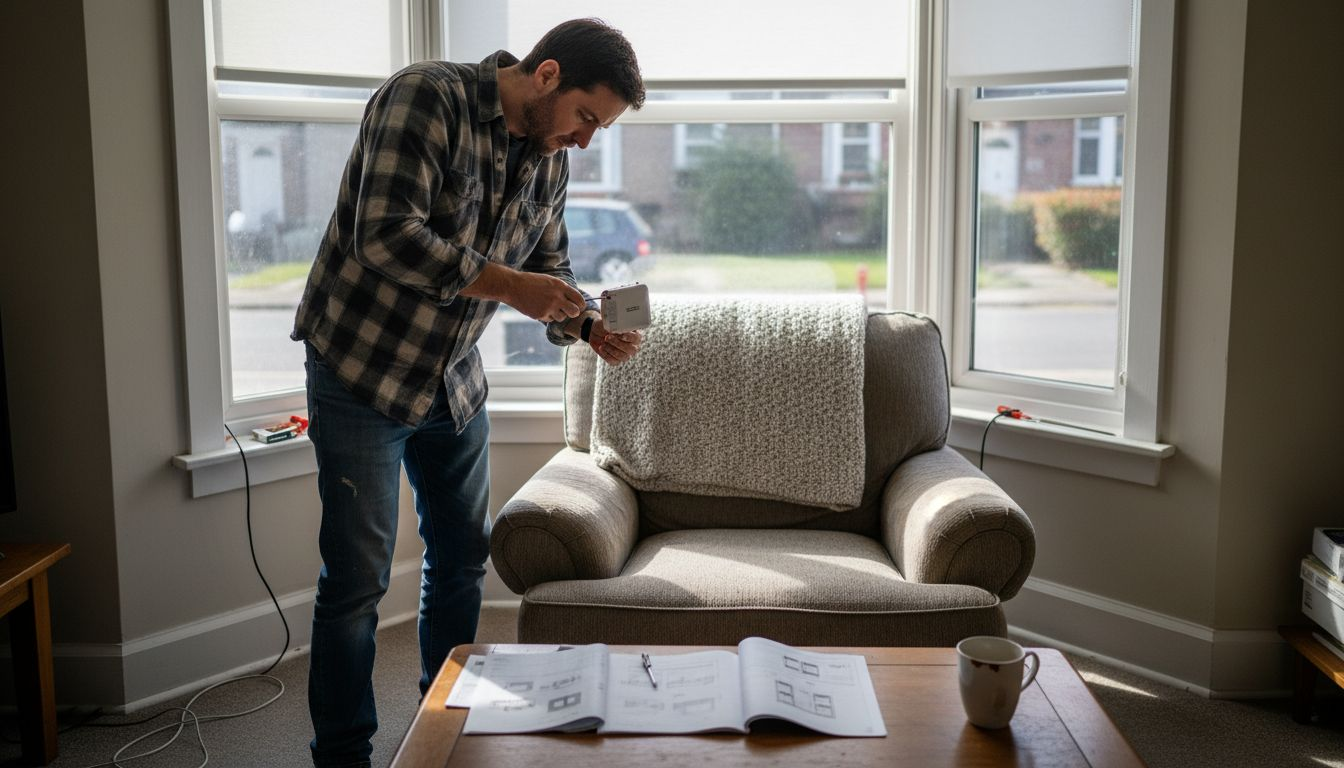
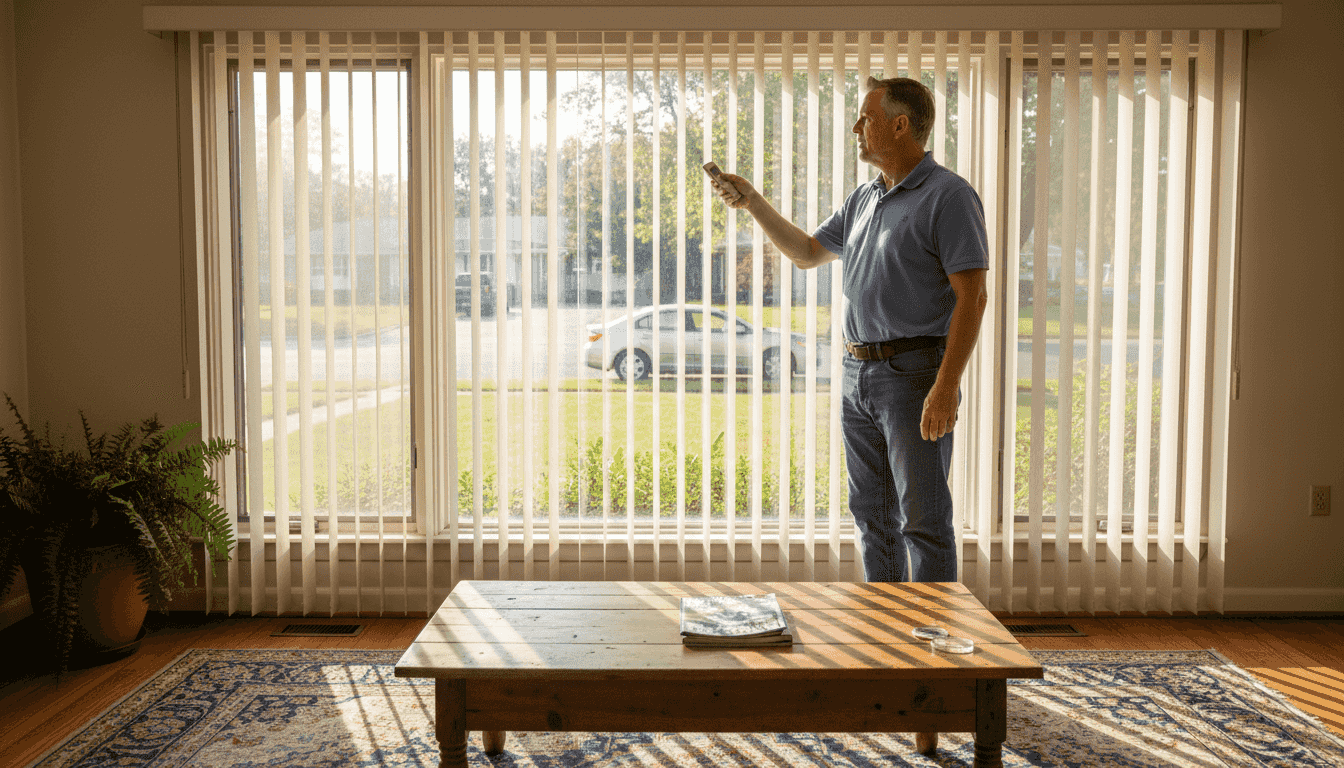
Motorized vertical blinds feature vertical slats controlled by an electric motor rather than manual cords or wands. You operate them using a remote, wall switch, smartphone app, or voice command through smart home platforms. Motors typically last upwards of 10 years with minimal noise, running below 50 decibels, quieter than normal conversation.
The motor mechanism sits inside the headrail and rotates the slats or draws them open and closed along a track. Unlike manual blinds that require physical pulling or twisting, motorized blinds automation eliminates wear from repeated hand contact. This automation extends component life and maintains consistent operation over years.
Control methods vary based on your preference and budget:
- Remote control: Handheld device with buttons for open, close, and tilt functions
- Wall switch: Hardwired or wireless switch mounted near the window
- Smartphone app: Wireless connectivity for remote access anywhere
- Voice commands: Integration with Alexa, Google Assistant, or Siri
- Scheduled automation: Program blinds to adjust based on time or sunlight sensors
The electric motor technology in blinds has evolved to become quieter, more reliable, and energy efficient. Modern motors draw minimal power during operation and enter standby mode when idle. Battery-powered options eliminate wiring needs, while hardwired systems provide continuous power without battery replacement.
Pro Tip: If you have tall or hard-to-reach windows, motorized control saves you from using step stools or extension wands, making daily adjustments safer and more convenient.
Energy Efficiency Benefits
Motorized vertical blinds improve home insulation through automated shading that responds to temperature and sunlight conditions. By programming blinds to close during peak sun exposure in summer, you block heat gain that forces air conditioners to work harder. In winter, opening blinds during sunny hours captures passive solar heating, then closing them at night retains warmth.
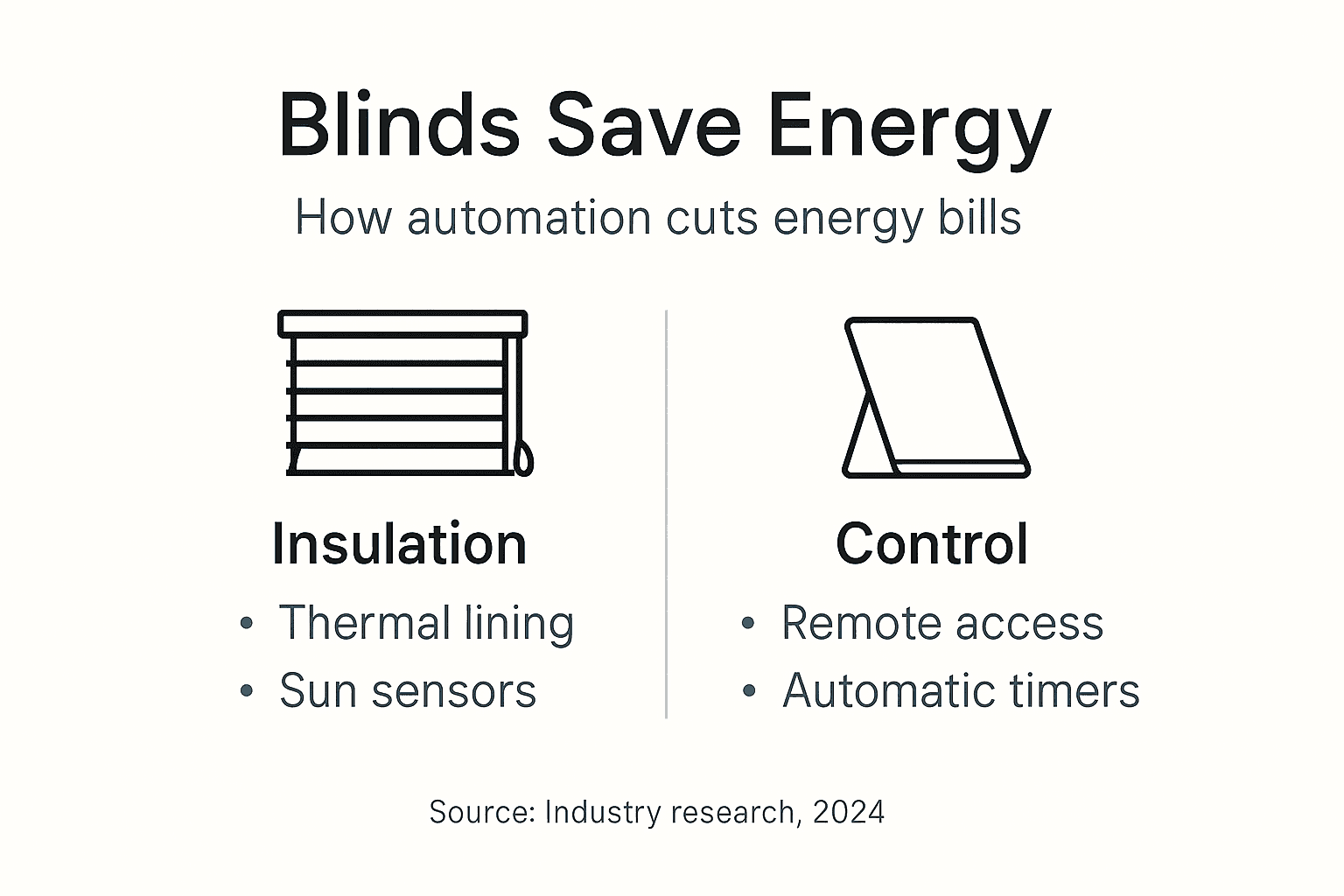
Motorized vertical blinds can reduce heating and cooling energy usage by up to 25% when equipped with thermal linings. These specialized fabrics add an insulating air gap between the window glass and room interior. The automated scheduling ensures blinds adjust at optimal times without you remembering to manually operate them.
Key factors that maximize energy savings:
- Thermal liners: Reflective or insulating backing that blocks heat transfer
- Tight seals: Proper installation minimizes gaps where air leaks occur
- Light control: Blackout fabrics prevent heat gain more effectively than sheer materials
- Automated schedules: Program adjustments based on daily sun patterns and seasonal changes
- Smart sensors: Some systems use temperature or light sensors to trigger adjustments automatically
Estimated Annual Energy Savings by Climate Zone:
| Climate Zone | Heating Savings | Cooling Savings | Total Annual Savings |
|---|---|---|---|
| Hot/Humid | 10% | 20% | $180-$240 |
| Hot/Dry | 12% | 22% | $200-$260 |
| Mixed | 15% | 18% | $220-$280 |
| Cold | 20% | 12% | $240-$300 |
Savings assume average 2,000 sq ft home with 15 windows and thermal-lined motorized blinds used according to recommended schedules.
The material choice and lining options significantly enhance thermal insulation, affecting how much heat your blinds block or retain. Fabrics with higher R-values provide better insulation. When combined with energy efficiency options like solar screens or cellular construction, vertical blinds create an effective thermal barrier.
Pro Tip: Program your blinds to close 30 minutes before sunset in winter to trap daytime heat, and open them 30 minutes after sunrise in summer to delay heat buildup.
Customization Options and Design Versatility
Motorized vertical blinds offer extensive personalization to match your interior design preferences and functional requirements. Fabric colors, textures, and slat widths can be tailored to complement existing décor while delivering the light control you need.
Fabric choices include:
- Sheer fabrics: Diffuse natural light while maintaining daytime privacy
- Light filtering: Balance privacy and natural light for living areas
- Room darkening: Block most light for bedrooms and media rooms
- Blackout: Eliminate virtually all light for complete darkness
- Textured weaves: Add visual interest and depth to window treatments
Slat widths typically range from 3.5 inches to 4.5 inches. Wider slats suit larger windows and modern aesthetics, while narrower slats work better for smaller windows or traditional styles. Color options span neutrals, bold accents, and natural tones to coordinate with walls, furniture, and flooring.
Control customization allows you to select the operation method that fits your lifestyle:
- Choose your fabric and color based on room function and décor style
- Select slat width appropriate for window size and design preference
- Pick control method (remote, app, voice, or combination)
- Decide on power source (battery or hardwired based on installation location)
- Add smart features like scheduling, sensors, or motorized blinds control customization
You can operate multiple blinds individually or group them into zones controlled simultaneously. This flexibility lets you manage all bedroom blinds with one command or adjust living room windows independently for precise light control.

Pro Tip: Request fabric swatches before ordering to see how colors and textures look in your actual lighting conditions, as online photos may not accurately represent material appearance.
Smart Home Integration
Modern motorized vertical blinds connect seamlessly with popular smart home ecosystems to enhance automation and convenience. Most systems are compatible with Alexa, Google Home, and Apple HomeKit for voice control and routine creation.
Integration capabilities include:
- Voice commands: “Alexa, close the living room blinds” or “Hey Google, open blinds to 50%”
- Scheduled routines: Automatically open blinds at sunrise and close at sunset
- Scene creation: Include blind positions in multi-device scenes like “Movie Time” or “Good Morning”
- Remote access: Control blinds from anywhere using your smartphone
- Sensor triggers: Link blinds to temperature, light, or occupancy sensors for automated adjustments
- Geofencing: Program blinds to adjust when you leave or arrive home
Integrating smart home compatible motorized blinds with your existing setup creates a cohesive automated environment. You can coordinate blinds with thermostats to optimize heating and cooling, or sync them with security systems to simulate occupancy when traveling.
Setup typically involves connecting the blind’s control hub to your home Wi-Fi network, then adding it to your smart home platform through the respective app. Most manufacturers provide step-by-step instructions, and smart home integration technologies continue advancing to simplify the connection process.
Once configured, you can create complex automations like closing blinds when indoor temperature exceeds a threshold, opening them when motion is detected in the morning, or adjusting them based on weather forecasts. These automated behaviors reduce manual intervention while maximizing comfort and energy efficiency.
Common Misconceptions About Motorized Vertical Blinds
Several persistent myths discourage homeowners from considering motorized vertical blinds despite their practical advantages. Understanding the reality behind these misconceptions helps you make informed decisions.
Myth 1: Motorized blinds are prohibitively expensive.
Reality: Costs have decreased 30-40% over the past decade, making motorized options only marginally more expensive than premium manual blinds. When factoring in energy savings and extended lifespan, the total cost of ownership often favors motorized versions.
Myth 2: Motors create disruptive noise in the home.
Reality: Modern motors operate below 50 decibels, quieter than normal conversation and barely noticeable during operation. Advances in motor design have eliminated the loud buzzing associated with older automation systems.
Myth 3: Motorized blinds pose safety risks due to cords or electricity.
Reality: Motorized blinds reduce cord-related accidents and enhance child and pet safety by 75% by eliminating dangling cords entirely. Motors are fully enclosed within the headrail, and low-voltage systems minimize electrical hazards.
Myth 4: They require high maintenance and are fragile.
Reality: Motorized blinds actually require less maintenance than manual versions because automated operation reduces mechanical stress on components. Motors are designed for tens of thousands of cycles without service, and fabric cleaning remains the primary upkeep task.
“The perception that motorized window treatments are luxury items prevents many homeowners from exploring affordable options that deliver real convenience and energy benefits.”
Addressing the motorized blinds cost misconception requires comparing total value rather than just upfront price. When you account for energy savings, safety improvements, convenience gains, and longer lifespan, motorized vertical blinds often represent better value than premium manual alternatives.
Installation and Maintenance Considerations
Proper installation ensures your motorized vertical blinds operate reliably and deliver expected performance throughout their lifespan. While some homeowners attempt DIY installation, professional installation ensures precise mounting, correct motor setup, and prolongs blind lifespan.
Installation steps include:
- Accurate measurement: Measure window width, height, and depth at multiple points to account for irregularities
- Mounting preparation: Identify stud locations or use appropriate anchors for weight support
- Headrail installation: Level and secure the headrail containing the motor and track
- Slat attachment: Hang vertical slats from carriers in the headrail
- Motor programming: Set travel limits and test all control methods
- Final adjustments: Ensure smooth operation and proper slat alignment
Installation typically takes two to four hours depending on window quantity and room complexity. Hardwired systems require electrical work that should only be performed by licensed electricians to meet building codes and safety standards.
Maintenance requirements remain minimal:
- Weekly dusting: Use a microfiber cloth or vacuum with brush attachment on slats
- Monthly inspection: Check for smooth operation and listen for unusual motor sounds
- Quarterly deep cleaning: Follow manufacturer instructions for fabric cleaning based on material type
- Annual motor check: Test all control methods and verify automated schedules function correctly
- Battery replacement: Change batteries every 12-18 months for battery-powered systems
Pro Tip: Keep the original remote and smartphone app installed even if you primarily use voice control, as they provide backup operation methods if your smart home system experiences connectivity issues.
Avoid common mistakes like over-tightening mounting brackets, which can warp the headrail, or using harsh chemicals on fabrics not rated for wet cleaning. Following manufacturer care instructions protects your warranty and maintains appearance.
Durability, Longevity, and Safety
Motorized vertical blinds offer practical advantages beyond convenience that justify their investment. Motorized vertical blinds last about 20% longer than manual ones due to reduced mechanical wear from automated operation that applies consistent, gentle force.
Durability benefits include:
- Reduced physical contact: Eliminates wear from repeated hand pulling and twisting
- Consistent operation: Motors apply uniform force that prevents stress concentration
- Quality materials: Motorized systems typically use higher-grade components to match motor reliability
- Protected mechanisms: Enclosed motors shield internal parts from dust and damage
Safety improvements represent a significant advantage, especially for households with young children or pets. The cordless design eliminates strangulation hazards that traditional blind cords present. Motorized systems remove all dangling chains, wands, and pull cords, creating a cleaner appearance while enhancing safety.
Safety statistics:
- Cordless blinds reduce strangulation risk by 75% compared to corded versions
- Operational noise stays below 50 decibels, suitable for bedrooms and quiet spaces
- Low-voltage motors minimize electrical shock hazards
- Automatic stop features prevent over-rotation that could damage slats or motor
The enclosed motor design prevents curious children from accessing moving parts, and the absence of cords means pets cannot become entangled during play. These safety features meet current window covering safety standards and provide peace of mind.
Motor reliability continues improving as manufacturers refine designs based on real-world performance data. Quality motors include thermal protection that prevents overheating, obstacle detection that stops operation if resistance increases, and fail-safe positioning that prevents blinds from falling if power is lost.
Making the Right Choice: Final Considerations
Selecting the best motorized vertical blinds requires balancing multiple factors including cost, customization, smart features, and maintenance commitment. Understanding how these elements interact helps you make a confident purchasing decision aligned with your needs and budget.
Motorized vs Manual Vertical Blinds Comparison:
| Feature | Motorized | Manual |
|---|---|---|
| Initial Cost | $400-800 per window | $200-400 per window |
| Lifespan | 12-15 years | 10-12 years |
| Energy Savings | Up to 25% reduction | 10-15% reduction |
| Safety (cordless) | 75% lower hazard risk | Standard cord risks |
| Convenience | High (automated) | Moderate (manual effort) |
| Maintenance | Low (minimal wear) | Moderate (cord replacement) |
When evaluating options, consider:
- Home layout: Hard-to-reach windows benefit most from motorized control
- Family composition: Households with children or pets gain significant safety advantages
- Smart home adoption: Existing automation systems integrate easily with compatible blinds
- Energy priorities: Thermal liners and scheduling maximize savings in extreme climates
- Budget flexibility: Balance upfront costs against long-term energy savings and convenience
The balancing upfront costs with long-term savings requires calculating total ownership costs over the expected lifespan. Include energy savings, reduced maintenance, and safety benefits in your evaluation.
Before purchasing, verify:
- Smart home platform compatibility if you plan to integrate with existing systems
- Warranty coverage for both motor components and fabric
- Availability of replacement parts and service support
- Installation requirements and whether professional help is included
Explore motorized blinds buying guide resources and review customization options overview to understand available choices before committing.
Pro Tip: Prioritize energy efficiency features and cordless safety if you have young children or pets, as these benefits deliver immediate value beyond convenience and often justify the price difference over manual blinds.
Explore Stylish Motorized Vertical Blinds at Value Blinds Direct
Ready to enhance your home with motorized vertical blinds that combine style, energy efficiency, and smart convenience? Value Blinds Direct offers an extensive selection of customizable options tailored to your décor and functional needs.
Our window treatment design studio lets you visualize different fabrics, colors, and slat configurations in your space before ordering. Browse our complete vertical blinds collection featuring motorized options with thermal linings, smart home compatibility, and cordless safety features. We provide expert guidance throughout the selection process, quality products backed by comprehensive warranties, and support to ensure your high-quality blinds deliver lasting satisfaction and performance.
Frequently Asked Questions
What is the typical lifespan of motorized vertical blinds?
Motorized vertical blinds typically last 10 to 15 years, approximately 20% longer than manual blinds, thanks to reduced wear from automated operation. Proper maintenance including regular cleaning and motor checks extends lifespan further. Quality motors are designed for tens of thousands of cycles without requiring service or replacement.
Can I install motorized vertical blinds myself?
While some skilled DIYers may successfully install motorized blinds, professional installation is recommended to ensure proper setup, motor programming, and safe electrical connections. Incorrect installation can void warranties, cause operational problems, and create safety hazards. Professional installers complete the work efficiently and test all functions before finishing.
Are motorized vertical blinds safe for homes with children and pets?
Yes, cordless motorized blinds reduce strangulation hazards by 75% compared to traditional corded blinds, significantly enhancing safety for children and pets. Motors are fully enclosed within the headrail, eliminating access to moving parts. The absence of dangling cords or chains removes common entanglement risks present in manual systems.
What smart home systems are compatible with motorized vertical blinds?
Most motorized vertical blinds support Amazon Alexa, Google Home, and Apple HomeKit platforms for voice control and automation. Some systems also integrate with Samsung SmartThings, IFTTT, and other home automation hubs. Always confirm specific compatibility with your existing smart home ecosystem before purchasing to ensure seamless integration.
How much can I realistically save on energy bills using motorized vertical blinds?
When combined with thermal liners and used according to recommended schedules, motorized vertical blinds can reduce heating and cooling costs by up to 25%. Actual savings vary based on climate zone, window size, insulation quality, and usage patterns. Homes in extreme climates with large windows typically see the greatest cost reductions.
Recommended
- Motorized Venetian Blinds: Smart Living and Energy Benefits
- Value Blinds™ Solar Shades | Elegant & Premium Solar Shades with Smart Motorization
- Motorized Cellular Blinds: Smart Home Energy Control
- Value Blinds™ Natural Woven Shades | Motorized Window Treatments for Modern Homes
- Creating an efficient Laundry Space ?