Choose Fabric First: Printed Window Shades for Homes & Businesses
Yes, you can order high-resolution custom printed window shades in blackout, light-filtering, or solar-screen fabrics, and you’ll get real design flexibility instead of settling for plain fabric. Printing runs through dye-sublimation or UV/latex processes, so expect a request for print-ready artwork and a proof before anything ships. Budget roughly 2 to 4 weeks for production once you approve that proof, and add extra time if you’re going motorized or oversized. 🎨
TL;DR:
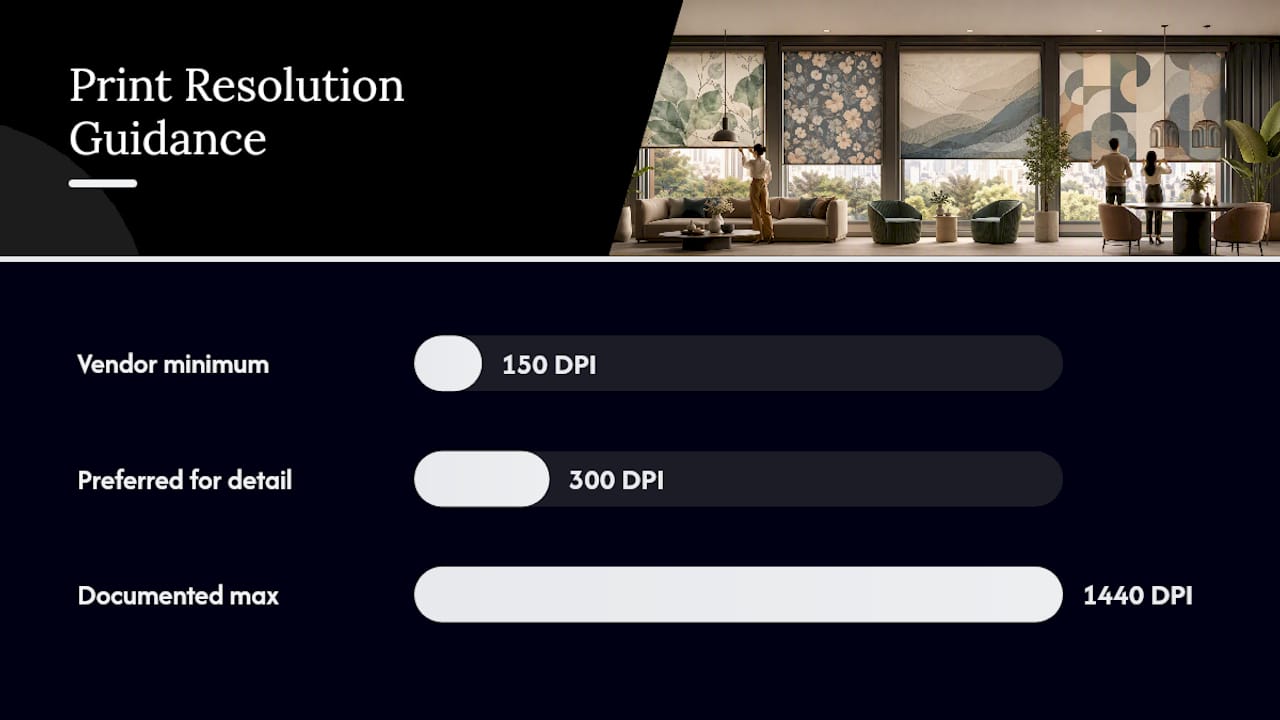
- Use a minimum of 150 DPI, ideally 300 DPI, for artwork to ensure sharp prints at large shades; lower resolutions will result in blurry images.
- Blackout fabrics are best for sleep or media rooms, while solar screen fabrics suit storefronts and spaces needing glare reduction.
- Production generally takes 2 to 4 weeks after proof approval, with longer timelines for motorized or oversized shades.
- Accurate measurements are essential, with inside mount measurements using the smallest width and longest height, and artwork should be submitted at precise pixel dimensions.
- Commercial-grade printed fabrics should meet NFPA 701 fire resistance standards for durability and safety compliance.
Table of Contents
- What Fabric Type Actually Fits Your Window?
- Where Do Printed Shades Actually Make Sense?
- How Do You Measure, Order, and Budget for Custom Shades?
- What Hardware and Mounting Options Should You Pick?
- How Long Do Printed Shades Last, and How Do You Clean Them?
- How Valueblindsdirect Helps You Get It Right
- What Buyers Get Wrong About Printed Shades
- Ready to Design Your Own Shades?
- Where to Verify the Technical Details
- Sources
- FAQ
What Fabric Type Actually Fits Your Window?
Fabric choice comes before art choice, not after. Pick wrong here and even a gorgeous design won’t do what you need it to do.
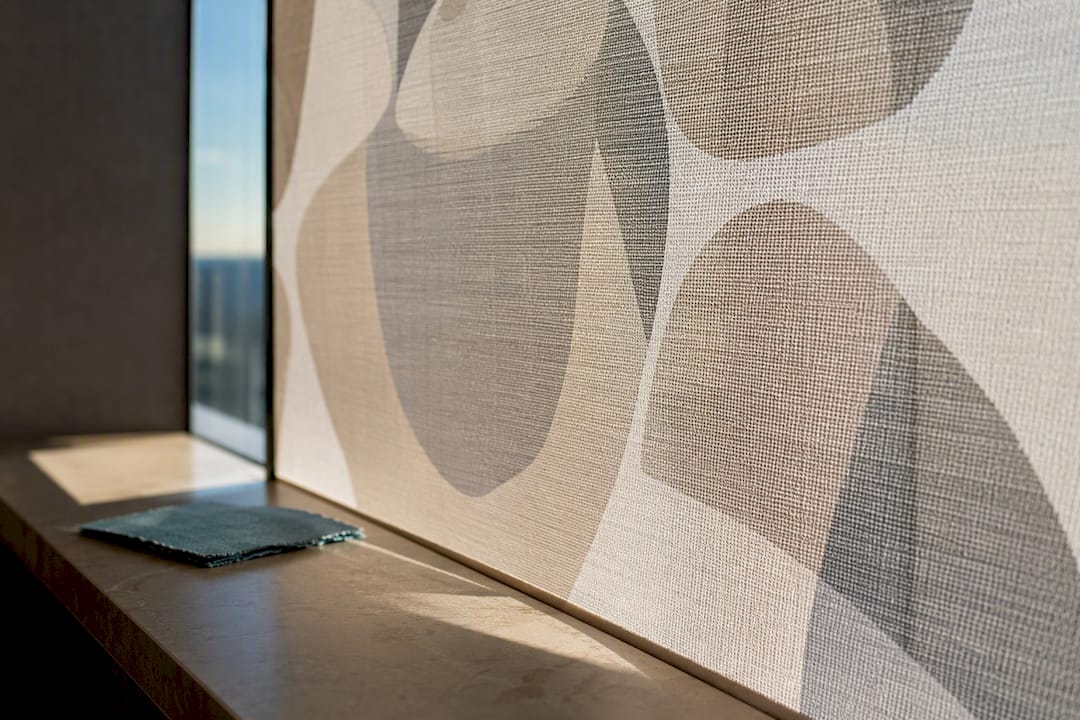
Blackout fabric blocks essentially all outside light, which makes it the right call for media rooms, nurseries, or any bedroom where 6 a.m. sun is not welcome. Light-filtering fabric softens daylight while keeping the room bright, a nice fit for living rooms or offices where you still want a view. Solar screen fabric (rated by openness percentage) cuts glare and heat while letting you see outside, which is exactly why storefronts and lobbies lean on it for daytime branding.
On the printing side, dye-sublimation and UV/latex printing both deliver strong color, but they behave differently:
- Dye-sublimation infuses ink into the fabric fibers, producing rich, photo-quality color that resists cracking or peeling over time.
- UV/latex printing cures ink on the surface fast, works well on a wider range of fabric backers, and tends to be the go-to for large commercial runs.
OrangePiel documents dye-sublimation printing at resolutions up to 1440 DPI on PVC-free fabric, though for practical purposes, aim for at least 150 DPI at final print size, and 300 DPI if your image has fine detail like small text or a crisp logo. Anything lower and you’ll see soft, blurry edges once the graphic is blown up to shade size.
Statistic Callout: Vendors recommend a minimum of 150 DPI at final print size, with 300 DPI preferred for detailed artwork, according to production specs from OrangePiel.
Large-format capability matters too. Some manufacturers print single panels up to 192 inches wide, which means panoramic murals or wide storefront windows can run seamless, with no visible break in the image. Before you upload anything, check two things: the pixel dimensions match your print size at the right DPI, and the file is a high-resolution JPEG, PNG, or PDF, not a low-res web graphic pulled off a website.
Where Do Printed Shades Actually Make Sense?
Not every space needs the same fabric or the same design approach. Matching the shade to the room (or the storefront) is what separates a shade that works from one that just looks nice in a photo.
For homes, printed shades tend to show up in a few favorite spots:
- Feature windows with a mural-style scene, often in a living room or entryway where there’s no privacy concern.
- Kids’ rooms with playful patterns, layered over blackout fabric for actual nap-time performance.
- Media rooms and bedrooms where blackout fabric handles the light control and the print adds personality.
For businesses, the use cases shift toward messaging and brand presence. Printed shades regularly serve as storefront advertising, turning a plain window into a constant impression for foot traffic. Conference rooms use them for subtle logo placement. Hotels and restaurants use them for wayfinding graphics or décor that reinforces a theme. Commercial printed shades also double as long-lived signage that keeps working around the clock, unlike a poster that fades or peels.
One design note worth remembering: logos and text need contrast and size that hold up at viewing distance, and backlighting from sunlight can wash out light colors during the day. A dark logo on a light solar screen usually reads better than the reverse.
How Do You Measure, Order, and Budget for Custom Shades?
Getting a quote that actually matches what shows up at your door starts with accurate measurements. Here’s the order of operations:
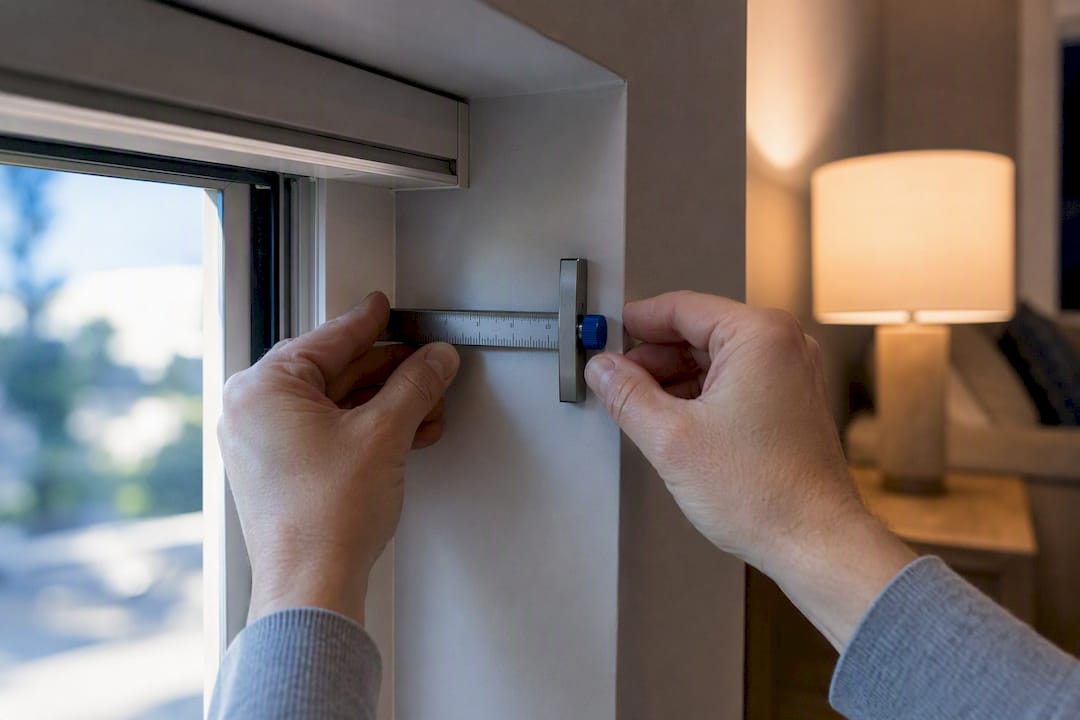
- Decide on mount type. Inside mount sits within the window frame for a clean look; outside mount covers the frame and blocks more light at the edges.
- Measure three points across the width (top, middle, bottom) and use the smallest number for inside-mount orders, since window frames are rarely perfectly square.
- Measure height at three points (left, center, right) and use the longest measurement so the shade fully covers the window.
- Submit your artwork at the correct pixel dimensions and resolution, then review your printed proof carefully before giving final approval.
Our own measuring guide walks through this with diagrams if you want a visual reference, and a simple step-by-step version is available too.
Price depends on a handful of variables: fabric type (solar screen is often less expensive than blackout with a laminated backer), overall size (oversized single-panel widths cost more to produce), printing method, and whether you’re adding motorization. Commercial-grade finishes with fire-rated fabric typically run higher too.
Standard production is 2 to 4 weeks after you approve your proof, according to production timelines from OrangePiel. Motorized units and oversized panels tend to push that timeline further, so plan ahead if you’re working around a launch date or an event.
Pro Tip: Always request a fabric swatch and a printed proof before committing to a full order. Colors on a screen almost never match colors on fabric exactly, and a $5 swatch beats a $400 surprise.
What Hardware and Mounting Options Should You Pick?
Your fabric and design get all the attention, but the hardware is what you’ll actually touch every day.
Mounting breaks into three types. Inside mount tucks the shade into the window recess for a built-in look, provided you have enough depth. Outside mount covers the whole frame and blocks more light around the edges, which matters for blackout applications. Recess mount is a middle ground for windows with limited inside depth.
Operating mechanisms vary in how they’re used day to day:
- Chain and clutch systems are affordable and durable but not cordless, so they may not meet safety codes in homes with young kids or pets.
- Cordless spring systems eliminate hanging cords entirely, a common choice for nurseries and childproofing.
- Battery-powered motors add push-button or app control without any wiring, ideal for retrofits.
- Hardwired motors offer the most reliable long-term power for commercial installs but need an electrician for setup.
Motorized shades also open the door to smart-home integration, letting you schedule shades to open at sunrise or close automatically during the hottest part of the day. If you’re going hardwired, factor in the electrical work when budgeting your total project cost, not just the shade itself.
How Long Do Printed Shades Last, and How Do You Clean Them?
Fade resistance is where fabric quality really shows. Commercial-grade printed fabrics are tested against AATCC standards for UV and fade resistance, which is the benchmark that separates a shade that stays vibrant for years from one that yellows within a season.
Statistic Callout: Commercial printed fabrics that pass AATCC 16.3 fade testing and carry an NFPA 701 fire rating are the standard vendors point to for durability and code compliance in business installations.
If you’re outfitting a restaurant, hotel, or office, ask specifically for NFPA 701 fire-rated fabric. Many commercial buildings require it by code, and it’s a lot easier to request upfront than to retrofit later.
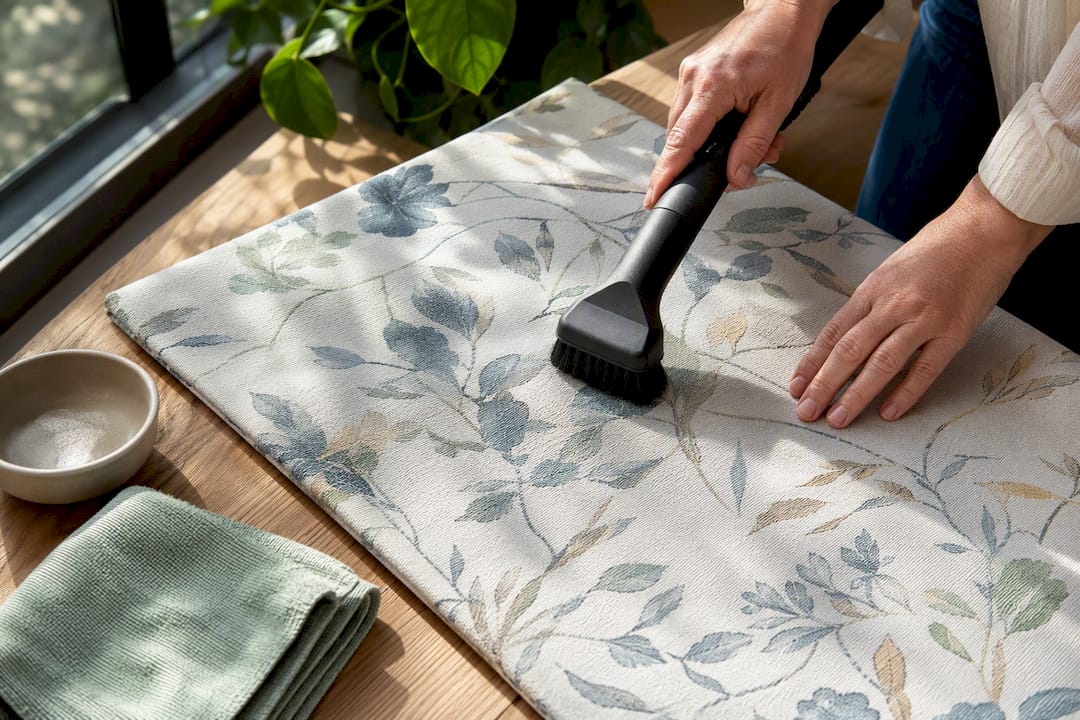
Cleaning depends on the fabric. Light-filtering and solar screens usually just need a soft brush attachment or a damp microfiber cloth. Blackout fabrics, which often have a laminated opaque backer to preserve full light blockage, should avoid harsh scrubbing that can lift the print layer. When in doubt, spot-test a hidden corner first.
How Valueblindsdirect Helps You Get It Right
Ordering a custom printed shade shouldn’t feel like a guessing game, and that’s the whole point of the tools Valueblindsdirect puts in front of you. The Window Treatment Design Studio lets you upload artwork, preview it on a shade, and get a proof before you commit to anything.
Free fabric swatches are available so you can check color and texture in your own lighting before ordering the full shade, which matters more than most people expect once they see how much window light can shift a color. Our measurement guides walk you through inside versus outside mount step by step, and our energy calculators help you see how blackout or solar options affect your heating and cooling costs over a year.
On the hardware side, we offer cordless, motorized, blackout, and light-filtering options across our shade lines, so the fabric decisions covered above translate directly into products you can configure. Need help with a commercial order or a tricky window? Reach out through our support channels for a custom quote, and let’s get your design studio proof moving. 💡
What Buyers Get Wrong About Printed Shades
Most buying guides treat fabric and printing method as an afterthought, something you pick after you’ve already fallen for a design. That’s backwards. The fabric determines what the shade can actually do for you, blackout for sleep, solar screen for glare and daytime branding, light-filtering for a softer everyday room, and the design has to work within those limits, not the other way around.
The other place conventional advice falls short: it treats DPI as a technical detail buried in fine print. It’s not. A logo that looks sharp on your laptop can turn to mush at 60 inches wide if the file wasn’t built for that size. If you prioritize one thing before anything else, prioritize matching your intended use to the fabric first, then confirm your artwork resolution actually supports the size you’re printing. Everything else, mount type, motorization, hardware, is a secondary decision that’s easy to get right once those two are locked in.
— Sunny
Ready to Design Your Own Shades?
Custom printed shades are available in blackout, motorized, and large-format options, so you’re not stuck choosing between a good design and a functional one. Whether you’re branding a storefront window or blacking out a nursery, the fabric and hardware choices covered above are all configurable right in our design tools.
Start in the Window Treatment Design Studio to upload your artwork and get a proof, or browse motorized cellular shades and blackout duo-tone honeycomb shades if you want blackout performance with room for a printed layer on top. If you’re planning a broader room refresh alongside your window project, this roundup of interior door design trends is worth a look for matching finishes. Request your free swatches, check your measurements, and get your quote started today.
Where to Verify the Technical Details
- OrangePiel’s product specs cover DPI recommendations, fabric openness options, and NFPA 701 fire ratings.
- Draper’s FlexShade page details CMYK printing and low-VOC ink certifications for commercial installs.
- FASTSIGNS’ window graphics page outlines branding and signage use cases for printed shades.
Sources
- Custom Printed Window Shades — 16 ft Wide | OrangePiel
- Digitally Printed FlexShade :: Draper, Inc.
- Printed Window Shades | Window Graphics | Graphic Shades
FAQ
What DPI Do I Need for a Printed Window Shade?
Aim for at least 150 DPI at your final print size, with 300 DPI preferred for detailed images like small text or fine logo work.
How Long Does It Take to Get a Custom Printed Shade?
Standard production runs about 2 to 4 weeks after you approve your proof, though motorized units and oversized panels can extend that timeline.
Can Printed Shades Block Out Light Completely?
Yes, blackout fabrics with a laminated opaque backer preserve full light blockage while still displaying your print on the room-facing side.
Are Printed Shades Suitable for Commercial Buildings?
Many commercial installs require NFPA 701 fire-rated fabric, so ask for that certification specifically when you order for a business space.
Does Valueblindsdirect Offer Motorized Printed Shades?
Yes, motorized options are available alongside cordless and chain systems, and you can explore fabric and hardware choices directly in the Window Treatment Design Studio.