
Article: Homeowners: Factory Made Motorized Blinds Without Measurement Mistakes
Homeowners: Factory Made Motorized Blinds Without Measurement Mistakes
For homeowners who want custom, order-ready motorized blinds rather than an electronics project, the fastest path is simple: measure precisely, pick your power and control setup, then order factory motorized shades with optional professional install. Battery or USB-C power works well in finished rooms, while hardwired setups suit new construction. Skip the soldering iron. The real DIY here is in the planning, not the wiring.
TL;DR:
- Factory motorized shades are designed with matched fabrics and motors, reducing fitting errors compared to DIY retrofit kits, especially for large or irregular windows.
- Local control protocols like Zigbee or Matter ensure blinds operate reliably without internet dependency, which is crucial for consistent performance and security.
- Precise measurement, especially at multiple points using a steel tape, is critical to avoid binding or misalignment, and professional help is recommended for complex window shapes.
- Power options influence installation difficulty and ongoing maintenance, with battery packs suited for finished rooms and hardwired setups better for high-use or new construction projects.
- Safety for homes with children is significantly improved through cordless operation and secure mounting, but proper covering of batteries and electrical safety remain essential.
Table of Contents
- What “DIY Motorized Blinds” Actually Means Here
- How Do You Choose Style, Fabric, and Motor Type?
- How Do You Measure and Verify Mounting Depth?
- Which Power Option Fits Your Project and Budget?
- Your Ordering Checklist: What to Ask Before You Buy
- How Do You Troubleshoot and Maintain Motorized Blinds?
- Will Motorized Blinds Fit Your Windows?
- Are Motorized Blinds Safe for Homes With Kids?
- What Should You Budget for a DIY Motorized Blinds Project?
- Why Factory-Built Motorized Shades Beat DIY Retrofits
- Ready to Order? Here’s Your Next Step
- Helpful Resources Before You Order
- Sources
- FAQ
What “DIY Motorized Blinds” Actually Means Here
Let’s clear something up right away, because it trips up a lot of shoppers: this guide is not about retrofitting old blinds with a microcontroller kit, a stepper motor, and a weekend of trial and error. That’s a real hobby project, but it’s a different animal, with different tools and a much higher failure rate. What we’re talking about is the “do it yourself” of choosing, ordering, and preparing for custom motorized window coverings, built and calibrated at the factory, then shipped to your door (or installed by a pro).
That covers a lot of ground:
- Roller shades with in-tube motors (the most common factory option)
- Cellular (honeycomb) shades with lift motors
- Roman shades on motorized headrails
- Zebra/dual shades with layered light control
- Wooden and faux-wood blinds offered in factory-motorized versions
This guide is for homeowners ordering their first smart shade, interior designers specifying products for clients, and buyers who plan to arrange professional installation instead of climbing a ladder themselves.
How Do You Choose Style, Fabric, and Motor Type?
Here’s the part nobody tells you: your fabric choice affects your motor choice, not the other way around. Heavier blackout fabric and larger rolls need more torque than light-filtering sheers. If you fall in love with a fabric first and then discover it needs a beefier (and pricier) motor, that’s a budget surprise you can avoid by planning both together.
Motors vary by product family. In-tube motors handle roller shades and are the most widely used option for factory-motorized blinds. Cellular and roman shades use separate lift motors built into the headrail, while slatted wooden or aluminum blinds need to tilt motors, which have real mechanical limits when someone tries to retrofit them onto old hardware.
Then there’s the control question, and this is where a lot of buyers get overwhelmed by acronyms:
- Zigbee and Matter/Thread prioritize local control, meaning your blinds keep working even if your Wi-Fi goes down. These protocols are recommended for most smart-home setups because they don’t depend on a cloud server to respond to a remote press.
- Proprietary RF systems often work great within their own ecosystem but rarely play nice with other brands.
- Wi-Fi-only shades connect directly to your router, which sounds convenient until your internet blips and your blinds ignore every command.
Pro Tip: Pick your fabric and mount style before you fall in love with an app. The physical shade drives the product choice far more than which control platform it happens to run on.
If reliability matters to you (and it should), lean toward local-control protocols like Zigbee or Matter. Confirm whether the motor uses USB-C or battery power too, since that decision affects how simple your install day turns out to be.
How Do You Measure and Verify Mounting Depth?
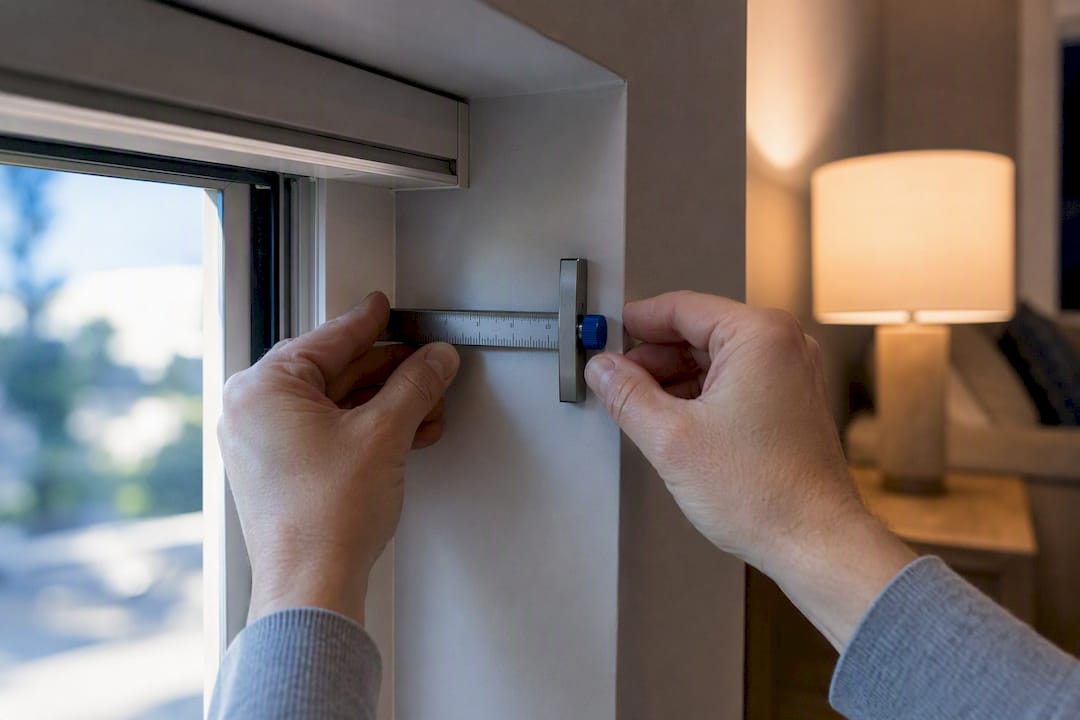
Measurement mistakes are the number one reason custom motorized blinds don’t fit right or strain their motors. The Home Depot recommends a steel tape measure over a cloth one for exactly this reason: cloth stretches, and a stretched measurement means a shade that’s too tight or too loose months later.
Here’s the process, step by step:
- Measure width at the top, middle, and bottom of the window opening, then use the smallest number. Windows are rarely perfectly square, even in newer homes.
- Measure height at the left, center, and right sides, again recording the smallest measurement.
- Check mounting depth for inside mounts, adding extra clearance for the headrail and motor housing, which run deeper than a manual headrail.
- Decide inside vs. outside mount. Inside mount gives a clean, built-in look but demands more depth. Outside mount hides an uneven frame and lets you overlap the shade for better light blocking.
- Check for obstructions like window cranks, handles, or a sill that juts out further than expected.
Measuring at multiple points and using the smallest value is standard practice for a reason: it’s the difference between a shade that glides smoothly and one that binds against the frame. If you’re dealing with an oddly shaped window, a bay window, or anything oversized, book a professional measuring appointment instead of guessing. It costs less than reordering.
Which Power Option Fits Your Project and Budget?
This is where a lot of buying decisions actually get made, because power source drives both your upfront cost and how much maintenance you’ll deal with later.
- Battery and rechargeable packs are the easiest option to install in a finished room, since there’s no wiring involved. They commonly deliver 6 to 12 months of runtime depending on how often you raise and lower the shade, typically 4 to 6 cycles a day. Cold climates can shorten that runtime, so keep a spare battery pack on hand if your window sits in an unheated sunroom.
- USB-C or plug-in power gives you continuous power without ripping into a wall. It’s a solid middle ground when hardwiring feels like overkill but you don’t want to think about batteries. Just check cord length against your nearest outlet before you order.
- Hardwired (low-voltage or line-voltage) systems make the most sense for new construction or heavy daily use. The upfront installation cost is higher, but you’ll skip battery swaps entirely for the life of the shade.
Retrofit motorization kits run roughly $150 to $400 per window, while factory motorized shades commonly start around $300 to $800 or more per window depending on fabric and motor. If your existing shades are still in great shape, a retrofit kit might make sense, but factory-built units give you a matched motor, fabric, and warranty from day one.
Your Ordering Checklist: What to Ask Before You Buy
Before you accept any quote, whether it’s from an online configurator or an installer standing in your living room, get every line item in writing. A proper shade quote should itemize each of these separately:
- Fabric and shade style (blackout, light-filtering, solar)
- Motor type and control protocol
- Remote, wall control, and hub/bridge if needed
- Power supply or electrical labor (for hardwired jobs)
- Measuring service, if you’re not doing it yourself
- Installation and old-blind removal
- Warranty coverage for motor, fabric, and labor separately
Ask about firmware update policies too. A motor that never gets software support is a motor you’ll eventually replace sooner than you’d like. Request free fabric swatches before committing. Colors read differently on a screen than they do against your actual wall in your actual light.
Lead times for custom motorized shades often run longer than off-the-shelf blinds, so ask upfront and plan your install date around it. If your windows are large, oddly shaped, or recessed, lean toward professional installation. If they’re standard rectangular windows with easy access, self-install is often realistic. Either way, ask your installer to test pairing and set travel limits before they pack up and leave.
How Do You Troubleshoot and Maintain Motorized Blinds?
Test everything the day your blinds arrive or get installed, not three weeks later when you’re trying to remember what “normal” sounded like.
- Confirm the remote or app pairs correctly and holds the connection
- Check that upper and lower limits are set so the shade doesn’t over-travel and strain the motor
- Listen for grinding or excessive noise during a full up-and-down cycle
- Test local control (wall switch or remote) separately from app control, in case Wi-Fi ever drops
If a shade stalls partway or rolls unevenly, the limit settings are the first thing to check. Fabric drift, where the shade slides slightly off-center over time, usually points to a roller alignment issue rather than the motor itself.
Pro Tip: Write down your model number, serial number, and pairing code somewhere you’ll actually find again, like a note in your phone. When you call support about a hiccup, that information cuts your wait time in half.
For ongoing care, recharge battery packs on a schedule rather than waiting for them to die mid-cycle, and install firmware updates when your app prompts you. Testing pairing and limits before the installer leaves also protects your warranty, since some manufacturers require documented setup for coverage.
Will Motorized Blinds Fit Your Windows?
Standard rectangular windows, the kind found in most bedrooms and living rooms, are the easiest fit for factory motorized shades. Roller and cellular shades handle these sizes with no fuss.
Large windows and sliding glass doors need a different conversation. Wider spans require heavier-duty motors with more torque, and the fabric itself needs reinforced rolling to avoid sagging in the middle. If you’re covering a window wider than about 8 feet, check with your supplier about split shades or a dual-motor setup rather than assuming one motor can handle the whole span. A dedicated guide for large windows walks through motor sizing for oversized openings in more detail.
Bay and angled windows complicate things further, since each pane often needs its own shade and sometimes its own motor, synced through a shared remote or hub. Arched or oddly shaped windows generally can’t be motorized at all with standard hardware, since the track systems rely on straight edges.
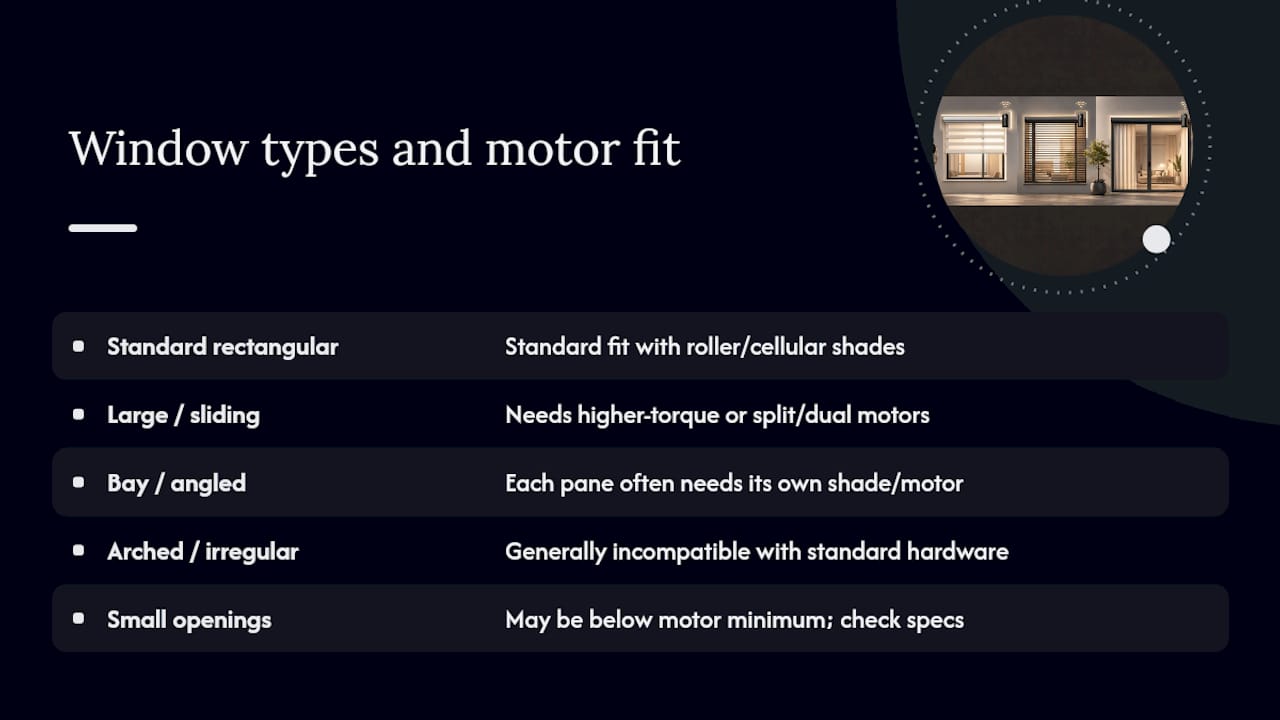
Small windows, like bathroom or kitchen openings, sometimes fall below a manufacturer’s minimum width for motorization. Always check the minimum and maximum size specs on a product page before ordering. Depth matters too: recessed window housings with shallow trim may not have room for a motorized headrail, which is exactly why the mounting depth check earlier in this guide matters so much. Skipping it is how homeowners end up with a beautiful shade that doesn’t clear the window frame.
Are Motorized Blinds Safe for Homes With Kids?
Cordless operation is the single biggest safety upgrade motorized blinds offer over traditional corded blinds, and it matters most in homes with young children or pets. Corded blinds have long carried strangulation risk warnings, and removing the cord entirely removes that hazard at the source.
That said, “cordless” doesn’t mean “risk-free.” A few things matter for households with kids:
Keep remote controls and any exposed low-voltage wiring out of reach of curious toddlers, since small buttons and thin wires both attract little hands. If you go hardwired, make sure electrical work is done by a licensed electrician, particularly for line-voltage installations, since exposed or improperly grounded wiring is a real hazard regardless of what’s covering your window.
Battery compartments should snap or screw shut securely. Look for units where the battery pack isn’t easily popped open by small fingers. If your household includes young kids, ask your supplier specifically about child-safety certifications on the motor housing and remote, since standards vary by product line and manufacturer.
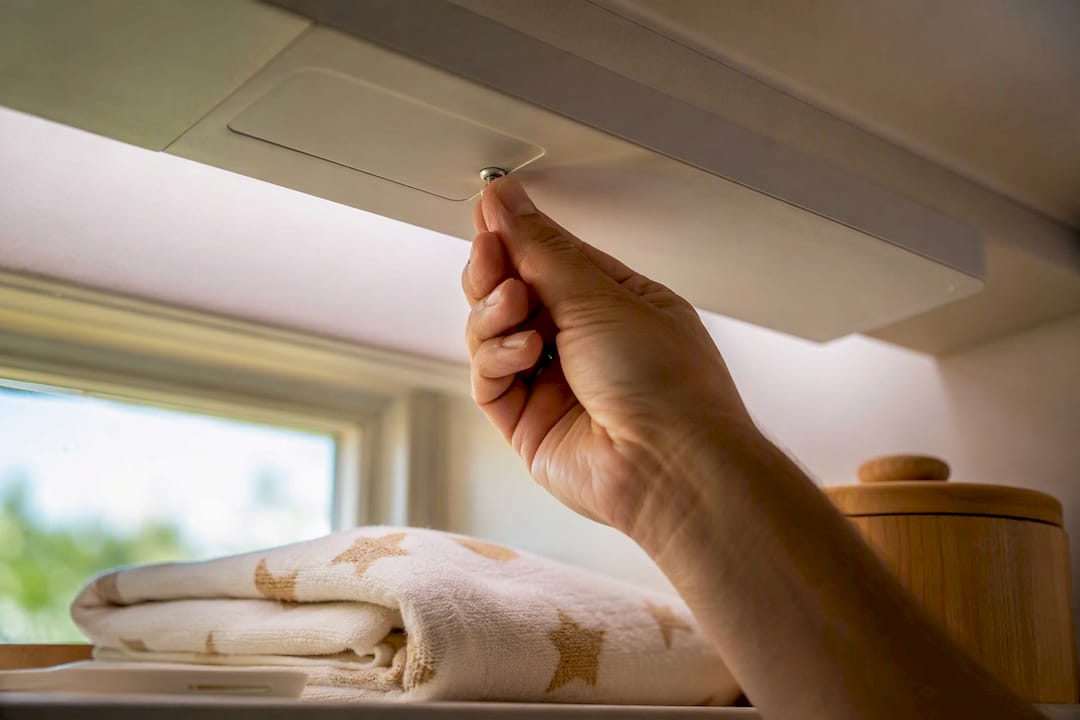
Finally, mount the shade securely to the frame. A loose bracket isn’t just an installation annoyance, it’s a shade that could come loose under weight. If a curious kid tugs on a bottom rail, secure mounting is what keeps the whole unit from becoming a hazard rather than a feature.
What Should You Budget for a DIY Motorized Blinds Project?
Your total cost depends heavily on three things: how many windows you’re covering, which power option you choose, and whether you hire a professional installer.
Per-window pricing runs on a spectrum. As covered above, retrofit kits sit around $150 to $400 per window, while factory motorized shades typically start around $300 to $800 or more depending on fabric weight, motor type, and control protocol. Multiply that across a whole house, and the difference between “a few statement windows” and “every window in the home” adds up fast, which is exactly why most homeowners motorize in phases: living room and primary bedroom first, guest rooms and bathrooms later.
Installation labor is a separate line item from the shade itself. Simple roller shades in standard windows are often realistic to self-install, saving that labor cost entirely. Large windows, hardwired setups, or anything involving electrical work justify paying for professional installation, both for safety and to protect your warranty.
Don’t forget the hidden costs: a hub or bridge if your control protocol requires one, extra remotes for multiple rooms, and battery packs as spares. None of these are expensive individually, but they’re easy to forget when you’re budgeting off the sticker price of the shade alone.
Why Factory-Built Motorized Shades Beat DIY Retrofits
Here’s my honest take after looking at how these projects actually go wrong: most of the headaches homeowners run into with motorized blinds trace back to a mismatch between fabric, motor, and mounting depth, not to some fundamental flaw in the technology itself. Factory motorized shades solve that mismatch before it ever reaches your window, because the motor is matched to the fabric weight and roll diameter at the factory, not guessed at in your garage.
Accurate measurement and early power planning solve the rest. If you’re unsure which protocol or power option fits your home, use a design studio, request free swatches, and lean on expert support rather than guessing. The upfront effort is small compared to reordering a shade that doesn’t fit.
— Sunny
Ready to Order? Here’s Your Next Step
Skip the guesswork and the electronics project entirely. Some companies specialize in factory motorized shades built to exact measurements, with the motor, fabric, and control protocol matched from the start rather than pieced together after the fact.
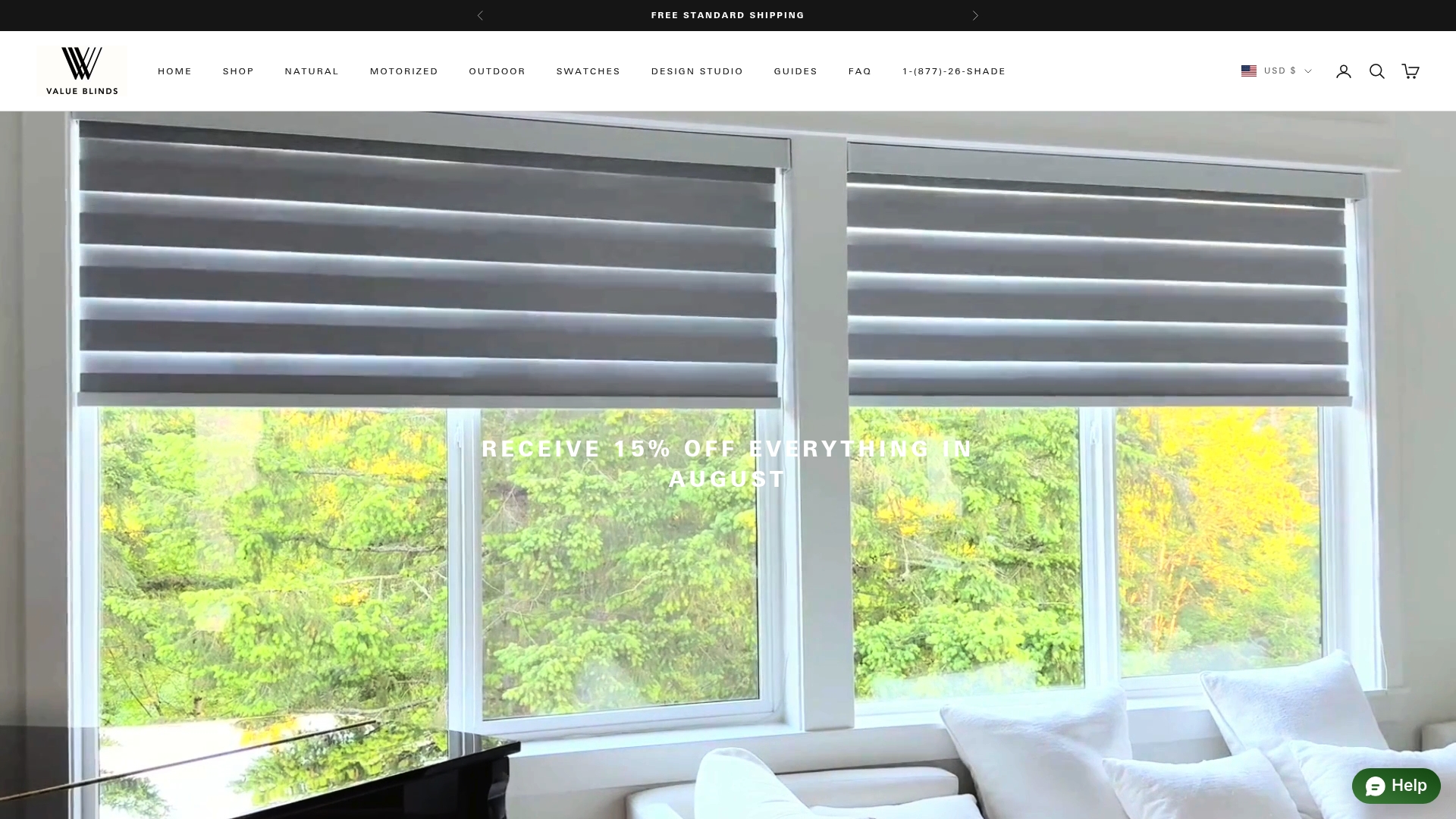
Start with the Window Treatment Design Studio, where you can select fabric, motor type, and control options for your specific windows before you commit to an order. If you’re leaning toward a particular style, browse motorized cellular shades or the full blinds and shades collection to compare fabrics side by side. Orders often include warranty coverage on motor and fabric, and free swatches may be requested before purchase. For large, unusually shaped windows, or to avoid climbing a ladder, consider scheduling a measurement appointment so a professional can handle the fit and installation. Get your swatches ordered and your measurements booked, and the rest of this process gets a lot easier.
Helpful Resources Before You Order
- How to measure blinds and shades for exact window dimensions
- Motorized blinds installation guide for self-install prep
- Local installation partners if you prefer an in-person installer
- Zebra shades collection for layered light control options
Sources
- Best Smart Blinds & Motorized Shades 2026: IKEA vs Lutron – SmartHome Automate
- Motorized Shades vs Smart Blinds: Choosing the Right Retrofit and New-build Solution - Home Controls
- Motorized Blinds: Measuring Windows the Right Way (So They Fit) - GeistForLife
- Smart Window Shades: What to Know Before You Install Them - Harmonicode
FAQ
Can I Add a Motor to My Existing Blinds Instead of Ordering New Ones?
Retrofit kits exist for this purpose and typically cost $150 to $400 per window, but factory motorized shades give you a motor matched to the fabric and roll diameter from the start, which usually means fewer fit problems down the line.
How Long Do Battery-Powered Motorized Blinds Last Before Recharging?
Battery packs commonly run 6 to 12 months between charges, depending on how many times a day you raise and lower the shade.
Do I Need a Hub for Zigbee or Matter-Compatible Blinds?
Most Zigbee and Matter/Thread systems require a hub or bridge for full functionality, though local control between the remote and motor often works without one.
Should I Measure My Own Windows or Hire a Professional?
Standard rectangular windows are usually fine to measure yourself with a steel tape measure, but irregular shapes, oversized openings, or recessed housings are worth booking a professional measuring appointment for.
Are Cordless Motorized Blinds Actually Safer for Homes With Kids?
Yes. Removing the cord eliminates the strangulation risk associated with traditional corded blinds, though secure mounting and covered battery compartments still matter for households with young children.