Article: 3 Times Homeowners Should Always Get a Fabric Swatch Sample
3 Times Homeowners Should Always Get a Fabric Swatch Sample
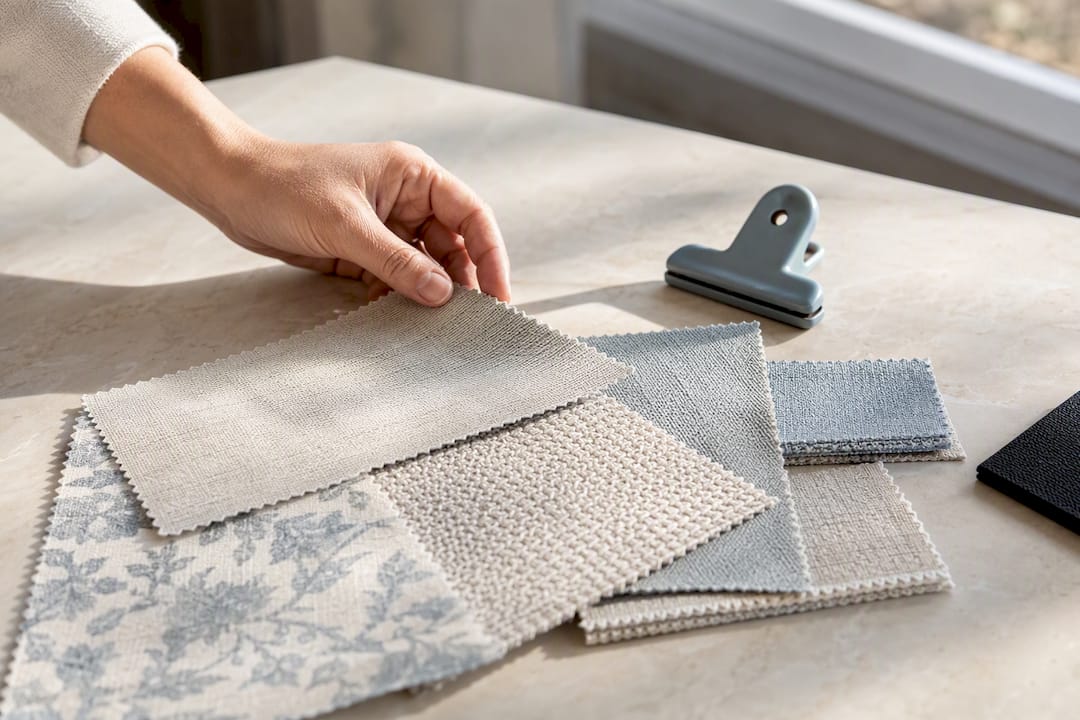
A fabric swatch sample is a small cut of fabric, usually just a few inches square, that lets you check a material’s color, texture, and weight before you buy the real thing. Retailers, mills, and custom window-treatment sellers hand them out (often free) precisely so you can catch a bad match before it becomes an expensive mistake. If a fabric is going anywhere near your living room windows, grab one first. 🧵
TL;DR:
- Small fabric swatches are typically between 2x2 inches and 6x6 inches, suitable for quick color and texture checks but limited in showing pattern or drape.
- Larger memo samples, ranging from about 8½x8½ inches to 17x17 inches, better reveal pattern repeat, weight, and fabric behavior, especially for upholstery or curtains.
- Request production memos before large orders to verify color consistency, weight, and fabric characteristics, particularly for custom-dyed or printed textiles.
- Always label and compare swatches in natural and artificial lighting to accurately assess color, texture, and how fabrics hang or perform at your window.
- Confirm sample details—size, origin, and purpose—with suppliers upfront to avoid mismatches and ensure the sample serves your specific project needs.
Table of Contents
- What Is a Fabric Swatch Sample, Exactly?
- Common Swatch Sizes and Sample Formats You’ll Encounter
- Types of Fabric Samples and When to Request Each
- How to Evaluate a Swatch at Home or in a Showroom
- Where to Get Fabric Swatches and What to Expect
- How Value Blinds Uses Swatches for Shade Selection
- Three Rules for When to Always Swatch
- Order Free Samples from Value Blinds
- Sources
- FAQ
What Is a Fabric Swatch Sample, Exactly?
The word “swatch” has roots in old tailoring practice, where cloth merchants kept snippets pinned into books so buyers could touch and compare options without unrolling entire bolts. That basic idea hasn’t changed. A swatch is still a stand-in for the bigger piece, a way to judge quality without committing to it.
But not every sample means the same thing, and mixing them up can cost you time or money. Here’s how the terms break down:
- Swatch: a small reference piece used for a quick look at color and hand feel.
- Presentation swatch: a slightly larger piece meant to show off appearance and texture, often used in showrooms or catalogs.
- Production swatch: cut directly from the actual production run, so it matches what you’ll receive, not just what was originally designed.
- Strike-off: a trial print run used to check whether a printed pattern reproduced correctly before full production begins.
- Lab dip: a small dyed sample submitted for color approval, common when custom dye matching is involved.
- Handloom: a woven sample, often used to test structure and drape in the earliest design stages.
Suppliers don’t always use these terms consistently, so ask what a sample actually represents before you rely on it. A small swatch also has real limits. It can’t tell you how a fabric will hold up after two years of sun exposure or how a large-scale print will repeat across a wide window.
Common Swatch Sizes and Sample Formats You’ll Encounter
Fabric swatches don’t follow one universal size, but most fall in a predictable range. Small reference tags typically run about 2×2 inches (5×5 cm) up to 6×6 inches (15×15 cm), with some suppliers offering 10×10 cm pieces. That’s plenty for checking basic color, but it won’t show you much about pattern repeat or drape.

For that, you want a memo. Memo samples run considerably larger, often from about 8½×8½ inches up to 17×17 inches depending on the fabric and its intended use. If you’re eyeing a bold geometric print or a heavy upholstery weave, a memo shows you what a tiny tag physically cannot.
You’ll typically run into these formats:
- Swatch tags: small individual clippings, great for a quick color check.
- Swatch memos or blankets: larger stand-alone pieces that reveal pattern and drape.
- Swatch cards: curated groupings, often organized by collection or color family.
- Sample books: bound collections used for browsing multiple options at once.
Before you order anything, check the supplier’s listed dimensions. “Swatch” on one site might mean a 2 inch tag, while on another it means an 8 inch memo.
Types of Fabric Samples and When to Request Each
Ordering the wrong sample type wastes time, so match the sample to what you’re actually trying to confirm.
- Presentation or promo swatches are best for initial browsing. Use these when you’re narrowing down colors or textures across a bunch of options and don’t need production-level accuracy yet.
- Production memos confirm what you’ll actually receive. Request one before finalizing a large order, especially for upholstery or window treatments, where color and weight variations between dye lots are common.
- Strike-offs and lab dips matter most for printed or custom-dyed fabric. If you’re ordering a custom print, a strike-off confirms the pattern reproduced correctly, and a lab dip confirms a custom color matches before the whole run gets dyed.
A small swatch can’t validate print scale or dye accuracy on its own, so request the appropriate proof sample rather than assuming a promo swatch tells the whole story. These terms genuinely are not interchangeable. Ask your supplier directly which type you’re getting.
How to Evaluate a Swatch at Home or in a Showroom
This is where a swatch earns its keep. A photo on a website can show you color, sort of, but it can’t show you weight, sheen, or how a fabric actually drapes and feels. That part is entirely on you.
Visual checks:
- Look at the swatch in both natural daylight and your evening artificial lighting. Colors shift dramatically between the two.
- Hold it next to your existing furniture, walls, or trim rather than judging it in isolation.
- If there’s a pattern, check how the repeat looks at actual scale, not shrunk down in a product photo.
Tactile checks:
- Handle the fabric. Is it stiff, soft, structured, bouncy? Describe it in plain words and compare that description to what your project actually needs.
- Pinch and stretch it gently to test recovery and durability.
- Let it hang if possible to judge drape, especially important for curtains or shades.
Functional checks for window fabrics:
- Hold the swatch up to your actual window at different times of day.
- Check the openness factor if you’re evaluating shades. This tells you how much light and view-through the material allows.
- Do a basic see-through test at night with a lamp on inside. That’s the real privacy test, not the daytime version.
Pro Tip: Label every swatch the moment it arrives, with the supplier name, fiber content, and your own notes. It sounds unnecessary until you’ve got five nearly identical beige samples and no idea which one had the better drape.
Where to Get Fabric Swatches and What to Expect
Swatches come from more places than you’d think. Local fabric shops let you cut or request pieces on the spot. Online fabric sellers, mills, and designer showrooms typically mail small samples, often free of charge. Custom window-treatment vendors usually offer both a quick free swatch and a paid memo for final confirmation.
Before you request anything, ask a few questions:
- What size is the sample, exactly?
- Is it cut from an actual production bolt, or is it a presentation piece?
- How long is shipping, and is there a return policy on paid memos?
Getting these answers upfront saves a round of back-and-forth later, especially if you’re comparing several vendors for the same project.
How Value Blinds Uses Swatches for Shade Selection
At Valueblindsdirect, sampling isn’t an afterthought. Free fabric swatches are available so you can check color and texture before committing to a full order, and our design tools, including measurement guides, a design studio, and energy calculators, help you plan around what you find.
For most shade decisions, a small swatch answers your color question. But if opacity, blackout performance, waterproofing, or motorization compatibility is on the line, order a memo instead. Those properties don’t show up reliably on a 2 inch tag. Once you’ve tested your options, professional measuring and installation services are often available to assist when moving from sampling to installing.

Three Rules for When to Always Swatch
Order a sample every time you’re dealing with a large pattern repeat, upholstery-weight fabric, or a room where light and privacy really matter, like a bedroom window. Skip it for low-stakes, small-scale projects where a photo is good enough. Whatever you order, label it and keep it. Future you will thank present you when comparing options six months from now.
— Sunny
Order Free Samples from Value Blinds
Valueblindsdirect is the practical next step after this guide. Free fabric swatches, paired with design tools like our measurement guide and energy calculator, mean you’re not guessing your way to a final shade order.
Start with a small swatch to narrow down color and texture. Once you’ve settled on a favorite, request a memo to confirm opacity, weight, and how it behaves in your actual window before ordering. If you’re leaning toward something with blackout lining or motorized operation, browse our cellular shades or check the full roller shade lineup to see what pairs well with your swatch results. When you’re ready to move past sampling, our pro-measure and install service takes the guesswork out of final ordering. Head to the full Value Blinds catalog to pick your fabrics and get your first swatches on the way.
Sources
- How big is a swatch of fabric
- Textile sample — Wikipedia
- How and Why to Swatch Fabrics — Threads Magazine
- What is a fabric memo sample and why it’s the final step buyers need before ordering — SampleBook
FAQ
What Is a Fabric Swatch?
A fabric swatch is a small cut of material, usually a few inches square, used to check color, texture, and weight before buying the full fabric. It’s a preview tool, not a guarantee of exact production match unless it’s specifically labeled a production swatch.
Where Can I Find Fabric Sample Swatches?
Fabric swatches are available from local fabric shops, textile mills, designer showrooms, and online sellers, often as a ring, card, or booklet of options. Custom window-treatment vendors like Valueblindsdirect also offer free swatches directly through their site.
Where Do You Get Fabric Swatches for Window Treatments?
For window treatments specifically, request swatches directly from the shade or blind vendor rather than a general fabric shop, since they’ll match materials actually used in production. Valueblindsdirect offers free swatches alongside design tools to help you plan the full order.
How Big Is a Swatch Sample of Fabric?
Most swatches run from about 2×2 inches (5×5 cm) up to 6×6 inches (15×15 cm), though sizing varies by supplier. For a fuller picture of pattern and drape, a memo sample, often 8½×8½ inches up to 17×17 inches, is the better choice.