
Avoid Quarter Inch Remakes with Professional Blind Installation
Professional blind installation matters because it guarantees a precise fit, safe operation, and fewer costly remakes down the road. A pro follows anchoring guidance from the CPSC to reduce cord hazards, and correct fit helps your shades perform the way building-science research from Penn State PHRC says they’re designed to: blocking light, holding privacy, and managing heat.
TL;DR:
- Professional installation is essential for complex window types like bay, arch, or oddly shaped frames to ensure a perfect fit and avoid visible gaps.
- Accurate measurements and proper hardware anchoring by professionals extend the lifespan and improve the function of window shades, especially in safety-sensitive environments.
- Safety standards from CPSC and ANSI require correct cord anchoring or cordless options to prevent strangulation hazards, especially with children or pets in the home.
- Costs vary based on window shape, size, and hardware complexity, with motorized setups and custom shapes increasing the overall price and installation time.
- Selecting an experienced, insured installer with recent references and clear communication helps prevent common DIY mistakes and ensures warranty coverage.
Table of Contents
- When professional installation is worth it
- Key benefits professionals deliver: fit, function, and longevity
- What professional installers do: tools, steps, and quality checks
- Safety and standards: cord hazards and ANSI/CPSC guidance
- Cost and time expectations: budgeting a pro install
- How to choose an installer and the right service
- What I’ve learned watching DIY blind installs go sideways
- How Value Blinds’ Pro Measure & Install service helps
- Sources
- FAQ
When professional installation is worth it
Not every window needs a pro, but plenty do. Here’s when calling in help stops being optional and starts being the smart move:
- Bay windows, arches, or oddly angled frames where a fraction of an inch off means a gap you’ll notice every single day.
- Motorized or smart shades, since wiring and calibration are a different skill set than hanging a basic slat blind.
- High or hard-to-reach windows where a ladder and an awkward drill angle turn a simple job into a safety gamble.
- Homes with toddlers or pets, where cord anchoring has to be exact, not “close enough.”
DIY works fine for a standard rectangular window with basic mini blinds and a free Saturday afternoon. But once you’re juggling odd shapes, tricky hardware, or genuine safety stakes, the time and tools you’d need to buy (a laser level, a stud finder, the right anchors) often cost more than just booking a professional.
Key benefits professionals deliver: fit, function, and longevity
A blind that’s off by even a quarter inch can leave a light gap along the edge or a privacy strip nobody wants their neighbors peeking through. Precise measurement is not a nice-to-have. It’s the difference between a blind that disappears into your window and one that always looks a little wrong.
Here’s what professional measurement and mounting actually buys you:
- Tighter light and privacy control, since exact inside or outside mount measurements close the gaps DIY jobs often leave.
- Smoother daily operation, because properly aligned brackets keep the headrail level so the blind doesn’t bind or tilt.
- Longer product life, since correctly anchored hardware spreads weight evenly instead of stressing one bracket until it fails.
- Protected warranty coverage, because most manufacturers require proper installation for warranty claims to hold up.
Pro Tip: Ask your installer to confirm your mount depth before ordering, since reveal space can make or break whether an inside mount is even possible.
Post-installation support matters more than people expect. When a bracket loosens or a cord needs re-anchoring two years later, having someone to call beats starting from scratch with a YouTube tutorial.
What professional installers do: tools, steps, and quality checks
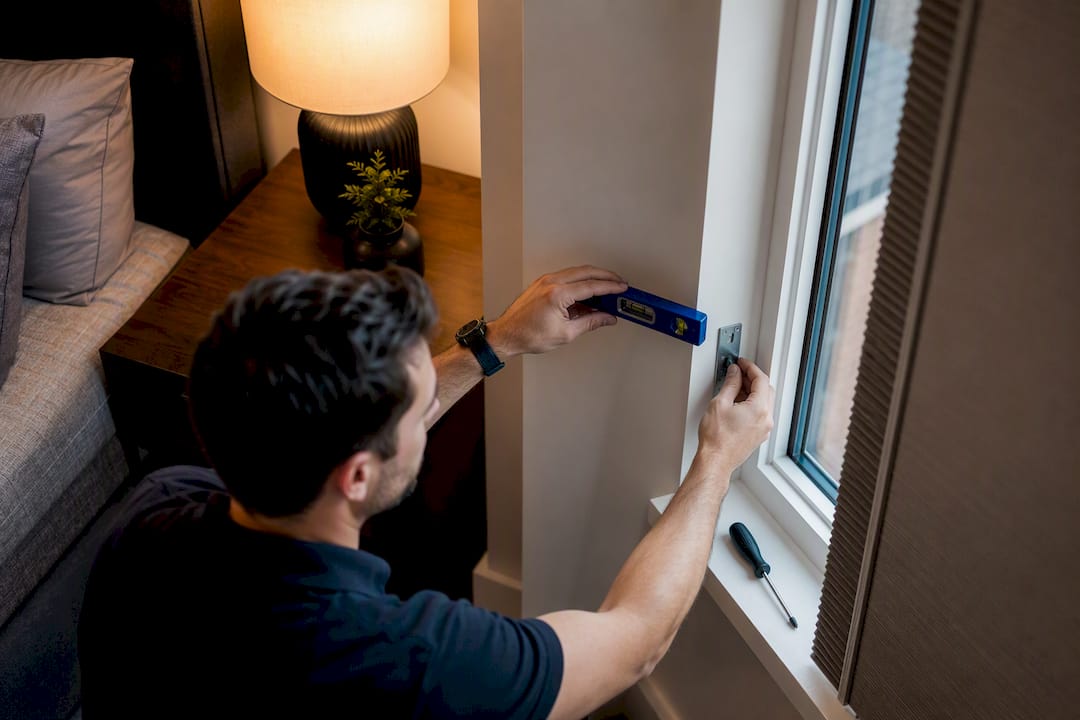
A pro’s process looks nothing like eyeballing a bracket and hoping for the best. Here’s the general workflow:
- Inspect the window frame for square, level, and any obstructions like trim or hardware that could interfere with mounting.
- Take precise measurements for both the opening and the mount depth, since inside mounts need reveal space that outside mounts don’t.
- Choose the mount type (inside, outside, or reveal) based on frame depth, window function, and your stated preference for look versus light blockage.
- Select the right anchors for the wall or frame material, whether that’s drywall, plaster, wood, or metal.
- Level and tension the hardware, checking that the headrail sits true and the lift mechanism runs smoothly without binding.
- Test motorized units for calibration and range before calling the job done.
- Clean up and walk through operation with you so you know how to raise, lower, and tilt correctly from day one.
That last step sounds small, but it’s often where the real value shows: someone showing you exactly how your new shades are supposed to work.
Safety and standards: cord hazards and ANSI/CPSC guidance
This part isn’t optional information, it’s genuinely important. The CPSC has identified corded window coverings as a foreseeable strangulation hazard, particularly for young children, and staff analysis found that anchored tension devices only work when they’re permanently and correctly fixed in place.
CPSC staff estimates that roughly two-thirds of potentially fatal window covering incidents could be prevented if looped cords and long operating cords were made inaccessible or eliminated entirely, according to the agency’s voluntary standards guidance. That’s a striking number, and it’s exactly why professional anchoring matters: safety devices are frequently skipped or installed wrong by well-meaning homeowners.

The ANSI/WCMA A100.1 standard sets durability testing and installation requirements specifically to cut cord-related risk. If you have kids or pets at home, going cordless is worth serious consideration, and our guide to cordless blinds safety walks through the options.
Cost and time expectations: budgeting a pro install
A standard window typically takes a professional installer far less time than a complex bay window, motorized setup, or oversized custom shade. Here’s what tends to drive the price up or down:
- Window shape and size, since custom cuts and multi-panel setups take longer than a single rectangular frame.
- Mount type, with reveal or recessed mounts sometimes requiring extra hardware or adjustment.
- Motorization, which adds wiring, calibration, and app setup time.
- Number of windows, since bulk jobs often come with better per-window pricing.
Think of the installation cost as risk management, not just a service fee. A remake because of a bad measurement, or a warranty claim denied over improper mounting, usually costs more than getting it right the first time.
How to choose an installer and the right service
Picking the right installer comes down to a short checklist:
- Experience with your specific product type, whether that’s motorized shades, wood blinds, or oversized panels.
- Proof of insurance, so you’re covered if something goes wrong in your home.
- A written warranty on the installation work itself, separate from the product warranty.
- Familiarity with the brand or line you’re buying, since hardware varies more than people expect.
When you’re vetting someone, ask directly: “How do you handle odd-shaped windows?” and “What happens if a bracket fails after installation?” A confident, specific answer is a good sign. A vague one isn’t.
Pro Tip: Ask for references from jobs completed in the last year, not just a general portfolio, so you can see how recent work has held up.
Red flags include installers who won’t quote in writing, can’t explain their anchor choices, or dodge questions about insurance.
What I’ve learned watching DIY blind installs go sideways
The most common DIY mistake I see is skipping the reveal-depth check before ordering, which turns a simple inside mount into a returned product and a wasted week. Professional correction of that one step alone saves more money than most homeowners expect. My recommendation carries the most weight for anyone dealing with motorized shades or windows that aren’t perfectly square.
— Sunny
How Value Blinds’ Pro Measure & Install service helps
If you’d rather skip the guesswork entirely, a professional Pro Measure & Install service handles the measuring, mounting, and final adjustment for you. It’s built for homeowners who want a guaranteed fit and safe, correctly anchored hardware without spending a weekend on ladders and levels. You can browse the full Pro Measure & Install page to see what’s included, or start by exploring the full product catalog if you’re still deciding which shades fit your space.
Sources
Safety guidance comes from the CPSC, building-performance context from Penn State PHRC and NIST, and real-world fit guidance from Cornell Cooperative Extension.
FAQ
What are common problems with blinds installing?
The most frequent issues are inaccurate measurements that leave light gaps, brackets anchored into the wrong material, and misaligned headrails that cause binding. Skipping mount-depth checks before ordering is a top cause of returns and remakes.
Why do rich people leave windows uncovered?
This is more a design trend than a rule, often tied to homes with strong privacy from landscaping, distance from neighbors, or architectural glass. Most homeowners still need coverings for privacy, glare control, and the thermal comfort benefits that properly fitted shades provide.
How much should blind installation cost?
Cost depends heavily on window size, shape, mount type, and whether the shades are motorized, so there’s no single universal price. Value Blinds offers its Pro Measure & Install service with pricing available on request based on your specific windows.
Is Lowe’s blind installation good?
Big-box installation services vary by location and available installer, and quality often depends on who’s dispatched to your home rather than the retailer itself. Whoever you choose, confirm insurance, a written installation warranty, and experience with your specific product type before booking.