
Article: Measure Three Points for Perfect Custom Wood Vertical Blinds
Measure Three Points for Perfect Custom Wood Vertical Blinds
For most sliding doors, patios, and busy family rooms, faux wood vertical blinds are the practical pick because they shrug off humidity and temperature swings without warping. Reserve solid wood for formal, climate-controlled rooms where you want real grain and richer texture. Either way, the next move is the same: grab your tape measure, note your window’s width and height, and request free swatches before you order.
TL;DR:
- Faux wood vertical blinds are best suited for humid or temperature-sensitive rooms because they resist warping and cracking better than solid wood.
- The typical lifespan of wooden blinds is around six years, but premium cedar slats can last decades with proper maintenance, unlike faux wood which is more affordable and lower maintenance.
- Measuring for the right size is crucial: measure width and height at multiple points, and decide between inside or outside mount based on frame depth and desired look.
- Motorized and cordless options are recommended for large or hard-to-reach openings to enhance safety and convenience, especially in homes with children and pets.
- Material choice should prioritize room conditions: use solid wood in stable environments, and faux wood or bamboo in damp or fluctuating climates to maximize longevity and sustainability.
Table of Contents
- Why Choose Wood Vertical Blinds for Your Windows?
- Real Wood vs. Faux Wood vs. Bamboo: Which Material Fits Your Room?
- Where Wood Vertical Blinds Work Best
- Customization Options: Valances, Motorization, and Child Safety
- How to Measure and Prepare for Installation
- What Kind of Upkeep Should You Expect?
- What Does It Cost, and How Long Does a Custom Order Take?
- Installing Wood Vertical Blinds: DIY or Call a Pro?
- Warranty and Return Policies: What to Check Before You Buy
- Are Wood Vertical Blinds an Eco-Friendly Choice?
- Light Control and Privacy: How Do Your Options Compare?
- Our Take: What Matters More Than the Material Debate
- Ready to Order? Here’s Where to Start
- Sources
Why Choose Wood Vertical Blinds for Your Windows?
Vertical slats do something horizontal blinds and curtains can’t: they cover wide, tall openings without sagging or bunching. That makes wood vertical blinds a natural fit for sliding glass doors, patio walls, and floor-to-ceiling windows where a single stretch of fabric would look overwhelmed.
The design payoff is real, too. Natural wood slats soften incoming sunlight into a dappled, textured glow that flat fabric shades simply can’t replicate, and the warmth pairs naturally with wood trim, hardwood floors, or exposed beams. You get coordination without matching everything perfectly.
Beyond looks, vertical wood blinds deliver:
- Adjustable privacy that rotates from fully open to fully closed with a single wand or cord.
- Simple side-to-side stacking that clears the full window when you want an unobstructed view.
- A layer of insulation across large glass expanses, which helps buffer heat loss in winter.
Pro Tip: If you’re covering a sliding door, measure the full track width, not just the glass panel. Vertical blinds need extra slat coverage to stack cleanly to one side without gaps.
Real Wood vs. Faux Wood vs. Bamboo: Which Material Fits Your Room?
The material decision comes down to one question: how much moisture and temperature swing will this window see? Bathrooms, kitchens, and covered patios punish solid wood. Humidity swells the wood, and slats warp or crack over time. That’s why retailers routinely position faux wood vertical blinds as the moisture-resistant option for exactly those rooms.
Here’s how the three main options stack up:
- Solid wood: Real grain, stainable or paintable finishes, and genuine texture. Best in dry, temperature-stable rooms like formal living rooms, dining rooms, and bedrooms.
- Faux wood (PVC/vinyl composite): Consistent color matching across every slat, resistance to warping, and a lower price point. Best for kitchens, bathrooms, basements, and anywhere near a heat vent.
- Bamboo: A renewable, fast-growing material with a naturally varied grain pattern. It leans eco-friendly but tends to be less moisture-tolerant than faux wood, so it fits dry rooms better than damp ones.
Cost and lifespan track the same pattern. Faux wood is generally the most affordable and forgiving option day to day. Solid wood costs more upfront but rewards you with a richer look and, when properly finished, a much longer service life.
Where Wood Vertical Blinds Work Best
Vertical blinds were built for openings horizontal blinds struggle with. Sliding glass doors are the classic case: the slats stack neatly to one side and clear the doorway completely when you need to walk through. Wide picture windows, wall-to-wall glass, and even open-concept room dividers all benefit from the same vertical drop.
Slat width matters more than most shoppers expect:
- 3.5-inch slats give a more traditional, slightly heavier look and work well on wider walls of glass.
- 5-inch slats are less common now but offer a bolder, more retro profile.
- Narrower slat options create a softer, more contemporary line and require less stacking depth on either side.
Track configuration also shapes how the blinds function. A one-way draw stacks every slat to a single side, ideal for doors used from one direction. A center-draw or split-stack track pulls slats to both sides, better suited to wide windows where you want light entering from the middle out.
Customization Options: Valances, Motorization, and Child Safety
The base blind is just the starting point. Valances hide the headrail and track hardware, and you can match them to your trim in wood tones, painted finishes, or fabric-wrapped options for a softer look.
Motorization is worth serious consideration for anything oversized or hard to reach. If you’re covering a two-story sliding door or a window behind furniture, a motorized track eliminates the wand-and-cord dance entirely. It costs more upfront, but for large or awkward openings, the daily convenience tends to justify the price.
Safety controls have become a bigger factor in recent buying decisions. Cordless operation and enclosed wand systems reduce the strangulation risk that loose cords present, which matters most in homes with young kids or pets.
A few more details worth planning around:
- Stained finishes show wood grain but need occasional touch-ups if scratched.
- Painted finishes hide imperfections better and clean up easier.
- Motorized tracks typically run on rechargeable batteries or hardwired power, depending on the manufacturer.
Pro Tip: If your household has toddlers or pets that chase cords, go cordless from the start rather than retrofitting later. It’s a small upcharge that saves a future headache.
How to Measure and Prepare for Installation
Getting the measurements right the first time avoids the most common ordering mistake: a too-narrow width that leaves gaps when the blind is closed. Here’s the process:
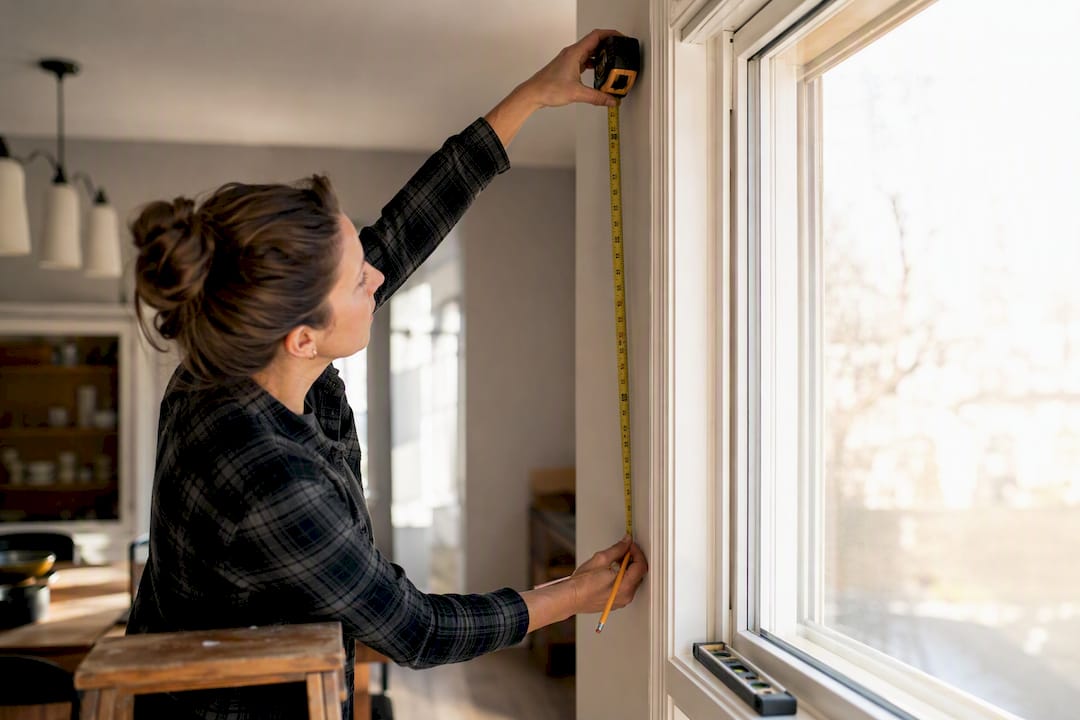
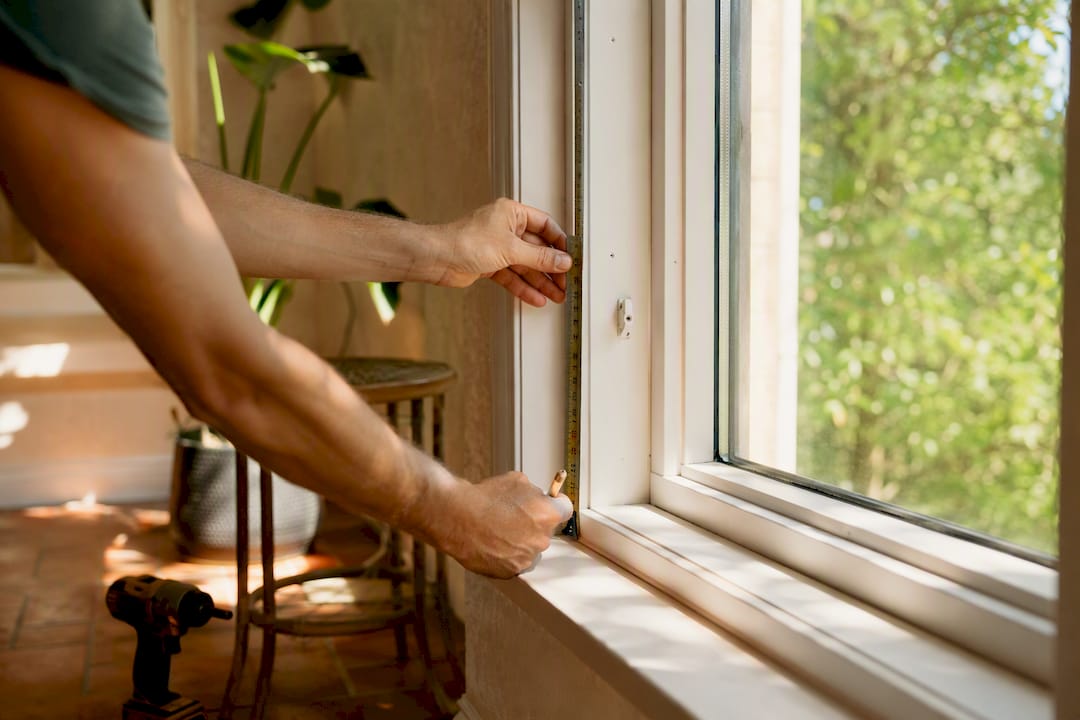
- Measure width at three points. Check the top, middle, and bottom of the window or door frame, and use the narrowest of the three for an inside mount.
- Measure height at three points. Check the left, center, and right sides, and use the longest measurement so the blind covers the full opening.
- Decide inside vs. outside mount. Inside mount needs at least 2.5 to 3 inches of depth in the frame for the headrail; outside mount works when the frame is too shallow or you want to make the window look larger.
- Check stacking clearance. Vertical blinds need open wall space beside the window for slats to stack when fully open, especially on sliding doors.
If your window is an odd shape, oversized, or the frame isn’t perfectly square, request professional measuring rather than guessing. Our step-by-step guide to measuring for vertical blinds walks through each point in more detail.
What Kind of Upkeep Should You Expect?
Cleaning routines differ by material. Solid wood slats need a dry dusting cloth or a slightly damp wipe, since standing moisture damages the finish over time. Faux wood tolerates a damp cloth and mild soap without issue, which is part of why it holds up in kitchens. Bamboo does best with a dry brush or vacuum attachment since it can absorb moisture along the weave.
Repairs are usually minor. Expect to occasionally replace a cracked slat, re-string a control cord, or lubricate a sticking track after several years of daily use.
Lifespan varies enormously by material quality. Standard wooden blinds average around six years of service, but premium straight-grained cedar slats with proper finishing can last decades longer under controlled humidity when the manufacturer’s care guidance is followed closely. Skip that upkeep, and even a premium product will wear out closer to the typical range.
- Dust weekly with a microfiber cloth or vacuum brush attachment.
- Avoid harsh chemical cleaners on stained or painted finishes.
- Keep humidity stable near solid wood installations to protect the finish.
What Does It Cost, and How Long Does a Custom Order Take?
Faux wood vertical blinds sit at the affordable end of the category, and retailers consistently market them as the lower-cost, lower-maintenance alternative to solid wood. Premium solid-wood custom orders, especially those with specialty stains or wide-format slats, sit at the higher end of the price range.
A few factors move the price up or down:
- Material grade. Basic PVC composite costs less than fine-grain cedar or oak.
- Motorization. Adding a motor and remote control raises the price of any base blind.
- Custom finishes. Hand-applied stains or painted-to-match colors cost more than standard finish options.
- Installation. Professional installation adds to the total but reduces measurement risk.
Custom orders typically take a few weeks to produce since each blind is cut and finished to your exact measurements. If you’re on a tight timeline, ask about rush production when you place your order, since not every finish or motorization option qualifies for expedited turnaround.
Installing Wood Vertical Blinds: DIY or Call a Pro?
Installation for vertical blinds generally follows a predictable sequence: mount the headrail bracket, snap the track into place, attach the slats, and test the stacking direction. For a standard window with a square frame, a confident DIYer with a drill and a level can usually finish one blind in under an hour.
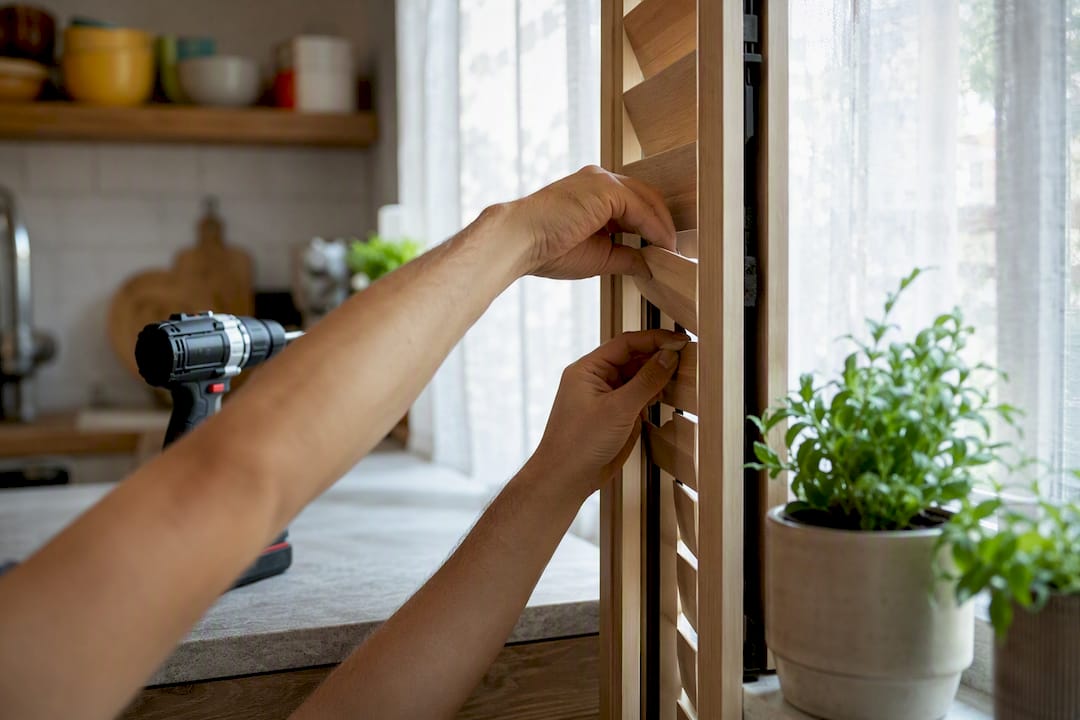
Sliding doors and oversized openings raise the difficulty. The headrail needs to sit perfectly level across a longer span, or the slats will hang unevenly and drag against each other when you operate the wand. Motorized tracks add another layer, since you’re also wiring or pairing a control unit correctly.
Professional installation earns its cost in a few specific situations. If your frame isn’t square, if you’re mounting outside the frame onto drywall or brick, or if you’ve ordered a motorized system, a professional installer avoids the trial-and-error that leads to reorders. It also matters if you’re installing multiple blinds across a whole room and want consistent results without spending a weekend on a step stool.
If you’re comfortable with basic tools and your window is a standard rectangular shape, DIY installation is entirely reasonable and saves on labor cost. Just double-check every measurement before drilling, since the most common fit problem traces back to a mis-measured width rather than a hardware issue. For guidance on prepping any window before install day, our guide to measuring windows for custom blinds covers the groundwork.
Warranty and Return Policies: What to Check Before You Buy
Custom window treatments are made to your exact measurements, which means return policies differ significantly from off-the-shelf home goods. Most manufacturers offer a warranty covering manufacturing defects, hardware failure, and premature wear on slats, tracks, and control mechanisms. Coverage length and terms vary by product line and material, so it’s worth reading the specific warranty tied to the blind you’re ordering rather than assuming blanket coverage.
Because vertical blinds are custom cut, many retailers limit returns or exchanges once an order goes into production, since a blind sized for your window can’t easily be resold. That makes accurate measurement before ordering even more important. It also means requesting swatches and confirming your measurements twice is worth the extra few minutes it takes.
Motorized components sometimes carry a separate warranty period from the physical slats and track, since electronics wear differently than hardware. If you’re investing in a motorized system for a large sliding door, ask specifically about the motor and remote warranty terms, not just the blind’s general coverage.
Before placing a custom order, confirm three things: what the warranty covers, how long it lasts, and whether the retailer offers any adjustment period for measurement errors. A little diligence here prevents an expensive surprise if something arrives slightly off.
Are Wood Vertical Blinds an Eco-Friendly Choice?
Wood and faux wood blinds land in very different places on sustainability. Solid wood is a renewable material when it’s sourced from responsibly managed forests, and a well-made wood blind that lasts for years reduces the replacement cycle compared to cheaper products that wear out fast. Bamboo goes a step further on the renewability front, since bamboo regenerates far faster than hardwood trees and requires less water and fewer pesticides to cultivate.
Faux wood blinds are typically made from PVC or vinyl composite, which comes from petroleum-based materials and doesn’t biodegrade the way wood does. The trade-off is durability in the exact conditions where wood struggles. A faux wood blind that survives a decade in a humid bathroom without warping may have a smaller environmental footprint over its lifetime than a wood blind that needs replacing every few years in the wrong climate.
If sustainability is a priority, look at the full picture: where the wood was harvested, how the faux wood was manufactured, and how long the product will realistically last in your specific room. A blind that lasts is almost always the more sustainable choice, regardless of material, simply because it delays another manufacturing cycle.
Light Control and Privacy: How Do Your Options Compare?
Vertical blinds offer a level of control that’s genuinely different from horizontal blinds or fabric shades, and understanding the range helps you set expectations before you buy.
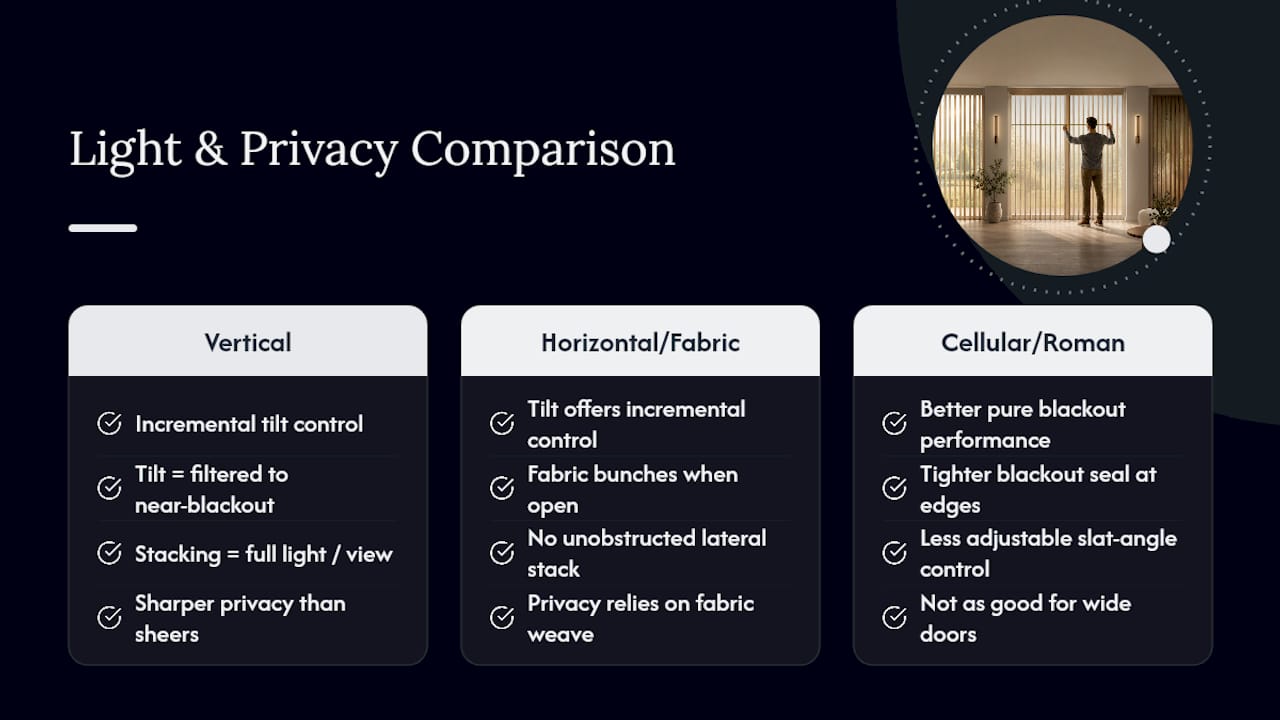
Rotating the slats gives you incremental control: tilt them at an angle for filtered light and partial privacy, or close them fully for a near-blackout effect on darker slat colors and finishes. Stacking the blind open, by contrast, gives you full light and an unobstructed view, which fabric roller shades can’t match since they bunch at the top or bottom rather than sliding sideways.
Compared to sheer curtains, vertical wood and faux wood blinds offer sharper, more adjustable privacy control since the slat angle changes precisely rather than relying on fabric weave density. Compared to cellular or roman shades, verticals handle wide openings better but generally don’t achieve the same tight blackout seal, since light can pass through the small gaps where slats overlap at the edges.
If total darkness is the priority for a bedroom or media room, a light-blocking cellular shade may outperform verticals on pure blackout performance. If flexible daytime control across a wide sliding door is the priority, wood or faux wood verticals remain hard to beat.
Our Take: What Matters More Than the Material Debate
Most buying guides frame this as a simple choice between real wood and faux wood, as if one is universally “better.” That framing misses the actual decision homeowners are making. The real question is whether you’re solving for appearance or for durability in a specific room, and those two goals sometimes pull in opposite directions.
We’d push back gently on the instinct to default to solid wood because it “looks nicer.” In a stable, dry room, that instinct is correct. In a kitchen or a sunroom with wide temperature swings, it can lead to warped slats and an expensive redo within a couple of years. The smarter approach is choosing the material based on the room’s actual conditions first, then picking the finish and slat width that fits your design goals within that material.
Valueblindsdirect built its catalog around this idea: real wood, faux wood, and bamboo options sit side by side because different rooms genuinely call for different materials, not because one is a downgrade from the other. The site pairs that range with measurement guides, a design studio, and an energy calculator so you’re not guessing at fit or performance before you commit. Free swatches, warranty coverage, and flexible shipping round out an ordering process built for a product you can’t easily return once it’s cut.
— Sunny
Ready to Order? Here’s Where to Start
Once you know your material and slat width, the fastest path forward is the Window Treatment Design Studio, where you can preview colors, finishes, and motorization options against your actual window dimensions before you commit to an order.
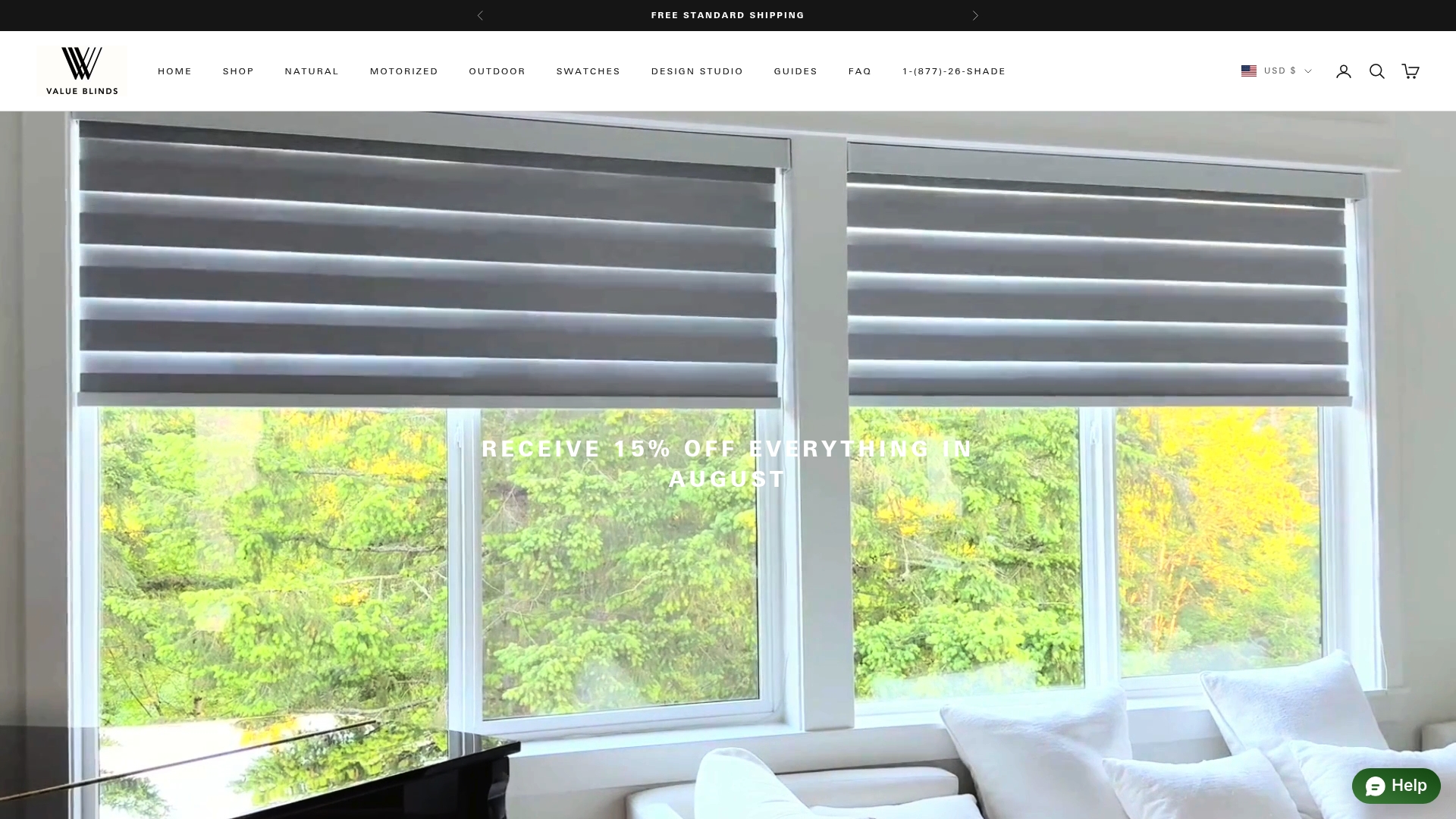
If you’re still deciding between real wood, faux wood, or bamboo, order free swatches first. Holding the actual material against your trim and flooring tells you more in five minutes than any product photo will. Browse the full vertical blinds collection to compare slat widths and finishes side by side, or check out solid wood blind options if you’ve already decided real wood is right for your room.
Before you start an order, have three things ready: your three-point width and height measurements, your material preference, and whether you want manual, cordless, or motorized controls. With those in hand, checkout takes minutes instead of guesswork.
Sources
- Sample Catalog Available Wooden Blinds Vertical Wood 90 東京ブラインド工業 | IPROS GMS
- Wood - Vertical Blinds - The Home Depot
- Graber vertical blinds product imagery and copy