
Cellular Shades Energy Savings: What You Can Expect
Cellular shades (also called honeycomb shades) save energy by trapping a layer of still air at your window, which slows heat moving out in winter and in during summer. The U.S. Department of Energy says window attachments can save 15% of a household’s annual HVAC energy use compared with vinyl blinds. Lab tests show savings range from a few percent to 25% or more, depending on your climate, your windows and how you use the shades. Here is what the research says, what moves the number up, and how to pick shades that put it in your favor. 🏠
TL;DR
- Cellular shades trap air in honeycomb pockets, which cuts nighttime heat loss in winter and unwanted solar heat in summer.
- DOE testing shows up to 20% savings on heating energy and up to 15% on total heating and cooling versus no shades, and 15% of annual HVAC energy versus vinyl blinds.
- Savings are biggest when every window is covered and the shades are used on a routine, which is where motorization and scheduling help a lot.
- Older homes with lots of glass, and west- and south-facing windows, tend to gain the most.
- Our Smart Shade Savings Tool and free swatches make it easy to plan before you order.
Table of Contents
- How cellular shades save energy
- What the numbers look like, side by side
- What decides how much you save
- How to get the most out of your shades
- Cellular shades or new windows?
- Who benefits most
- Picking the right cellular shade
- Our take: Perspective
- Ready to start? Our cellular shades
- FAQ
- Sources
How cellular shades save energy
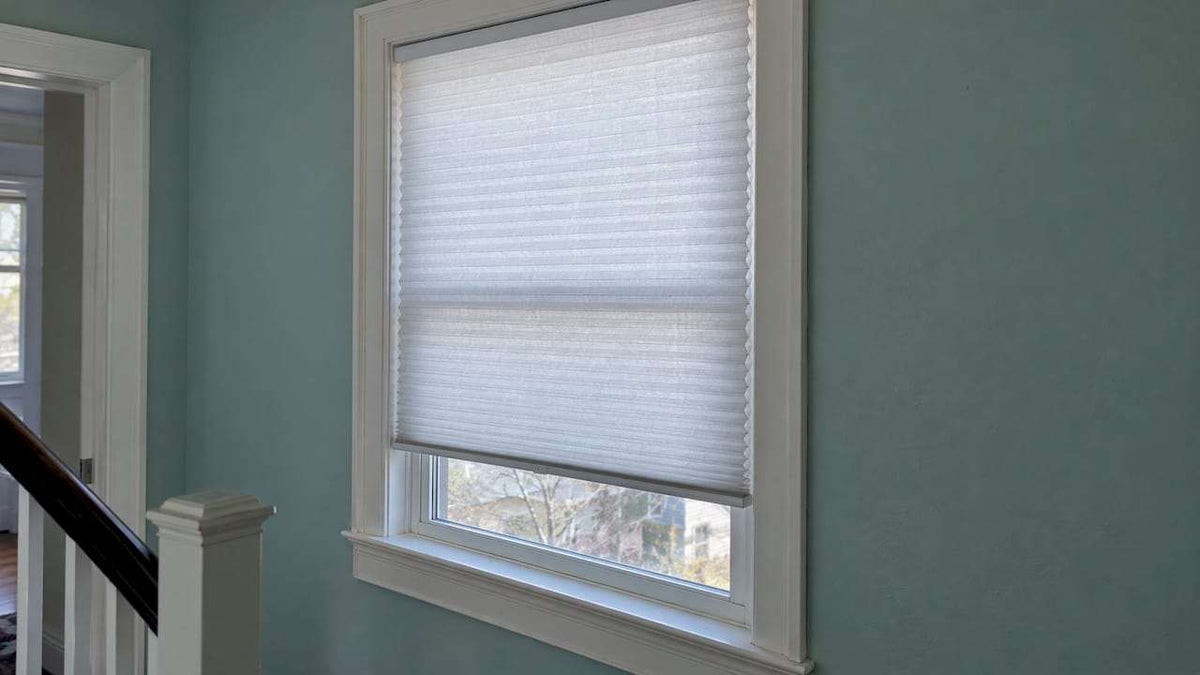
The fabric is pleated and folded into rows of hollow cells. Those cells hold air. According to the DOE fact sheet on interior cellular shades, the trapped air inside the cells and between the shade and the glass adds insulation. The result is less heat loss at night, fewer cold drafts near the window, and less solar heat coming in. Some designs also use low-emissivity surfaces that reflect ultraviolet or infrared light for extra insulation.
Think of it as adding a thin blanket to the weakest part of your wall. A window is usually the thinnest, leakiest spot in a room, so a small upgrade there makes a noticeable difference.
Researchers at the Department of Energy’s labs have also found that the honeycomb structure gives better thermal performance than generic shades and venetian blinds. That is the core reason they rank so high on energy-minded wish lists.

Winter: keeping the warmth in
At night, a window is where your heated air escapes. Closed cellular shades slow that down. In Oak Ridge National Laboratory (ORNL) experiments summarized by the DOE, cellular shades saved up to 20% on heating energy and up to 15% on total heating and cooling energy compared with no shades.
A separate ORNL residential study measured 9% to 23% daily energy savings between 6 p.m. and 6 a.m. for cellular shades versus venetian blinds. Nights are exactly when your shades do their best work.
Summer: keeping the heat out
Yes, cellular shades help keep heat out too. The same DOE fact sheet notes they reduce unwanted solar heat gain, so your air conditioner works less on hot afternoons. In Pacific Northwest National Laboratory (PNNL) testing, high-efficiency double-cell shades delivered 25% HVAC savings in the cooling season when all windows were covered.
What the numbers look like, side by side
No single percentage fits every home. This table gathers the main published results so you can see the range.
| Study | What was measured | Result |
|---|---|---|
| DOE fact sheet, 2021 | Window attachments vs. vinyl blinds | 15% of annual household HVAC energy |
| DOE fact sheet, 2021 | Cellular shades vs. no shades (ORNL) | Up to 20% heating, up to 15% heating and cooling |
| PNNL Lab Homes, 2017 to 2018 | Double-cell shades, all windows covered, summer | 25% HVAC savings |
| PNNL Lab Homes, 2017 to 2018 | Cellular vs. typical venetian blinds, cooling | 6% to 15% whole-home HVAC savings |
| DOE Window Treatments briefing, 2019 | Insulated cellular shades in new and existing homes | 10% to 34% annual HVAC savings |
| ORNL field study | Commercial building, vs. unshaded rooms | More than 20% heating savings |
Why the spread? Because the result depends on your house, not just the shade. Let’s break that down.
What decides how much you save
PNNL’s modeling study points to a handful of factors: the attachment type, the home’s structure and orientation, the primary windows, the climate and how the shades are operated. Here is what that means in plain terms.
Your windows and your home
The same study found savings were greatest in smaller existing homes with a high ratio of window area to wall area, and that more window area means more savings. Well-insulated new homes with high-performing windows have less to gain than older homes of the same size.
That lines up with a number the DOE shares: nearly 80% of U.S. homes have inefficient single- or double-pane windows, and only about 2% of those homes get updated with better windows each year, according to the DOE fact sheet. If your windows are older, shades are one of the most affordable ways to close the gap.
Your climate
The DOE’s 2013 analysis ran more than 16,000 simulations across 12 climate zones. It found that all attachments save energy in cooling-dominated climates, while insulating shades with balanced solar control save the most in northern and many central heating-dominated zones. A later PNNL model found cellular shades deliver year-round HVAC savings in all 13 climate zones it examined.
For example, ORNL’s simulations of a medium office building showed annual HVAC savings of 25% in Phoenix, 27% in Nashville and 19% in Rochester. Hot, cold or in between, the shades earn their keep.

Cell count and fit
PNNL found that double-cell shades provide nearly the same savings as triple-cell shades. So a double-cell design is a strong choice for most homes.
Fit matters too. Building-science guidance says insulated cellular shades without side tracks raise a window’s R-value (its resistance to heat flow) by about 1 to 2, while designs with side tracks that fit tightly can raise it by about 4. Measuring carefully is how you keep gaps small, and our Pro Measure & Install service is there if you would rather have someone else handle it.
How to get the most out of your shades
The research agrees on one thing: how you use the shades matters as much as which shades you buy. 💡
- Cover all the windows that matter. In the PNNL tests, double-cell shades delivered 25% summer HVAC savings with every window covered, and about 5% under typical use when large west- or south-facing windows were left uncovered. Start with the big west and south windows, since they take in the most afternoon sun.
- Close them at the right times. In summer, lower the shades on sun-facing windows through the hottest part of the day. In winter, open them to let the sun in, then close them at dusk to hold the heat.
- Make it routine. Building-science guidance notes that maximum savings depend significantly on routine deployment. A shade you forget to close saves nothing.
- Get the fit right. Measure to the tight tolerances the shade needs so it sits close to the window frame. Our measurement guides walk you through it.
- Let automation do the remembering. PNNL’s modelers noted that near-optimal savings depend on schedules people are unlikely to follow by hand, and recommended automated shading controls. Which brings us to motorization.
Why motorized cellular shades make sense
A motorized shade can open and close on a schedule or from your phone or remote, so the energy-saving routine happens whether you are home or not. No more running around at sunset (ugh!) or coming home to a sun-baked living room. We have a guide on motorized cellular blinds for smart home energy control, and another on remote control cellular shades if you want a simpler step up. Motorized cordless operation also keeps the window clean and clutter-free, which is a nice bonus for homes with kids and pets.
Cellular shades or new windows?
Replacement windows can be a big project. The DOE describes well-fitted cellular shades as an affordable option compared with high-efficiency replacement windows. You get a meaningful insulation boost in an afternoon, with no construction, no permits and no dust.
For homeowners planning a sale, energy-friendly touches also catch buyers’ attention. If you are weighing which upgrades pay off, this look at Austin home energy-saving features shows how much buyers care about efficiency.
Who benefits most
- Homeowners in older houses: more glass relative to wall area and older panes mean more to gain.
- Property managers: one consistent, tidy shade across many units that helps with tenant comfort and utility costs.
- Realtors and contractors: a quick, visible efficiency upgrade that does not need a renovation.
- Interior decorators: cellular shades come in many fabrics, colors and light-filtering options, so energy performance does not cost you style. 🎨
Picking the right cellular shade
Before you order, run through these questions:
- Light control. Light filtering keeps rooms bright and soft. Our Deluxe Light Filtering Cellular Shades are a good fit for living areas.
- Operation. Cordless is clean and simple. Motorized adds scheduling and smart control, such as our motorized light filtering honeycomb shades.
- Cell design. Double-cell is the sweet spot for most homes, per the PNNL modeling above.
- Window orientation. Prioritize west- and south-facing glass.
- Fit. Measure carefully, or use professional measuring and installation.
Want to see the fabric in person first? Free swatches let you check color and texture in your own light. For a closer look at how insulation works, read our guide to understanding cellular shades insulation or the overview of cellular shades benefits and features.
Our take: Perspective
We think of a cellular shade as the easiest efficiency upgrade in a house. It does not need a contractor crew, a permit or a weekend of demolition, and it improves comfort the first night you close it.
The research is clear that the shade is only half the story. Fit and routine do the rest, and that is why we build our offer around the whole picture: made-to-order sizing, measurement guides, professional measuring and installation, and motorized options that take the daily routine off your plate.
Our Smart Shade Savings Tool helps you estimate what covering your windows could mean for your home, and our satisfaction guarantee and warranties are there so you can order with confidence. If you are deciding between a handful of windows or the whole house, start with the sunniest ones and grow from there.
Sunny
Ready to start? Our cellular shades
Our cellular shades collection covers light filtering styles, cordless and motorized operation, made to the size of each of your windows. Order free swatches to see colors at home, use the measurement guides, or add professional measuring and installation so the fit is right from day one.
If you are comparing it with other styles, you can browse the full range on valueblindsdirect.com, including zebra shades, roller shades, wood blinds and more.
FAQ
Do cellular shades really save energy?
Yes. The DOE reports that cellular shades saved up to 20% on heating energy and up to 15% on total heating and cooling energy compared with no shades in ORNL experiments. The exact amount depends on your climate, windows and how consistently you use the shades.
Will cellular shades keep heat out in summer?
They do. The air trapped in the cells slows heat moving through the glass, and the shades reduce unwanted solar heat gain. PNNL measured 25% summer HVAC savings with high-efficiency double-cell shades covering all windows.
Are double-cell shades better than single-cell?
Double-cell designs have two layers of air pockets, so they insulate more. PNNL’s modeling found double-cell shades deliver nearly the same savings as triple-cell ones, which makes them a great balance for most homes.
Which windows should I cover first?
Start with the large west- and south-facing windows. They collect the most solar heat, and PNNL found savings drop to about 5% under typical use when those big windows stay uncovered. Bedrooms and living rooms with lots of glass are good next steps.
Can motorized shades save more energy?
Motorization does not change the shade’s insulation, but it makes the routine automatic. Researchers have noted that optimal savings depend on schedules people rarely follow by hand, so scheduled or app-controlled shades help you capture the savings consistently.
Sources
- Interior Cellular Shades Boost Home Energy Performance (U.S. DOE, 2021)
- National energy savings potential of cellular shades (OSTI, 2022)
- Testing the Performance and Dynamic Control of Cellular Shades (PNNL-27663)
- Modeling Cellular Shades in EnergyPlus (PNNL, 2017)
- Window Treatments: The Undervalued, Highly Efficient Window Attachments (DOE, 2019)
- Energy Savings from Window Attachments (DOE, 2013)
- Cellular Shade Energy Savings in a Commercial Building (ORNL)
- Cellular Shades in a Residential Building (ORNL)
- Cellular Shade | Efficient Window Coverings
- Austin home features and energy savings