
Measure Three Points: Cellular vs Roller Shades for Homeowners
If energy savings and quiet insulation top your list, cellular shades win. If you want a sleek, modern look with endless color and print options, roller shades take it. Both come in cordless and motorized versions, so safety and renter-friendly installs aren’t a trade-off either way. The real decision comes down to how much you value trapped-air insulation versus a flat, minimalist stack.
TL;DR:
- Cellular shades provide superior insulation due to honeycomb air pockets, but proper installation close to the glass is essential for maximum energy savings.
- Roller shades excel for modern aesthetics, print customization, and are generally cheaper upfront, but insulation performance is limited without thermal backing.
- Cellular shades reduce noise more effectively because of their trapped-air structure, making them ideal for bedrooms or homes on noisy streets.
- Both styles now offer motorized and smart home-compatible options, with roller shades typically featuring quieter operation due to lighter fabric weight.
- Measure window depths carefully at multiple points before ordering, as shallow frames may limit cellular shade options and affect overall insulation performance.
Table of Contents
- Cellular Shades vs Roller Shades: Look and Style Differences
- How Cellular and Roller Shades Are Built and Operated
- Which Insulates Better: Energy Efficiency Compared
- Light Control and Privacy: Blackout vs Filtering Options
- Cost, Durability, and Maintenance Compared
- Installation, Mounting Depth, and Sizing Rules to Know Before You Order
- Quick Decision Checklist: Cellular or Roller Shades?
- Do Cellular or Roller Shades Reduce Noise Better?
- Are Cellular and Roller Shades Compatible With Smart Home Systems?
- Are Cellular or Roller Shades More Sustainable?
- What I Tell Homeowners Before They Order
- Ready to Choose? Here’s How Value Blinds Makes It Easy
- Sources
Cellular Shades vs Roller Shades: Look and Style Differences
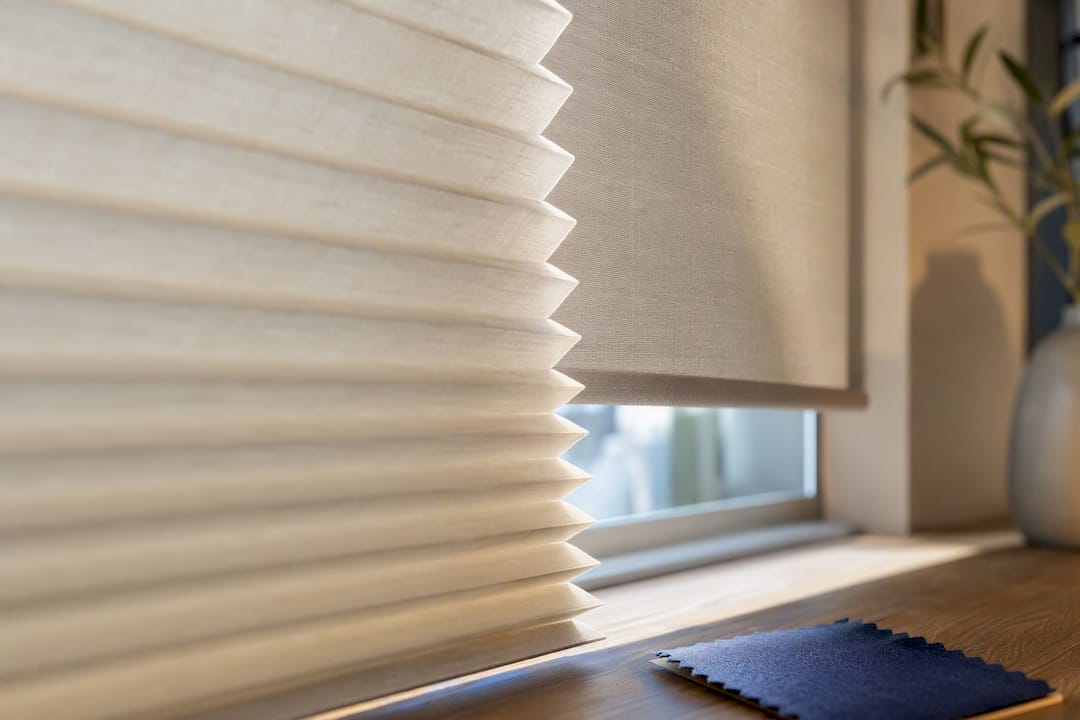
Cellular shades have a honeycomb profile. Their pleats catch light in soft, textured folds that read as quiet and layered, almost architectural. That texture makes them recede into a room rather than demand attention, which is why so many homeowners pair them with drapery panels for extra depth.
Roller shades do the opposite. A single flat panel rolls up into a tight cylinder, giving you a crisp edge and a look that reads modern the second you see it. This flatness is exactly why roller shades outperform blinds and cellular options for custom printing, botanical patterns, geometric prints, even photography, since there’s no pleat breaking up the image.
Here’s how each fits common design directions:
- Modern or minimalist rooms: Roller shades in solid neutrals or bold graphic prints keep sightlines clean.
- Traditional or layered rooms: Cellular shades add texture without competing with molding, wallpaper, or existing drapery.
- Farmhouse or transitional spaces: Light-filtering cellular shades in warm whites soften hard architectural lines.
- Raised vs lowered: Cellular shades compress into a slim stack at the top; roller shades roll into a cassette or exposed tube, which some homeowners prefer hidden behind a valance.
Color-wise, cellular fabrics tend to lean toward soft, muted tones because of the pleat structure. Roller fabrics take dye and print work more readily, which is where they pull ahead for anyone chasing a specific aesthetic.
How Cellular and Roller Shades Are Built and Operated
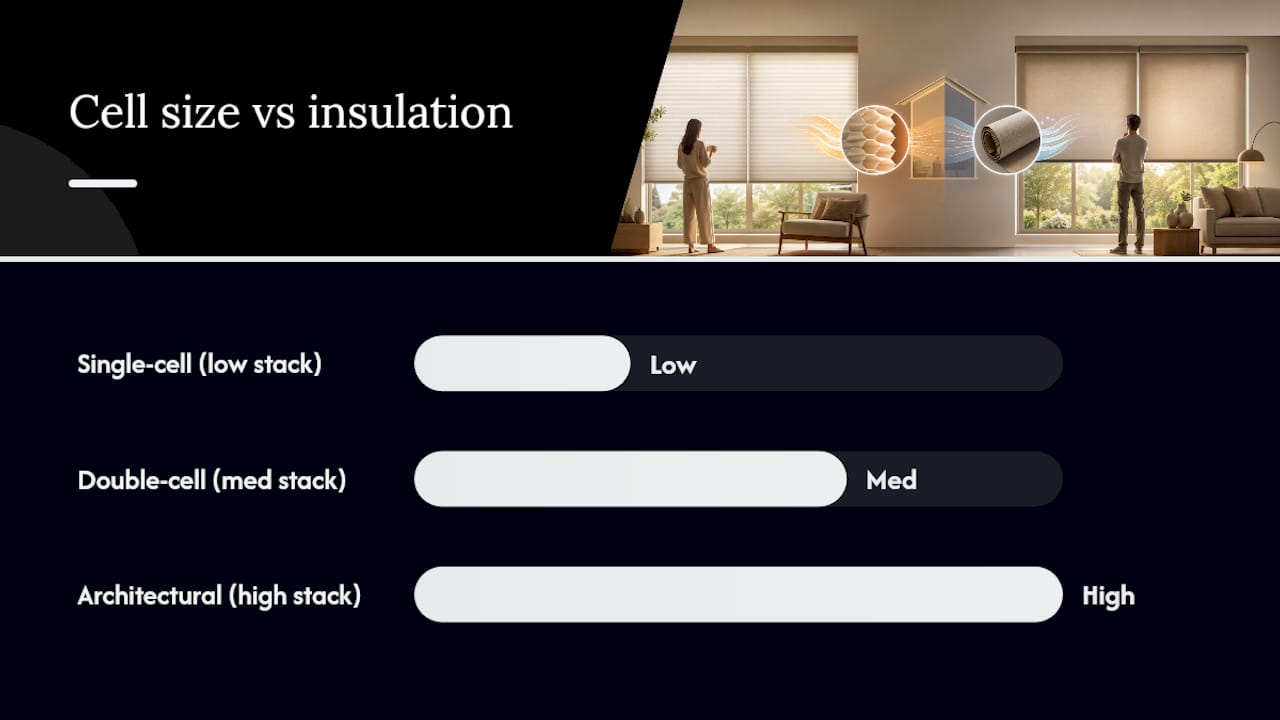
Cellular shades get their insulating power from the accordion-style cells that run the height of the fabric. Those trapped air pockets act as a buffer between your glass and your room, which is also why they cut sound better than a flat panel. You’ll find them in single-cell, double-cell (duo), and architectural cell sizes. The bigger the cell, the more insulation, but also the taller the stack when raised.
Roller shades work through a tube mechanism, either a spring roller, a clutch system, or a motorized cassette, that winds the fabric around a single tube. Because it’s one continuous panel, the stack height at the top is minimal even on tall windows.
Control options now overlap heavily between the two styles:
- Cordless: Spring-loaded or clutch systems with no dangling cords, standard on most current cellular and roller lines.
- Chain or clutch: A continuous loop for manual control, common on wider roller shades.
- Motorized: App or remote-controlled lift, ideal for skylights, high transoms, or anyone who wants one-touch control.
- Top-down/bottom-up: Lets you drop light in from the top while keeping the bottom covered for privacy, available mostly on cellular shades.
Pro Tip: If you have kids or pets in the house, go cordless or motorized without exception. Cordless operation is one of the most consistently recommended safety features in homes with young children, and it removes the temptation to wrap a dangling cord around a doorknob “just for a minute.”
Which Insulates Better: Energy Efficiency Compared
Cellular shades insulate better than standard single-layer roller fabric, and the physics behind it is straightforward. Trapped air is a poor conductor of heat, so a honeycomb structure full of sealed air pockets slows the transfer of warm or cool air through your glass far more effectively than a flat panel ever could. A well-sealed, inside-mounted cellular shade interrupts convective air movement at the window edge more effectively than an outside-mounted roller shade, even one with a thermal-backed fabric, because the sealed pocket sits directly against the glass rather than floating in front of it.
That said, roller shades aren’t insulation dead weight. Thermal-backed and quilted roller fabrics have narrowed the gap considerably, and for climates with mild winters or homes with double-pane, low-E glass already doing most of the work, an insulated roller can get you close enough that the aesthetic win outweighs the smaller energy loss.
Installation matters as much as the shade itself. Consumer Reports notes that properly installed window shades reduce heat transfer meaningfully, but only when they’re mounted close to the glass and kept drawn during peak sun hours. A cellular shade hung an inch off the frame with light leaking around the edges won’t outperform a tightly fitted roller shade.
A few rules of thumb worth following:
- Older, single-pane windows: Invest in cellular shades. The insulation gap matters most where the glass itself is doing the least work.
- Newer double or triple-pane windows: Either style works well; pick based on look and light control first.
- Cold or extreme-heat climates: Cellular shades pay for themselves faster through reduced heating and cooling load.
- Mild climates: Insulated roller fabrics are a reasonable trade for the cleaner look.
Quick fact: Mounting shades tight against the glass and keeping them closed during the hottest part of the day is consistently cited as one of the most reliable ways to boost the energy performance of any window covering, regardless of which shade style you choose.
Light Control and Privacy: Blackout vs Filtering Options
- Light-filtering fabrics soften daylight without blocking your view entirely. Both cellular and roller shades offer sheer-to-moderate weaves that glow softly when sunlight hits them, popular in living rooms and kitchens where you want brightness without glare.
- Blackout linings turn either shade into a near-total light blocker. Blackout roller fabrics with thermal coatings can deliver close to complete darkness while also adding a modest energy boost, making them a strong pick for bedrooms and media rooms.
- View preservation favors light-filtering roller shades and sheer cellular fabrics, since both let you see out while diffusing direct sun. If keeping sightlines open matters, especially for a view worth showing off, pair a lighter fabric with a design element like glass interior doors elsewhere in the room to keep the whole space feeling open.
- Top-down/bottom-up cellular shades solve the classic privacy dilemma: drop the top for light and keep the bottom raised for privacy, ideal for street-facing bedrooms or bathrooms.
- Double-layer or duo-tone shades alternate opaque and sheer bands, letting you dial privacy up or down without changing shades entirely, a feature increasingly common on premium cellular lines.
Cost, Durability, and Maintenance Compared
Basic roller shades tend to start cheaper than basic cellular shades, largely because a single fabric layer requires less material and simpler mechanics. Custom cellular shades, especially duo-cell or motorized versions, sit at the higher end of most budgets, but the added cost often reflects real insulation value, not just markup.
Durability depends heavily on material choice. Faux wood, cellular fabrics, and coated roller fabrics resist sun fading and humidity better than cheaper, untreated materials, which means fewer replacements over the life of the window.
- Maintenance: Roller shades wipe clean easily since there’s one flat surface; cellular shades need a vacuum brush attachment to clear dust from the pleats.
- Humidity resistance: Coated and faux materials hold up in bathrooms and kitchens far longer than basic fabric blends.
- Repair complexity: A torn roller fabric usually means a full panel replacement; a damaged cellular cell can sometimes be spot-repaired.
- ROI: Factor in energy savings and warranty coverage, not just sticker price, when comparing the two long term.
Installation, Mounting Depth, and Sizing Rules to Know Before You Order
Most shades need 2 to 3 inches of frame depth for a clean inside mount. Shallow sills force an outside mount, which can slightly reduce insulation performance and change the finished look. Stack height also matters: cellular shades with larger cells stack taller at the headrail, so measure your available clearance above the glass before ordering.
Renters aren’t stuck waiting on a landlord’s approval, either. No-drill and tension-mount cordless options install without touching the window frame at all.
- Measure width and depth at the top, middle, and bottom of the frame, then use the smallest depth reading to pick your mount type.
- Check headrail clearance if you have blinds or curtain rods already installed above the window.
- Keep a tape measure, pencil, and level on hand, and follow a step-by-step measuring guide before cutting anything.
Pro Tip: Measuring the reveal depth is the single most skipped step in DIY installs. Check it at three points, not just the center, since window frames are rarely perfectly square.
Quick Decision Checklist: Cellular or Roller Shades?
- Choose cellular shades if: you want maximum insulation, quieter rooms, or a soft textured look that works with drapery layering.
- Choose roller shades if: you want a clean modern stack, custom printed fabric, or the lowest starting price point.
- Red flag for cellular: if your frame depth is under 2 inches and you can’t do an outside mount, a bulky honeycomb shade may not sit right.
- Red flag for roller: if you need serious cold-climate insulation and can’t upgrade to a thermal-backed fabric, a standard roller may underperform.
- Final steps: decide your top priority (insulation, look, blackout, or budget), measure your window depth and width at three points, then order fabric swatches or book a measurement consultation before you commit.
Do Cellular or Roller Shades Reduce Noise Better?
Cellular shades reduce noise more effectively than roller shades, and the reason is the same trapped-air structure that makes them better insulators. Sound waves lose energy passing through multiple air pockets the same way heat does, so a honeycomb shade absorbs and dampens ambient noise from traffic, neighbors, or street activity in a way a flat roller panel simply can’t match.
Double-cell and architectural cellular shades perform best here, since more layers of trapped air means more sound dampening. If you live on a busy street or work from a home office near a main road, that difference is noticeable within the first week of installation, not just on paper.
Roller shades aren’t built for acoustic performance, and no fabric weight change will get them close to cellular’s sound-dampening capability. Thicker blackout roller fabrics block a bit more sound than sheer weaves simply because they’re denser, but the improvement is modest compared to a cellular shade’s cellular structure.
If noise reduction is your primary driver, and not just a nice side effect of insulation, cellular shades should be the default choice, especially in bedrooms, home offices, or any room facing a street, alley, or shared wall. Pair them with heavier drapery for an even bigger drop in ambient sound if the room backs onto a particularly loud area.
Are Cellular and Roller Shades Compatible With Smart Home Systems?
Both cellular and roller shades now come in motorized versions that connect to smart home ecosystems, so compatibility isn’t a deciding factor between the two styles anymore. The real question is which control hub you already use, and whether the motor you choose supports it.
Most current motorized shades sync with common voice assistants and app-based hubs, letting you schedule shades to open at sunrise or close automatically when a room hits a certain temperature. That scheduling feature matters more for cellular shades from an energy standpoint, since automatically closing them during peak afternoon sun directly supports the insulation benefits already built into the honeycomb structure.
Roller shades pair with the same smart systems, and their motor tends to be quieter simply because there’s less fabric weight to lift and less mechanical resistance than a multi-cell honeycomb structure.
One practical note before you buy: not every motorized shade uses the same hub or app, so check compatibility with your specific smart home setup before ordering rather than assuming universal support. Battery-powered motors are common on both styles and typically need recharging every few months depending on how often you operate the shades, while hardwired options suit windows you rarely plan to access for battery swaps.
Are Cellular or Roller Shades More Sustainable?
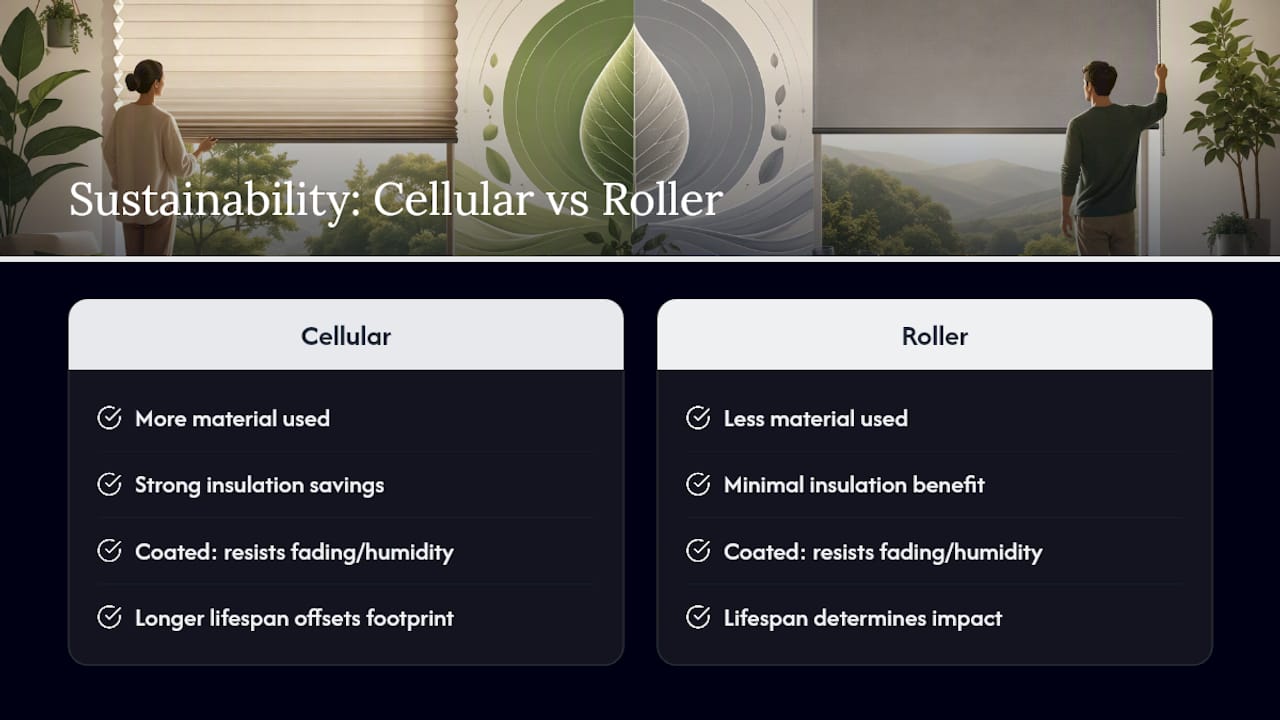
Neither style has a clear sustainability edge across every material line, since both come in a range of fabrics with different environmental footprints. What actually matters is durability and lifespan, because a shade that lasts twice as long effectively cuts its environmental impact in half regardless of what it’s made from.
Coated and treated fabrics on both cellular and roller shades resist sun fading and humidity damage significantly better than untreated materials, which means fewer replacements heading to a landfill over the years. That durability factor is arguably a bigger sustainability lever than the base material itself.
Roller shades, being a single fabric layer, generally use less raw material per square foot than a multi-cell honeycomb structure, which some homeowners weigh as a smaller manufacturing footprint. Cellular shades use more material but return that investment through years of reduced heating and cooling energy use, which offsets the manufacturing footprint over the shade’s working life.
Look for fabrics free of harsh chemical treatments if indoor air quality matters to your household, and ask about recyclability or take-back programs when you’re comparing specific product lines. Neither shade type wins outright on sustainability. The better question is which one you’ll keep on your windows the longest without wanting to replace it for looks or performance reasons.
What I Tell Homeowners Before They Order
The biggest mistake I see isn’t picking the wrong shade style. It’s skipping the measuring step and assuming every window in the house takes the same size. Older homes especially have frames that shift by a quarter inch or more from top to bottom, and that’s enough to throw off an inside mount.
A pattern worth noting: parents almost always land on cordless cellular shades for kids’ rooms, prioritizing both the safety win and the noise dampening for better naps. Meanwhile, anyone with a view worth showing off tends to lean roller with a light-filtering fabric, because no one wants a honeycomb texture competing with a good sunset.
If you’re still torn, order swatches before you order shades. Fabric looks different in your actual light than it does on a screen.
— Sunny
Ready to Choose? Here’s How Value Blinds Makes It Easy
Once you know your priority, matching it to the right product line takes minutes, not weeks. If insulation and quiet rooms matter most, browse cellular shades built for energy performance, including motorized and cordless options that solve both the safety and the convenience side of the equation. If you’re chasing a clean, modern stack or custom fabric, the roller shade collection covers everything from sheer light-filtering weaves to full blackout.
Not sure which fabric will actually look right on your windows? Order free swatches before committing to anything, fabric behaves differently under your own light than it does on a screen. If you want expert eyes on your measurements first, the Window Treatment Design Studio walks you through sizing, mount type, and fabric pairing before you check out. For families prioritizing safety, the motorized light-filtering cellular shades remove cords from the equation entirely while still delivering the insulation boost cellular construction is known for. Measure your windows, order your swatches, and get your shades made to fit exactly what your home needs.
Sources
- Lower your energy costs with window coverings - Consumer Reports
- Your whole home cheat sheet to picking the right window coverings - Emily Henderson
- 11 Best window blinds and shades to transform your home in 2026 - Interior Settings
Recommended
- Solar Shades vs Roller Shades: Which Fits Your Home?
- Cellular shades explained: Benefits, features, and smart choices
- Understanding Cellular Shades Insulation for Your Home
- Large Roller Shades: the Homeowner’s Buying Guide

Value Blinds®
Trusted window treatments provider
Value Blinds® is a trusted provider of Greenguard, OEKO-TEX, and FSC-certified window treatments based in Portland, Oregon. Specializing in sustainable, motorized, smart-controlled, and outdoor-ready blinds and shades, the company is built on a foundation of simplified shopping, premium eco-friendly materials, and transparent pricing without the inflated cost.