
Window Shade Types: A Homeowner's Guide to Choosing Right
The six shade types you’ll encounter most are cellular/honeycomb, roller, solar/screen, Roman, woven/natural, and sheers/pleated/zebra — the single rule for choosing among them is simple: match the shade to what that room actually needs. A bedroom needs blackout. A sunroom needs glare control without losing the view. A drafty north-facing room needs insulation. Once you know the room’s job, the right shade type almost picks itself.
Quick picks by use case:
- Bedroom blackout: cellular shades (blackout lining) or blackout roller shades
- Living room light diffusion: sheers, shadings, or light-filtering zebra shades
- Sunroom or home office glare reduction: solar/screen shades
- Cold climates and energy savings: double- or triple-cell cellular shades
- Decorative focal window: Roman shades with a custom fabric
- Earthy, layered look: woven or bamboo shades with a liner
Top deciding factors to keep in mind as you shop:
- Light control and privacy (blackout, room-darkening, light-filtering, or sheer)
- Insulation (especially relevant for older windows or extreme climates)
- Style and aesthetic (modern/minimal vs. textured/layered)
- Budget (choices vary by product and customization options)
- Child safety and motorization (cordless and motorized options for households with kids or pets)
Key Takeaways
Cellular shades are the strongest choice for energy efficiency, while roller shades offer the best value for modern rooms needing clean, low-profile light control.
| Point | Details |
|---|---|
| Match shade to room function | Blackout cellular for bedrooms, solar shades for view-forward living rooms, Roman shades for decorative focal windows. |
| Opacity matters as much as type | Choose blackout, room-darkening, light-filtering, or sheer based on the room’s actual light and privacy needs before picking a style. |
| Cordless and motorized for safety | Cordless shades eliminate cord hazards for children and pets; motorized options add scheduling and smart-home control. |
| Measure before you order | Inside mount requires minimum 2 inches of window depth; always measure width at three points and use the narrowest. |
| Valueblindsdirect for custom sizing | Valueblindsdirect offers custom-sized cellular, roller, zebra, Roman, and woven shades with free swatches and a design studio. |
Table of Contents
- What are the different types of window shades?
- Why cellular shades are the top pick for energy efficiency
- What makes roller shades such a popular choice?
- How do solar shades let you keep the view?
- When do Roman shades make the most sense?
- Are woven and bamboo shades worth it?
- Sheers, pleated shades, and zebra styles explained
- Shade types compared at a glance
- How to choose the right window shade for your home
- What Valueblindsdirect offers homeowners shopping for custom shades
- What most homeowners get wrong when buying window shades
- Ready to find your perfect shade? Valueblindsdirect makes it easy
- Sources
What are the different types of window shades?
According to industry-standard naming conventions, the most common shade categories break down like this:
- Cellular (honeycomb) shades: Fabric cells trap air to insulate. Available in single-, double-, or triple-cell configurations. Top light-control and energy-efficiency pick.
- Roller shades: A single fabric panel rolls onto a tube. Clean, minimal, and easy to motorize. Available in blackout, room-darkening, and light-filtering fabrics.
- Solar/screen shades: Open-weave fabric reduces glare and UV exposure while preserving your outside view. Rated by “openness factor” (1%–14%).
- Roman shades: Fabric folds into horizontal pleats when raised. Decorative and tailored, with wide fabric choices.
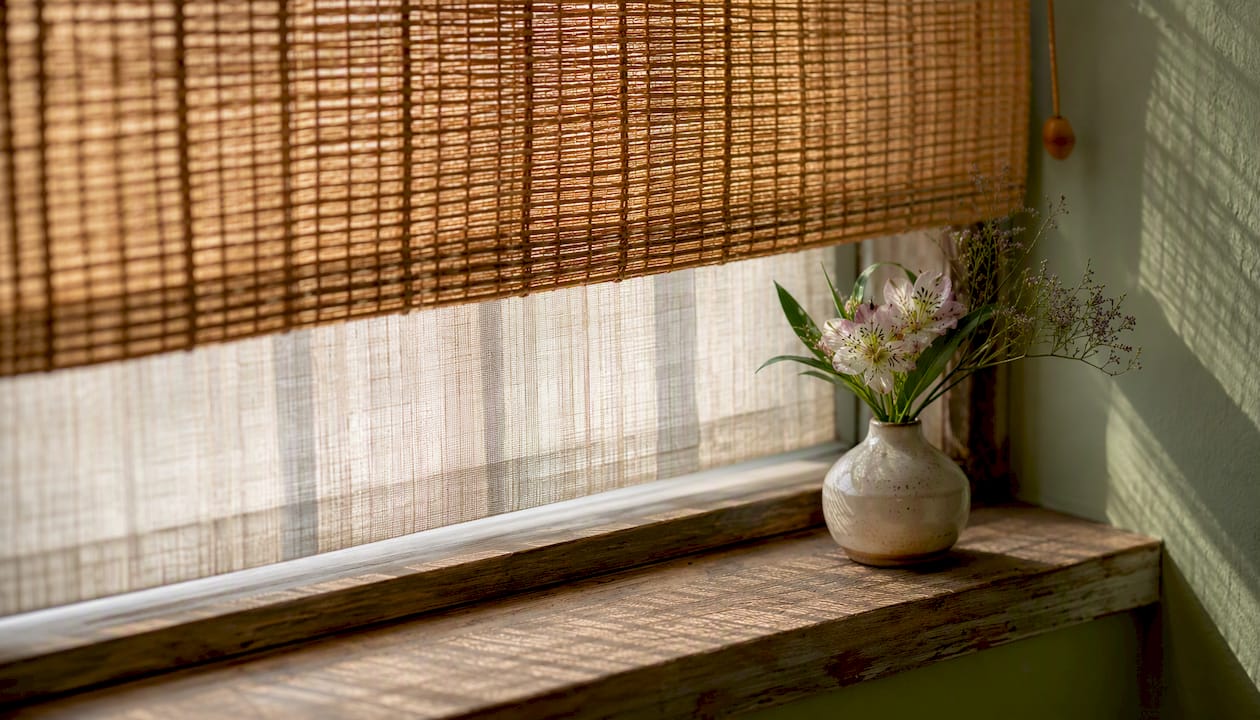
- Woven/bamboo/natural shades: Woven grass, bamboo, or jute creates a warm, organic texture. Light gaps are common unless paired with a liner.
- Sheers and shadings: Soft, translucent fabric diffuses light gently. Often layered with a heavier shade for full privacy.
- Pleated shades: Single-fold fabric in a crisp, geometric pleat. Lightweight and affordable.
- Zebra/day-night shades: Alternating sheer and opaque horizontal stripes let you dial between open and private by shifting the fabric alignment.
A note on fabric opacity: Most shade types come in four opacity levels: blackout (blocks virtually all light), room-darkening (blocks most light, minor gaps at edges), light-filtering (softens and diffuses), and sheer (minimal light reduction, maximum transparency). Understanding light-filtering vs. blackout options before you order saves a lot of returns.
Why cellular shades are the top pick for energy efficiency
Cellular shades earn their reputation honestly. The honeycomb structure traps air inside each cell, creating a buffer between the glass and your room. That air pocket slows heat transfer in winter and keeps cool air in during summer. Homes with older single-pane windows or large glass surfaces often see the most noticeable difference. Cellular shades are a strong energy-efficiency choice, particularly in climates with big seasonal temperature swings.
Benefits:
- Strong thermal insulation from air-pocket cell structure
- Available in blackout, room-darkening, and light-filtering fabrics
- Cordless and motorized options widely available
- Top-down/bottom-up configurations let you control privacy and light simultaneously
Trade-offs:
- Fabric cells can collect dust and are harder to wipe clean than roller shades
- Custom sizing adds cost; off-the-shelf widths may not fit every window
- Heavier than roller shades, which matters for motorization load
When to choose cellular shades: Bedrooms, north-facing rooms, rooms above a garage, and any space where heating or cooling bills are a concern. They also work well for skylights and specialty-shaped windows when ordered custom.
Pro Tip: Single-cell shades are the most affordable and work well in mild climates. Double-cell shades offer noticeably better insulation for most homes. Triple-cell is worth the extra cost only for very cold climates or windows with significant heat loss — think older homes in Minnesota or upstate New York.
What makes roller shades such a popular choice?
Roller shades are the workhorse of the window treatment world, and for good reason. One fabric panel, one tube, one clean line. They fit almost any window size, work in virtually every room, and cost less than most other shade types at comparable sizes. Motorizing a roller shade is also simpler and cheaper than motorizing a Roman or cellular shade, which makes them a natural fit for smart-home setups.
Benefits:
- Minimal profile when raised — nearly invisible at the top of the window
- Wide fabric range: blackout vinyl, textured linen, printed patterns, solar mesh
- Budget-friendly starting price; easy to find off-the-shelf or custom
- Among the easiest shade types to motorize
Trade-offs:
- Minimal insulation compared to cellular shades
- The rolled fabric at the top can leave a small gap at the window’s upper edge
- Blackout roller shades may need side channels or cassette headrails to fully block light
When to choose roller shades: Modern or minimalist rooms, kitchens, bathrooms, small windows, and high-traffic spaces where easy cleaning matters. They’re also a smart base layer when you want to add a sheer curtain panel on top for a layered look.
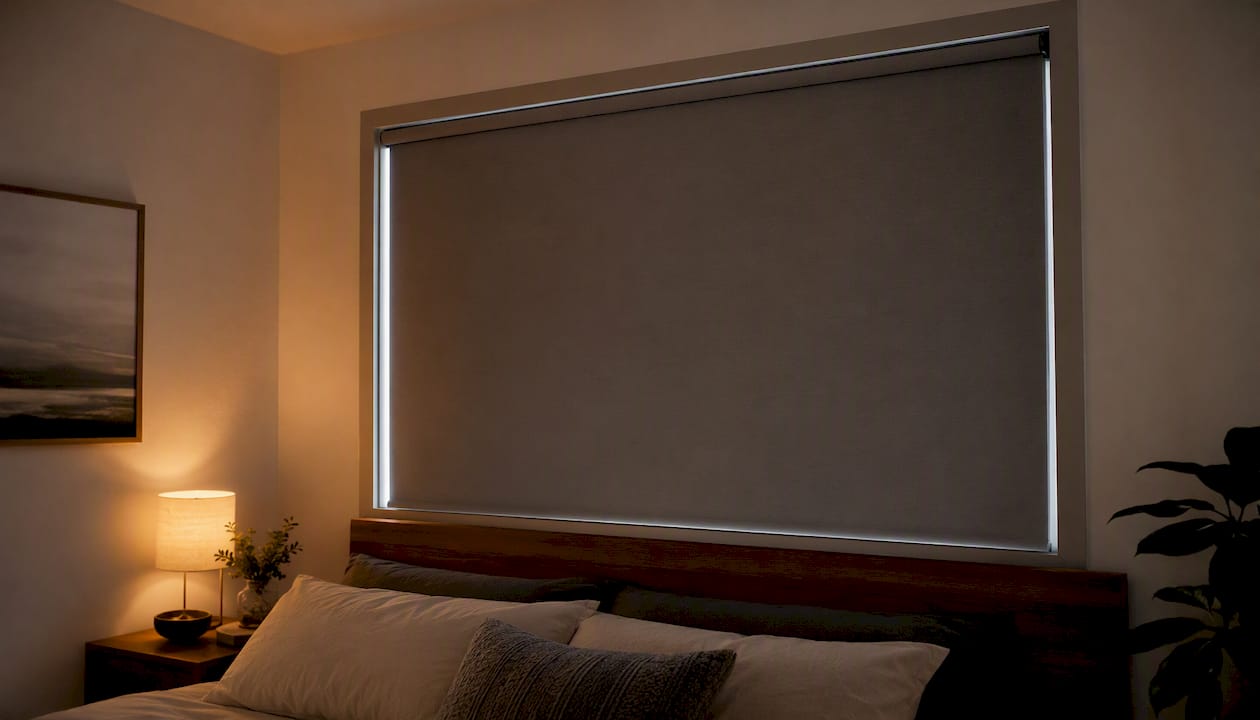
Pro Tip: For bedrooms, choose a roller shade with a blackout backing AND a cassette headrail. The cassette hides the roll and eliminates the light gap at the top — that tiny strip of light at 6 AM is more annoying than you’d expect.
How do solar shades let you keep the view?
Solar shades do something no other shade type does as well: they cut glare and UV exposure during the day without turning your window into a wall. The open-weave fabric filters light while keeping the outside view visible. South- and west-facing windows that get direct afternoon sun are the classic use case. Solar shades trade nighttime privacy for daytime view preservation — once it’s dark outside and your interior lights are on, the fabric becomes essentially transparent from the outside.
Benefits:
- Significant glare reduction without blocking the view
- Blocks UV rays that fade furniture and flooring
- Works well for large picture windows and sliding glass doors
- Pairs naturally with a blackout roller or cellular shade for full privacy when needed
Trade-offs:
- No meaningful privacy at night without a second shade layer
- Outdoor-rated solar shades use heavier, more durable fabric; indoor versions are not rated for exterior use
- Lower openness factors (1%–3%) give more privacy but reduce view clarity
When to choose solar shades: Living rooms with a view, home offices facing a bright exposure, sunrooms, and patios. They’re also popular for motorized outdoor sunshades on pergolas and covered decks.
When do Roman shades make the most sense?
Roman shades are the decorator’s choice. When raised, the fabric folds into neat horizontal pleats that frame the window beautifully. When lowered, they lay flat and show off the fabric in full. That fabric is the whole point — Roman shades are where you bring in pattern, texture, and color in a way no other shade type allows as cleanly.
Benefits:
- Tailored, polished look that works in formal and transitional rooms
- Enormous fabric range: linen, velvet, printed cotton, woven textures
- Custom lining options let you add blackout or thermal performance
- Pairs well with drapery panels for a layered, high-end look
Trade-offs:
- Unlined Roman shades offer minimal insulation and limited light control
- Fabric requires more care than vinyl or polyester roller shades
- Custom fabric orders can take 3–6 weeks; not a quick-ship option
- Stacking height when raised can cover part of the window on shorter windows
When to choose Roman shades: Dining rooms, living rooms, primary bedrooms where aesthetics matter as much as function, and any window you want to use as a design focal point. Real-world installations often pair Roman shades with sheer side panels for a layered, editorial look.
Pro Tip: Always add a blackout or room-darkening lining to a Roman shade in a bedroom. An unlined Roman shade in a beautiful fabric looks stunning and blocks almost no light — a frustrating combination at 5 AM.
Are woven and bamboo shades worth it?
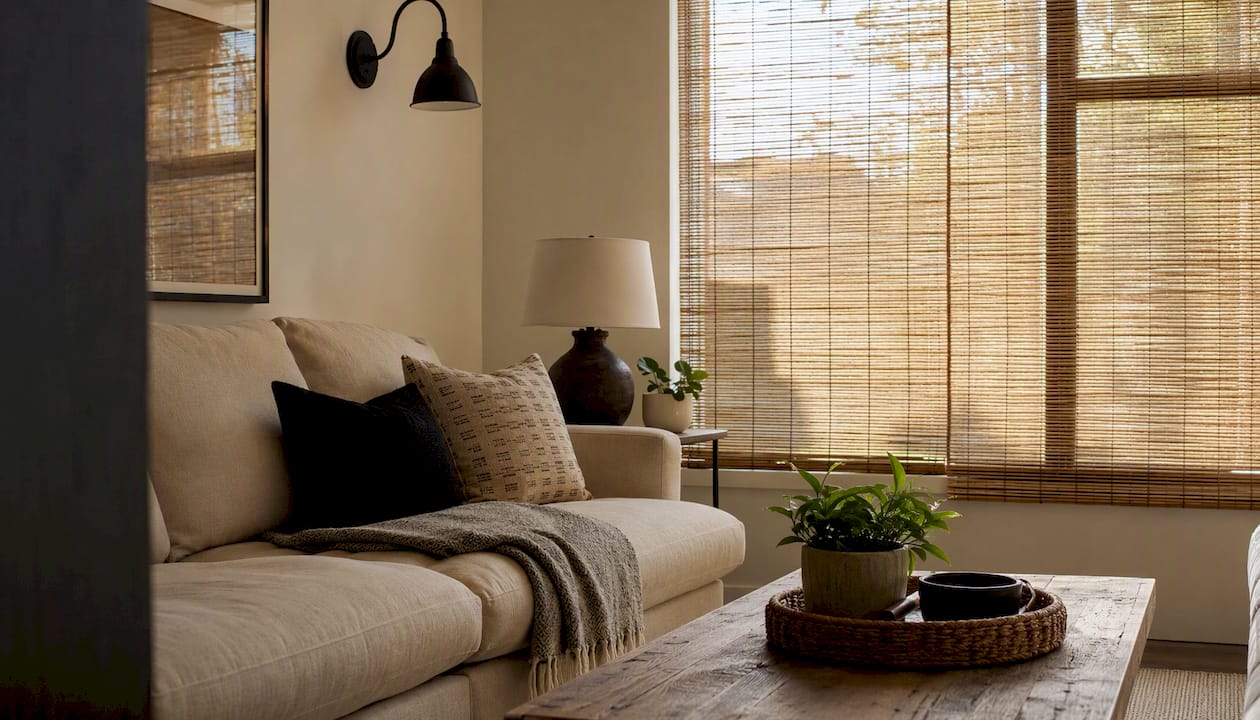
Yes, if texture and warmth are what you’re after. Woven shades made from bamboo, jute, seagrass, or rattan bring an organic, earthy quality that fabric shades simply can’t replicate. They’re a natural fit for coastal, bohemian, and casual-modern interiors. For homeowners thinking about eco-friendly window treatment choices, natural woven shades are among the most sustainable options available.
Benefits:
- Warm, tactile texture that adds visual depth to a room
- Renewable materials (bamboo, jute, seagrass) with lower environmental impact
- Light filters through the weave in a soft, dappled way that feels natural
- Available with motorization for a modern upgrade
Trade-offs:
- Light gaps in the weave mean limited privacy and no blackout capability without a liner
- Humidity can cause warping or mold in bathrooms or very humid climates
- Cleaning is more involved — spot-clean only, no wiping down with a damp cloth
When to choose woven/natural shades: Living rooms, dining rooms, bedrooms in dry climates, and any room where you want a relaxed, layered aesthetic. Avoid unlined woven shades in bathrooms or laundry rooms.
Pro Tip: Order a privacy liner when you buy woven shades. The liner adds room-darkening capability and closes the light gaps without hiding the texture of the woven fabric from the front. It’s the best of both worlds.
Sheers, pleated shades, and zebra styles explained
These three shade types cover the soft-light and hybrid-control end of the spectrum — and they’re more different from each other than they might first appear.
Sheers and shadings are the gentlest option. Sheer shades use a translucent fabric that softens light without blocking it, similar to a sheer curtain but in a shade format. Shadings (a specific Hunter Douglas category, though the term is used broadly) layer sheer fabric vanes between two sheer panels, letting you tilt the vanes for more or less light. Both work best in rooms where soft, diffused ambient light is the goal — think a reading nook or a formal living room that gets indirect light.
Pleated shades are the simplest construction: a single sheet of fabric with crisp accordion folds. They’re lightweight, affordable, and available in a wide range of colors and textures. The trade-off is minimal insulation and a less polished look than cellular shades, which have a similar fold structure but with the added air-pocket cell.
Zebra (day-night) shades are the most versatile of the three. Alternating horizontal stripes of sheer and opaque fabric let you shift between open and private by aligning the stripes. Align sheer over sheer for maximum light; shift to opaque over opaque for privacy. Motorized zebra shades make that transition effortless and are a popular choice for living rooms and open-plan spaces.
Common pairings worth knowing:
- Sheer + blackout roller: layered on a double bracket for full light range from bright to blackout
- Solar shade + blackout cellular: ideal for bedrooms with a view that also need full darkness for sleep
- Zebra shade + sheer curtain panel: adds softness and privacy depth to large windows
Shade types compared at a glance
Cost ranges above reflect broad off-the-shelf to custom pricing. Custom sizing, premium fabrics, motorization, and professional installation all push costs toward the higher end. Prices vary by retailer, window size, and material grade.
How to choose the right window shade for your home
The decision is easier than it looks when you work through it in order. Here’s a practical checklist:
- Define the room’s primary need. Is it sleep quality (blackout)? Energy savings (insulation)? Glare control (solar)? Aesthetics (Roman or woven)? Start here — everything else follows.
- Set your light and privacy priority. Decide on opacity: blackout, room-darkening, light-filtering, or sheer. Understanding these differences before you measure saves you from a frustrating return.
- Pick your material and style. Fabric, vinyl, woven natural, or solar mesh — each has a different look, feel, and maintenance requirement.
- Measure carefully. Inside mount vs. outside mount changes your measurements entirely. For inside mounts, measure width at three points (top, middle, bottom) and use the narrowest. For outside mounts, add 2–4 inches on each side for light blockage. A step-by-step installation guide walks you through the specifics.
- Decide on motorization and child safety. Cordless shades are the safest option for homes with young children or pets — no dangling cords. Motorized shades go further, with remote control and scheduling via apps like PowerView. Lutron’s motorization systems also integrate with most major smart-home platforms including Apple HomeKit, Google Home, and Amazon Alexa.
- Order and plan your timeline. Off-the-shelf shades ship in days. Custom orders typically take 2–4 weeks, sometimes longer for specialty fabrics. Order swatches first — always.
Questions to ask before you buy: What’s the lead time for custom sizes? What’s the return policy if the shade doesn’t fit? Does the product come with a warranty, and what does it cover?
Pro Tip: For households with children under 6, the Window Covering Safety Council recommends cordless or motorized shades as the safest option. Cords on window coverings are a documented strangulation hazard — cordless is not just a convenience feature.
What Valueblindsdirect offers homeowners shopping for custom shades
Buying custom shades online sounds complicated, but the right vendor makes it genuinely straightforward. Valueblindsdirect offers a full range of custom window shades — cellular, roller, zebra, Roman, woven, and motorized options — with sizing customized to your exact window dimensions.
Here’s what you get when you shop with Valueblindsdirect:
- Custom sizing for every window, including specialty shapes and skylights
- Free fabric swatches so you can test color and opacity before committing
- Measurement guides and a design studio to help you configure the right product
- Cordless and motorized options across most product lines, including cordless blackout cellular shades for child-safe installations
- Energy-efficiency tools to help you pick the right shade for your climate
- Warranty and customer support for post-purchase questions and fit issues
Before you order, have your window measurements ready (width and height, inside and outside mount), know your opacity preference, and decide whether you want cordless or motorized. The design studio walks you through the rest.
What most homeowners get wrong when buying window shades
Here’s an honest take: the shade type itself is rarely the mistake. The mistakes happen before and after the decision.
The most common one is skipping swatches. A fabric that looks warm and linen-toned on a screen can read cold and gray on your actual wall. Order swatches. Always. It costs almost nothing and saves a genuinely painful return process.
The second mistake is underestimating lead time. Custom shades are not Amazon Prime. A 3-week lead time on a Roman shade in a specialty fabric is normal. If you’re furnishing a new home or staging for a sale, order early — not the week before you need them.
The third is measuring for inside mount without accounting for the window’s depth. An inside-mount shade needs at least 2 inches of depth to sit flush. Shallow window frames require an outside mount, which changes how the shade looks and how much wall space it covers. Measure depth first, then decide on mount type.
One more thing worth saying: solar shades are often oversold as a privacy solution. They’re excellent for daytime glare and UV control, but the moment your interior lights come on at night, anyone outside can see in clearly. If your living room faces a street or a neighbor, pair your solar shade with a privacy shade layer or a blackout roller on a double bracket. The layered approach gives you the view during the day and the privacy at night — no compromise needed.
For older homes with drafty windows, cellular shades are worth the extra cost over roller shades every time. The insulation difference is real, especially in rooms that face north or get direct winter wind. Pairing cellular shades with broader home energy upgrades — like new interior doors — compounds the savings noticeably.
Ready to find your perfect shade? Valueblindsdirect makes it easy
Picking the right shade from a catalog of hundreds of options sounds like a lot. Valueblindsdirect cuts through that with a window treatment design studio that walks you through every choice — shade type, fabric, opacity, mount, and motorization — in one place. No guessing, no back-and-forth with a showroom.
You can order free swatches to test fabrics at home, use the built-in measurement guides to get your dimensions right the first time, and choose from cordless and motorized options across cellular, roller, zebra, and woven shade lines. Every product comes with warranty coverage and customer support if something doesn’t fit. Head to the design studio to start configuring your custom shades today.
Sources
These resources go deeper on specific topics covered above: