
Large Vertical Blinds: Style, Fit, and Function Guide
TL;DR:
- Vertical blinds are custom-made window coverings ideal for wide and tall openings, offering precise light control and walk-through access. Different materials like PVC, fabric, and honeycomb provide durability, insulation, and aesthetic options for various rooms, with motorization enhancing convenience. Accurate measurement and installation, including split stacking for wider spans, ensure functional and visually appealing results for large windows and patio doors.
Large vertical blinds are window coverings designed with vertical vanes that hang from a top headrail, built specifically to cover wide and tall window openings with precision. They are the industry standard treatment for sliding glass doors, patio doors, and floor-to-ceiling windows where horizontal blinds simply cannot span the width. Homeowners dealing with shades for wide windows often find vertical blinds the most practical solution because the vanes stack neatly to one side, leaving the full opening clear. Valueblindsdirect offers custom-sized versions that fit openings standard retail products cannot reach.
What design and material options are available for large vertical blinds?
The material you choose for your vertical blinds determines both how the room looks and how the blinds perform over time. PVC vanes are the most durable and easiest to wipe clean, making them the right call for kitchens, sunrooms, and high-humidity spaces. Fabric vanes, particularly polyester and woven blends, bring a softer, more residential feel that works well in living rooms and bedrooms.
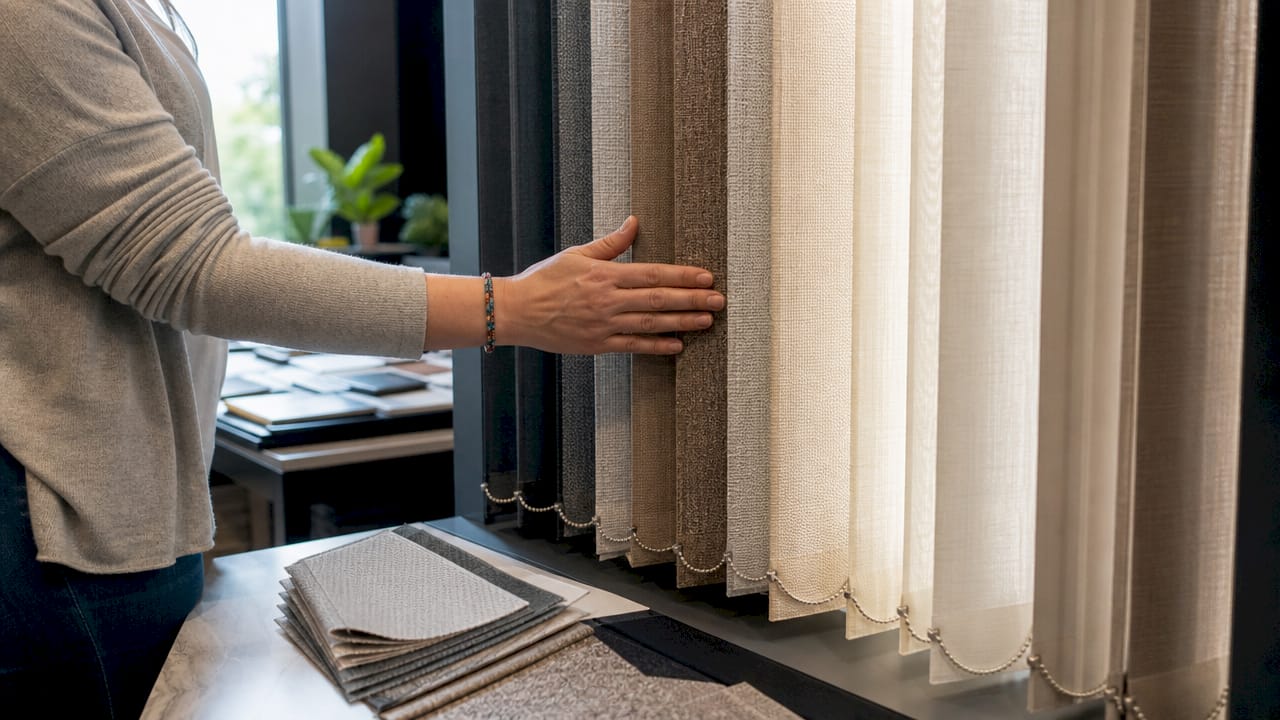
Honeycomb fabric vanes are worth special attention. They trap air between their cell layers, which gives them thermal insulation properties that solid PVC cannot match. Honeycomb blinds save up to 34% in heating and cooling costs, along with measurable sound dampening benefits. That combination makes them a strong choice for sunroom windows or rooms that face direct afternoon sun.
Contemporary vertical blinds have moved well beyond the flat, utilitarian vanes associated with office spaces. Fabric vanes with S-curve shapes create a soft, drapery-like silhouette that reads as intentional interior design rather than a functional afterthought. Textured weaves, sheer translucent fabrics, and layered tones give you real decorating flexibility.
Material options for large vertical blinds include:
- PVC: Waterproof, easy to clean, and highly durable. Best for kitchens, bathrooms, and sunrooms.
- Faux wood: Warmer visual texture than PVC with similar moisture resistance.
- Polyester fabric: Soft drape, available in light-filtering and blackout weights.
- Honeycomb fabric: Thermal and acoustic performance in a residential-friendly look.
- Sheer fabric: Diffuses light without blocking the view, ideal for living rooms with garden or patio access.
Pro Tip: Match your vane material to the room’s primary function. A sunroom facing west needs thermal fabric or honeycomb vanes. A bedroom needs blackout-weight polyester. A kitchen needs wipeable PVC. Getting this decision right saves you from replacing the blinds in two years.
How do you measure and install vertical blinds for large windows and sliding doors?
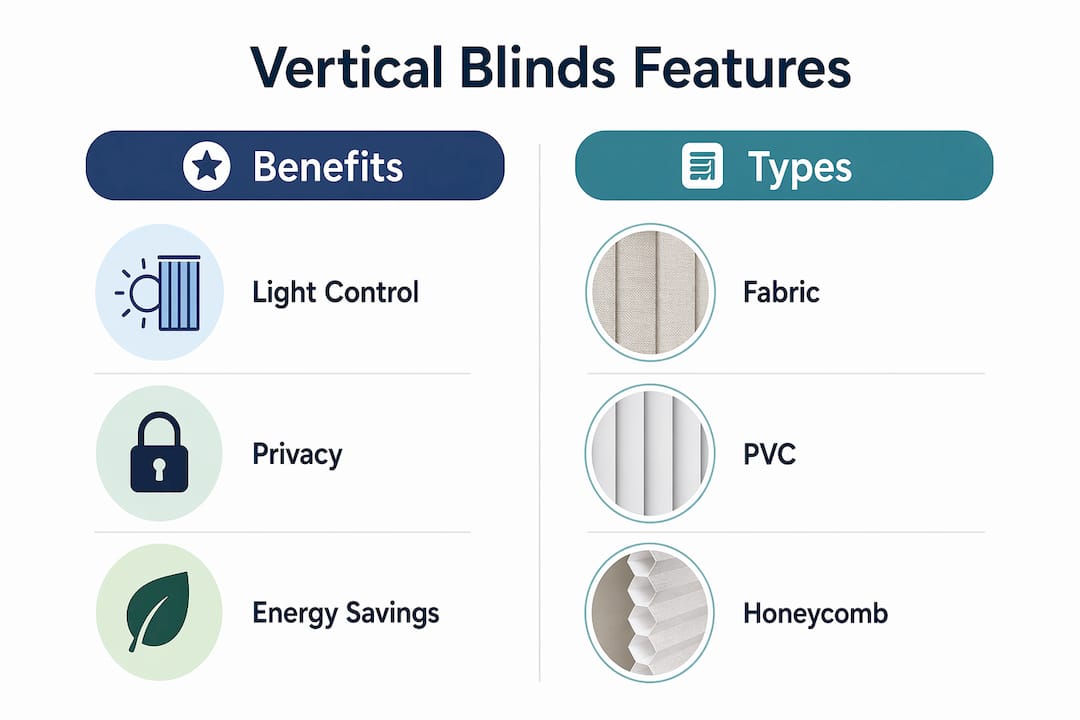
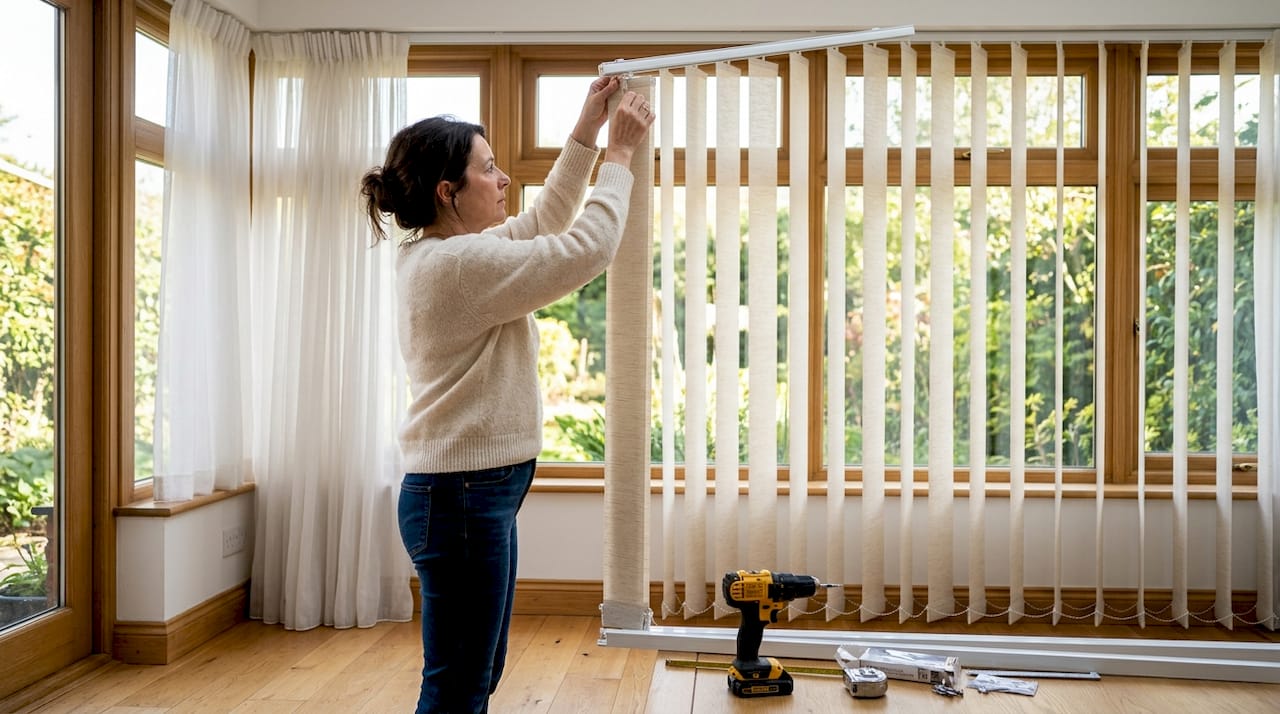
Accurate measurement is the single most critical step when ordering custom vertical blinds for large windows. A measurement error of even half an inch can cause vanes to bind against the frame or leave a visible gap at the edge.
Follow these steps for a reliable measurement:
- Decide on inside or outside mount. Inside mount fits within the window frame for a clean, built-in look. Outside mount sits above and beyond the frame, which is useful when the reveal is too shallow or when you want to make the window appear larger.
- Check your reveal depth. Inside mount requires enough depth to fit the headrail without the vanes hitting the glass. Smart vertical blind systems require a minimum inside mount depth of approximately 3.5 inches to accommodate the headrail and vane rotation mechanism.
- Measure width at three points. Measure the width at the top, middle, and bottom of the opening. Use the narrowest measurement for inside mount orders.
- Measure height at three points. Measure the height at the left, center, and right. Use the longest measurement for inside mount orders.
- Account for manufacturing deductions. Manufacturers apply small deductions of 4.8mm to 16mm on custom blind dimensions to prevent vanes from scraping floors or binding within frames. This is built into the production process, not something you calculate yourself.
- Plan your stack direction. For extra-wide openings, a split stack (vanes part in the center and stack to both sides) keeps the stacked vanes from blocking too much of the view. Dual-unit installations with split stacking can cover total spans of up to 23.6 feet, which handles virtually any residential opening.
Pro Tip: Never measure just once. Measure each dimension three times and write down every number before you order. Walls and floors are rarely perfectly square, and the difference between your top and bottom width measurements is often larger than you expect.
What are the functional benefits of vertical blinds for large windows?
Vertical blinds give you precise control over light and privacy that most other window treatments cannot match at large scales. Rotating the vanes 180 degrees takes you from fully open to fully closed, with every angle in between available. That range lets you block direct sun without darkening the room completely.
The walk-through advantage is the feature that makes vertical blinds genuinely superior for patio doors. Vertical blinds allow passage without fully raising the blind, making them far more practical for high-traffic patio doors than roller or Roman shades that must be fully retracted. You simply part the vanes at any point and walk through. Roller shades require full retraction every time someone uses the door, which adds friction to daily life.
Energy performance is another real advantage, particularly with fabric and honeycomb vane options. The thermal retention properties of honeycomb vanes reduce heat transfer through glass, which lowers both heating and cooling loads. Acoustic dampening from the same fabric types reduces noise transmission from outside, which matters in rooms adjacent to busy streets or yards.
| Feature | Vertical blinds | Roller shades | Curtains |
|---|---|---|---|
| Walk-through access | Yes, at any point | No, must fully raise | Yes, but bulky |
| Light angle control | Full 180-degree rotation | Open or closed only | Limited |
| Thermal performance | High with honeycomb vanes | Moderate | Moderate to high |
| Width scalability | Spans up to 23.6 ft | Limited by single unit | Unlimited with panels |
| Cleaning ease | Wipe or spot clean | Wipe or spot clean | Machine or dry clean |
Vertical blinds also work well as shades for sunroom windows because they handle wide spans without sagging, resist humidity when made from PVC or faux wood, and allow you to control sun angle throughout the day as the light shifts.
What modern enhancements improve large vertical blinds’ usability?
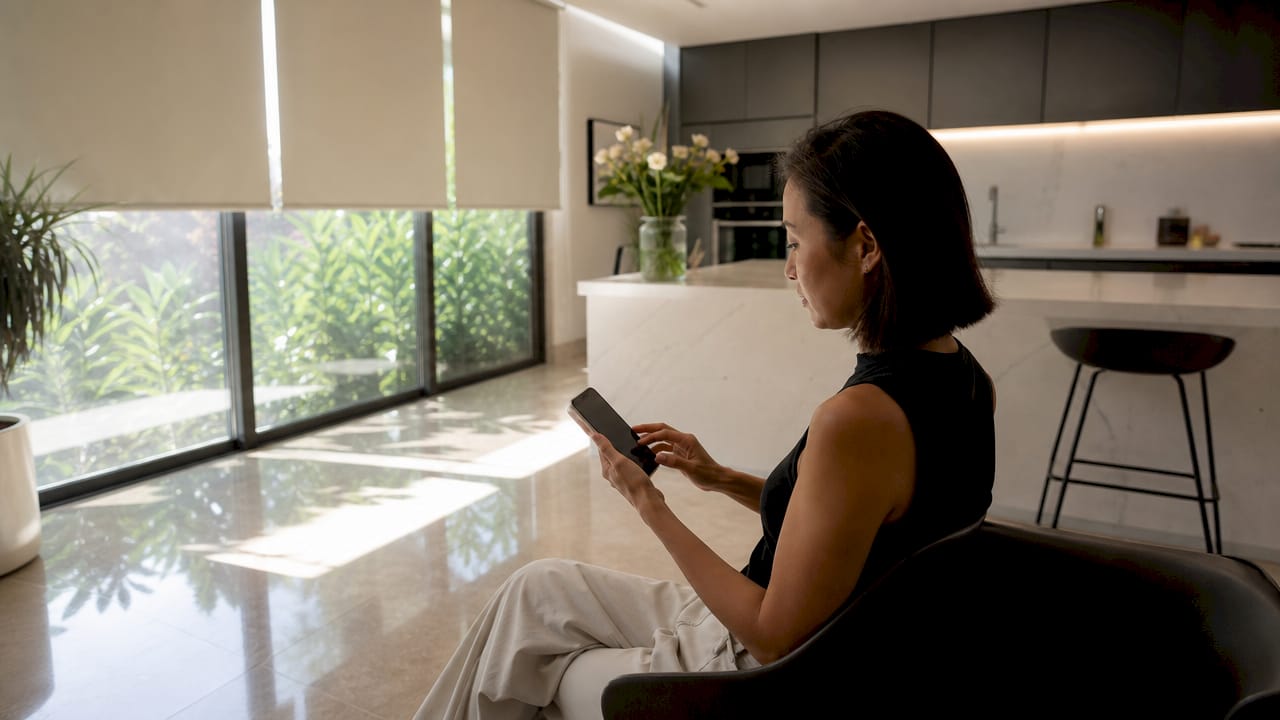
Motorization has changed what vertical blinds can do in a residential setting. Smart motorized vertical blinds integrate with Alexa, Google, and Apple Home for remote operation and automation. That means you can schedule your blinds to open at sunrise and close at sunset without touching them, which is especially useful for very large or hard-to-reach windows.
Modern design upgrades have also addressed the aesthetic concerns that kept vertical blinds out of upscale interiors for years. Current options include:
- Fabric vanes with S-curve profiles that create a soft, pleated silhouette similar to drapery panels.
- Textured and translucent weaves that diffuse light in a way flat PVC vanes never could.
- Slim, low-profile headrails that sit flush with the ceiling or window frame without visual bulk.
- Decorative valances that conceal the headrail mechanism and give the installation a finished look.
- Cordless and wand-operated systems that eliminate dangling cords, which is a meaningful safety upgrade for homes with children or pets.
Multiple lift systems are available for vertical blinds, including manual wand, cordless, cord loop, and motorized options, giving you a fit for every household situation. For a detailed look at how motorized systems work across large window applications, the motorized blinds guide from Valueblindsdirect covers the technology and installation considerations in depth.
Pro Tip: If you are ordering motorized vertical blinds for a patio door, confirm that the motor supports partial opening. Some entry-level motors only move the vanes fully open or fully closed. For a door you use multiple times a day, you need a motor that stops at any position.
Key takeaways
Custom-sized vertical blinds with the right material and mount type are the most practical window treatment for wide and tall residential openings, including patio and sliding glass doors.
| Point | Details |
|---|---|
| Material drives performance | Choose PVC for moisture resistance, honeycomb fabric for thermal and acoustic benefits, and polyester for soft light control. |
| Measure three times per dimension | Width and height both vary across large openings; use the narrowest width and longest height for inside mount orders. |
| Split stacking covers wide spans | Dual-unit split-stack installations can cover openings up to 23.6 feet, handling any standard residential opening. |
| Walk-through access is a real advantage | Vertical vanes part at any point, making them more practical for daily patio door use than roller shades or Roman shades. |
| Motorization adds daily convenience | Smart systems compatible with Alexa, Google, and Apple Home let you automate large blinds you cannot easily reach by hand. |
What I’ve learned from years of covering large window treatments
The biggest mistake I see homeowners make is treating large vertical blinds as a purely functional purchase. They focus entirely on price and coverage, then end up with flat PVC vanes in a living room that deserves something better. The material and vane profile decision is actually a design decision, and it shapes how the entire room feels.
My honest recommendation: if the room gets direct sun for more than four hours a day, go with honeycomb fabric vanes. The energy savings are real, and the acoustic benefit in a sunroom or great room is something you notice immediately. If the room is a kitchen or laundry area, PVC is the right call because fabric vanes absorb cooking odors and moisture over time.
On the measurement side, I always tell people to check their reveal depth before anything else. Ordering a motorized system and then discovering the window frame is only two inches deep is an expensive mistake. Measure the depth first, then decide on mount type, then measure width and height.
Motorization is worth the investment for any blind wider than six feet. Reaching across a large patio door to operate a wand every morning gets old quickly. A smart motor that runs on a schedule removes that friction entirely, and the integration with voice assistants means you can adjust the blinds without crossing the room.
Finally, do not skip the valance. A finished headrail with a matching valance is the difference between a blind that looks installed and one that looks designed. It takes the treatment from functional to intentional.
— Sunny
Valueblindsdirect has the right fit for your large windows
Valueblindsdirect carries a full range of vertical blinds built for wide and tall residential openings, from wipeable PVC vanes to fabric and honeycomb options with thermal performance. Every blind is custom-sized to your exact measurements, so you are not working around standard retail dimensions that never quite fit.
The Window Treatment Design Studio walks you through material selection, mount type, and sizing with guided tools that take the guesswork out of ordering. Motorized and cordless options are available across the vertical blind range, and free swatches let you confirm color and texture before you commit. Order your custom vertical blinds directly from Valueblindsdirect and get a treatment that fits the first time.
FAQ
What is the maximum width for a single vertical blind unit?
Maximum width varies by manufacturer, but extra-wide openings beyond a single unit’s limit can be covered by installing two units side by side with split stacking, reaching total spans of up to 23.6 feet.
How do I know if inside mount will work for my window?
Inside mount requires a minimum reveal depth of approximately 3.5 inches for standard systems, and more for motorized headrails. Measure the depth of your window frame before ordering.
Are vertical blinds good for patio doors?
Vertical blinds are the most practical option for patio doors because the vanes part at any point, allowing walk-through access without raising the entire blind.
Can vertical blinds help with energy costs?
Honeycomb fabric vertical blinds provide thermal retention that reduces heat transfer through glass, which lowers heating and cooling loads and can meaningfully cut energy costs over time.
Do large vertical blinds work with smart home systems?
Motorized vertical blinds are available with compatibility for Alexa, Google, and Apple Home, allowing voice control, app operation, and automated scheduling.