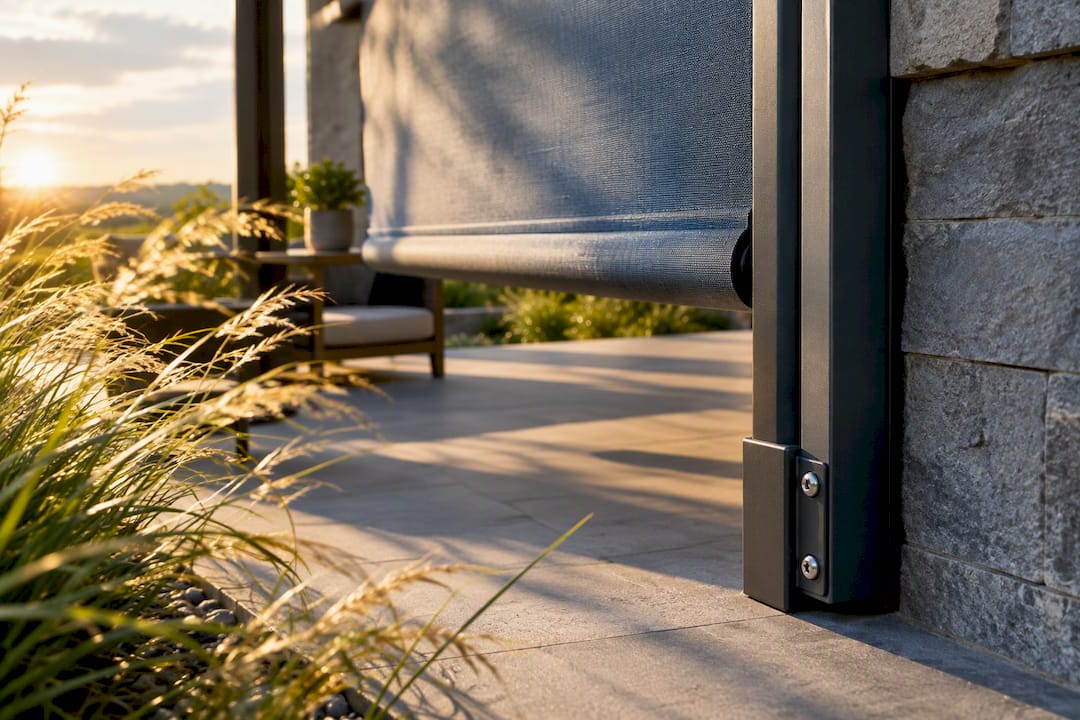

Article: Test Before You Buy: 4 Moves to Maximize Small Apartments
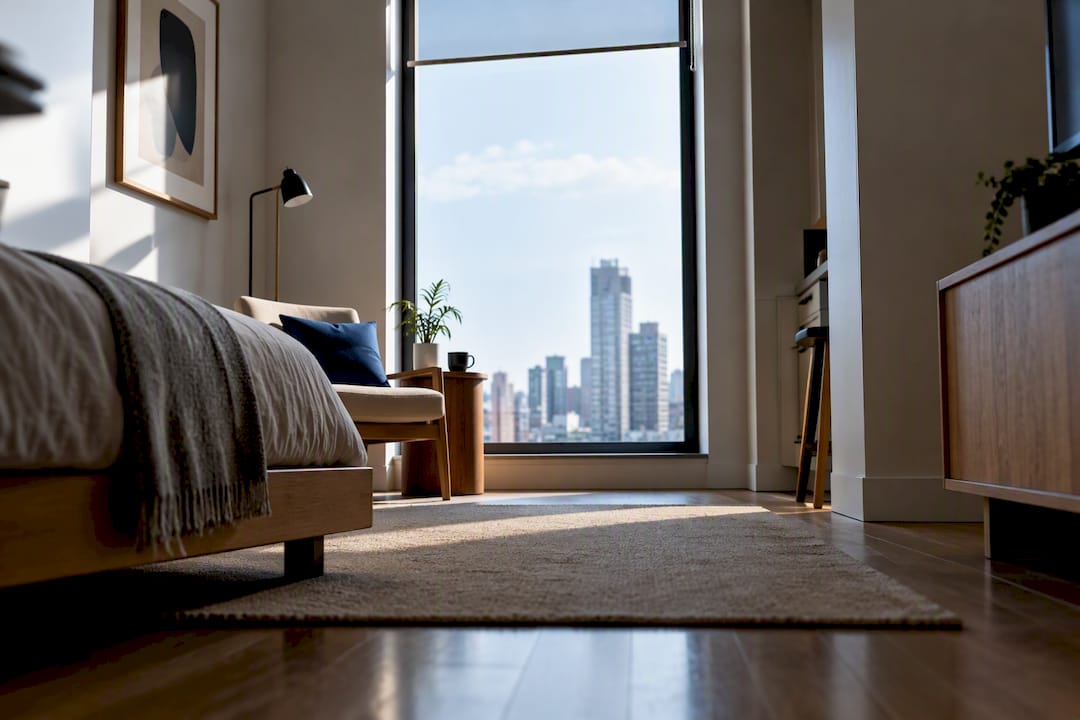
Test Before You Buy: 4 Moves to Maximize Small Apartments
Maximizing small spaces comes down to four moves, in this order: build up instead of out with vertical storage, choose furniture that does two jobs, control daylight with the right window treatment, and plan circulation before you buy anything. Get those four right and everything else (baskets, hooks, décor) is just polish. Below is the exact checklist and the tests to run before you spend a dollar. 🙌
TL;DR:
- Using taller shelving and wall units maximizes ceiling height, but top shelves should be reserved for infrequent use to avoid daily inconvenience.
- Living with a mockup of furniture footprints for a week helps confirm clearance and prevents space-blocking mistakes before purchase.
- Light-filtering window treatments like cellular shades can make rooms feel larger, especially when chosen based on orientation and climate considerations.
- Open shelving and consolidated storage units improve visual space perception and reduce clutter, with placement tied to usage frequency.
- Testing furniture and window treatments through measurements and tape outlines is essential to ensure practicality and avoid costly mistakes in small spaces.
Table of Contents
- Maximizing Small Spaces: The Highest-Impact Tactics
- Storage That Frees Space Instead of Blocking It
- Choosing Window Treatments That Make a Small Room Feel Bigger
- Furniture That Actually Earns Its Footprint
- Plan the Routine, Not Just the Furniture
- Your Small-Space Project, Step by Step
- Why Small-Space Design Is Mostly a Testing Problem
- Custom Shades Built for Rooms That Can’t Waste an Inch
- Sources
- FAQ
Maximizing Small Spaces: The Highest-Impact Tactics
Here’s the ranked list of moves that actually move the needle, starting with the ones that cost the least and matter the most.
- Go vertical, not wide. Tall shelving and wall units use ceiling height most rooms waste. Trade off: anything above eye level needs a step stool for daily items, so reserve the top shelves for things you grab monthly.
- Declutter before you organize. Buying bins for things you don’t need just hides the clutter better. Test: box up anything untouched in 90 days and see if you miss it.
- Use light-filtering shades to open up sightlines. A softly lit window reads bigger than one blocked by heavy drapes. House Beautiful’s design roundup points to fold-away furniture and multifunctional pieces as top-impact small-space fixes, and light control plays the same role for a room’s visual size.
- Add mirrors opposite windows. They bounce daylight deeper into the room and double the sense of depth. Trade off: a mirror facing clutter reflects the clutter too.
- Choose fold-away furniture for occasional use. Drop-leaf tables and wall-mounted desks disappear when not needed. Test: fold it flat and check the wall clearance before ordering.
- Build a storage bench near the entry. Seating plus hidden bin storage solves the shoe pile problem in one piece.
- Pull drawers out from under the bed. This is often the single largest unused volume in a bedroom. Test: measure clearance under the frame before buying, since box springs vary.
- Mount hooks and pegboards on open wall space. Vertical, visible storage for coats, bags, and tools costs little and installs in an afternoon.
- Install floating shelves instead of bulky cabinets. They hold books and décor without eating floor space. Trade off: open shelves need tidier styling than closed cabinets.
- Remove doors that swing into tight rooms. A pocket door or curtain frees up the floor space a swinging door demands.
Storage That Frees Space Instead of Blocking It
Open shelving makes a room feel airy because your eye reads past it to the wall behind. Closed cabinets hide mess but can make a small room feel boxed in if they’re scattered in mismatched pieces. The fix is consolidation: one full-height wall of storage almost always reads bigger than the same volume split across three small cabinets, because it keeps a single unbroken line instead of fragmenting the wall visually, according to Livingetc’s compact-room guidance.
Match placement to how often you use something:
- Daily items go in shallow, easy-reach pull-outs near where you use them.
- Seasonal gear belongs high (holiday decor) or low (under-bed bins).
- Rarely used dining pieces are prime candidates to downsize or fold away, a strategy House Beautiful’s small-space experts flag repeatedly.
- Renters should lean on tension-rod shelving and stick-on hooks that skip drywall damage entirely.
Pro Tip: Before you install anything permanent, live with a taped-off mockup of the shelf footprint for a week. You’ll know fast whether it blocks a doorway swing you forgot about.
Choosing Window Treatments That Make a Small Room Feel Bigger
Daylight and an open view do more for a small room’s perceived size than almost any other single change. The U.S. Department of Energy’s Building America Solution Center recommends picking window attachments by goal rather than looks alone, weighing visible transmittance, solar heat gain coefficient, U-factor, glare, and privacy together.
Here’s how that translates into real choices for compact rooms:
- Light-filtering cellular shades soften harsh sun while still letting the room feel bright, a good match for living rooms and home offices. Value Blinds’ light-filtering blinds guide breaks down which weaves diffuse light best.
- Blackout shades matter most in bedrooms, especially studio layouts where the bed sits near a street-facing window.
- Solar shades earn their keep on west or east-facing glass that runs hot in the afternoon, cutting glare without going fully dark.
- Motorized or cordless options help in rooms where the light changes a lot through the day and you don’t want to fuss with cords every time.
Orientation matters here too. Shading needs to differ by climate and sun path, so what works on a north-facing window in one region may not translate directly elsewhere. Renters can start with cordless or tension-mounted options; anyone adding motorized shades or built-in blackout systems benefits from professional measuring, since a fraction of an inch off can leave gaps that undo the blackout effect. Value Blinds’ small-space window treatment guide covers sizing specifics room by room.
Furniture That Actually Earns Its Footprint
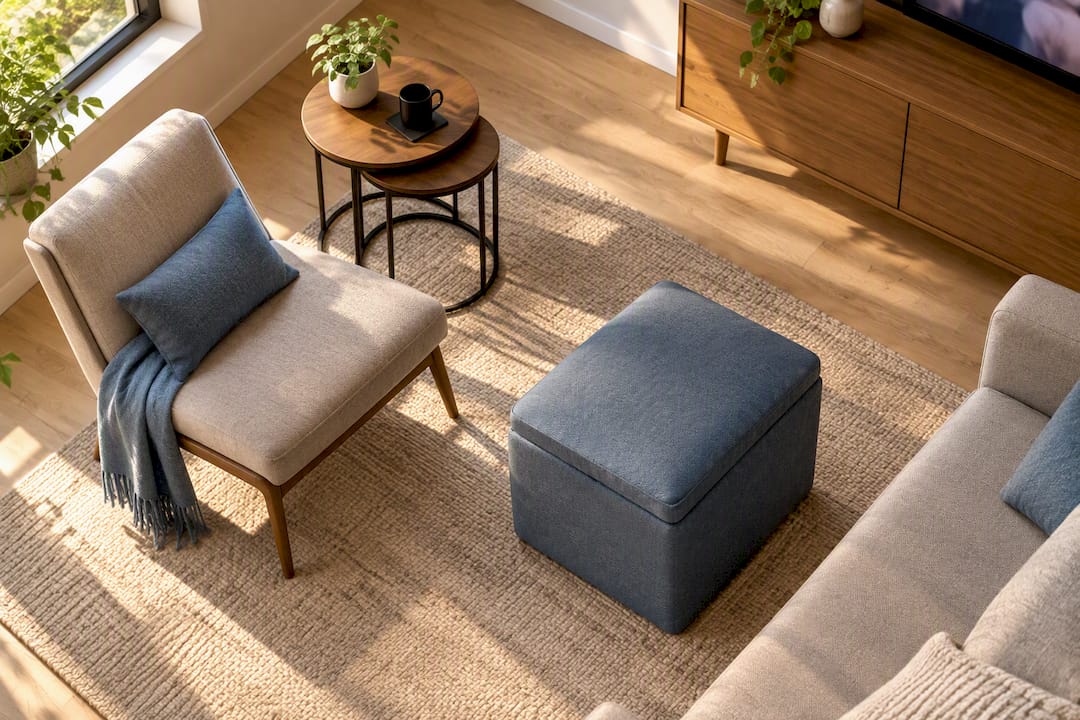
Murphy beds, sleeper sofas, nesting tables, and lift-top ottomans all promise double duty, but only some deliver in daily use. A Murphy bed that takes ten minutes to fold up won’t get folded up most nights. Lofts can work well in tall rooms, though ArchDaily’s coverage of a 17-square-meter compact apartment shows how much they depend on headroom and safe access, not just clever framing.
Run this test before you buy anything multifunctional:
- Tape the fully open dimensions on your floor, drawer pulls and all.
- Walk your normal evening routine through that taped outline.
- Open every drawer and swing every door to check for collisions with other furniture.
- Note whether the piece blocks a closet, outlet, or heating vent when deployed.
Pro Tip: Furniture with exposed legs and a low profile reads smaller than boxy, floor-to-floor pieces, even at the same square footage. That visual trick matters as much as the actual dimensions.
Plan the Routine, Not Just the Furniture
Gary Chang’s approach to compact living treats a home as a set of scenes that shift through the day rather than fixed rooms, and his work on dense, small-footprint living shows how furniture and storage can choreograph a bed-to-desk-to-guest-space conversion on cue. You don’t need sliding walls to borrow the idea. A rug, a floor lamp, or a shelf can define a zone without a single wall going up.
- Walk your daily routine and mark the pinch points where you sidestep furniture.
- Check for a clear path, roughly 30 to 36 inches wide, from entry to bed or from kitchen to seating.
- Swap swinging doors for curtains or pocket doors wherever a doorway eats into a walkway.
Your Small-Space Project, Step by Step
- Measure the room and mark window and outlet locations.
- Map your daily routine to spot where furniture already gets in your way.
- Tape out operating footprints for anything you’re considering buying.
- Pick window treatments and storage pieces based on those tests.
- Install, starting with the easiest wins (hooks, shelves) before big-ticket items.
- Live with it a week, then adjust.
DIY fixes like shelving or hooks take a few hours to a weekend. Custom built-ins or motorized shades run longer, often several weeks between ordering and install, and cost more. Bring in a pro for anything involving electrical work, motorization, or built-in carpentry.
Why Small-Space Design Is Mostly a Testing Problem
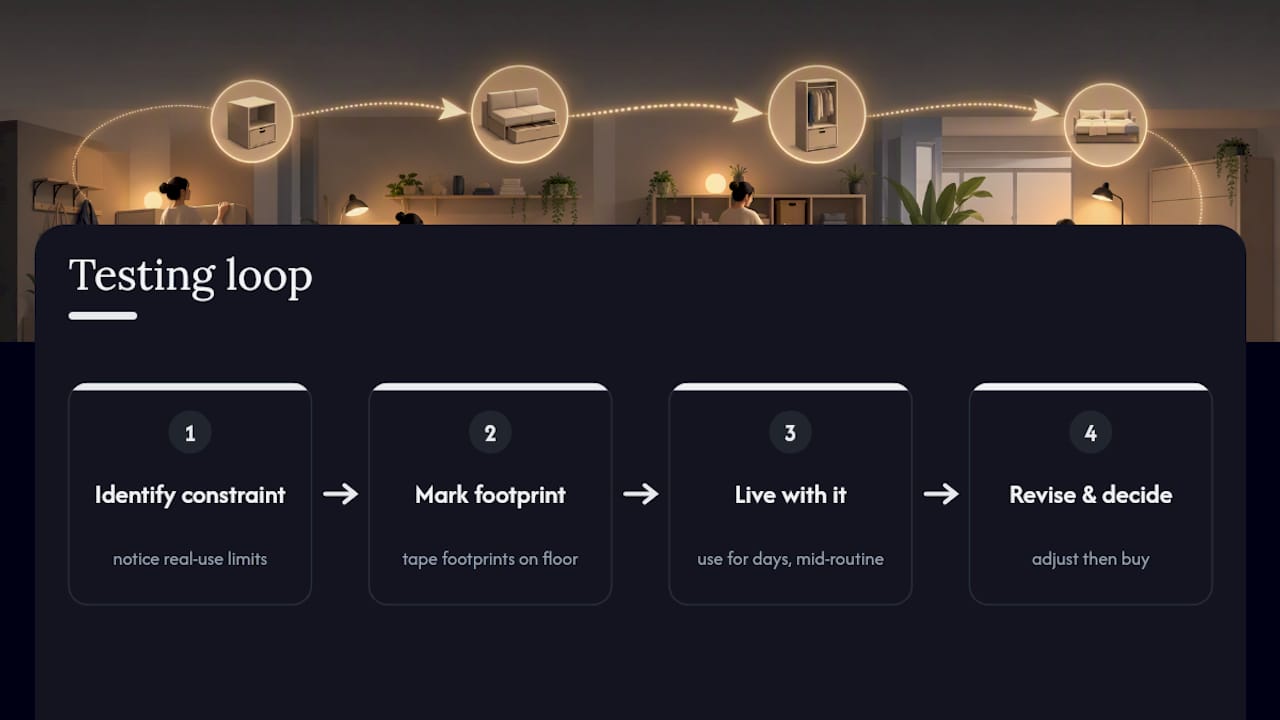
Most small-space advice treats furniture and storage like a shopping list, but the real skill is testing before you commit. The single biggest mistake I see is someone falling for a piece’s folded dimensions in a showroom and never checking what it looks like open, mid-routine, at 7 a.m. with a coffee mug in hand.
The window treatment piece gets underrated the most. People treat it as decoration when it’s really a light and space-perception tool first. Tape your footprints, test your drawers, and pick shades for function before style. The room will do the rest.
— Sunny
Custom Shades Built for Rooms That Can’t Waste an Inch
Custom shades are a practical next step once you’ve tested your layout and know what your windows actually need. We build custom light-filtering and cellular shades in cordless and motorized versions, so a studio bedroom can get blackout while the adjoining kitchen keeps diffuse daylight, all measured to your exact window rather than a standard size that leaves gaps.
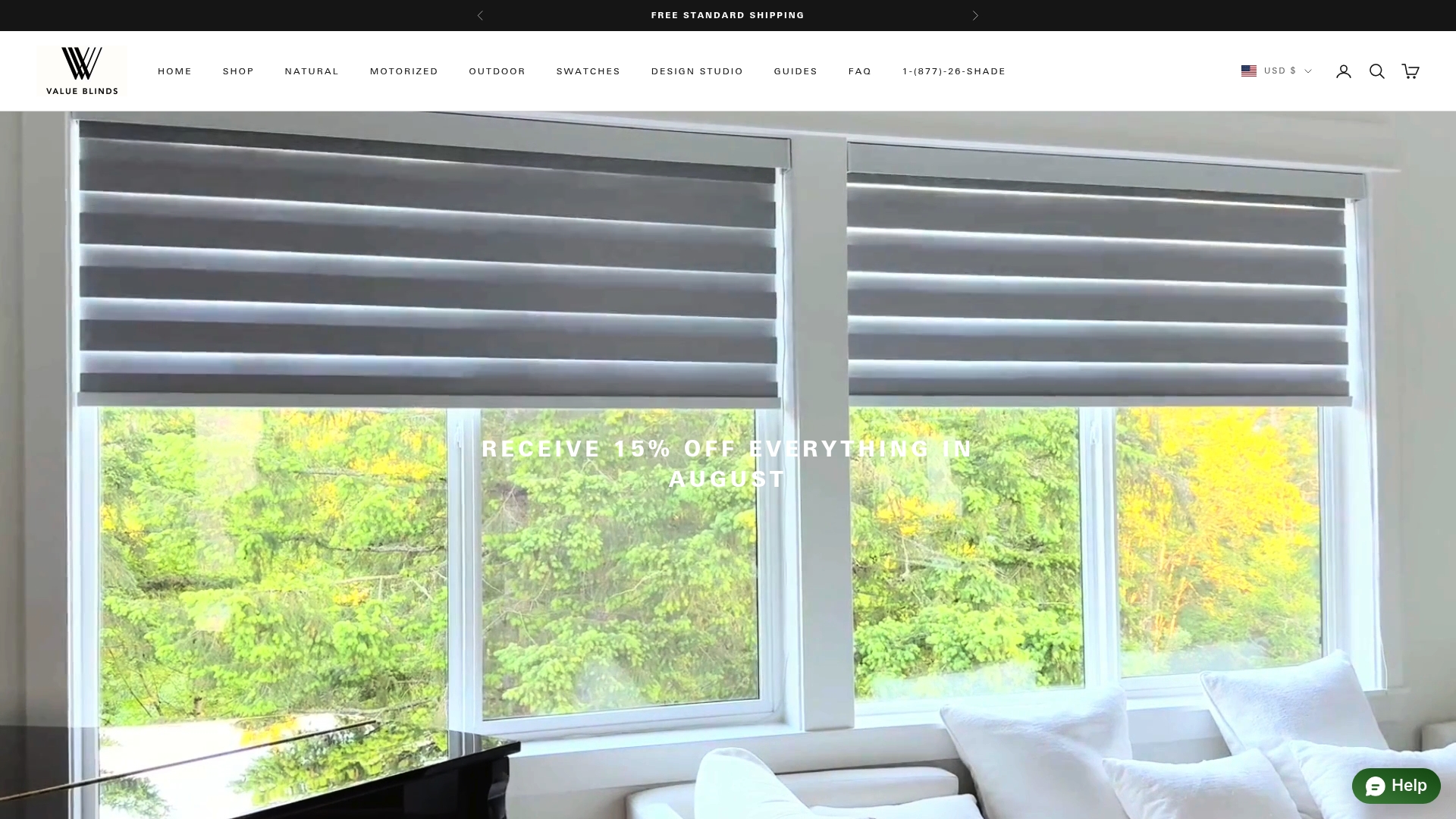
Many orders start with free fabric swatches so you can check how a shade reads in your actual light before committing. If you’re not sure which profile fits a tight window recess or a room that runs hot in the afternoon, our Pro Measure & Install service handles the measuring and mounting so nothing gets ordered a half inch off. Browse the full shades and blinds collection to start narrowing down what fits your space, or check out cellular shades built for light control and insulation if a small room’s temperature swings are part of the problem you’re solving.
Sources
- 17 small space design ideas that make the most of your square footage | House Beautiful
- Window attachments for solar control and energy efficiency | Building America Solution Center
- Space-saving design ideas for compact rooms | Livingetc
FAQ
What’s the single best way to maximize small spaces?
Vertical storage combined with decluttering gives the fastest, cheapest gains, since it uses wasted ceiling height instead of floor space. Pair it with a light-filtering window treatment and the room reads noticeably bigger within a day.
How do I test furniture before buying it for a small room?
Tape the furniture’s fully open dimensions on your floor and walk your normal routine through that outline. This operating-footprint test catches drawer collisions and blocked doorways that a showroom display never shows you.
Do mirrors really make small rooms look bigger?
Yes, a mirror placed opposite a window bounces daylight deeper into the room and adds a sense of depth. It only works well when the reflected view is tidy, since mirrors amplify clutter just as much as light.
What window treatments work best in small bedrooms?
Blackout cellular shades suit small bedrooms best, especially studios where the bed sits close to the window. Light-filtering shades work better in living areas and home offices where you want brightness without direct glare, as detailed in Value Blinds’ light-filtering blinds guide.
How much does it cost to outfit a small apartment with custom shades?
Pricing depends on shade type, size, and features like motorization, and current pricing is available directly on the Value Blinds site. Free fabric swatches let you compare options against your actual window light before ordering.