

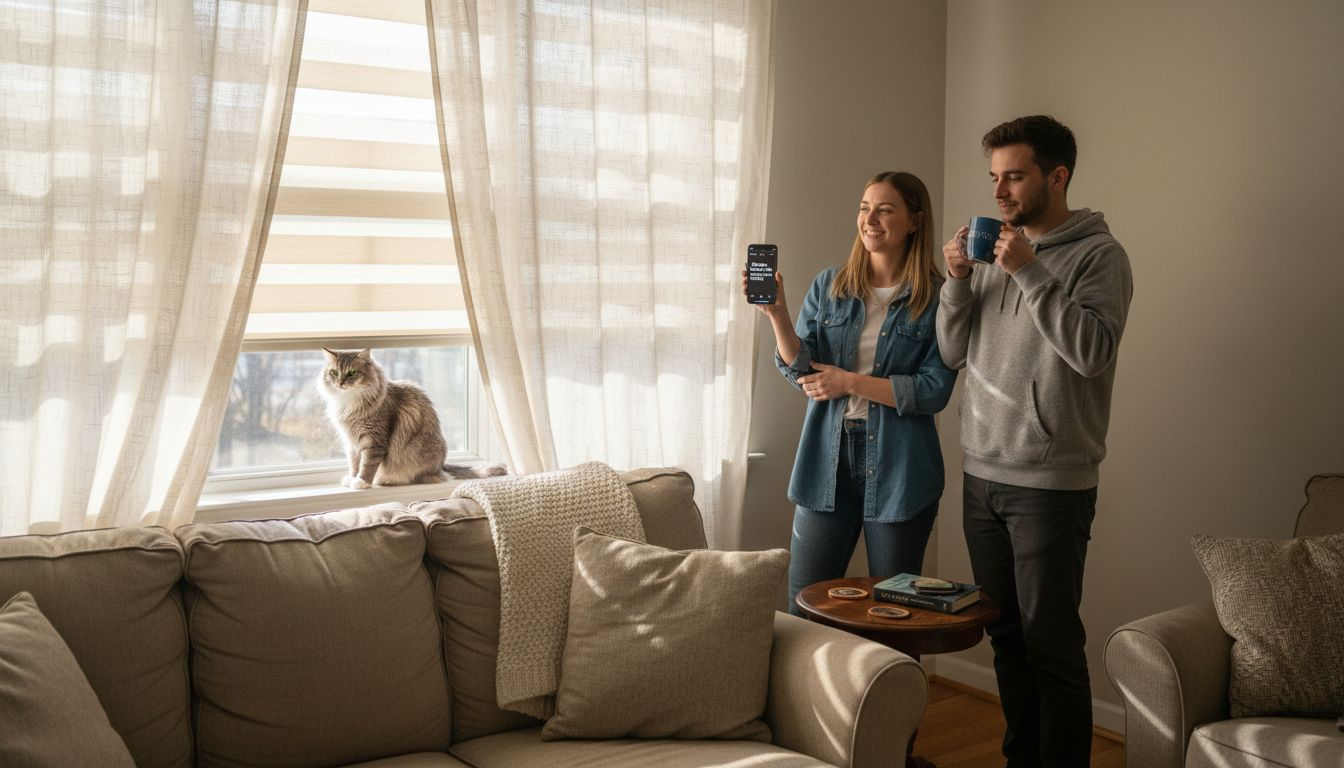
Alexa Controlled Blinds: 20% Energy Savings & Smart Home
Your home loses up to 30% of heating and cooling energy through windows, but Alexa-controlled blinds reduce home cooling costs by optimizing natural light exposure, leading to average energy savings of 10-20%. These voice-activated window treatments let you adjust natural light instantly while cutting energy bills. Whether you’re cooking dinner or relaxing on the couch, simple voice commands give you complete control over your home’s comfort and efficiency.
Table of Contents
- Introduction To Alexa-Controlled Blinds
- Energy Efficiency Benefits Of Alexa-Controlled Blinds
- Integration And Compatibility With Alexa Devices
- Installation And Setup Guide For Alexa Blinds
- Common Misconceptions And User Misunderstandings
- Advanced Customization, Automation, And Security Features
- Cost-Benefit Analysis And Long-Term Savings
- Conclusion And Next Steps For Tech-Savvy Homeowners
- Explore Alexa-Compatible Blinds From Value Blinds
- FAQ
Key Takeaways
| Point | Details |
|---|---|
| Voice Control Convenience | Motorized blinds respond to Alexa commands for hands-free operation throughout your day. |
| Energy Savings Potential | Average 10-20% reduction in cooling and heating costs, reaching 25% when paired with smart thermostats. |
| Quick Installation | Most homeowners complete setup in under 90 minutes using manufacturer guides and apps. |
| Compatibility Requirements | Requires specific Alexa skills and manufacturer app setup for full voice control functionality. |
| Security Enhancement | Automated schedules create occupancy appearance to deter burglars while you’re away. |
Introduction to Alexa-Controlled Blinds
Alexa-controlled blinds use voice commands to open and close motorized window treatments, creating a seamless connection between your window coverings and smart home ecosystem. These blinds integrate directly with Amazon’s Alexa platform, responding to natural language instructions without requiring you to touch switches or pull cords.
The technology combines electric motors, wireless connectivity, and voice recognition software. When you say “Alexa, close the living room blinds,” your Echo device communicates with the blind’s control hub, which sends signals to the motor. The system works with various custom remote blinds smart guide options already installed in your home.
Basic voice commands include:
- Open, close, or stop blinds mid-motion
- Adjust to specific percentages (“Alexa, set blinds to 50%”)
- Control individual rooms or grouped windows simultaneously
- Schedule automatic adjustments based on time or sunlight
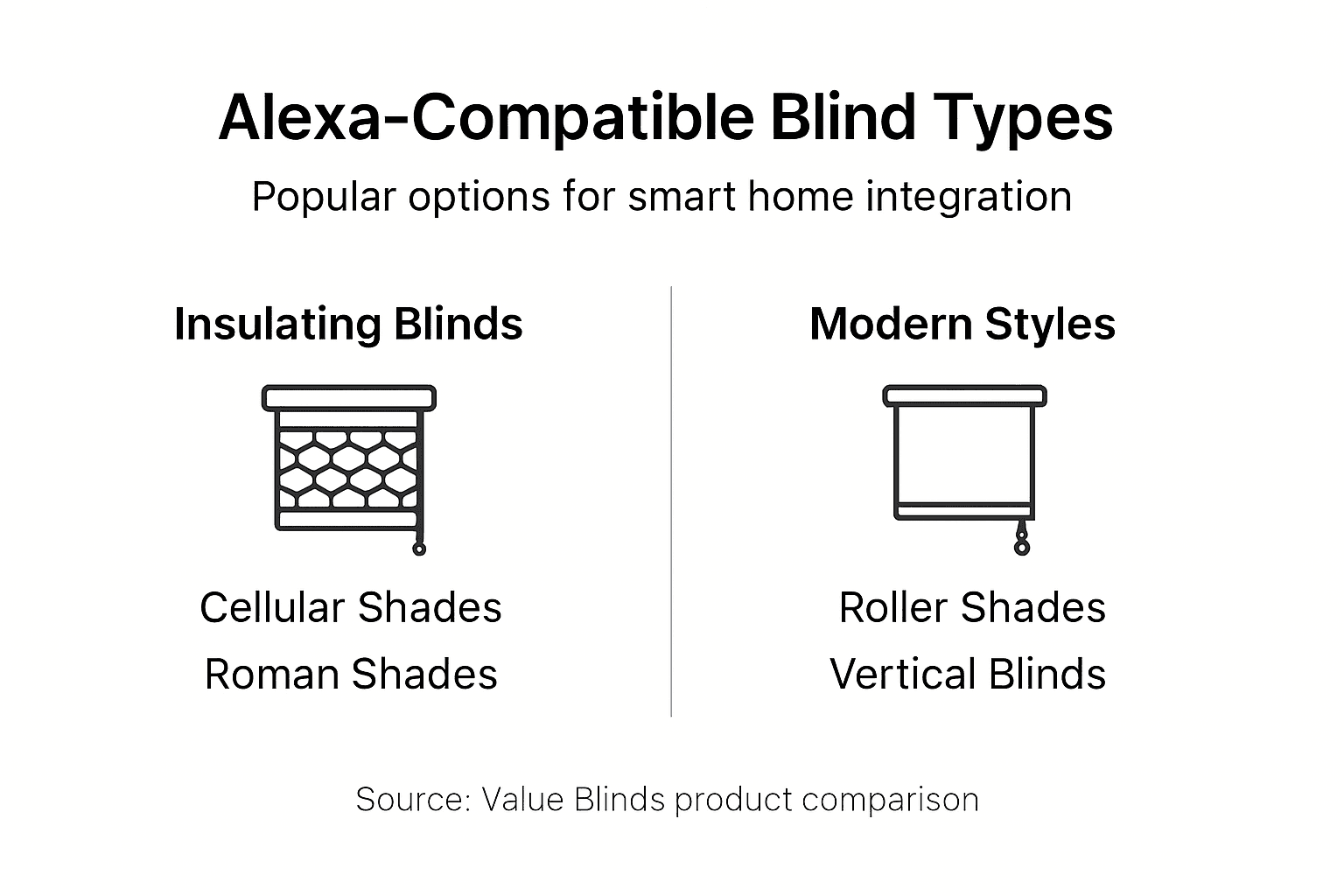
Popular motorized blind types compatible with Alexa include cellular shades for insulation, roller shades for clean aesthetics, and wood blinds for traditional style. Each type offers different light filtering capabilities and energy efficiency benefits. The complete guide to smart blinds covers how various materials and designs impact your home’s climate control.
Integrating blinds into your smart home system creates automated routines that respond to daily patterns. Morning routines can gradually open blinds with your alarm, while evening sequences close them for privacy. This automation transforms window treatments from static fixtures into active participants in your home’s energy management strategy.
Energy Efficiency Benefits of Alexa-Controlled Blinds
Smart blinds manage heat gain by blocking intense afternoon sun during summer months, reducing the load on your air conditioning system. During winter, opening blinds on sunny days captures passive solar heating, while closing them at night provides insulation. This dynamic adjustment optimizes your home’s thermal envelope throughout the year.
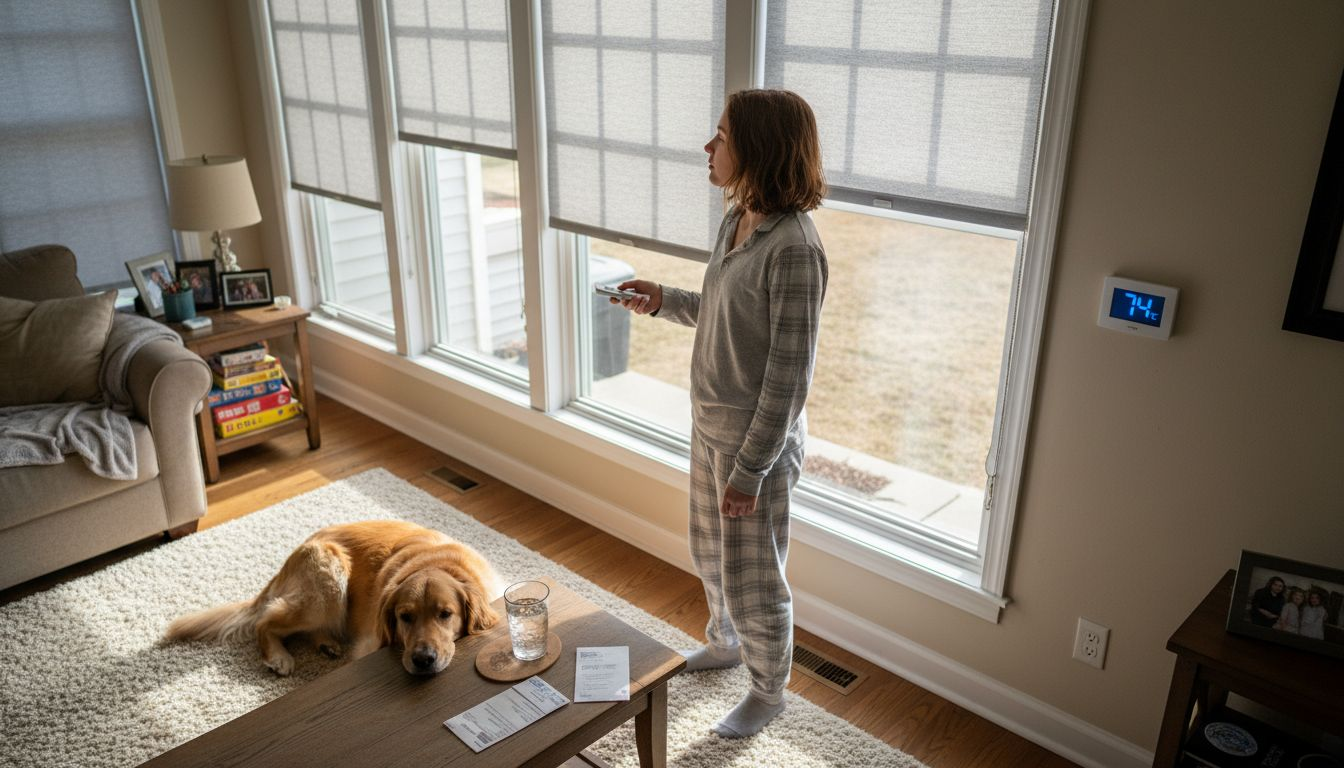
Energy savings from Alexa-controlled blinds are maximized when combined with smart thermostats and lighting, demonstrating the importance of holistic smart home integration. The synergy between devices creates compound benefits that exceed individual component savings. Your thermostat can delay cooling cycles when blinds close automatically, while lighting systems reduce artificial illumination as natural light enters.
| Scenario | Annual Energy Cost | Savings vs Manual |
|---|---|---|
| Manual blinds (reactive adjustment) | $1,800 | Baseline |
| Alexa blinds only | $1,530 | 15% reduction |
| Alexa blinds + smart thermostat | $1,350 | 25% reduction |
| Full smart home integration | $1,260 | 30% reduction |
The table demonstrates how motorized cellular blinds energy control amplifies when coordinated with other systems. Cellular shades provide superior insulation with trapped air pockets, while remote roller shades energy solutions offer precise light control for rooms with varying sun exposure.
Key energy-saving mechanisms include:
- Blocking up to 99% of UV rays with blackout materials
- Creating dead air space between window and shade for insulation
- Reducing glare to minimize artificial lighting needs during daytime
- Preventing heat loss through windows at night
Pro Tip: Schedule blinds to close 30 minutes before peak afternoon temperatures. This prevents heat buildup before your cooling system struggles, reducing energy spikes. Combine this with thermostat adjustments for maximum efficiency gains. More strategies appear on the Value Blinds blog with seasonal optimization guides.
Understanding energy-efficient treatments by DOE standards helps you select materials with proven thermal performance ratings.
Integration and Compatibility With Alexa Devices
Alexa can control blinds through Echo devices and Fire TV, supporting commands beyond open/close including percentage adjustments and group controls. Echo Dot, Echo Show, Echo Studio, and Fire TV Cube all provide voice control when connected to your home network. The specific features available depend on both your Alexa device generation and the blind manufacturer’s skill implementation.
Compatible Alexa devices include:
- All Echo generations (Dot, standard, Plus, Studio)
- Echo Show models with visual feedback
- Fire TV devices for entertainment room control
- Alexa-enabled third-party speakers and displays
Voice command variety extends beyond basic operations. You can ask Alexa to “set bedroom blinds to 75%” for filtered morning light or “close all blinds” when leaving home. Grouping multiple windows under single names like “living room” or “upstairs” enables synchronized control with one command.
Manufacturer-specific Alexa skills bridge your blinds to Amazon’s ecosystem. Each brand requires linking their dedicated skill through the Alexa app, then authenticating your account credentials. This process grants Alexa permission to communicate with the blind’s control hub. Without linking the correct skill, voice commands won’t reach your blinds even if they’re motorized.
Some systems offer native Alexa integration without separate hubs, while others require a bridge device. Native integration simplifies setup but may limit advanced features. Hub-based systems often provide more customization options and faster response times. Check compatibility requirements before purchasing to ensure seamless voice control.
Universal control claims can mislead buyers. Not all Alexa-compatible blinds support identical command sets. Basic models may only handle open/close instructions, while premium options accept percentage adjustments, tilt commands for venetian blinds, and favorite position presets. Review the motorized blinds installation guide to understand feature differences across product lines.
Installation and Setup Guide for Alexa Blinds
Installation often takes under 90 minutes and can be completed by homeowners using manufacturer apps and guides without professional help. The process involves mounting hardware, connecting power sources, pairing with control hubs, and linking to your Alexa account. Most manufacturers provide detailed instructions with labeled components and step-by-step videos.
Step-by-step installation process:
- Measure window openings precisely for inside or outside mount configurations
- Mark and drill bracket mounting holes using provided templates
- Install brackets and test fit the blind headrail before securing
- Connect battery packs or hardwired power depending on your model
- Mount the blind into brackets and verify smooth operation manually
- Download the manufacturer’s app and create an account
- Pair the blind using Bluetooth or Wi-Fi following app prompts
- Link the manufacturer skill in your Alexa app
- Discover devices through Alexa and assign room names
- Test voice commands and adjust settings as needed
Common installation challenges include:
- Inaccurate window measurements leading to poor fit
- Stripped screw holes in drywall requiring anchors
- Weak Wi-Fi signals in remote rooms affecting connectivity
- Confusion between mounting bracket types for different window frames
- Battery compartment access difficulties on certain models
The installation guide for motorized blinds addresses these issues with troubleshooting flowcharts and alternative mounting solutions. Cellular shades typically mount inside frames, while roller shades offer flexibility for inside or outside positioning.
Manufacturer apps enable motor limit adjustments, setting upper and lower travel points so blinds stop at exact positions. This calibration prevents fabric bunching or gaps at the bottom. Apps also configure favorite positions, adjust motor speed, and update firmware for improved performance.
Pro Tip: Test Wi-Fi signal strength at each window location before installation. Place a smartphone where the blind will mount and check signal bars. If strength drops below three bars, consider a mesh network extender or reposition your router. Weak signals cause delayed responses and disconnection errors that frustrate daily use.
Common Misconceptions and User Misunderstandings
Many assume Alexa-controlled blinds require constant internet connectivity to function, but numerous models store automation routines locally. Once programmed, scheduled adjustments run from the control hub’s internal memory without cloud communication. Voice commands still need Wi-Fi, but time-based routines continue during internet outages.
Installation complexity gets overestimated by first-time buyers who imagine professional-level electrical work. Modern motorized blinds use battery power or simple plug-in transformers, eliminating hard-wiring concerns. Mounting brackets snap into place with standard screws, and most windows need just two to three brackets regardless of size.
Frequent misconceptions include:
- All Alexa-compatible blinds offer identical voice command sets (they don’t)
- Smart blinds drain batteries quickly (quality motors last 6 to 12 months)
- You can control any motorized blind with Alexa (requires specific skill support)
- Voice control eliminates the need for physical remotes (most include backup controls)
- Automation replaces manual adjustment entirely (you’ll still tweak positions occasionally)
The belief that linking Alexa skills compromises privacy concerns some users. Manufacturer skills only access blind control data, not broader home information. Skills require explicit permission during setup, and you can revoke access anytime through Alexa app settings. Data transmission focuses on blind position and scheduling, not audio recording or personal habits.
Universal Alexa control sounds appealing but remains largely fictional. Each manufacturer develops proprietary protocols, preventing cross-brand voice commands. Buying blinds from three different companies means managing three separate skills and apps. Standardization efforts exist but haven’t achieved widespread adoption. Stick with one brand family for consistent control.
Automation benefits extend beyond convenience into security territory. Scheduled blind movements during vacations simulate occupancy patterns that deter break-ins. Random timing variations prevent predictable patterns that signal empty homes. This security enhancement often goes unrecognized by buyers focused solely on voice control novelty.
Advanced Customization, Automation, and Security Features
Alexa routines transform simple voice commands into orchestrated smart home sequences. A “Good Morning” routine can gradually open bedroom blinds over 10 minutes while starting your coffee maker and adjusting the thermostat. Evening routines close all blinds, dim lights, and lock doors with one phrase. These multi-step automations leverage the full potential of connected devices.
Creating an Alexa routine with blinds:
- Open the Alexa app and navigate to the Routines section
- Tap the plus icon to create a new routine
- Choose a trigger: voice command, schedule, device action, or location
- Add actions including blind position changes for specific rooms
- Insert delays between actions for gradual transitions
- Include thermostat and lighting adjustments for coordinated comfort
- Test the routine and refine timing for smooth execution
Customization options vary by blind type and material. Blackout cellular shades block nearly all light for bedrooms, while light-filtering roller shades soften harsh sunlight in living areas. Percentage-open settings let you dial in exact amounts of natural light throughout the day. Some systems remember favorite positions accessible through voice shortcuts.
Security automation creates convincing occupancy patterns:
- Randomize blind opening times within a 30-minute window
- Alternate which rooms show activity on different days
- Coordinate with smart lights for layered security appearance
- Schedule bedroom blinds to close at typical bedtime hours
- Open kitchen blinds during morning hours when you’d normally be home
Burglars observe homes for predictable patterns before attempting entry. Automated blind movements break those patterns, making your home appear occupied even during extended absences. Pairing blind automation with timed lighting and occasional TV activation through smart plugs creates comprehensive security coverage without monthly monitoring fees.
Advanced users integrate sunrise/sunset triggers that adjust automatically as seasons change. Your blinds open with natural dawn light in summer but delay during dark winter mornings. Sunset routines close blinds as daylight fades, maintaining privacy without manual intervention. These adaptive schedules eliminate the need to reprogram settings quarterly.
Voice control extends to guests through Alexa’s Drop In feature on Echo devices. Family members can adjust blinds in their rooms without accessing your phone app. This distributed control maintains convenience while preserving individual preferences for light levels and privacy.
Cost-Benefit Analysis and Long-Term Savings
Alexa-controlled blinds typically cost 20% to 40% more than basic motorized versions without smart home integration. A standard motorized roller shade might run $150 to $300 per window, while Alexa-compatible versions range from $200 to $400. Premium materials like wood or cellular honeycomb designs push prices higher, but energy savings offset initial investments over time.
Payback periods average three to five years when factoring energy bill reductions. A home with eight windows spending $1,800 annually on heating and cooling could save $270 to $360 per year with optimized blind automation. Those savings accumulate to $1,350 to $1,800 over five years, recovering most installation costs before considering security and convenience benefits.
| Feature | Manual Blinds | Basic Motorized | Alexa-Controlled |
|---|---|---|---|
| Initial Cost per Window | $50 to $150 | $150 to $300 | $200 to $400 |
| Energy Savings | 0% baseline | 5% to 10% | 15% to 25% |
| Voice Control | No | No | Yes |
| Automation | No | Limited | Full routines |
| Security Features | No | Timer only | Advanced patterns |
| 5-Year ROI | $0 | $200 to $400 | $600 to $900 |
The custom window treatments comparison reveals how material choices impact long-term value. Cellular shades deliver superior insulation, shortening payback periods in extreme climates. Roller shades cost less upfront but provide fewer energy benefits in spaces with intense sun exposure.
Financial considerations before purchase:
- Calculate current energy costs to project realistic savings percentages
- Factor in local electricity rates (higher rates improve ROI)
- Consider climate zone (extreme temperatures accelerate payback)
- Evaluate existing smart home devices for integration synergies
- Account for DIY installation savings versus professional service costs
- Research manufacturer warranty coverage (typically 3 to 5 years)
- Compare battery versus hardwired power for ongoing maintenance expenses
Non-monetary benefits include increased home resale value and improved quality of life. Prospective buyers view smart home features as premium upgrades worth higher offers. Daily convenience from voice control and automation eliminates small frustrations that accumulate over time. Glare reduction protects furniture and flooring from UV damage, preserving interior aesthetics.
Some utility companies offer rebates for energy-efficient window treatments. Check local programs before purchasing, as incentives can reduce upfront costs by 10% to 15%. These rebates combined with federal energy tax credits occasionally available for home efficiency improvements further enhance financial returns.
Conclusion and Next Steps for Tech-Savvy Homeowners
Alexa-controlled blinds deliver measurable energy savings, enhanced security, and effortless convenience that transforms daily home management. Voice commands eliminate manual adjustments while automated routines optimize comfort and efficiency. The technology integrates seamlessly with existing smart home ecosystems, creating compound benefits that justify the premium investment.
Before purchasing, verify your home’s Alexa device compatibility and Wi-Fi coverage in rooms where you plan installations. Test signal strength at window locations using your smartphone. Research manufacturer skill requirements to ensure your preferred brand supports desired features like percentage adjustments and group controls.
Explore trusted vendors offering comprehensive product selections with clear compatibility specifications. Consider requesting sample materials to evaluate light filtering and insulation properties. Professional consultations can clarify technical questions about power options and mounting configurations for unusual window shapes.
Start with high-traffic rooms where you’ll experience maximum benefit from voice control and automation. Bedrooms and living areas provide immediate quality-of-life improvements. Expand to additional windows as you refine routines and discover preferred settings. This phased approach spreads costs while building familiarity with the technology.
Explore Alexa-Compatible Blinds from Value Blinds
Value Blinds offers extensive selections of Alexa-compatible motorized window treatments designed for seamless smart home integration. Our window treatment design studio lets you customize materials, colors, and control options to match your home’s aesthetic and functional requirements.
Our motorized roller shades collection includes energy-efficient fabrics with proven thermal performance ratings. Explore cordless blinds options that combine modern convenience with child safety features. Each product includes detailed compatibility information, installation guides, and expert support to ensure successful smart home integration. Free swatches help you make confident material decisions before ordering custom sizes.
FAQ
What Alexa devices are compatible with Alexa-controlled blinds?
All Echo generations including Dot, Show, and Studio models support blind control when paired with manufacturer skills. Fire TV devices also enable voice commands through your television. Compatibility depends on linking the specific blind manufacturer’s Alexa skill and maintaining stable Wi-Fi connectivity.
Do Alexa-controlled blinds require a constantly active Wi-Fi connection?
Many systems store programmed routines locally in control hubs, allowing scheduled adjustments to run during internet outages. Initial setup requires Wi-Fi for skill linking and device pairing. Voice commands need active connectivity, but time-based automations continue functioning offline once configured.
How difficult is it to install Alexa-controlled motorized blinds myself?
Most homeowners complete installation in under 90 minutes following manufacturer instructions and videos. Battery-powered models eliminate electrical work, while mounting brackets use standard screws. The motorized blinds installation guide provides troubleshooting tips for common challenges like bracket alignment and Wi-Fi pairing.
What energy savings can I realistically expect with Alexa-controlled blinds?
Typical savings range from 10% to 20% on heating and cooling costs through optimized light and heat management. Alexa-controlled blinds reduce home cooling costs by optimizing natural light exposure, leading to average energy savings of 10-20%. Integration with smart thermostats can push savings toward 25% by coordinating temperature adjustments with blind positions.
Recommended
- Smart Blinds: Complete Guide to Modern Automation
- Motorized Cellular Blinds: Smart Home Energy Control
- Value Blinds™ Solar Shades | Elegant & Premium Solar Shades with Smart Motorization
- Value Blinds™ Elegant and Premium Solar Shades with Smart Motorization
- 5 Benefits of Energy Efficient Shutters for Your Home