
Homeowners: 4 Decisions to Get Bamboo Shades With Blackout Liner
Bamboo shades with a blackout liner are a smart pick when you want natural texture on your windows and real darkness in the room, especially for bedrooms and media rooms. If total insulation or absolute blackout is your top priority, a cellular shade or a layered system might edge them out. For everything in between, though, a blackout-lined woven shade hits the sweet spot, and they are available as custom, made-to-order options from some suppliers.
TL;DR:
- Custom sizing is essential to prevent light gaps, as even half-inch measurement errors can compromise room darkness with blackout-lined bamboo shades.
- Outside mount installation generally provides better blackout performance by overlapping the window frame, while inside mounts require precise measurements and enough frame depth.
- Removable liners, such as snap-on or hook-and-loop options, facilitate easy cleaning and replacement, extending the lifespan and maintaining optimal blackout performance.
- Dense, tight weaves of bamboo require less liner help, whereas open-weave shades depend heavily on liners to achieve substantial darkness.
- Professionals can ensure proper measurement, installation, and alignment, reducing the likelihood of light leaks and maximizing blackout effectiveness.
Table of Contents
- What Is a Blackout Liner on Bamboo Shades?
- Benefits and Tradeoffs of Adding a Blackout Liner
- How Do You Choose the Right Blackout-Lined Bamboo Shade?
- Measuring and Installing Bamboo Shades With a Blackout Liner
- Caring for Bamboo Shades With a Blackout Liner
- Why Custom-Fit Bamboo Shades With Blackout Liners Are Worth the Extra Step
- Ready to Order Your Bamboo Shades With a Blackout Liner?
- Sources
- FAQ
What Is a Blackout Liner on Bamboo Shades?
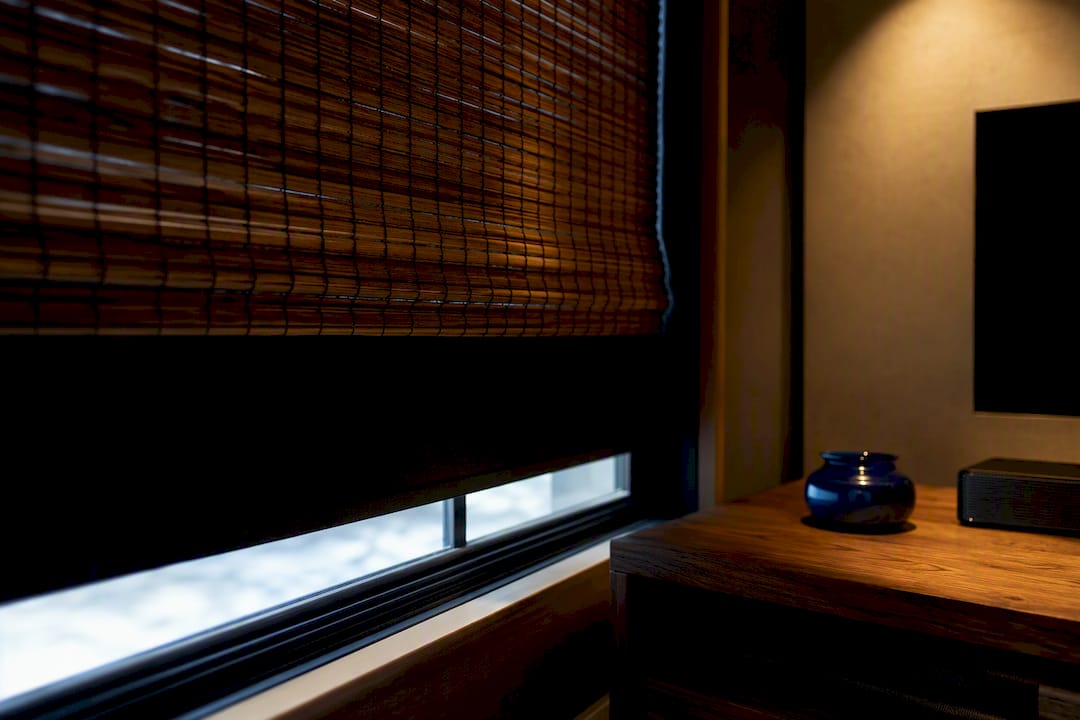
A blackout liner is a separate fabric layer attached to the back of a woven or bamboo shade specifically to block light that would otherwise pass through the natural gaps in the weave. Bamboo shades are, by nature, full of tiny openings between reeds, grasses, and wood slats. Without a liner, even a “closed” bamboo shade lets in a surprising amount of light. That’s the whole point of pairing the two: you keep the organic look up front and hide a light-blocking layer behind it.
There are two main liner types, and the difference matters more than most buyers realize:
- Blackout liners use a tightly woven or coated fabric (often a foam-backed or vinyl-laminated material) that stops close to 100% of direct light.
- Light-filtering liners use a thinner, translucent fabric that softens harsh sun without eliminating it, good for living rooms where you still want some daytime glow.
How the liner attaches also affects how the shade performs and how easy it is to live with:
- Sewn-in liners are stitched permanently into the shade at the factory, giving a cleaner, flatter finish but no way to remove them later.
- Snap-on or hook-and-loop liners attach along the top rail and can be popped off for cleaning or swapped out entirely.
- Back-mounted liner systems hang as a nearly independent shade just behind the bamboo layer, which some buyers prefer because it moves separately and doesn’t add bulk to the woven fabric itself.
Retail woven-wood shade listings typically present blackout liners as an optional upgrade rather than a standard feature, which tells you something: manufacturers know not everyone needs full blackout, and they price and package it accordingly.
Liner opacity also depends on your bamboo weave. A dense, tight weave with narrow reeds needs less help from the liner to darken a room, while a loose, open weave (the kind with wide gaps and a more rustic look) leans harder on the liner to do the actual work. If you love an airy, open-weave bamboo shade, expect the liner to be doing most of the heavy lifting on darkness.
One caution worth repeating: keep blackout-lined bamboo shades indoors. Natural bamboo and the adhesives or backing used in some liners aren’t built for consistently damp or outdoor environments, and manufacturer guidance warns against installing them in spaces prone to humidity, like uncovered patios or bathrooms with poor ventilation.
Benefits and Tradeoffs of Adding a Blackout Liner
The upside is straightforward. A blackout liner gives you meaningfully darker rooms, stronger privacy at night when your lights are on inside, less glare on screens and glossy surfaces, and a modest thermal benefit since the extra fabric layer adds a bit of insulation against heat gain in summer. None of that is exclusive to bamboo, but it’s a real upgrade over an unlined shade.
The tradeoffs are worth being honest about, too:
- The liner sits behind the bamboo, which slightly mutes the natural texture and shadow play that makes woven shades appealing in the first place.
- Adding a liner increases the shade’s overall bulk, which can matter in a shallow window recess.
- Custom lined shades cost more than unlined ones and may take longer to produce, since the liner has to be cut, attached, and quality-checked as an extra step.
Pro Tip: If you love the dappled, sun-through-leaves look bamboo shades give during the day but still want darkness at night, ask about a light-filtering liner instead of full blackout. You get texture and glow during daylight hours, and a second layered shade (or a room-darkening liner) can handle nighttime.
A light-filtering liner, or even skipping the liner and pairing bamboo with a separate blackout roller shade behind it, makes more sense for living rooms, kitchens, and sunrooms where you want light control without sacrificing the organic feel entirely. Save full blackout for the rooms where darkness is the actual job: bedrooms, nurseries, and media rooms.
How Do You Choose the Right Blackout-Lined Bamboo Shade?
Picking the right shade comes down to four decisions: mount type, sizing, controls, and how dark you actually need the room.
-
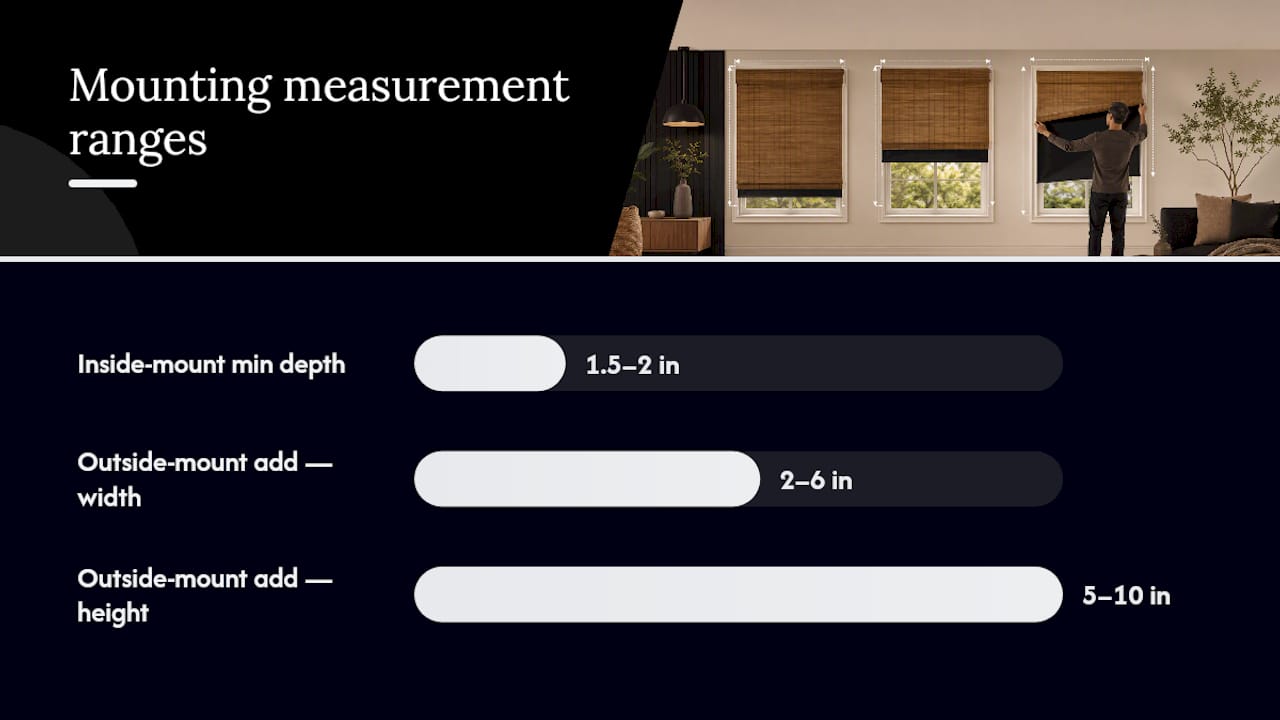
Decide between inside and outside mount. An outside mount, where the shade hangs on the wall or trim outside the window frame, gives noticeably better room darkening because the shade can overlap the frame on all sides and close off the gaps that let light sneak around the edges. An inside mount, fitted inside the window frame, gives a cleaner, built-in look but needs enough frame depth, typically 1.5 to 2 inches, for the headrail to sit flush without hardware conflicts.
-
Size for darkness, not just fit. For an outside mount, add roughly 2 to 6 inches to the width and 5 to 10 inches to the height beyond the window opening so the shade overlaps the frame and minimizes light gaps at the edges. For an inside mount, measure width and height at three points and use the smallest of the three measurements, since window frames are rarely perfectly square.
-
Pick your control style. Cordless lift systems and motorized options aren’t just about convenience. They remove loose cords from a room entirely, which matters a lot in households with kids or pets, and they tend to give a cleaner overall look on the window. Motorized shades also make it easier to keep a consistent blackout seal, since the shade lowers to the exact same position every time.
-
Match the liner to the room’s actual use. Bedrooms and media rooms call for full blackout. Home offices and living rooms usually do better with light-filtering or room-darkening (a middle-ground option that blocks most, but not all, light) so the space doesn’t feel like a cave during the day.
If you’re set on an outside mount for maximum darkness, it helps to understand exactly why outside mounts reduce light leakage before you commit to a size.
Measuring and Installing Bamboo Shades With a Blackout Liner
Getting the measurements right is the single biggest factor in whether your blackout-lined shade actually blocks light the way you expect. Get it wrong by even half an inch on an inside mount, and you’ll see daylight creeping in at the edges no matter how good the liner is.
For inside mounts:
- Measure the width at the top, middle, and bottom of the window opening, then use the smallest number. Window frames shift slightly with age and construction, so this step catches the narrowest point before it becomes a problem.
- Measure the height at the left, center, and right of the opening, and again use the smallest measurement.
- Confirm your frame depth meets the minimum for inside mount, generally 1.5 to 2 inches. If your frame is shallower than that, switch to an outside mount instead of forcing an inside fit.
For outside mounts:
- Measure the exact width and height of the window opening or trim as your baseline.
- Add 2 to 6 inches to the width and 5 to 10 inches to the height, depending on how much overlap you want on each side. More overlap means better light control, but too much can look oversized on a small window.
- Mark your bracket positions on the wall using a level, not by eye, since even a slightly crooked headrail will create an uneven gap on one side.
On installation: most bamboo shade headrails come pre-drilled for bracket mounting. Installation manuals recommend marking bracket positions, drilling pilot holes, and using wall anchors rated for drywall if you’re not mounting directly into a stud. Skipping pilot holes is one of the most common reasons brackets end up crooked or pull loose over time.
Child safety matters just as much as fit. If your shade uses a lift cord, install a cord cleat or tension device at a height children can’t reach, and route the cord so it never forms a loop a child could pull down over their head. This isn’t optional advice tucked in for liability. It’s a standard step in every reputable installation manual, and cordless or motorized shades sidestep the issue entirely.
If your window frame is out of square, uneven, or you’re dealing with an unusual mounting surface (tile, metal, or plaster), it’s worth using a detailed inside-mount measuring guide or requesting professional measurement rather than guessing. A shade that’s off by a quarter inch on each side adds up to a visible gap once it’s hanging.
Caring for Bamboo Shades With a Blackout Liner
Routine care is simple, but bamboo shades punish shortcuts more than fabric shades do. A few habits keep both the wood and the liner in good shape for years.
- Dust regularly with a microfiber cloth or a vacuum on the lowest brush setting, working with the weave rather than against it.
- Skip wet cleaning on the natural bamboo itself. Moisture is the fastest way to warp reeds or encourage mildew between the slats.
- If your liner is removable, take advantage of it. You can spot-clean or replace just the liner without touching the bamboo shade, which is a real advantage over sewn-in systems when the fabric eventually yellows or wears.
- Watch for warping, a musty smell, or new light gaps appearing where the shade used to seal well. Any of those are signs it’s time to reline or replace, not just clean.
- In humid seasons, crack a window or run a dehumidifier in rooms with bamboo shades, and store any removable liners flat rather than folded to avoid permanent creasing.
Why Custom-Fit Bamboo Shades With Blackout Liners Are Worth the Extra Step
Here’s what most buying guides skip: the biggest source of buyer’s remorse with blackout-lined bamboo shades isn’t the liner itself. It’s ordering a shade sized for a “close enough” window measurement and then discovering a half-inch gap of daylight streaming in every morning at 6 a.m. That gap isn’t a manufacturing defect. It’s almost always a measurement problem, and it’s entirely preventable.
Custom sizing exists precisely because stock windows don’t exist in most real homes. Frames settle, trim varies, and a shade cut to the exact three-point measurement of your window performs completely differently than one bought off a shelf in a standard size. That’s why Value Blinds builds every natural bamboo blind to the buyer’s own measurements rather than offering a handful of fixed sizes.
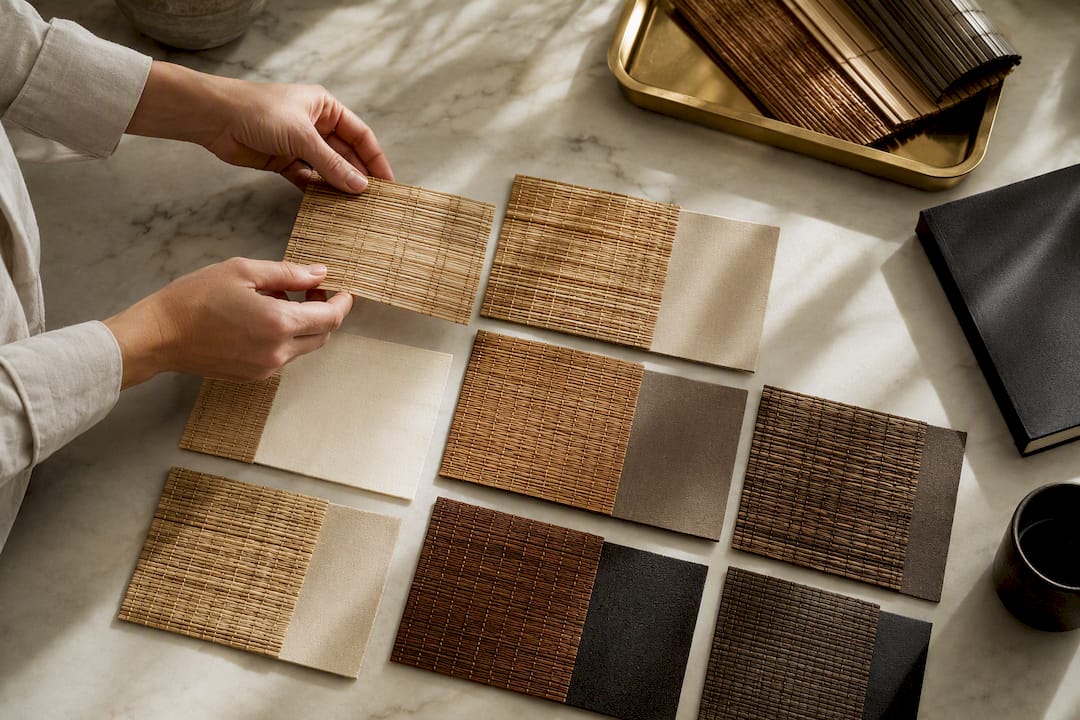
Free fabric swatches solve a related problem: opacity and color are almost impossible to judge from a product photo on a screen. A liner that looks charcoal gray online might read as navy blue against your actual wall color, and swatch sets let you check that before you commit to a full custom order.
Then there’s installation, which is where a lot of the light-gap complaints in this category actually originate. A shade that’s perfectly sized but hung a quarter inch crooked will still leak light on one side. Professional measure and install services exist specifically to catch that kind of error before it becomes a permanent annoyance you notice every night when you try to sleep.
None of this replaces doing your own homework on mount type and sizing rules. It just removes the guesswork from the two steps where most at-home orders go wrong.
Ready to Order Your Bamboo Shades With a Blackout Liner?
If you’ve read this far, you already know the two things that make or break a blackout-lined bamboo shade: getting the measurements right and picking a mount type that actually suits your window. Some window treatment providers focus on helping customers with accurate measurements and appropriate mount types rather than just selling standard sizes off a rack.
Start by ordering free fabric swatches so you can check liner opacity and bamboo tone against your actual wall and lighting before you commit to a full order. From there, use the inside-mount measuring guide to confirm your frame depth and take accurate three-point measurements, whether you’re leaning toward an inside or outside mount. And if you’d rather skip the measuring tape entirely, Professional measuring and installation services are available to help prevent alignment issues and light gaps in installed shades.
Many custom orders on window treatments include warranties and return policies to provide customer assurance if fit issues arise. Browse the full Natural Bamboo Blinds collection or head to the main Value Blinds site to start your swatch order today.
FAQ
Do Blackout Liners Work on All Bamboo Shades?
Most woven bamboo and wood shades can accept a blackout liner, either sewn in at the factory or attached with a snap-on system. Very loose, open weaves rely more heavily on the liner for full darkness, so check the weave density before assuming any bamboo shade will block light equally well.
Should I Choose Inside or Outside Mount for Maximum Darkness?
Outside mount typically blocks more light because the shade can overlap the window frame on all sides, closing off the gaps that let light sneak in around an inside-mounted shade. Inside mount gives a cleaner, recessed look but needs at least 1.5 to 2 inches of frame depth to work properly.
How Much Extra Width and Height Should I Add for an Outside Mount?
Add roughly 2 to 6 inches to the width and 5 to 10 inches to the height beyond your window opening to create enough overlap and minimize light gaps at the edges. More overlap generally means better darkness, but very large windows may not need the full range.
Can I Remove and Clean the Blackout Liner Separately?
Yes, if you choose a snap-on or hook-and-loop liner rather than a sewn-in one, you can remove it for spot cleaning or replace it entirely without touching the bamboo shade itself. Removable liners are widely offered as an option on woven wood shades specifically because they simplify long-term care.
What Does Value Blinds Offer for Custom Blackout-Lined Bamboo Shades?
Value Blinds offers custom-sized natural bamboo blinds with blackout liner options, free fabric swatches, and Pro Measure & Install for accurate, alignment-free fitting. Current pricing is available directly on the site since it depends on your chosen size, liner type, and control options.