
How Fabric Opacity Shapes the Ambiance of a Room
Fabric opacity decides how much light and view pass through your window covering, and that single choice sets the mood of the room. Sheer fabrics feel airy and bright. Light-filtering fabrics feel soft and calm. Room-darkening and blackout fabrics feel cozy, quiet and cocoon-like. 🌤️ Below, we break down what opacity really means, how weave, color and lining change it, and which level suits each room.
TL;DR
- Opacity is about two things at once: how much light gets through and how much of the room (or the street) can be seen. They are not the same measurement.
- Sheer and light-filtering fabrics create a bright, diffused, open mood. Room-darkening and blackout fabrics create a dim, private, restful one.
- Color and weave matter as much as the label: a light fabric gives stronger daytime privacy, while a darker one can give you a better view out.
- Daytime privacy fades after dark when your lamps are on. Rooms that need privacy at night need a more opaque fabric or a second layer.
- Most homes do best with different opacities in different rooms, or with a dual-layer shade that lets you switch moods.
Table of Contents
- What fabric opacity actually means
- The five opacity levels and the moods they create
- What changes the feel: weave, thickness, color and lining
- Privacy: the day shift and the night shift
- Glare control without losing the daylight
- Room-by-room opacity picks
- Is opaque fabric good or bad?
- Our perspective
- Find the right opacity at Value Blinds
- FAQ
- Sources
What fabric opacity actually means
Opacity describes how much a fabric stops light and hides what is behind it. An opaque fabric largely conceals the background. A translucent one passes some light and partly reveals what is behind it. A sheer one lets most light through and only softens the view.
Here is the part that surprises people: “how much light comes through” and “how much you can see through it” are separate properties. Textile measurement specialists treat light blocking and sheerness as different properties. Light blocking measures the light transmitted through the fabric, while sheerness measures how visible the background is in reflected light.
There is also a number you will see on shade fabrics called openness. UK shading industry guidance defines openness as the percentage of the weave not covered by thread. Lower openness generally means less light and less view-through, but the same guidance notes that 0% openness is not automatically opaque. A thin, light-colored 0% fabric can still glow when the sun hits it.
So when you shop, think in terms of three questions:
- How bright do I want the room to be at midday?
- Who can see in during the day, and who can see in at night?
- How much of the view outside do I want to keep?
The five opacity levels and the moods they create
Shade makers usually sort fabrics into a spectrum. The names vary a little from brand to brand, but the feel of each level is fairly consistent. (For our own full breakdown, see our guide to custom shade opacity levels.)
| Opacity level | Light in the room | Daytime privacy | Typical mood |
|---|---|---|---|
| Sheer | Maximum daylight, soft glare reduction | Low | Airy, open, breezy |
| Semi-sheer | Bright, gently diffused | Low to moderate | Fresh, relaxed |
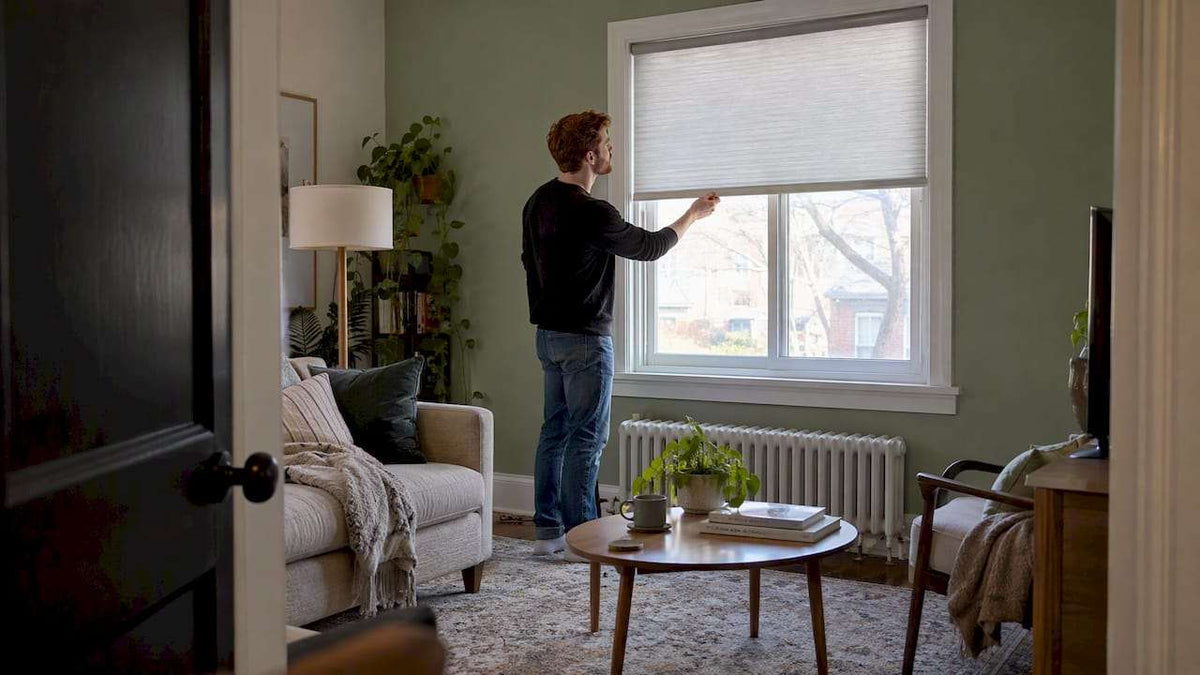
| Light filtering (semi-opaque) | Soft, even glow | Moderate to good | Calm, welcoming, living-room friendly |
| Room darkening | Dim, with some glow at the edges | High | Cozy, quiet, intimate |
| Blackout | Little or no light | Total | Cocoon-like, restful, theater-ready |
Sheer and semi-sheer: bright and open
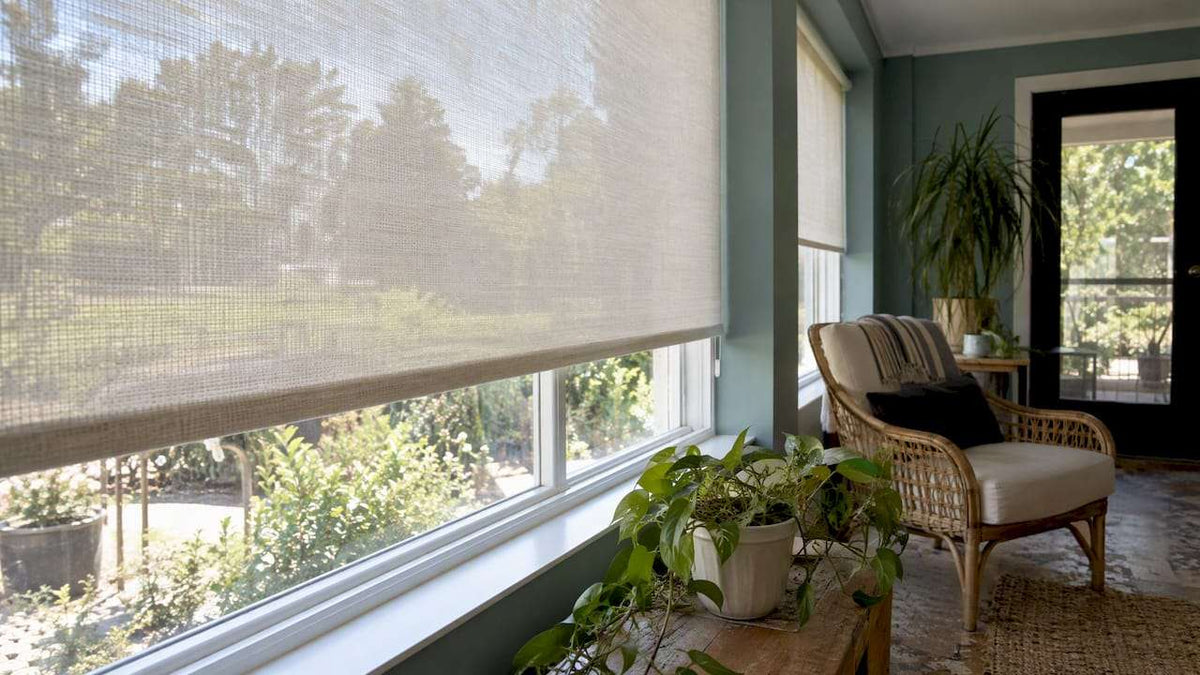
Sheer fabrics keep a room feeling large and sunny. They soften the view instead of hiding it, and they take the edge off glare. What they do not do is give you privacy. If your neighbors can see in without the shade, they can mostly see in with it too. Our post on light filtering sheer shades goes deeper on how to get the glow without feeling on display.
Light filtering: the all-rounder
Light-filtering fabrics scatter sunlight so it spreads across the room instead of landing in harsh beams. The effect is a warm, even brightness that flatters wood floors, skin tones and paint colors. It is the go-to ambiance for living rooms, home offices and kitchens. If you want to see how this plays out on roller shades, take a look at our guide to light filtering roller shades.
Room darkening and blackout: calm and private
Room-darkening fabrics cut most of the light and give a dim, restful feel. Blackout fabrics go all the way, usually with a coating or a dense lining. The mood shifts from “bright and social” to “quiet and tucked in.” That is wonderful for bedrooms, nurseries and media rooms, and a little heavy for a room where you want to feel daylight.
What changes the feel: weave, thickness, color and lining
Two shades labeled “light filtering” can feel totally different. Four things explain why.
Weave and openness. A tighter weave means less open space for light and view to pass through. Industry guidance points to a measure called visible light transmittance (Tvis), which reflects light passing through the fabric openings plus light diffused or reflected by the shade itself. Color, thickness, construction, weave openness and coatings all affect it. If you can only compare one number, Tvis tells you more about brightness than openness alone.
Thickness. Thicker fabric generally lowers Tvis because more light is absorbed as it travels through the weave. Heavier fabrics feel richer and more substantial, and they dim a room more gently than a coating does.
Color. Color is the sneaky one. Architectural guidance explains that darker fabrics can improve your view outward because your eye focuses on the brighter exterior, while lighter fabrics generally give stronger daytime privacy and reflect more solar heat. In practice:
- White and cream: bright, soft, glowing. Great for a light, airy mood and for daytime privacy.
- Gray and charcoal: a cleaner view out, less glare, a more modern and moody look.
- Warm tones (sand, terracotta): a cozy, golden cast on the light that enters.
- Cool tones (blue-gray, sage): a calmer, cooler feel.
The same guidance notes that combining lower openness with a darker color can cut Tvis more than lowering openness alone, which is a handy trick if glare is your enemy but you still want a view.
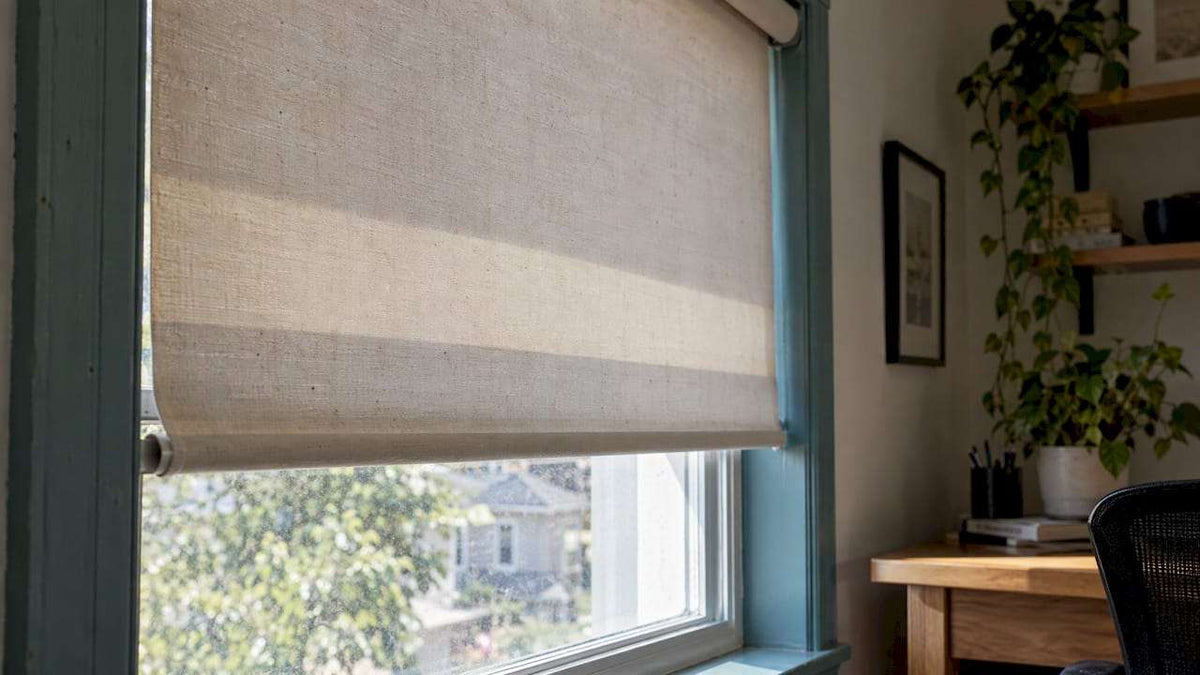
Lining and backing. Add a lining or a dense backing and you move a fabric one or two steps along the opacity spectrum. This is how many blackout shades are built: a decorative face fabric on the room side with an opaque layer behind it.
Privacy: the day shift and the night shift
Opacity and privacy are tied together, but the relationship flips after sunset.
During the day, it is brighter outside than inside, so people looking in see mostly reflection and glare, while you can see out. That is why a light-filtering or semi-sheer shade can feel private at noon. One fabric manufacturer explains that its fabrics can give daytime privacy while keeping outward visibility. The same source notes that at night, interior lighting can reverse the view, and it recommends blackout fabric as a fully opaque answer when nighttime privacy matters.
That plays out in real rooms every evening. Turn on a lamp behind a light-filtering shade and your silhouette can be visible from the sidewalk. If you have a street-facing living room, a bathroom, or a ground-floor bedroom, plan for the night shift, not just the day one.

The easy fix is layering. A dual shade, such as a zebra shade or a double roller, gives you a sheer or filtering layer for day and a more opaque layer for evening. Our double roller shades buying guide explains the setup, and you can browse our zebra shades if you like the alternating-band look.
Glare control without losing the daylight
Glare is what makes a bright room uncomfortable: the screen you can’t read, the sun stripe across the sofa. Opacity is your main tool here, but you don’t have to go dark to fix it.
A few practical rules:
- Check Tvis if the manufacturer publishes it, not just openness. Industry guidance recommends this when you want glare control and an outside view together.
- Pick a mid-to-dark color in a low-openness weave for screen-heavy rooms like home offices.
- For east- and west-facing windows, where low sun hits hardest, consider a light-filtering shade you can lower partway.
- Motorization helps. A shade that adjusts on a schedule or from your phone means you actually use it. Our motorized roller shades with smart control are a good example.
Room-by-room opacity picks
There is no single right answer, but there are sensible starting points. Think about what you do in the room and when.
Living room
Go light filtering. You get a soft, even glow, less glare on the TV, and enough daytime privacy. If you also host movie nights, a dual shade lets you drop a darker layer for the evening. Our custom roller shades guide covers how to balance light and privacy here.
Bedroom
Blackout or room darkening is the usual pick, and there is a health reason beyond mood. In a small laboratory study of 20 healthy adults, one night of moderate light (100 lux) during sleep raised nighttime heart rate and next-morning insulin resistance compared with sleeping in a dim room. It was a small, one-night study, so treat it as a reason to take bedroom darkness seriously, not as a medical promise. If you have a sleep concern, talk with your doctor.
If you like waking up gradually with daylight, choose room darkening with a motorized schedule, or pair a blackout shade with a light-filtering one.
Nursery and kids’ rooms
Blackout helps with naps and early summer mornings. Choose cordless operation for safety, since cords are a known hazard around young children.
Kitchen and dining room
Light filtering or semi-sheer in a moisture-friendly material keeps the room cheerful and bright for cooking and meals. Faux wood or a wipeable fabric is an easy win. Browse our faux wood blinds for a clean, durable option.
Bathroom
Privacy comes first, so lean toward a more opaque fabric or a privacy-rated material, and remember the night shift: a lit bathroom is a lantern at night.
Home office
Light filtering in a low-openness weave, ideally mid-tone, cuts screen glare and keeps you in natural light. Add a blackout layer only if you do video calls in a bright room and need to control backlight.
Media room
Blackout, full stop. Side channels or a tight mounting help block the glow around the edges.
Is opaque fabric good or bad?
Neither. It is a trade-off, and it’s worth being honest about both sides.
What opaque fabric does well
- Gives total privacy, day and night
- Blocks glare and heat from strong sun, which can help comfort
- Creates a dark, quiet, cozy mood for sleep and screens
- Hides what is behind the fabric, including a busy window view
What you give up
- Natural daylight, which can make a room feel smaller and flatter when the shade is down
- Outward view
- A sense of connection to the weather and time of day
The smart move is to match the opacity to the job of the room, then add flexibility where you can: a dual shade, a motorized schedule, or layered treatments. And if you are choosing fabrics for the whole house, avoid sheer-only options in bedrooms and bathrooms, and avoid blackout-only options in rooms where you spend sunny afternoons.
Our perspective
At Value Blinds, we hear the same thing again and again: people choose a shade by color, then discover the opacity is what they really live with every day. 😊 We think opacity deserves to be the first decision, not the last.

Our advice is to walk through your home at three times of day (morning, midday and evening with the lamps on) and note where you want light, where you want privacy and where you want both. Then pick fabrics room by room. We also encourage ordering free swatches and holding them up at the actual window, because fabric looks different in a catalog than against your own walls and your own sun.
For most homes, our favorite combination is light filtering where you live and blackout where you sleep, with dual or motorized shades for rooms that have to do both. It is an easy way to get the ambiance you want without giving up daylight or privacy.
— Sunny
Find the right opacity at Value Blinds
Ready to try it? We make custom shades and blinds in a full range of opacities, from airy sheers to blackout, including cellular shades that soften light and add insulation, and roller and zebra styles with optional motorization and smart control. Order free swatches, use our measuring guides, or add professional measuring and installation. Start at Value Blinds and see what each fabric looks like at your own window.
FAQ
What is the difference between opacity and transparency?
Opacity is how much a fabric blocks light and hides what is behind it. Transparency is the opposite: how easily you can see through it. A fabric can let in plenty of light yet still hide the view, which is why light blocking and sheerness are measured separately.
Is fabric translucent or opaque?
It depends on the fabric. Sheer and light-filtering fabrics are translucent: they pass some light and blur the view. Blackout fabrics are opaque, with a coating or dense lining that stops nearly all light.
Does a darker shade fabric block more light?
Usually it absorbs more light, but color is only one factor. Weave openness, thickness and coatings all play a part. A dark fabric with a loose weave can still let in more light than a pale one with a tight weave, so check the openness and Tvis if they are listed.
Will a light-filtering shade give me privacy at night?
Not reliably. In the evening, lamps inside make it easier for people outside to see shapes through the fabric. For rooms where nighttime privacy matters, choose room-darkening or blackout fabric, or layer a second shade behind the first.
Which opacity is best for a bedroom?
Most people choose blackout or room darkening, since darkness supports better sleep and keeps early sunrises out. If you like gentle morning light, a motorized shade on a schedule or a dual-layer setup gives you both options.
Sources
- Guidance Note L-01 Light Control: Tvis and Openness
- Why Measuring Light Blocking & Sheerness Matters
- Whole Building Approach to Interior Roller Shade Fabric Selections
- Window Treatments, One-Way Window Shades and Privacy Roller Shades
- Light exposure during sleep impairs cardiometabolic function