Window Treatment Replacement Cycles Explained
Most window treatments last somewhere between 4 and 10 years, depending on the type, the quality, and how hard the window works them. Interior blinds sit at the short end, roller shades in the middle, and cellular shades at the long end. Sun, humidity and daily use can move any of them a few years in either direction. 🌞
Below, we break down the typical cycles, what speeds them up, how to tell “clean it” from “fix it” from “replace it,” and how to think about maintenance costs over the life of a shade.
TL;DR
- Typical service lives: about 4–8 years for interior blinds, 6–10 years for roller shades, and 8–10 years for cellular shades, per the Attachments Energy Rating Council.
- Sun exposure, humidity, how often you raise and lower the treatment, and hardware quality matter as much as the product type.
- Cleaning and small fixes (a cord, a bracket, a battery) usually beat replacing. Fading, warping, brittle fabric and failing mechanisms usually don’t.
- Judge cost per year of use, not sticker price. A longer-lived shade can cost less over time than a cheap one you replace twice.
Table of Contents
- What a “replacement cycle” really means
- Typical lifespans by treatment type
- What shortens (or stretches) the life of a window treatment
- Signs it’s time to replace (not just clean)
- Cleaning and maintenance: how often?
- Maintenance costs explained
- Repair or replace? A simple decision path
- Making your next set last longer
- Our take: plan for years, not seasons
- Ready to replace? Start here
- FAQ
- Sources
What a “replacement cycle” really means
A replacement cycle is the stretch of time between buying a window treatment and the point where fixing it no longer makes sense. It isn’t a date when things stop working. Most blinds and shades fade out gradually: the color shifts, the fabric loses its crispness, the lift gets sticky. You live with it for a while, then one day you notice the room looks tired. 😅
That’s why published lifetimes are ranges, not promises. They describe what’s typical for a product category in ordinary use. Your south-facing sunroom and your north-facing guest room can age the same shade very differently.
Typical lifespans by treatment type
Here’s a practical summary built from the published figures, plus what we see at the window.
| Treatment | Typical service life | What usually ends it |
|---|---|---|
| Interior blinds (general) | 4–8 years | Bent or cracked slats, broken cords or tilt mechanisms, yellowing |
| Roller shades | 6–10 years | Sun-faded or curling fabric, worn spring or clutch |
| Cellular shades | 8–10 years | Collapsed or discolored cells, damaged lift cords |
The 4–8, 6–10 and 8–10 year ranges come from the AERC product information page. The U.S. Department of Energy’s Better Buildings Residential Network also lists an expected lifetime of 8–10 years for cellular shades. Both are broad category figures, not a guarantee for any one product.
Notice what the ranges tell you. Even within one category, the gap between low and high is two to four years. That gap is where your window, your habits and your product choice live.

Blinds
Wood, faux wood, aluminum and vertical blinds all fall under the broad “blinds” range. Real wood can warp and yellow under years of strong sun or humidity. Aluminum slats bend, and once they’re creased they never look right again. Vertical blinds tend to fail at the track and carrier, not the vanes. If you’re shopping, our blinds collection and vertical blinds cover the main materials, and bamboo is an eco-minded option in our natural bamboo blinds.
Roller and solar shades
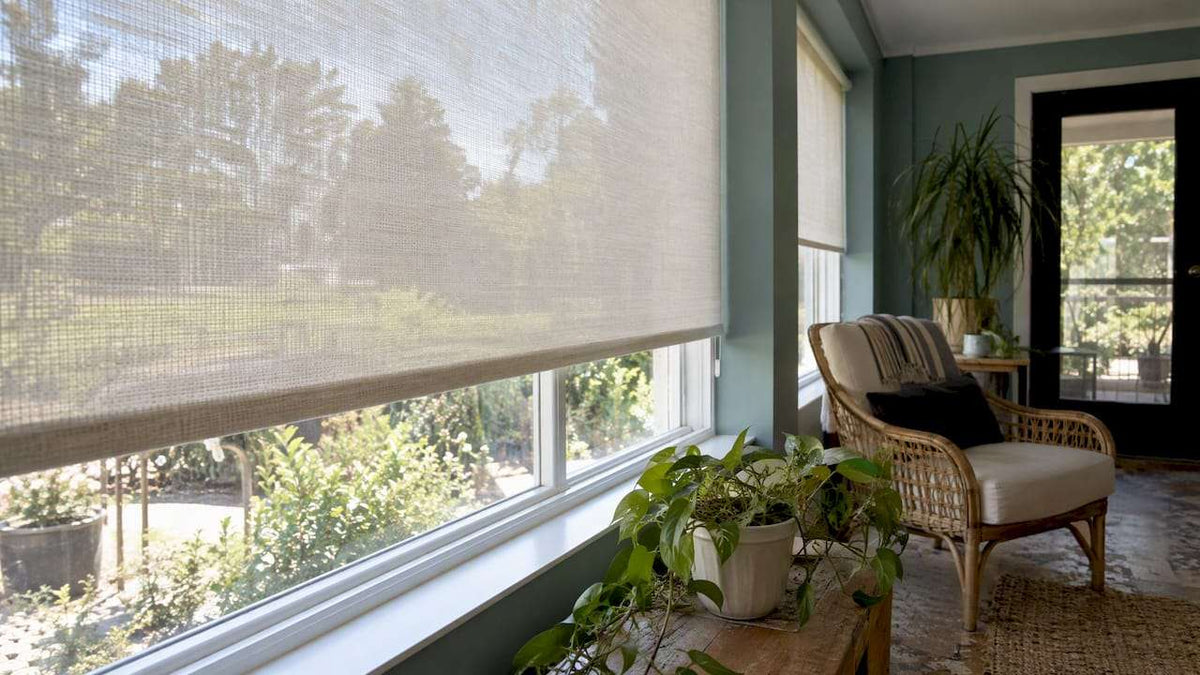
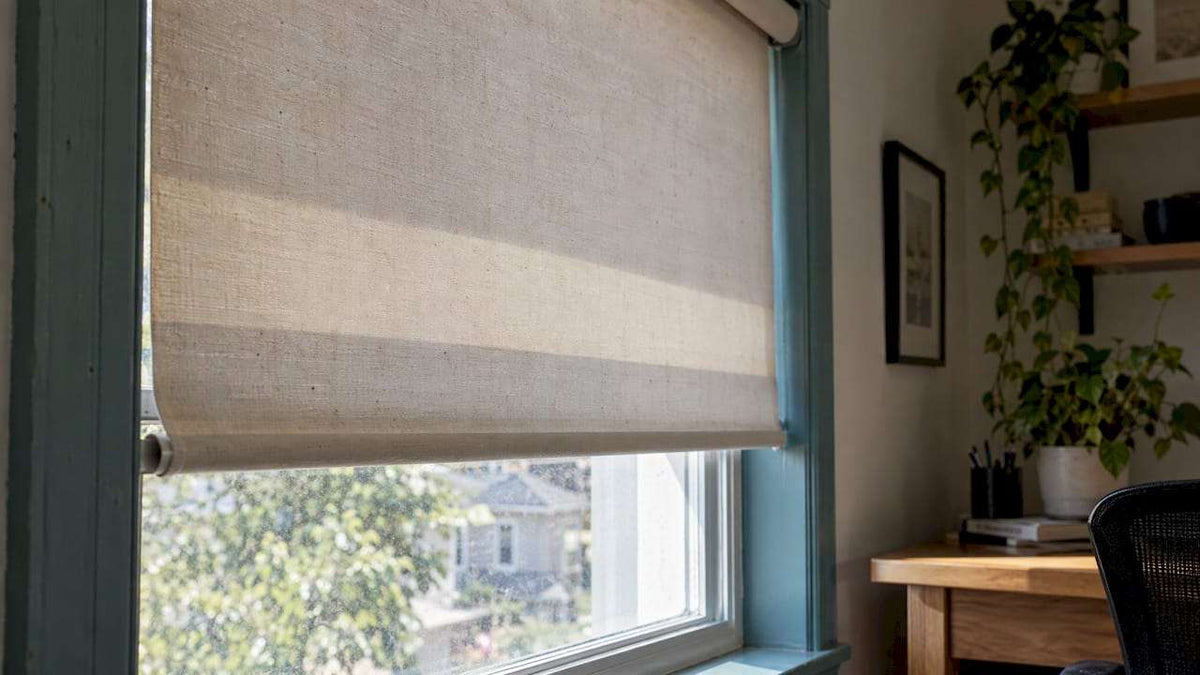
Rollers are simple: fabric, a tube, a clutch or motor. Simple means fewer things to break, but the fabric takes the full brunt of the light. Edge curling and sun-bleached streaks are the classic end-of-life signs.
Cellular shades
The honeycomb structure traps air, which is why the Department of Energy page highlights them for efficiency. They also tend to sit at the long end of the lifespan chart because there’s little exposed to wear. The weak points are cell collapse from heat and the lift cords.
Curtains, drapes and shutters
Fabric panels and shutters weren’t covered by the sources we relied on for numbers, so we won’t invent a figure. As a rule of thumb, fabric ages with light and washing, while shutters age with hinges and finish. Treat their condition, not a calendar, as your guide.
What shortens (or stretches) the life of a window treatment
Category sets the baseline. Everything below moves you up or down from it.
Sunlight
Direct sun is the biggest aging factor. It fades fabric dyes, and over years it can make plastics and some coatings brittle. Harsh afternoon light is also the reason your floors and furniture fade, so it’s worth thinking about the whole room. If you’re curious how that plays out underfoot, this piece on saving sun-faded hardwood floors shows the same exposure problem from the floor’s side.
Humidity and heat
Kitchens, bathrooms and laundry rooms are tough on natural wood and untreated materials. Moisture can warp slats, and heat cycles can stress cell structures. In wet rooms, moisture-friendly materials are worth it from day one. Our waterproof window covering guides walk through the options.
How often you use it
A shade you raise and lower several times a day does far more cycles than one you open on weekends. More movement means more wear on cords, clutches, springs and motors. Building-science guidance from NIST notes that systems with more moving parts generally need more maintenance, and that exposure to sun, wind and rain drives durability. That document is about window systems in general, but the logic carries over to anything with a cord or a mechanism.
Hardware quality
Fabrics get the attention, but brackets, headrails, cords and clutches decide whether a shade runs smoothly in year six. When two products look alike, compare the parts you can’t see.
Installation and care
A poorly mounted shade strains its own hardware. Dust that’s never removed gums up mechanisms. Harsh cleaners can damage finishes and fabrics. None of this is dramatic, but over years it can quietly cost you one or two seasons of life. Our installation guide covers mounting basics, and we offer professional measuring and installation if you’d rather hand it off.
Signs it’s time to replace (not just clean)
Here’s the quick test we use. Ask: Is the problem on the surface, or in the structure?
Clean it if:
- It looks dull or dusty, but the color is even when you check the back or the edge.
- Slats or fabric are gritty but not bent or cracked.
- Operation is stiff, and the cause looks like dust or debris.
Repair it if:
- A single cord, a bracket, a clip, or a battery is the problem and the rest looks good.
- One slat or a short stretch of vane is damaged on an otherwise healthy blind.
- A motor remote or hub has failed but the shade itself moves freely.
Replace it if:
- Color has faded unevenly (compare the part hidden in the headrail or bracket to the exposed fabric).
- Wood slats are warped or yellowed, or plastic has turned brittle and cracks.
- Cells in cellular shades have collapsed and won’t recover.
- The mechanism keeps failing, or repairs now happen yearly.
- The shade no longer does the job: it lets in glare, doesn’t give you privacy, or leaks heat you’re paying for.
That last one is the sleeper reason. A treatment can be intact and still be wrong for your home now. If your needs changed (a new baby, a work-from-home setup, a hot summer), replacement can be an upgrade, not just a swap.
Cleaning and maintenance: how often?
Exact schedules vary by product and manufacturer, so check the care sheet for your shade first. As a general rhythm that works for most homes:
- Every month or two: light dusting with a soft duster or a vacuum brush attachment on low suction.
- Twice a year: a closer pass. Wipe slats or spot-clean fabric as the care instructions allow, check cords, and make sure brackets are snug.
- Once a year: look at the shade in the light. Compare exposed fabric with protected edges, and test the full range of movement.
Avoid soaking, harsh chemicals and abrasive scrubbing unless the care sheet says it’s fine. For motorized products, battery and charging habits matter too, and we cover that in our motorized shade maintenance guide.
Maintenance costs explained
Here’s the honest picture: for most blinds and shades, ongoing upkeep is cheap in dollars and a little more demanding in time. You’re mostly paying for supplies you already own (a duster, a vacuum, a soft cloth). The real cost shows up in three places.
- Parts and repairs. Cords, clips, remotes and batteries are the usual suspects. A repair makes sense when it’s a small part on a healthy shade.
- Professional help. Pro cleaning, re-stringing or on-site adjustments cost more, and prices vary by region and provider, so get a quote before deciding.
- Energy. Treatments that no longer seal or insulate well can leave you paying more to heat and cool. The Department of Energy page above covers why window treatments matter for efficiency.
We don’t publish fixed maintenance prices because they depend heavily on the product and your location. What we can offer is a way to think about it.
Cost per year beats sticker price
Divide what you pay by the years you actually get. A low-cost blind that lasts four years and a better shade that lasts ten aren’t comparable by price tag alone. One simple example, with made-up round numbers to show the method (not real prices): a $100 treatment lasting 4 years costs $25 a year, while a $180 treatment lasting 9 years costs $20 a year. The cheaper one costs more in the end, and you’ve also done two installs. Add what you’d pay for repairs, and the gap tends to widen in favor of well-built products.

Efficient Window Coverings makes a related point: length of service affects life-cycle cost, and a warranty that states a number of years is a more useful clue than a vague “lifetime” promise. When you compare, read what the warranty actually covers (fabric, mechanism, motor) and for how long.
Repair or replace? A simple decision path
- Find the failing part. Is it a cord, a motor, the fabric, or the whole structure?
- Check the age against the typical range for that product type. A 3-year-old shade with a snapped cord deserves a repair. A 10-year-old cellular shade with faded, sagging cells is at the end of the road.
- Count recent repairs. One fix is normal. Repeated fixes mean the product is wearing out.
- Compare the repair to the replacement over time. If a fix buys you several more years, do it. If it buys you one, put the money toward a new shade.
- Ask whether the shade still suits the room. If not, replace it with something better matched.
A useful habit for multi-unit owners: track install dates and conditions by room. Our multifamily shade guide looks at how wear adds up when you manage many windows.
Making your next set last longer
If you’re replacing anyway, you can build in longevity.
- Match the material to the room. Moisture-friendly materials in wet rooms, light-filtering or solar fabrics where the sun is fierce.
- Choose hardware as carefully as fabric. Smooth clutches, sturdy headrails, solid brackets.
- Think about use. For windows you adjust constantly, motorization can reduce cord handling and wear on manual parts, though motors bring their own care needs.
- Measure accurately. A shade that fits well hangs and operates better. Our design studio and measuring tools help.
- Read about durability first. Our guide to durable window treatments goes deeper on materials. If you’re torn between two popular shades, see cellular vs. roller shades.
Outdoors, the cycle is its own animal, since wind, rain and sun all hit harder. If you’re covering a deck or patio, check our guide to ordering wind-rated outdoor shades before you buy.
Our take: plan for years, not seasons
We look at window treatments the way you’d look at any tool you use daily: what matters is how it performs year after year. Our catalog spans roller, zebra, cellular, Roman, solar and natural woven shades, plus wood, faux wood, aluminum and vertical blinds, and exterior options, so there’s a sensible match for most rooms. Our experience is that the happiest customers pick for the room (sun, steam, daily use) first and style second, and they take care of their shades with a few minutes of dusting. We also lean on free swatches, so you can see how a fabric looks in your own light before you commit.
The shade that lasts longest is rarely the one that costs the least upfront. It’s the one that suits the window it’s covering. ☀️
— Sunny
Ready to replace? Start here
When it’s time, browse the full range at Value Blinds, order free swatches, and use our design studio to test looks. Not comfortable measuring? Our Pro Measure & Install service takes care of it.
FAQ
How often should I replace my blinds or shades?
There’s no single schedule, but published ranges give a good guide: roughly 4–8 years for interior blinds, 6–10 for roller shades and 8–10 for cellular shades. Replace sooner if you see uneven fading, warping, brittle material or repeated mechanical failures. Replace later if they still look and work well.
Is it cheaper to repair or replace window treatments?
Repair is usually cheaper when one small part fails on an otherwise healthy, younger shade. Replacement tends to win when the fabric or slats are damaged, or when repairs keep recurring. Compare the cost of the fix against the years it will realistically buy you.
Do motorized shades have different replacement cycles?
The shade itself ages like any other, but the motor, battery and controls add components that can wear or need replacing separately. A good routine of charging, cleaning and checking the remote helps. See our motorized maintenance guide for specifics.
What shortens the life of window treatments the most?
Direct sun is the biggest factor, followed by humidity in kitchens and bathrooms, heavy daily use, and poor hardware or installation. Matching the product to the room is the simplest way to avoid early replacement.
Sources
- Window Treatments: The Undervalued, Highly Efficient Home Improvement (U.S. Department of Energy)
- Available Products (AERC Energy Rating)
- Overview: Deciding What to Do With Existing Windows (Efficient Window Coverings)
- Design for Better Window Performance (NIST)