

How to choose fabric blinds for style and function
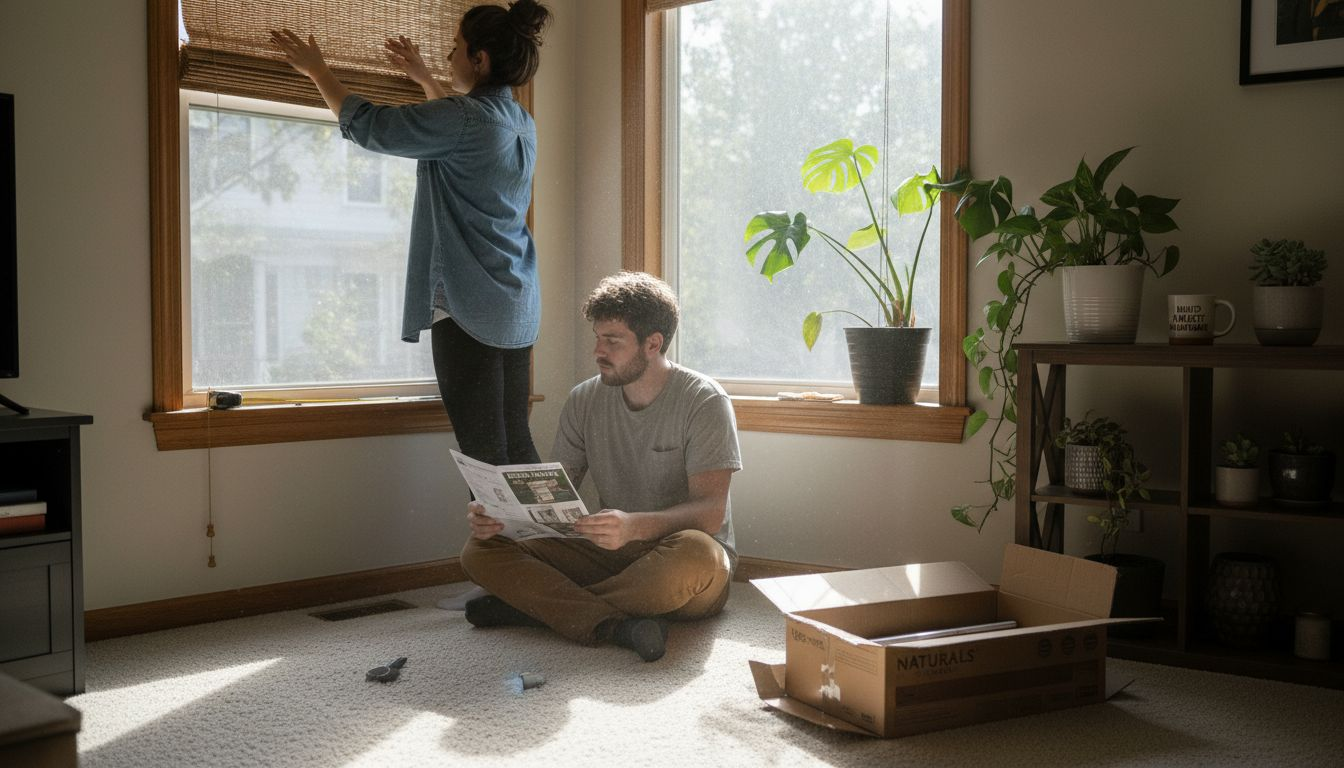
Selecting fabric blinds can feel overwhelming when faced with countless styles, fabrics, and features. The right choice balances aesthetics with practical needs like light control, privacy, and durability. This guide clarifies the types of fabric blinds available, key factors to consider for each room, customization options that enhance performance, and how to measure and install them safely so you can confidently transform your windows.
Table of Contents
- Introduction To Fabric Blinds
- Types Of Fabric Blinds And Styles
- Factors To Consider When Choosing Fabric Blinds
- Customization Options And Enhancements
- How To Measure And Install Fabric Blinds Safely
- Common Mistakes And Troubleshooting
- Expected Outcomes And Maintenance Tips
- Enhance Your Home With Custom Fabric Blinds From Value Blinds Direct
- FAQ
Key takeaways
| Point | Details |
|---|---|
| Different fabric blind styles affect aesthetics and function | Roman, roller, Swedish, and Austrian blinds each offer unique visual appeal and operational characteristics for varied design preferences. |
| Light control, privacy, and durability vary by fabric and room | Choose fabrics based on room-specific needs such as blackout for bedrooms, moisture resistance for bathrooms, and energy efficiency for living spaces. |
| Customization options include linings and motorization | Thermal linings, cordless designs, and motorized controls enhance safety, convenience, and energy savings while adding decorative accents. |
| Accurate measuring and safe installation are essential | Precise measurements prevent fit issues, and proper cord management with child safety devices ensures compliant, hazard-free operation. |
| Proper maintenance extends lifespan and performance | Regular cleaning and care preserve fabric appearance and functionality, maximizing your investment over time. |
Introduction to fabric blinds
Fabric blinds are soft window coverings made from textiles that fold, roll, or drape to control light and privacy. They come in styles like roman blinds, which feature flat fabric panels folded into soft pleats, and roller blinds, which coil around a horizontal tube for a sleek look. Each style suits different design preferences and functional requirements.
Roman blinds stand out as the most popular choice because they showcase fabric beautifully and add instant elegance to any room. Their stacked pleats create depth and texture that complement both traditional and modern interiors. Roller blinds offer minimalist appeal with clean lines ideal for contemporary spaces.
Compared to hard treatments like wood or aluminum, fabric blinds bring softness and warmth to windows. They absorb sound, reduce glare, and offer versatility in patterns and colors that match any decor. Many fabrics also provide energy savings by insulating windows against heat loss in winter and heat gain in summer.
The aesthetic impact of fabric blinds extends beyond function. Textured weaves add visual interest, while bold prints become focal points. Sheer fabrics diffuse natural light for a gentle glow, and heavier materials create dramatic contrast. When you choose blinds that align with your design vision, they elevate the entire room.
Key benefits of fabric blinds:
- Softness and texture that complement furniture and decor
- Wide range of fabrics, colors, and patterns for personalized style
- Energy efficiency through thermal insulation properties
- Light filtering options from sheer to blackout
- Sound absorption for quieter living spaces
For a deeper dive into styles and how they impact energy use, explore fabric shades styles and efficiency. Understanding these foundational elements helps you make informed decisions as you refine your selection criteria.
Types of fabric blinds and styles
Fabric blinds come in several distinct styles, each with unique design characteristics that influence how they look and perform. Roman blinds remain the most popular because they feature flat fabric panels folded into soft pleats that add elegance and showcase fabric patterns beautifully. When raised, they stack neatly at the top in horizontal folds.
Roller blinds offer a sleek, modern alternative. They roll up around a tube at the top of the window, creating a clean, unobtrusive appearance when open. This style works well in minimalist spaces where simplicity matters. The smooth surface displays solid colors and subtle textures effectively.

Swedish blinds combine the softness of fabric with a rolling mechanism similar to roller blinds but with visible pleats when lowered. This creates gentle waves that add dimension. Austrian blinds feature gathered fabric that forms luxurious scalloped folds along the bottom, creating a more ornate, formal look suited to traditional decor.
Visual differences between styles are significant. Roman blinds provide structured elegance with defined pleats, while roller blinds deliver streamlined minimalism. Swedish blinds offer a middle ground with soft waves, and Austrian blinds bring opulent drama with cascading ruffles.
Functional differences also matter. Roman blinds frame windows with visible fabric even when raised, making them a design feature. Roller blinds disappear almost completely when open, maximizing light and views. Swedish blinds filter light through their textured surface, and Austrian blinds partially obscure windows even when raised due to their gathered design.
| Style | Visual Character | Typical Use | Aesthetic Impact |
|---|---|---|---|
| Roman | Structured pleats, visible fabric | Living rooms, bedrooms | Classic elegance, showcases patterns |
| Roller | Smooth, flat surface | Kitchens, offices, modern spaces | Clean minimalism, maximizes views |
| Swedish | Soft waves, textured | Bedrooms, casual spaces | Relaxed sophistication, gentle light diffusion |
| Austrian | Scalloped folds, gathered | Formal dining, traditional rooms | Ornate luxury, dramatic focal point |
Style selection influences how much window framing you want. Roman blinds create a fabric border that adds color and texture to the wall. Roller blinds recede to let architecture shine. Consider how each style integrates with your existing furniture and design theme.
Light filtering varies by style mechanics. Roller blinds can achieve complete blackout with the right fabric. Roman blinds allow small gaps between folds where light may peek through. Austrian blinds diffuse light through multiple layers of gathered fabric.
For detailed guidance on how different fabric shades balance style and energy performance, visit fabric shades styles and efficiency. Understanding these distinctions helps you select a style that meets both your aesthetic preferences and functional requirements.
Factors to consider when choosing fabric blinds
Choosing the right fabric blind requires evaluating several functional factors beyond style. Light control needs vary by room. Bedrooms benefit from blackout fabrics that block 95% or more of incoming light for better sleep. Living rooms often work well with light filtering fabrics that soften sunlight while maintaining daytime privacy. Kitchens and home offices may need adjustable options that transition between full light and privacy.
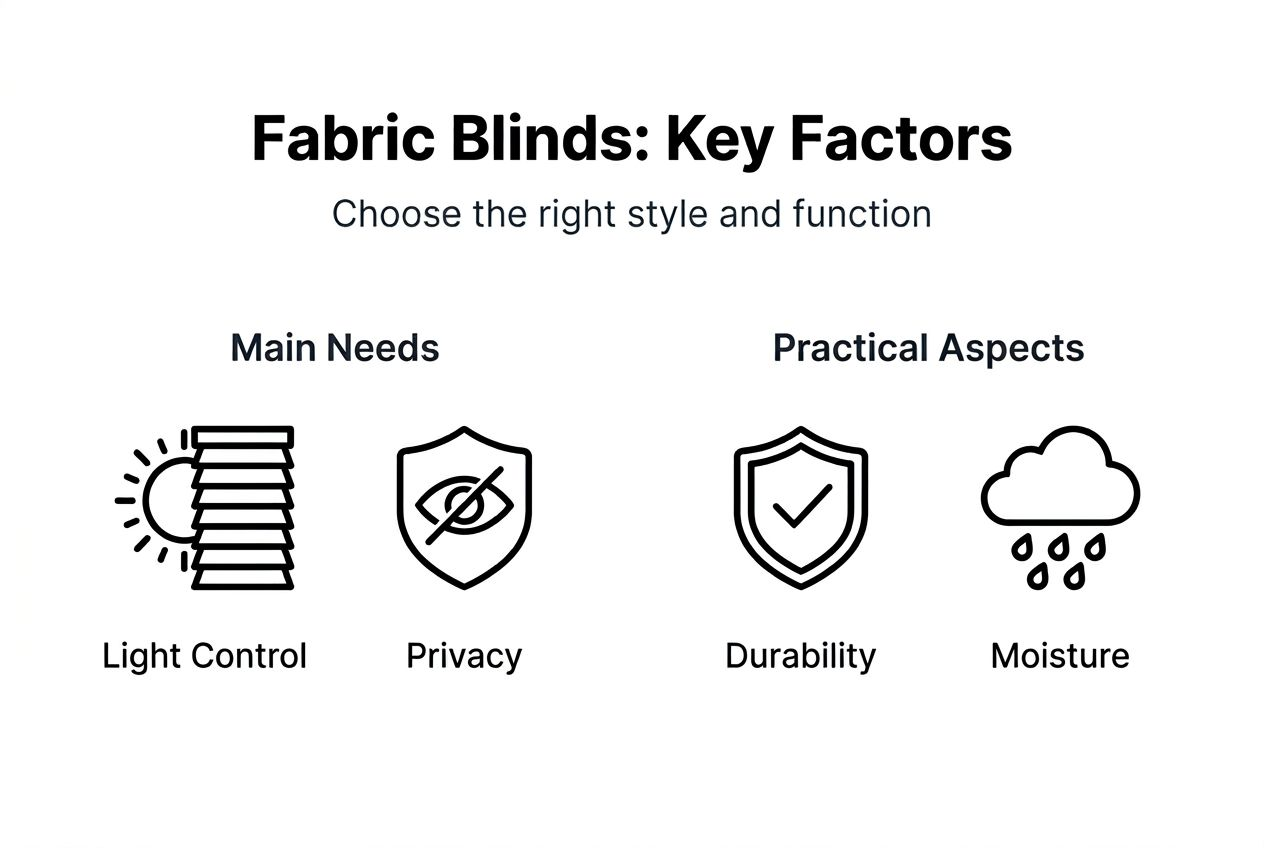
Privacy considerations tie directly to fabric opacity. Sheer fabrics offer daytime privacy by obscuring views from outside while allowing light in, but they become transparent at night when interior lights are on. Semi-opaque fabrics provide better privacy throughout the day. For street-facing windows or ground-floor rooms, choose denser weaves or add privacy linings.
Durability and moisture resistance matter significantly in high-use or humid areas. Moisture-resistant materials like certain synthetic fabrics withstand humidity in kitchens and bathrooms without developing mildew or warping. Polyester blends resist fading from sun exposure better than natural fibers. For families with children or pets, choose tightly woven, stain-resistant fabrics that handle frequent cleaning.
Energy efficiency impacts comfort and utility costs. Energy-efficient fabric blinds with insulation properties can cut heating and cooling costs by up to 25% by creating an air pocket between the window and room. Cellular or honeycomb structures trap air effectively. Reflective or thermal linings boost performance further by blocking heat transfer.
Room-specific fabric selection guidelines:
- Bedrooms: Blackout fabrics for sleep quality, thermal linings for temperature control
- Bathrooms: Moisture-resistant synthetics, easy-clean surfaces
- Kitchens: Stain-resistant, washable fabrics, avoid long drapes near cooking areas
- Living rooms: Light filtering for ambiance, decorative patterns for style
- Home offices: Glare-reducing fabrics to protect screens, adjustable light control
Pro Tip: For multipurpose rooms like guest bedrooms that double as home offices, choose dual-function fabrics with adjustable opacity or layer blinds with sheers for flexible light control throughout the day.
Understanding how fabric choices affect energy use helps optimize comfort. Explore energy efficient window coverings tips for additional strategies. The difference between light filtering and blackout fabrics extends beyond darkness to include temperature regulation and privacy, detailed in light filtering vs blackout blinds.
Balancing these factors ensures your fabric blinds perform well in their intended environment. Prioritize the top two or three needs for each room, then select fabrics that excel in those areas. This targeted approach prevents decision paralysis while meeting practical requirements.
Customization options and enhancements
Customization features elevate fabric blinds from functional to exceptional. Thermal and blackout linings improve insulation and energy efficiency by adding layers that trap air and block heat transfer. Thermal linings work year-round, keeping rooms warmer in winter and cooler in summer. Blackout linings eliminate light leakage for better sleep and media viewing.
Cord safety upgrades are critical, especially in homes with children or pets. Continuous cord loops and quick-release child safety devices reduce risk of accidents and comply with safety regulations. Cordless designs eliminate dangling cords entirely by using spring-loaded or push mechanisms. Routeless systems hide cords inside the blind structure for a cleaner appearance and safer operation.
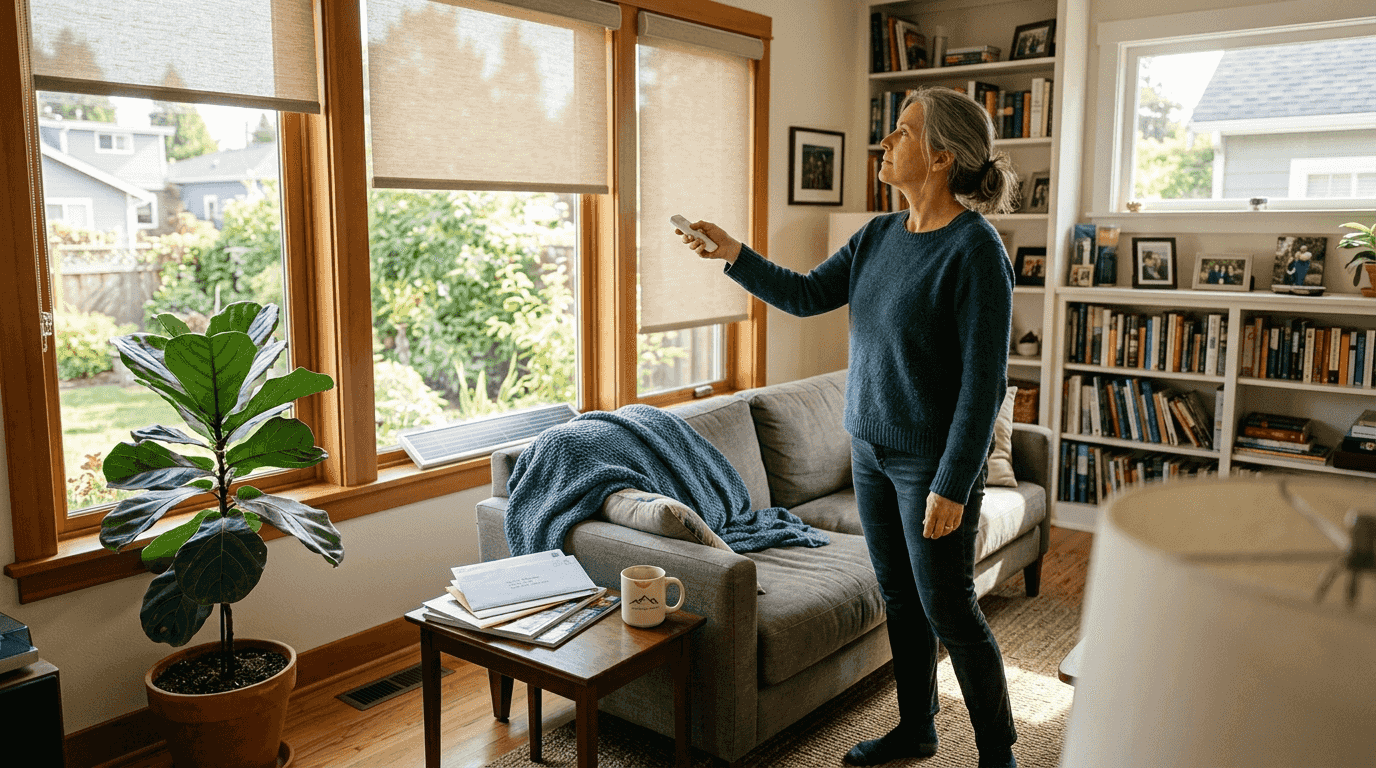
Motorized controls offer convenience and accessibility. Battery-powered or hardwired motors let you raise and lower blinds with remote controls, smartphone apps, or voice commands. This technology benefits large windows, high installations, and individuals with mobility limitations. Motorized blinds also integrate with smart home systems for automated schedules that optimize energy use.
For insights on how motorization improves energy savings, see motorized blinds energy savings. Remote operation provides additional benefits detailed in remote operated blinds benefits.
Decorative fabric tapes add visual interest and conceal seams. These trim pieces run along the front edges of roman blinds, creating contrasting borders that highlight the pleats. Choose tapes in complementary or contrasting colors to enhance your design scheme.
Customization options to consider:
- Thermal or blackout linings for improved performance
- Cordless or motorized mechanisms for safety and convenience
- Decorative tapes and trims for enhanced aesthetics
- Moisture-resistant treatments for humid environments
- UV-protective coatings to prevent fabric fading
Custom features increase upfront costs but deliver long-term value through improved function, safety, and durability. Prioritize upgrades based on your specific needs. A bedroom benefits most from blackout linings and cordless operation. A kitchen requires moisture resistance. A home theater maximizes blackout performance with side channels that seal light gaps.
When selecting customizations, consider future needs. Motorization adds value for aging in place. Cordless designs provide safety for growing families. Thermal linings reduce energy bills over time, offsetting initial investment. These enhancements transform fabric blinds into tailored solutions that adapt to your lifestyle.
How to measure and install fabric blinds safely
Accurate measurements prevent costly errors and ensure proper fit. Incorrectly measuring window dimensions is a frequent mistake causing poor fit and performance issues. Follow these steps for precise measurements:
- Decide on inside mount (within the window frame) or outside mount (covering the frame).
- For inside mount, measure the width at the top, middle, and bottom of the frame, recording the narrowest measurement.
- Measure the height from the top of the frame to the sill at the left, center, and right, using the longest measurement.
- For outside mount, measure the width of the area you want to cover, adding 3 to 4 inches on each side to block light gaps.
- Measure the height from above the frame to below the sill, adding 3 to 4 inches for adequate coverage.
- Record measurements in inches or millimeters as specified by your supplier, rounding down for width and up for height.
Double-check all measurements before ordering. A second person can verify numbers and help hold the tape measure level. Many manufacturers provide measurement guides specific to their products, so consult these resources.
Installation safety practices protect you and your household. Child safety devices are mandated for corded blinds by regulatory agencies. Install tension devices or cord cleats to secure cords out of reach. Position furniture away from windows so children cannot climb to access cords.
Cord management strategies:
- Use cord shorteners to eliminate excess length
- Install breakaway tassels that separate under pressure
- Anchor cord tensioners to walls or floors securely
- Choose cordless or motorized options to eliminate cord hazards entirely
For DIY installation, gather necessary tools including a drill, level, screwdriver, measuring tape, and pencil. Follow manufacturer instructions carefully. Ensure brackets are level to prevent binding or uneven operation. Test the blind several times after installation to confirm smooth function.
Pro Tip: Before drilling permanent holes, use painter’s tape to mark bracket positions and verify they are level and symmetrical. This prevents unnecessary wall damage if adjustments are needed.
Professional installation is worth considering for large windows, complex mechanisms, or if you lack experience with power tools. Professionals ensure proper fit, safe operation, and warranty compliance. Many retailers offer installation services bundled with purchases.
Common installation mistakes include mounting brackets too close together, which causes fabric bunching, or too far apart, leading to sagging. Verify bracket spacing matches manufacturer specifications. For additional measuring guidance, review the blind measuring guide.
Proper installation extends blind lifespan and ensures safe daily operation. Taking time to measure accurately and install carefully pays dividends in performance and peace of mind.
Common mistakes and troubleshooting
Avoiding common errors saves time, money, and frustration. Poor measuring causes incorrect blind size leading to installation problems. Ordering blinds that are too wide for inside mounts results in returns and delays. Too narrow, and light gaps diminish privacy and light control. Always measure multiple times and use the narrowest width for inside mounts.
Choosing non-moisture-resistant fabrics for humid rooms causes mildew, warping, and premature deterioration. Bathrooms and kitchens require synthetic or treated fabrics that withstand moisture. Avoid untreated cotton or linen in these spaces, no matter how attractive the pattern.
Ignoring child safety leads to serious hazards. Corded blinds with accessible loops pose strangulation risks. Install safety devices immediately upon hanging blinds. Better yet, select cordless or motorized options that eliminate cords entirely. Regulations mandate safety features, but enforcement relies on consumer compliance.
Improper installation causes operational issues like uneven lowering, fabric catching, or brackets pulling from walls. Using incorrect hardware for your wall type (drywall vs. plaster vs. concrete) leads to failures. Always use appropriate anchors and screws rated for the blind weight. If brackets feel loose during installation, stop and use stronger anchors.
Troubleshooting common problems:
- Blind won’t raise smoothly: Check for fabric caught in mechanisms, clean tracks, or lubricate moving parts.
- Light gaps at edges: Add side channels for roller blinds or adjust bracket positions for tighter fit.
- Fabric sagging in middle: Tighten cord tension or add center support brackets for wide blinds.
- Uneven lowering: Ensure cords are properly threaded and not tangled; check that brackets are level.
- Fabric fading: Use UV-protective treatments or linings; rotate blinds in rooms with intense sun exposure.
Measuring too late in the renovation process creates rushed decisions. Measure windows early in your planning phase to allow time for custom orders and delivery. Standard production times range from 1 to 3 weeks, with custom options taking longer.
Neglecting to test blinds immediately after installation delays identifying defects until after warranty periods expire. Operate blinds fully several times to ensure smooth function. Inspect fabric for flaws, verify safety devices work correctly, and confirm brackets are secure.
For comprehensive selection guidance that helps avoid these pitfalls, consult blind selection tips. Learning from common mistakes streamlines your fabric blind journey and ensures successful outcomes.
Expected outcomes and maintenance tips
Properly selected and installed fabric blinds deliver measurable benefits. Quality blackout blinds achieve 95% or higher light blocking, transforming bedrooms into dark sanctuaries for better sleep. Light filtering options soften harsh sunlight while maintaining privacy during the day, creating comfortable living spaces without glare.
Energy-efficient fabric blinds can reduce heating and cooling costs by up to 25% through effective insulation. This translates to noticeable savings on utility bills, especially in rooms with large windows or extreme temperature exposure. Thermal linings and cellular structures maximize these benefits by trapping air between the window and fabric.
Aesthetic improvements enhance your home’s appeal. Fabric blinds add color, texture, and pattern that tie together design elements. They soften hard surfaces, absorb sound, and create focal points. Well-chosen blinds increase perceived room value and make spaces feel more finished and intentional.
Maintenance preserves these benefits over time. Regular cleaning prevents dust buildup that dulls colors and causes allergies. Vacuum fabric blinds weekly using a soft brush attachment. For spot cleaning, use mild detergent and lukewarm water, testing in an inconspicuous area first. Avoid harsh chemicals that damage fabric fibers or fade colors.
Maintenance best practices:
- Dust blinds weekly with a microfiber cloth or vacuum with soft brush
- Spot-clean stains immediately using gentle, fabric-safe cleaners
- Professional cleaning every 1 to 2 years for deep refresh
- Rotate or flip blinds seasonally to even sun exposure and prevent uneven fading
- Inspect mechanisms quarterly for wear and lubricate moving parts as needed
Longevity indicators include consistent operation, retained fabric color, and intact seams. Quality blinds last 5 to 10 years or more with proper care. Warranties typically cover defects for 1 to 5 years, with premium products offering extended coverage. Review warranty terms to understand what maintenance is required to maintain coverage.
For detailed cleaning techniques, explore the cleaning window blinds guide. Natural cleaning methods that avoid harsh chemicals are covered in natural blinds cleaning tips.
Proper maintenance extends the lifespan of your investment while keeping blinds looking fresh. Simple routines prevent costly replacements and ensure continued performance. Treat fabric blinds as you would quality furniture, caring for them regularly to preserve their beauty and function.
Enhance your home with custom fabric blinds from Value Blinds Direct
Now that you understand how to select fabric blinds for style and function, Value Blinds Direct makes implementation effortless. Our window treatment design studio guides you through measuring, fabric selection, and customization options with interactive tools that visualize your choices in real time.
Our high-quality blinds collection features roman, roller, and specialty styles in fabrics suited to every room. Choose from energy-efficient options with thermal linings, moisture-resistant materials for bathrooms and kitchens, and blackout fabrics for bedrooms. Each blind is custom made to your exact measurements, ensuring perfect fit and optimal performance.
Safety is built into every product. Our cordless blinds options eliminate strangulation hazards while maintaining sleek aesthetics. Motorized controls add convenience and integrate with smart home systems for automated energy savings. Expert support is available throughout your selection and installation process, answering questions and providing guidance tailored to your specific needs.
Free swatches let you test fabrics in your space before committing. Generous warranties protect your investment. Flexible shipping ensures timely delivery. Whether you’re updating a single room or transforming your entire home, Value Blinds Direct provides the products, tools, and expertise to achieve professional results.
FAQ
What types of fabric blinds are best for humid rooms?
Synthetic fabrics like polyester or vinyl blends resist moisture and prevent mildew growth in bathrooms and kitchens. Look for materials specifically labeled as moisture resistant or waterproof. Avoid untreated natural fibers like cotton or linen, which absorb humidity and deteriorate quickly in wet environments.
How do I measure my windows accurately for fabric blinds?
Measure width at the top, middle, and bottom of the window frame, using the narrowest dimension for inside mounts. Measure height at the left, center, and right, recording the longest measurement. Double-check all numbers and consult the manufacturer’s specific measurement guide before ordering to ensure proper fit.
Are motorized fabric blinds worth the investment?
Motorized blinds increase convenience by eliminating manual cords, improve child safety, and allow precise light control for energy savings. They’re especially valuable for large windows, high installations, or individuals with mobility limitations. The upfront cost is offset by long-term convenience, safety benefits, and potential energy bill reductions.
How often should I clean my fabric blinds?
Dust fabric blinds weekly using a vacuum with a soft brush attachment or a microfiber cloth. Spot-clean stains immediately with mild detergent and lukewarm water. Schedule professional deep cleaning every 1 to 2 years to remove embedded dirt and refresh fabric appearance, extending the blinds’ lifespan significantly.
Can I install fabric blinds myself or should I hire a professional?
DIY installation is feasible if you have basic tool skills, follow manufacturer instructions carefully, and measure accurately. Professional installation ensures proper fit, safe operation, and warranty compliance, making it worthwhile for complex mechanisms, large windows, or if you lack experience with power tools and precise measurements.