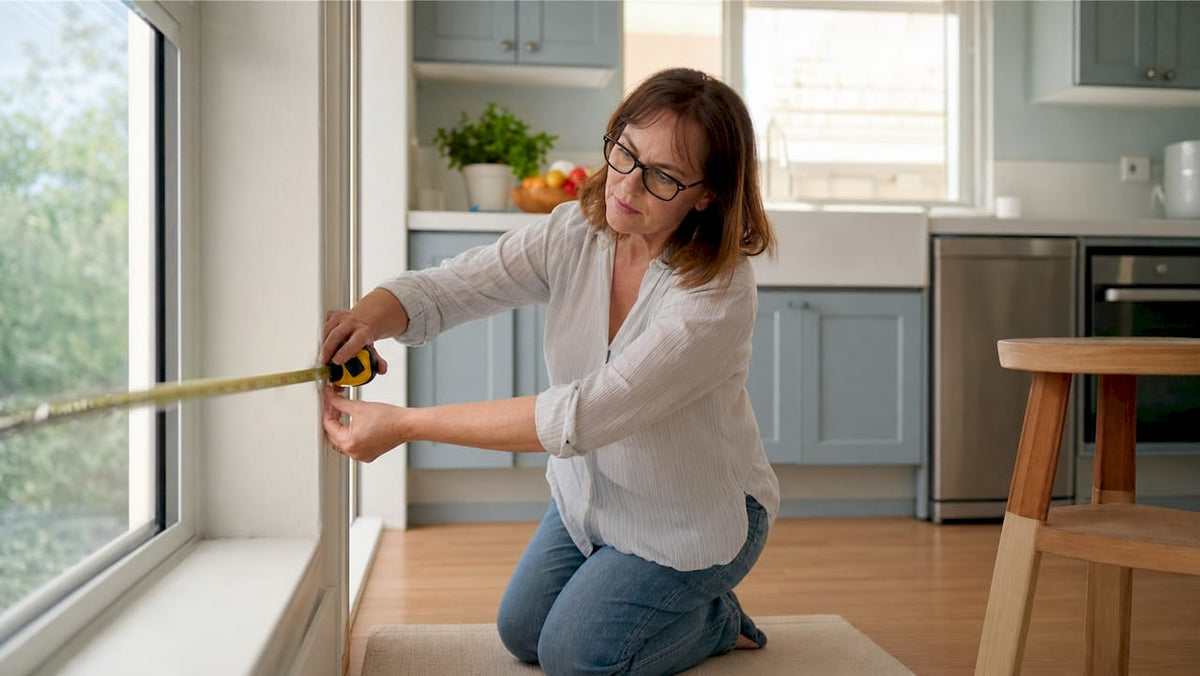

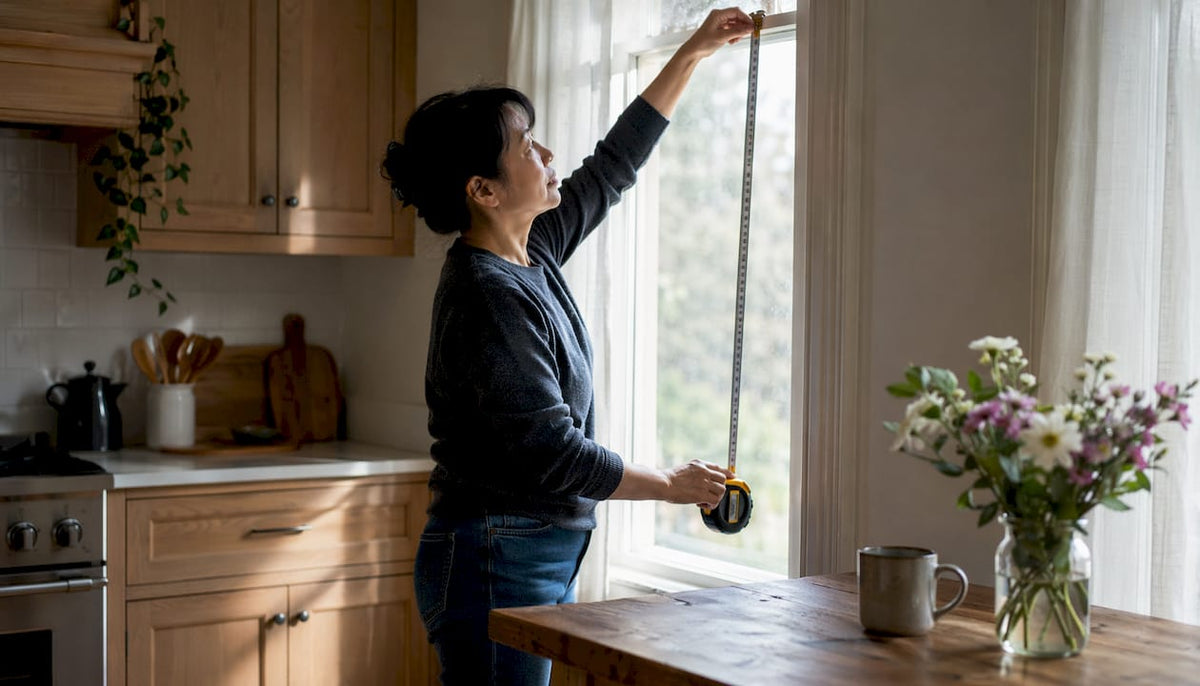
How to Measure for Roller Blinds: A DIY Guide
TL;DR:
- Accurate measurements depend on checking window depth and choosing the correct mount type before measuring. Consumers should submit raw measurements without deductions, trusting manufacturers to handle tolerances. Properly measuring and selecting features like roll direction ensures blinds fit and function properly.
Measuring for roller blinds is the process of capturing exact window dimensions and mount preferences to get a proper fit and function. Done right, you record width by height to the nearest 1/8 inch, choose your mount type based on window depth, and let the factory handle tolerance deductions. Skipping any of these steps is the most common reason blinds arrive too small or too large. Valueblindsdirect recommends this structured approach for every custom order, whether you’re fitting a single bedroom window or an entire home.
How to measure for roller blinds: inside vs. outside mount first
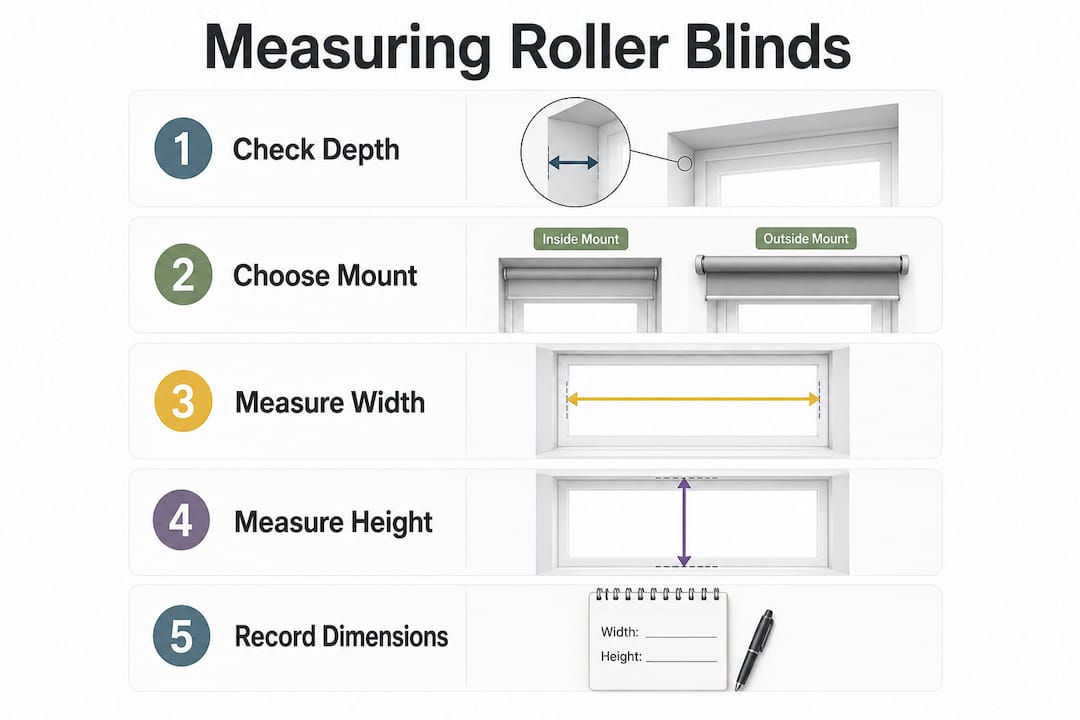
The first decision you make before taking any measurements is your mount type. Get this wrong and every number that follows is useless.
An inside mount sits within the window recess, giving a clean, built-in look that maximizes glass exposure. An outside mount attaches to the wall or frame above the window, covering the full opening plus overlap. Outside mounts block more light by eliminating side gaps and work well on windows with shallow recesses or hardware obstructions.
Your window recess depth determines which mount works. Inside mounts need at least 1.5 inches of unobstructed depth. A fully recessed blind requires 2.25 inches. If your window has handles, locks, or cranks inside the recess, those obstructions eat into usable depth and often force an outside mount.
Out-of-square windows are another reason to go outside. If your recess varies more than 1/4 inch from top to bottom, an inside mount will show visible gaps on one side.
| Feature | Inside mount | Outside mount |
|---|---|---|
| Appearance | Clean, built-in profile | Covers more wall area |
| Light control | Some side light gaps | Better blackout coverage |
| Recess depth needed | 1.5 in minimum | No recess required |
| Best for | Deep, square windows | Shallow recesses, obstructions |
| Measurement impact | Use narrowest width, longest height | Add overlap to full opening size |
Pro Tip: Measure your window recess depth at three points across the top before anything else. Obstructions like window handles are easy to miss until the blind arrives.
Does roll direction affect your measurements?
Roll direction is the step most guides skip entirely. It changes how the fabric hangs and where it sits relative to your glass.
Standard roll means the fabric unwinds from the back of the tube, placing the fabric closer to the glass. Reverse roll means the fabric unwinds from the front, keeping it further from the glass and closer to the room. Reverse roll reduces side light gaps and clears deep window sills or protruding handles more effectively.
Choosing roll direction at measuring time prevents clearance problems after installation. If you have a deep sill or window hardware that sticks out, reverse roll gives the fabric room to travel without catching.
Here is when each roll direction works best:
- Standard roll: Flat windows with no sill obstructions, inside mounts with adequate depth
- Reverse roll: Deep sills, inside mounts with handles or locks near the glass, when you want to minimize the gap between fabric and frame
- Either roll: Outside mounts where clearance is not an issue
- Reverse roll for blackout: When measuring for blackout blinds, reverse roll combined with an outside mount delivers the tightest light seal
Pro Tip: Stand at your window and note every obstruction before deciding roll direction. A handle that sits 1 inch from the glass can cause the blind to bunch or catch on standard roll.
Step-by-step inside mount measurements
Accurate blind measurements for inside mounts follow a specific sequence. Skipping steps or measuring only once leads to fitting problems.
What you need
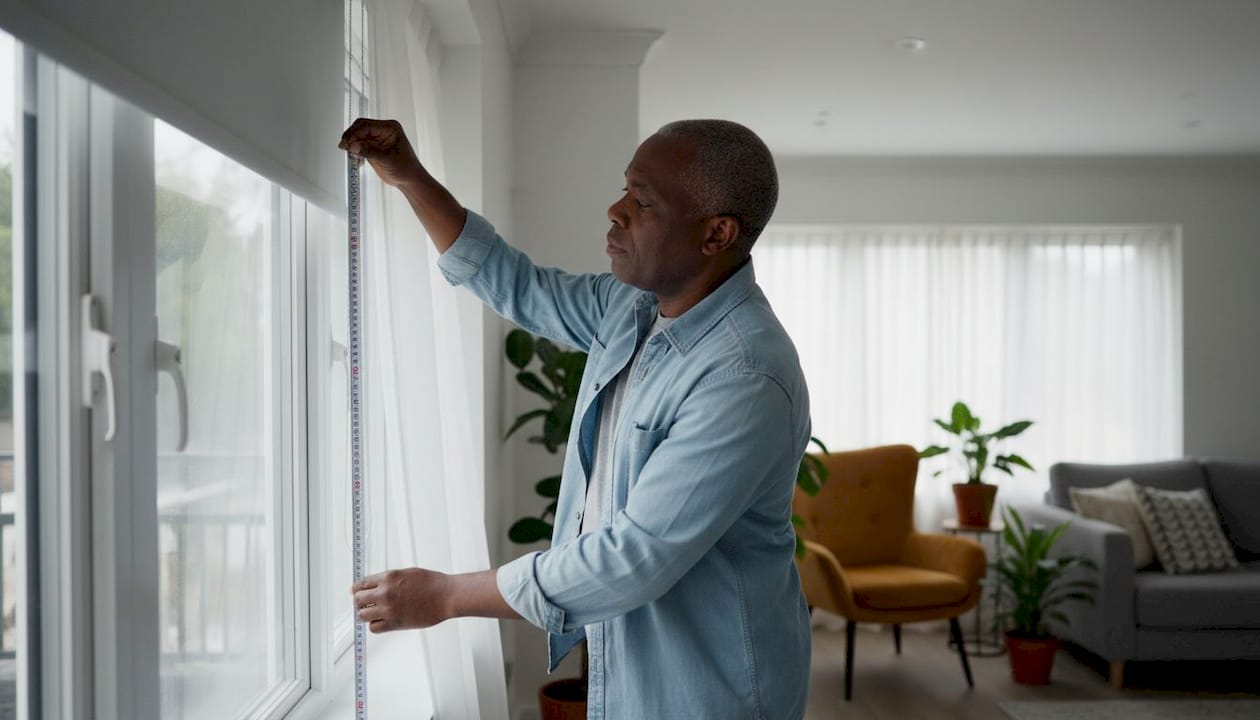
Use a steel tape measure for every measurement. Fabric and plastic tapes stretch slightly and introduce error. Record everything in inches to the nearest 1/8 inch.
Measuring width
Measure the width of the window opening in three places: at the top, the middle, and the bottom. Windows are rarely perfectly square, so these three numbers will often differ. Use the narrowest of the three measurements as your width. This prevents the blind from binding inside the recess.
Measuring height
Measure the height in three places: on the left side, the center, and the right side. Use the longest of the three measurements as your height. This covers the full opening even where the window sits slightly lower.
The deduction rule
Do not subtract anything from your measurements. Manufacturers apply a deduction of 1/8 to 1/4 inch for hardware clearance. If you deduct first and the factory deducts again, your blind arrives undersized. Provide your raw window measurements and trust the factory process.
Write your final numbers as width by height (W x H). This is the industry standard format for ordering.
| Step | Action | Which measurement to use |
|---|---|---|
| 1. Measure width | Top, middle, bottom of opening | Narrowest of the three |
| 2. Measure height | Left, center, right of opening | Longest of the three |
| 3. Record format | Write as W x H in inches | To nearest 1/8 inch |
| 4. Deductions | Do not deduct anything | Factory handles clearance |
| 5. Note squareness | Flag if variance exceeds 1/4 inch | Share with manufacturer |
Pro Tip: If your three width measurements vary by more than 3/8 inch, note this when ordering. A good manufacturer can advise whether an inside mount will still work or whether you need to switch to an outside mount.
For a broader look at measuring different window covering types, the DIY measuring guide from Valueblindsdirect covers additional scenarios in detail.
How to measure for outside mount roller blinds
Outside mount measurements work differently because you are defining coverage, not just capturing the opening size.
Start by measuring the full width of the area you want to cover. Add 1.5 to 3 inches of overlap on each side of the window opening. A 2-inch overlap per side is the most common choice for standard light control. If you are measuring for blackout blinds, go to 3 inches per side to close the gap between the blind edge and the wall.
For height, measure from your chosen mounting point down to the sill or to wherever you want the blind to end. Add 2 to 4 inches above the opening to allow for the bracket and to block light from the top. Add 2 to 3 inches below the sill if you want full coverage.
On outside mounts, the fabric width includes the brackets. Measure bracket-to-bracket as your final width. This is the number you submit when ordering.
Best practices for outside mount measuring:
- Mark your bracket positions on the wall with a pencil before measuring height
- Check that your mounting surface is flat and free of trim that would prevent flush bracket contact
- Measure twice from the same starting point to confirm consistency
- For blackout roller blinds, use the maximum recommended overlap to eliminate side light leakage
| Overlap amount | Best use case |
|---|---|
| 1.5 in per side | Light filtering, decorative use |
| 2 in per side | Standard light control |
| 3 in per side | Blackout, bedroom, media room |
Pro Tip: Mark your bracket positions before you measure height. If you measure height first and then shift the bracket position, your height number changes and you have to remeasure.
For step-by-step guidance on measuring windows for custom orders, the custom blind measuring guide at Valueblindsdirect walks through each window type.
Key Takeaways
Accurate roller blind measurements depend on checking window depth first, choosing mount type and roll direction before measuring, and submitting raw dimensions without self-applied deductions.
| Point | Details |
|---|---|
| Check depth before measuring | Confirm at least 1.5 inches of recess depth before committing to an inside mount. |
| Measure in three places | Take width at top, middle, and bottom; use the narrowest. Take height at left, center, and right; use the longest. |
| Never self-deduct | Factories apply 1/8 to 1/4 inch deductions. Deducting yourself produces undersized blinds. |
| Add overlap for outside mounts | Use 1.5 to 3 inches of overlap per side depending on light control needs. |
| Decide roll direction early | Reverse roll clears obstructions and reduces side light gaps; choose before ordering. |
What I’ve learned from measuring hundreds of windows
The single biggest mistake I see homeowners make is trying to be helpful by deducting measurements themselves. They read that blinds need clearance, so they subtract 1/4 inch before submitting. The factory then deducts again. The blind arrives narrow, and there is no fix except reordering.
The second most overlooked step is checking window depth. Most people grab a tape measure and go straight for width and height. They skip the depth check entirely. Then the blind arrives, they try to mount it inside the recess, and the hardware hits a window crank they never noticed. Measuring depth first takes 30 seconds and prevents that problem completely.
Measurement errors also come from inconsistent starting points. If you measure height from the top of the frame on the left side and from the top of the glass on the right side, your numbers will not match. Pick one reference point and use it every time.
My honest advice: give the manufacturer your exact raw window dimensions, note any obstructions or squareness issues, and let their production process do the rest. That is what the factory tolerance system is built for. Trying to second-guess it creates more problems than it solves.
— Sunny
Valueblindsdirect makes custom sizing straightforward
Getting your measurements right is the hard part. Ordering should be easy.
Valueblindsdirect offers made-to-measure roller blinds built from the exact dimensions you submit. The Window Treatment Design Studio walks you through fabric selection, mount type, roll direction, and sizing in one place, so nothing gets missed. If you prefer a hands-off installation, the cordless and no-drill collection covers options that go up without tools or complicated hardware. Every order comes with expert support and a warranty, so your measurements translate directly into a blind that fits.
FAQ
What is the minimum window depth for inside mount roller blinds?
Inside mount roller blinds require at least 1.5 inches of unobstructed window recess depth. A fully recessed fit needs 2.25 inches.
Should I deduct measurements before ordering roller blinds?
No. Submit your raw window measurements and let the manufacturer apply the standard 1/8 to 1/4 inch deduction for hardware clearance. Self-deducting produces undersized blinds.
How much overlap do outside mount roller blinds need?
Add 1.5 to 3 inches of overlap per side beyond the window opening. Use 3 inches per side for blackout applications in bedrooms or media rooms.
What is the difference between standard and reverse roll?
Standard roll places the fabric closer to the glass. Reverse roll keeps the fabric closer to the room, which helps clear deep sills, window handles, and reduces side light gaps.
How do I measure blind size for an out-of-square window?
Measure width at the top, middle, and bottom of the opening and use the narrowest measurement. If the variance exceeds 3/8 inch, note it when ordering so the manufacturer can advise on mount options.
Recommended
- How to Measure Windows for Roller Blinds Perfectly
- How to measure windows for custom blinds that fit
- How to Measure for Shutter Blinds: DIY Guide
- How to Measure for Vertical Blinds: A Homeowner’s Guide

Value Blinds®
Trusted window treatments provider
Value Blinds® is a trusted provider of Greenguard, OEKO-TEX, and FSC-certified window treatments based in Portland, Oregon. Specializing in sustainable, motorized, smart-controlled, and outdoor-ready blinds and shades, the company is built on a foundation of simplified shopping, premium eco-friendly materials, and transparent pricing without the inflated cost.