
Office Window Shades: A Facility Manager's Buying Guide
For most commercial office environments, motorized solar roller shades paired with blackout options for conference rooms are the best starting point. They handle glare, support energy savings, and integrate cleanly with building automation systems. Here’s what you need to know before you buy:
- Glare control: Solar screens with a low openness factor cut screen glare without killing the view.
- Energy savings: Cellular and solar shades reduce cooling loads by blocking direct solar heat gain.
- Occupant comfort: Adjustable motorized shades let teams control light without leaving their desks.
- Building controls: Many motorized options connect to BACnet, Somfy, or Lutron gateways.
- Immediate next step: Request free swatches and use the Window Treatment Design Studio to map shade types to your floor plan before committing to a quote.
Key Takeaways
Motorized solar roller shades with blackout options for conference rooms are the most practical starting point for most commercial office projects, with cellular shades adding thermal and acoustic value at the perimeter.
| Point | Details |
|---|---|
| Match shade type to zone | Solar rollers for open-plan, cellular for perimeter offices, blackout for conference rooms. |
| Require commercial specs | Demand UL-listed fabrics, ANSI/WCMA A100.1-2022 compliance, and motor-cycle ratings in every bid. |
| Start with samples | Order free swatches and test fabrics in your actual space before finalizing specs. |
| Standardize sizes | Uniform window dimensions across a floor reduce unit cost and simplify future reorders. |
| Use Valueblindsdirect | The design studio path covers swatches, custom sizing, motorization, and commercial quotes in one workflow. |
Table of Contents
- What types of office window shades work best for each space?
- Commercial specs and features you should require in every bid
- How do you choose the right shades for each office area?
- What you need to know about measurements and installation
- What do commercial window shades typically cost?
- Energy, comfort, and compliance benefits of commercial shades
- How Value Blinds supports commercial office projects
- Customization and mounting options: what to specify
- A facility manager’s honest take on office shade procurement
- Valueblindsdirect: custom commercial shades, ordered your way
- Sources
What types of office window shades work best for each space?
Picking the right shade family for each zone is where most procurement decisions go sideways. Here’s a quick map:
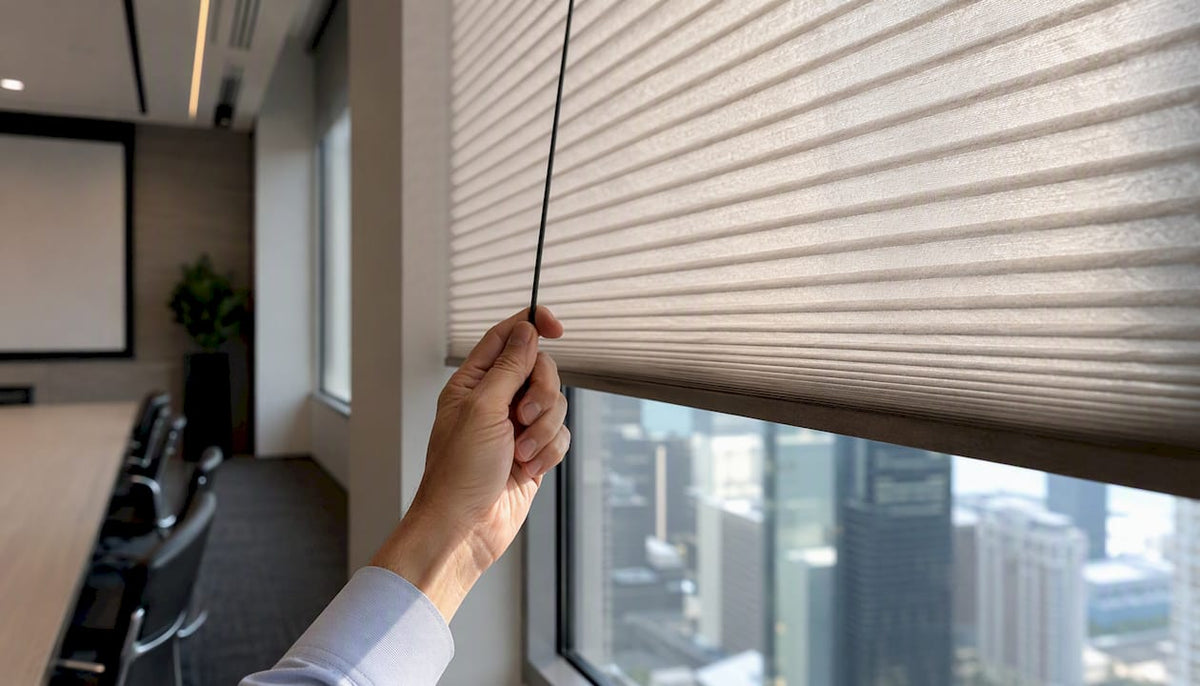
Cellular (honeycomb) shades are the thermal and acoustic workhorses of commercial glazing. Their air-pocket construction slows heat transfer and softens ambient noise, making them ideal for perimeter offices and exterior-facing glass. Valueblindsdirect’s Deluxe Light Filtering Cellular Shades are built around exactly this use case, with customization options for non-standard window sizes common in commercial builds.
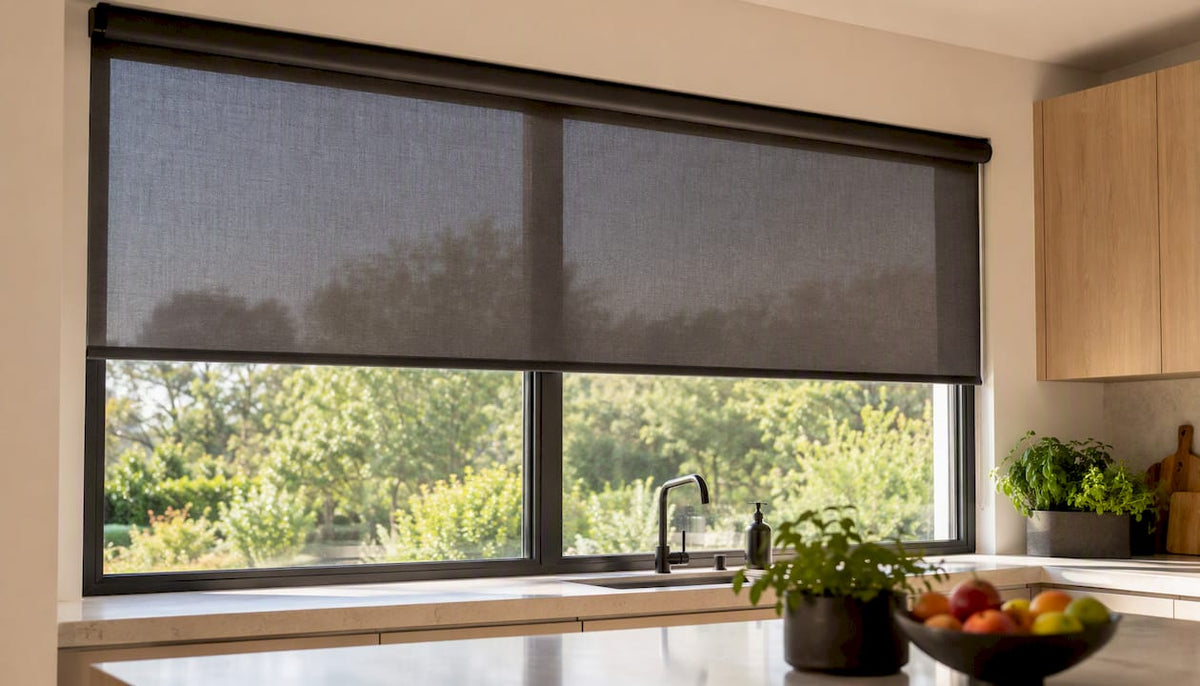
Solar/roller shades dominate open-plan facades and workstation rows. For south- and west-facing glass, these are often the single highest-impact investment you can make.
Blackout roller shades belong in conference rooms, training spaces, media rooms, and any area with a projector or display wall. Full room-darkening is non-negotiable for presentation quality.
Sheer and light-filtering shadings work well in collaboration zones and reception areas where you want diffused, glare-free daylight without cutting off the view entirely. They soften the light without making the space feel closed off.
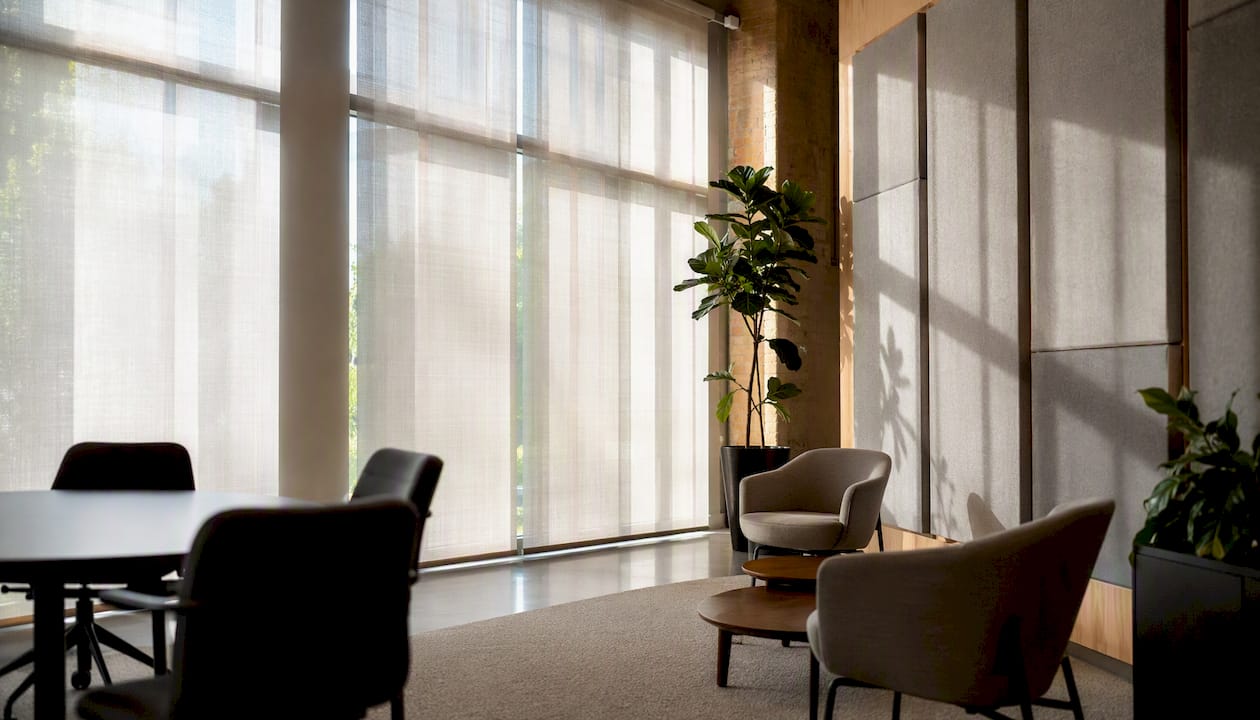
Vertical blinds and panel systems suit sliding glass doors, large glazed walls, and open-plan partitions. They’re also a practical choice for floor-to-ceiling curtain-wall glazing where a roller headbox would be too narrow.
Dual/day-night systems combine a solar screen and a blackout layer on a single headrail. Manufacturer guidance highlights these as the right call wherever a space needs both daylighting flexibility and full darkening on demand, such as a conference room that doubles as a training lab.
| Office area | Recommended shade type | Primary benefit |
|---|---|---|
| Open-plan workstations | Solar roller, 3–5% openness | Glare control, view-through |
| Private perimeter offices | Cellular (honeycomb) | Insulation, acoustic softening |
| Conference / media rooms | Blackout roller or dual system | Full darkening for presentations |
| Reception / collaboration | Sheer or light-filtering | Diffused daylight, open feel |
| Glazed facades / sliding doors | Vertical panel or motorized roller | Large-span coverage |
Pro Tip: Top-down/bottom-up cellular shades are worth specifying for private offices on lower floors — they let occupants bring in daylight from the top while maintaining eye-level privacy from the street.
Commercial specs and features you should require in every bid
Don’t let a vendor slide by with residential-grade hardware on a commercial project. Here’s the checklist:
- Motorization: Specify whether you need hardwired (low-voltage or 120V), battery-operated, or solar-assisted motors. Editorial reviewers at Wirecutter call out quiet, reliable motors and flexible power options as the critical differentiators for office deployments where disruption must stay minimal.
- BA/IoT integration: Require BACnet or BACnet/IP compatibility, or confirm the motor brand (Somfy, Lutron) supports your building’s gateway.
- Cordless and child-safety compliance: For any public-access area, require compliance with ANSI/WCMA A100.1-2022, which became effective June 1, 2024, and mandates hold-down tension devices on bead-chain operated shades.
- Fire-rated fabrics: Commercial specs should call for UL-listed or NFPA-classified fabrics. Ask for the certificate, not just the claim.
- Openness factor documentation: For solar screens, get the exact openness factor in writing — it determines glare reduction and privacy level.
- Hardware durability: Headboxes, side channels, and brackets should be commercial-grade aluminum. For outdoor or terrace shades, windproof side rails are a must.
- Warranty: Require a minimum commercial warranty on both fabric and hardware, with on-site support terms spelled out.
Pro Tip: Add a minimum-cycle requirement to your spec sheet — commercial motors should be rated for tens of thousands of cycles. If a vendor can’t provide that number, that’s a red flag.
How do you choose the right shades for each office area?
Work through this in order and your RFP almost writes itself.
- Define performance goals first. Glare control? Thermal improvement? Acoustic softening? Rank them by priority before looking at products.
- Map goals to window orientation. South- and west-facing glass needs stronger solar control (lower openness factor). North-facing glass often needs only light filtering.
- Set daylighting and aesthetic targets. Do occupants need a view? Does the space need to feel open? These answers narrow your fabric choices fast.
- Match shade type to occupancy pattern. A conference room used for presentations needs blackout. A 24/7 operations center needs motorized control with scheduling.
-
Ask vendors these questions directly:
- What motor/control protocols do you support, and can you provide integration documentation?
- What is the lead time for custom sizes, and do you offer lead-time guarantees for bulk orders?
- Can you provide fire-rating certificates for the fabrics you’re proposing?
- Who handles measurement and installation — your team or a subcontractor?
- What is your sample/swatch policy for commercial projects?
Red flags to watch for: A vendor who can’t produce UL or fire-rating certificates, offers only vague warranty language, has no professional measurement option, or can’t name the motor-control protocol they use. You can also check vendor reputation through resources like the Better Business Bureau before signing a purchase order.
On lifecycle cost: motorized cellular shades cost more upfront but reduce HVAC cycling and can pay back through energy savings over a multi-year horizon. Factor in motor maintenance, fabric replacement cycles (typically 10–15 years for commercial-grade material), and any controls-integration labor when comparing bids.
What you need to know about measurements and installation
Getting measurements wrong on a commercial project is expensive. Here’s how to avoid it.
Inside mount vs. outside mount: Inside mounts give a cleaner look and are standard for most office windows, but they require a minimum depth in the window frame. Outside mounts cover the full frame and are the right call when frame depth is insufficient or when you want to maximize light blockage at the edges. Curtain-wall and glazed systems often require custom mounting brackets or a face-mount approach — confirm this with your glazing contractor before ordering.
When to require professional measurement:
- Any project with more than 20 windows.
- Curtain-wall or atypical glazing where standard depth assumptions don’t apply.
- Motorized installations where conduit routing or power-source location affects headbox placement.
- Retrofit projects where existing hardware may interfere with new headrails.
For smaller installs or straightforward rectangular windows, in-house measuring is workable. Valueblindsdirect’s measuring guide walks through the exact steps to get accurate width and height readings for both mount types.
Electrical rough-in for motorized shades: Hardwired motors need conduit runs planned before drywall closes. Battery and solar-assist motors skip this entirely, which is why they’re popular for retrofit projects. Coordinate motor placement with your AV integrator for conference rooms — shade control often ties into the room’s AV system.
Typical timeline:
- Measurement to approval: 3–5 business days for standard projects.
- Fabrication: 2–4 weeks for custom commercial orders (longer for motorized or special finishes).
- Installation: Coordinate with HVAC and AV trades; schedule glazing contractor sign-off before install day.
What do commercial window shades typically cost?
Pricing varies more than most procurement teams expect. Here are the main drivers:
- Fabric type: Light-filtering fabrics cost less than blackout or fire-rated materials.
- Motorization: Adding a motor roughly doubles the per-unit cost compared to a manual shade, but battery motors cost less to install than hardwired.
- Custom sizing: Non-standard dimensions add fabrication cost; standardizing sizes across a floor reduces it.
- Headbox and side channels: Enclosed headboxes and side channels for light control add cost but improve performance.
- Fire-rated materials: Expect a premium for UL-listed or NFPA-classified fabrics.
Bulk procurement tips: Standardize window sizes wherever possible — even a half-inch variation creates a new SKU. Group orders by project phase rather than ordering floor by floor. Negotiate lead-time guarantees in writing for large orders.
What a complete quote should include: Itemized hardware costs, fabric cost per unit, motor and controls hardware, installation labor, controls-integration labor (if applicable), freight and staging charges, and warranty terms.
Energy, comfort, and compliance benefits of commercial shades
Solar screens and cellular shades do real work on your building’s energy budget. Solar shades block direct solar heat gain through glass, which reduces cooling loads and cuts HVAC cycling during peak afternoon hours. Cellular shades add an insulating air pocket that slows heat transfer in both directions, helping in winter as well. Valueblindsdirect’s guide to energy-efficient office window treatments outlines how coordinating shade schedules with HVAC and lighting controls compounds these savings.
Glare is a productivity issue, not just a comfort one. Solar screens reduce screen glare at workstations and make projector images readable in conference rooms without requiring full blackout. Manufacturer guidance from commercial shade producers confirms that solar and blackout shades protect furnishings and finishes from UV degradation while improving occupant satisfaction.
On compliance: ANSI/WCMA A100.1-2022 changed how chain-operated shades are supplied and installed in public-access areas. Procurement specs for any office with public access or child-accessible spaces should reference this standard explicitly and require documentation of compliance from the vendor.
Pro Tip: Schedule motorized shades to lower automatically at peak solar hours (typically 11 AM–3 PM on south and west facades) and coordinate that schedule with your HVAC setpoints. The combined effect on cooling load is noticeably larger than either measure alone.
How Value Blinds supports commercial office projects
Valueblindsdirect offers custom commercial-grade roller, cellular, blackout, and motorized shades with a procurement path built for facility teams:
- Free swatches: Order fabric samples before committing to a spec — critical for color matching and confirming openness factor in your actual light conditions.
- Measurement guidance: Detailed DIY measurement resources and professional measurement options for larger projects.
- Motorized and day/night cellular options: Including motorized day and night cellular shades suited for perimeter offices and conference rooms.
- Warranties and energy-efficiency focus: Products are specified with energy performance and durability in mind.
When contacting Valueblindsdirect for a commercial quote, include: total window count and approximate sizes, shade type preference (roller, cellular, blackout, motorized), motor/control protocol requirements, desired lead time, and whether professional installation is needed.
Pro Tip: Request swatches for your top two or three fabric candidates and test them in the actual space at different times of day before finalizing your spec. Fabric appearance changes significantly between morning and afternoon light.
Customization and mounting options: what to specify
Inside mount gives you a flush, built-in look and is the standard choice for most commercial windows. Outside mount covers the full frame and is better for maximizing light blockage or when frame depth is too shallow for an inside mount. Both options are available through Valueblindsdirect with custom sizing to the nearest fraction of an inch.
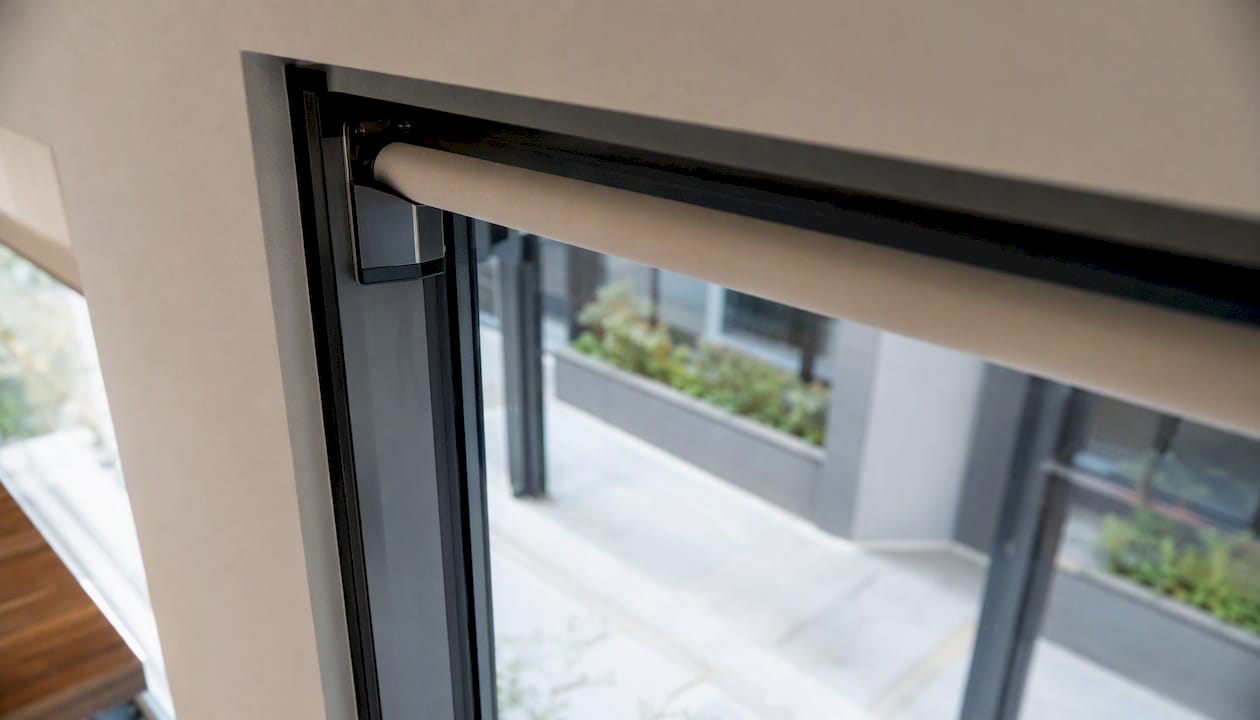
Mounting brackets for commercial installs should be specified as heavy-duty aluminum, not the plastic clips common in residential products. For curtain-wall glazing, face-mount brackets that attach to the mullion are often the only viable option — confirm bracket compatibility with your glazing system before ordering.
Professional measurement is worth the investment for any project with atypical glazing, motorized shades, or more than a handful of windows. For straightforward rectangular windows, Valueblindsdirect’s step-by-step installation guide covers in-house measuring and install in plain language. For office design tips that go beyond shades, One Day Doors & Closets offers practical interior guidance worth a look alongside your window treatment planning.
A facility manager’s honest take on office shade procurement
What most guides skip: the biggest cost in a commercial shade project usually isn’t the product — it’s the rework from a bad measurement or a spec that didn’t account for the glazing system. Start with a site walk, not a catalog.
The practical rule of thumb most facility teams land on: control high-glare south and west facades first, conference rooms second, and perimeter private offices third. That sequence addresses the highest-impact discomfort and energy issues before touching lower-priority zones.
One more thing worth saying plainly: standardizing your shade sizes across a floor or building phase is the single fastest way to reduce unit cost and simplify future replacements. It feels constraining at the design stage, but it pays off every time you reorder.
Start with samples and a measurement. Standardize early. The rest follows.
Valueblindsdirect: custom commercial shades, ordered your way
Facility managers dealing with glare, energy waste, and mismatched window treatments across multiple floors don’t need another vendor who ships a box and disappears. Valueblindsdirect gives you custom-sized, commercial-grade shades with the tools to specify them correctly: free swatches, a design studio, measurement guides, and motorized options that connect to your building’s controls.
The procurement path is straightforward: request swatches, use the Window Treatment Design Studio to map your floor plan and submit window counts, then move to a commercial quote with your motor and fabric specs in hand. Whether you need blackout cellular shades for conference rooms or motorized solar rollers for open-plan facades, Valueblindsdirect builds to your dimensions and ships direct. Start with your swatches today.
Sources
These resources support the technical claims and procurement guidance in this article:
- The 4 Best Smart Window Shades, Blinds, and Curtains of 2026 | Reviews by Wirecutter
Recommended
- Commercial-Grade Blinds: What Facility Managers Must Specify
- Order Window Shades Online: the Homeowner’s Guide
- Window Shade Types: A Homeowner’s Guide to Choosing Right
- Easy Install Window Shades: Step-by-Step Guide for All Homes

Value Blinds®
Trusted window treatments provider
Value Blinds® is a trusted provider of Greenguard, OEKO-TEX, and FSC-certified window treatments based in Portland, Oregon. Specializing in sustainable, motorized, smart-controlled, and outdoor-ready blinds and shades, the company is built on a foundation of simplified shopping, premium eco-friendly materials, and transparent pricing without the inflated cost.