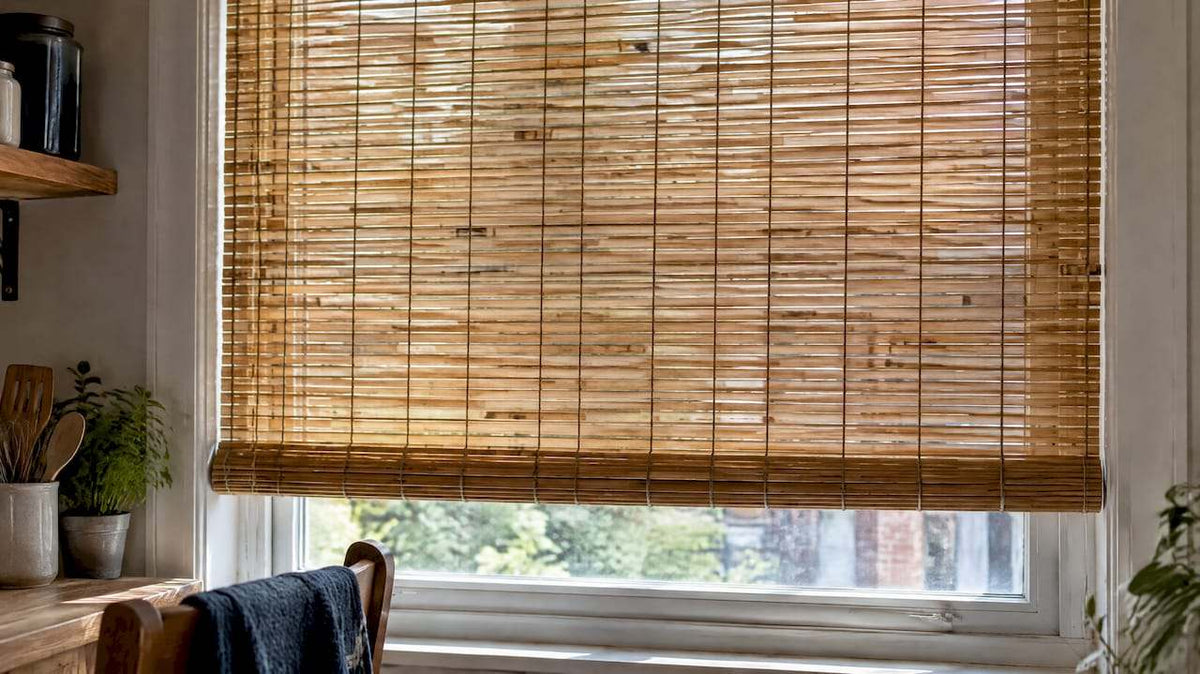

Article: What Is a Blind Rough Opening? Plain-English Guide
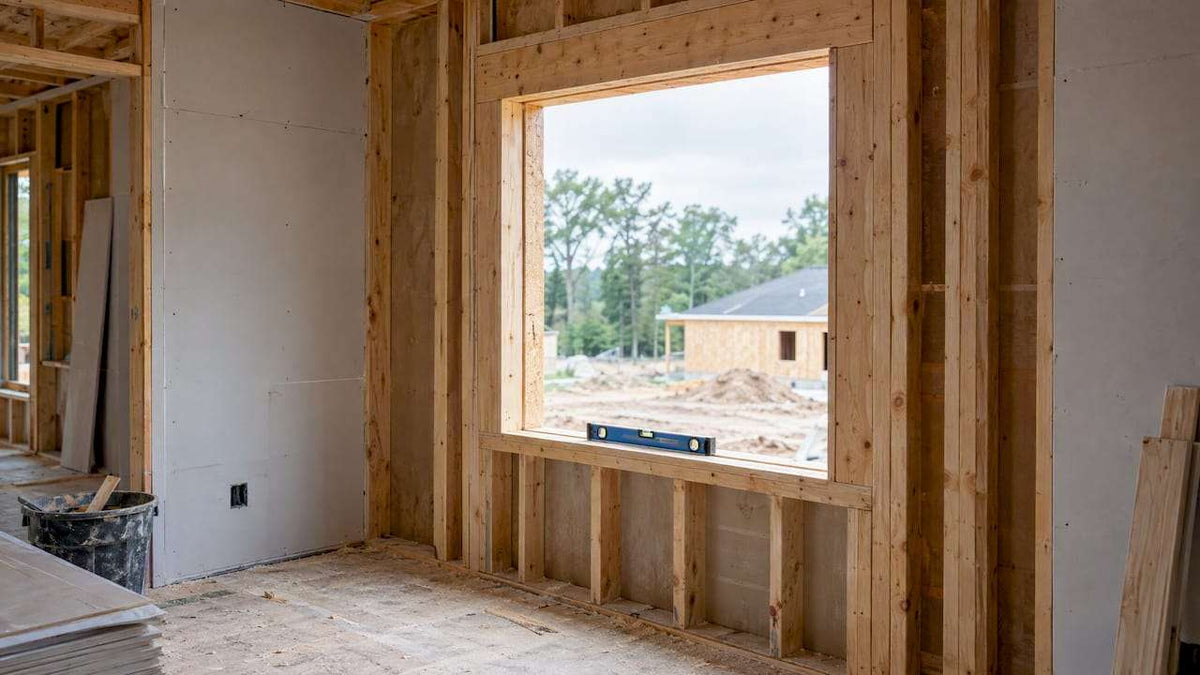
What Is a Blind Rough Opening? Plain-English Guide
Here’s the short version: “rough opening” is a construction term, and it isn’t really a blind term at all. A rough opening is the framed hole in a wall that a window or door gets installed into. When people search for a blind rough opening, they usually want to know one of two things. Either they’re asking what the builder’s number on the plans means, or they’re asking which opening they should measure to order blinds. The answer to the second one is the finished opening you can see and touch, never the framed hole hiding behind the trim. 🙂
Below, we’ll walk through what a rough opening is, why it’s bigger than your window, why it matters little for blinds, and what to measure instead.
TL;DR
- A rough opening is the framed hole (header on top, sill on the bottom, trimmers on the sides) that a window or door is installed into. It’s built larger than the window on purpose.
- Blinds don’t fit the rough opening. They fit the finished opening: the recess inside your window frame, or the wall area around it for an outside mount.
- Never size a blind from a window’s nominal size or a builder’s rough opening number. Measure the real opening with a steel tape.
- Inside mount? Measure width in three places, height in three places, and check the depth for the headrail.
- Not sure? Order free swatches, take your measurements twice, or ask for professional measuring.
Table of Contents
- What a rough opening actually is
- Rough opening vs. finished opening
- Why you can’t use a window’s rough opening size for blinds
- What to measure for blinds instead
- When the rough opening does matter to a blind project
- Common mistakes to skip
- Our take: measure what you can see
- Ready to measure and order?
- FAQ
- Sources
What a rough opening actually is
Picture a wall under construction. Before any window goes in, the framers leave a gap and build a box of lumber around it. That gap is the rough opening. As Thompson Creek’s explainer describes it, it has a header across the top, a sill plate across the bottom and vertical trimmers on each side.

The definition used by Fine Homebuilding is handy: an opening deliberately oversized by about 1/2 inch or so, so that windows and doors can be shimmed plumb and level. A window glossary says the same thing in plainer words: it’s built slightly larger than the unit, so the installer has room to level, shim, insulate and seal the gap around the frame.
Think of it like a shipping crate, not a picture frame. The window sits inside with a little breathing room all around.
Why “rough” doesn’t mean sloppy
The name is misleading. Fine Homebuilding’s John Spier makes the point in Not-So-Rough Openings: these openings demand plenty of precision, because accurate framing makes the window install easier later. A crooked or undersized opening means trouble for the window installer, and that’s the reason the number matters so much to them.
Who uses the number
Framers, window installers and window manufacturers. The rough opening size on a window order or a blueprint tells the crew how big to build the hole. It isn’t meant for the person ordering shades.
Rough opening vs. finished opening
This is where the confusion starts. Once a window is installed, the rough opening disappears. The framing is covered by the window frame, insulation, flashing, drywall and trim. What you see from inside the room is a different space entirely.
| Term | What it is | Who needs it | Matters for blinds? |
|---|---|---|---|
| Rough opening | The framed hole in the wall, bigger than the window | Framers, window installers | No (unless you’re mid-construction) |
| Window unit size | The size of the window itself, often a nominal number | Window buyers | Not reliably |
| Finished opening (recess) | The visible space inside the frame or casing, after drywall and trim | You, when ordering blinds | Yes |
| Outside-mount area | The wall or trim area the blind will cover, including overlap | You, when ordering blinds | Yes |
So when someone says “blind rough opening,” the practical translation is usually “the opening I need to measure for my blinds.” That’s the finished opening.
Why you can’t use a window’s rough opening size for blinds
It’s tempting. You have a number on a spec sheet, or a window label says something like 3x5, and you think, great, that’s my size. Don’t. Here’s why. 😬
- The rough opening is bigger than the window. The extra gap is deliberate, so a blind sized from it would be too wide to fit inside the frame.
- The clearance isn’t universal. It’s product-specific. Andersen’s 100 Series specification guide notes that minimum rough openings may need to increase to make room for items like building wrap, flashing, sill pans, brackets or fasteners.
- Rough opening dimensions vary by product. Andersen’s published tables show they change by product series and window dimension, so a “standard” 3x5 doesn’t give you one answer. The framing guide from Build Construct puts it simply: the dimensions come from the window manufacturer, not from guesswork.
- Trim, drywall returns and stops change the visible space. Two houses with identical windows can have different recesses.
The same logic applies to those popular searches about the rough opening for a 36-inch door, a 3x5 window or a 24x48 window. There isn’t one number. It depends on the manufacturer, the model, and whether a door is interior or exterior, pre-hung or slab. For a custom blind, those numbers are basically irrelevant unless you’re framing the window yourself before ordering the blind.
What to measure for blinds instead
You’re measuring the real, finished space you can see. Use a steel tape measure (cloth tapes stretch) and write down every number as width x height x depth.
Inside mount: measure the recess
An inside mount sits within the window recess, for that clean, built-in look.
- Width: measure the recess at the top, middle and bottom. Record all three.
- Height: measure at the left, center and right. Record all three.
- Depth: measure front to back to confirm the recess is deep enough for the headrail and any hardware. Check for window cranks, handles or lock hardware that might get in the way.
- Check for out-of-square walls. Houses settle. A recess that varies by a quarter inch or more from top to bottom is totally normal, which is exactly why you take three readings.
Our own guides go step by step: how to measure for inside mount blinds, plus a three point photo checklist for inside recess blinds so you can double-check against pictures. If you like the installer’s approach, see how to record width, height and depth to 1/8 inch.
Outside mount: measure the coverage area
With an outside mount, the blind sits on the wall or trim above the opening. You aren’t tied to the recess at all. Instead, decide how much of the surrounding wall or trim you want to cover, and measure that area. Extra overlap helps block more light and hides gaps. Shallow window frames, or recesses blocked by obstructions, are the usual reason people go this route. Our walkthrough on how to measure outside mount blinds covers it.
Product-specific tips
Some blind types have their own quirks:
- Vertical blinds are often used on sliding doors and wide windows, so the overlap and floor clearance matter. See our vertical blinds measuring guide.
- Roman shades have stack height (how much fabric piles up at the top when raised), which affects how much glass you’ll cover. See how to measure for Roman blinds.
- Motorized shades need room for the motor and, depending on the product, a place to plug in or charge. Think about that before you measure.
For a general overview, our complete guide to measuring blinds for the perfect fit is a good starting point, and how to measure windows for custom blinds covers the basics.
When the rough opening does matter to a blind project
There are a few cases where this builder’s term actually becomes useful.
- New construction or a major remodel. If walls are still open, you can plan window and blind positions together. Deeper recesses, for example, let you choose inside mounts later.
- Planning drywall returns and trim. The finished depth of the recess depends on how thick the wall finish is. Talk to your builder about this before it’s closed up.
- Ordering windows. Window orders ask for the rough opening. That isn’t something you’ll hand to your blind provider, but it helps you understand the paperwork.
- Contractors and property managers. If you’re working from plans across many units, use the plans to estimate, then verify each finished opening on site. A drawing never replaces a tape measure.
The principle holds in every case: the framed number is for building the wall, the finished number is for ordering the blind.
Common mistakes to skip
- Using nominal window sizes. “3x5” is a label, not a measurement.
- Measuring once. Measure two or three times, in each position.
- Subtracting from the number yourself. Report the exact opening size and let the order process handle any deductions, unless the product page tells you otherwise.
- Forgetting depth. A beautiful recess can still be too shallow for a particular headrail.
- Ignoring obstructions. Handles, cranks, trim and window locks all steal usable space.
- Rounding. Write down fractions precisely, to the nearest 1/8 inch.
Our take: measure what you can see
We see the same mix-up again and again: someone has a number from a window spec sheet, a blueprint or a contractor, and wonders if it can be used for a custom blind. Our advice is simple. Treat the rough opening as the builder’s number and the finished opening as yours.
Because our blinds and shades are made to order, accuracy up front saves you a headache later. That’s why we publish measuring guides for each major style, from inside mounts to vertical blinds to Roman shades, and why we offer professional measuring and installation for anyone who’d rather not climb the ladder. Take your time, measure what’s in front of you, write it down in width x height x depth order, and double-check. If something looks off, like a recess that’s way out of square, that’s the moment to ask for help, not after the order is placed.
— Sunny
Ready to measure and order?
Once you’ve got your numbers, the fun part starts. 🎉 Browse our full blinds collection for wood, faux wood, aluminum, vertical and more, or look at cellular shades if energy efficiency is on your list. We offer free swatches so you can see colors and fabrics in your own light, and our Pro Measure & Install service is there if you’d rather have someone else handle the tape measure. You can explore everything on Value Blinds.

FAQ
What does “rough opening window” mean?
It means the framed hole in the wall where a window will be installed, made up of the header, sill and side framing. It’s deliberately a bit larger than the window so the installer can level, insulate and seal it. It’s not the size you use to order blinds.
Do I measure the rough opening for blinds?
No. Measure the finished opening you can actually see: the recess for an inside mount, or the wall or trim area you want to cover for an outside mount. The rough opening is hidden behind the frame and trim once the window is in.
How much bigger is a rough opening than the window?
It varies by product. Fine Homebuilding describes a rough opening as oversized by about 1/2 inch for shimming, but manufacturers publish their own dimensions, and installation details like flashing can require more. Always use the window maker’s chart.
What’s the rough opening for a 3x5 window or a 36-inch door?
There’s no single answer. It depends on the manufacturer, series and model, and for doors, on whether they’re interior or exterior and pre-hung or slab. Check the product’s specification sheet. For blinds, you don’t need these numbers at all.
Should I measure before or after trim is installed?
After, whenever possible. Trim, drywall returns and stops change the visible recess and its depth. If you’re mid-build, plan with your builder, then confirm the final opening with a tape measure before you order.
Sources
- Not-So-Rough Openings, Fine Homebuilding
- Not-So-Rough Openings (framing terms PDF), Fine Homebuilding
- Rough Openings for Windows Explained, Thompson Creek
- What Is a Rough Opening? Window and Door Framing Explained
- Andersen 100 Series double-hung specification guide
- How to Frame Window Openings, Build Construct