
Article: What Is an Inside Mount? A Plain-English Guide
What Is an Inside Mount? A Plain-English Guide
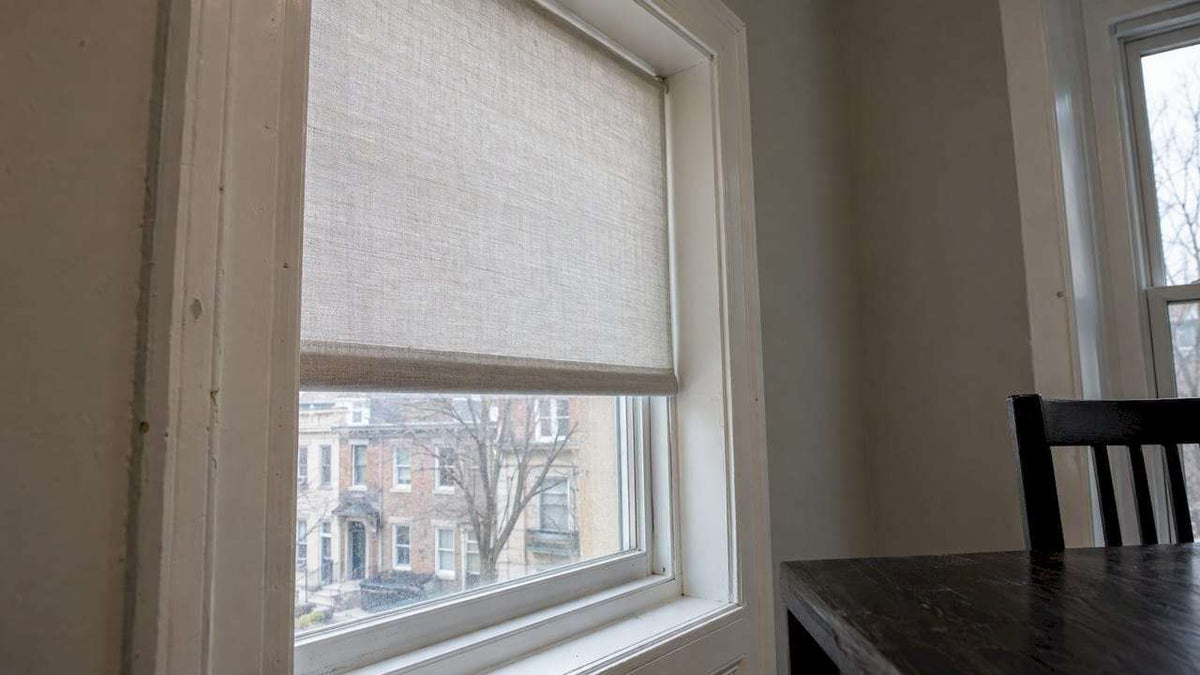
An inside mount means your blind or shade sits inside the window frame, within the recess, instead of on the wall or trim around it. The result is a clean, built-in look that shows off your window casing. The trade-offs are a small light gap at the edges and a need for enough frame depth. Here’s how to tell whether it’s right for your windows. 🪟
TL;DR
- Inside mount = the window covering is installed within the window opening, so the frame and trim stay visible.
- It looks tidy and minimal, and it works well when you have decorative molding you want to show off.
- It needs a frame deep enough for the hardware, and it leaves a thin gap at the sides where some light gets in.
- Measure the opening in three places and use the narrowest width. Accuracy to 1/8 inch matters.
- Shallow frames, obstructions, or a need for full light blocking usually point to an outside mount instead.
Table of Contents
- What an inside mount actually is
- Why people choose an inside mount
- The catch: light gaps, depth, and obstructions
- Inside mount vs. outside mount at a glance
- Which products work well as inside mounts?
- How to measure for an inside mount
- When an outside mount is the smarter move
- Safety: choose cordless, especially around kids and pets
- Our take: why we like inside mounts (with eyes open)
- Let us take care of the hard part
- FAQ
- Sources
What an inside mount actually is
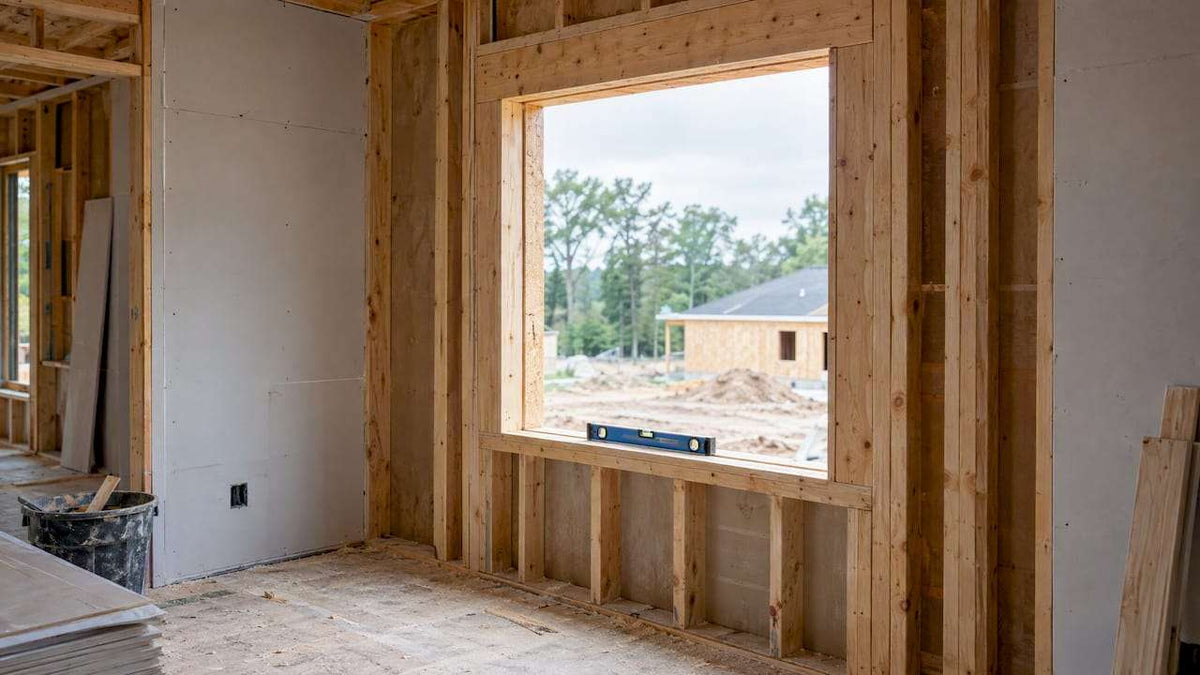
Picture your window. There’s the glass, then the frame around it, then the trim (casing) that finishes the edge against the wall. An inside mount puts the blind or shade in the recess formed by the frame, so it sits between the side walls of the opening, usually near the glass.
Because it’s made to fit that opening, the product is cut slightly narrower than the opening itself. That’s the whole trick: a snug, custom fit that looks like it grew there.
The opposite choice is an outside mount, where the treatment is attached to the wall or trim above and around the window and overlaps the opening. We cover that one in our guide to outside mount blinds, if you want to compare side by side.
Inside mount in one picture
Think of a picture frame with a mat inside it. The inside mount is the picture sitting in the frame. The outside mount is a poster hung over the frame. Both are fine. They just do different jobs.
Why people choose an inside mount
It keeps your window’s good looks
If you have pretty trim, crown detail, or a deep sill, an inside mount leaves all of it on display. Design pros often point this out: because the product is flush within the opening, it won’t cover decorative accents. Architectural Digest’s roundup of roman shades even mentions a shopper who picked an inside mount precisely so her window’s intricate details stayed visible.
It’s clean and minimal
With nothing overlapping the wall, the window reads as a simple, tidy rectangle. That suits modern, transitional, and minimalist rooms especially well.
It saves wall space
An inside mount keeps the treatment out of the way. That helps when a window sits close to a corner, a cabinet, or furniture, and you don’t have room for something wider.
It can help with energy savings
Placement matters for efficiency. Cornell Cooperative Extension notes that, to be most efficient, a shade should be installed with side tracks, about an inch from the glass (inside mount), with a reflective material facing the glass. The same page reports that inside-mounted shades with side tracks and reflective coatings can cut heat loss by up to 55%, while standard venetian blinds manage only 6 to 7%. Those figures come from a specific setup, so don’t expect every inside mount to hit them. But the principle is useful: a snug fit near the glass traps a layer of air that slows heat transfer.
The same source says insulated cellular shades are consistently strong performers, with annual heating and cooling savings of 10% to 34%. If efficiency is your goal, our cellular shades are a natural place to start.

The catch: light gaps, depth, and obstructions
An honest guide covers the downsides too. Here are the three you’ll run into.
1. Light gaps
To move freely, an inside-mounted product has to be a little smaller than the opening. That leaves a thin gap on each side, and light can slip through. For a living room, who cares. For a bedroom or a nursery where you want real darkness, it matters. Designers are noticing this too: Better Homes & Gardens reports that some designers are leaning toward outside-mounted roman shades in 2026 for a softer, fabric-forward look that avoids those gaps.
If you need serious darkness, read our explainer on blackout vs. room darkening shades. It will help you choose the right fabric, and you can decide whether an inside mount’s edge gaps are acceptable for that room.
2. Frame depth
Every blind or shade needs a certain amount of depth in the window recess for its brackets and headrail. Some products are slim, others are bulkier. Motorized options, thicker cellular shades, and wood blinds with a stacked slat bundle can need more room. The exact minimum depends on the product, so check the specs on the product page before you order. If you want the product to sit flush with the trim, you generally need extra depth beyond the bare minimum.
Measure your depth at the shallowest point. Windows aren’t always as even as they look.
3. Things in the way
Window cranks, handles, vent covers, and protruding lock hardware can all collide with a blind that sits inside the frame. If something sticks out, an outside mount (or a different product) may be smarter.
Inside mount vs. outside mount at a glance
| Inside mount | Outside mount | |
|---|---|---|
| Where it sits | Within the window frame | On the wall or trim, overlapping the opening |
| Look | Clean, built-in, shows trim | Bolder, can make a window look larger |
| Light blocking | Small gaps at the sides | Better coverage when it overlaps the frame |
| Depth needed | Enough recess for the hardware | Little to none |
| Measuring | Exact opening, precise to 1/8 inch | You choose the overlap |
| Best for | Deep frames, decorative trim | Shallow frames, obstructions, bedrooms, hiding uneven trim |
Neither wins every time. House Beautiful notes that both blinds and shades come in inside and outside mounts, so the mount is a separate decision from the product type.
Which products work well as inside mounts?
Most custom styles can be mounted inside, as long as the depth works. A quick rundown:
- Roller shades: Slim and tidy, a very common inside mount choice.
- Zebra shades: Alternating sheer and solid bands give you light control with a clean profile. Browse our zebra shades.
- Cellular (honeycomb) shades: Great for insulation. Check the depth spec for your chosen size.
- Roman shades: Elegant when set into the frame. See our roman shades.
- Faux wood and wood blinds: Classic and sturdy, with the slats tucked neatly into the recess. Check out faux wood blinds and solid wood blinds.
- Vertical blinds: Usually for sliding doors and wide openings, and they can be mounted inside the frame. Our vertical blinds are a good fit there.
One more design idea worth stealing: layering. House Fabric’s interview with a designer describes pairing an inside-mounted shade for privacy or light control with an outer decorative layer, such as drapery. You get function inside the frame and softness outside it. 🙌
How to measure for an inside mount
Measuring is where inside mounts succeed or fail. The rule of thumb is simple: record width, height, and depth, and be precise. Our guide on measuring like an installer, down to 1/8 inch walks through the details. Here’s the short version:
- Grab a steel tape measure. Cloth tapes stretch and give you bad numbers.
- Measure the width at three points: top, middle, and bottom of the opening. Windows are rarely perfectly square.
- Use the narrowest of the three as your width.
- Measure the height at the left, center, and right. For height, many people use the longest measurement, but follow the instructions for your specific product.
- Measure the depth from the glass (or the first obstruction) to the front edge of the frame. Note the shallowest reading.
- Write down exact numbers. Don’t subtract anything yourself unless the instructions say so. For custom products, the maker typically accounts for the clearance.
- Check the rule for your product. Steps differ a bit between styles, so see our walkthroughs for inside mount blinds, venetian blinds, vertical blinds, and shutter blinds.
Pro tip: Custom products are made to order, so a measuring mistake can be costly. If you’re not confident, ask for help rather than guessing.
A quick example
Say your window opening reads 35 1/2 inches at the top, 35 3/8 at the middle, and 35 1/2 at the bottom. You’d record 35 3/8, the narrowest. Then you’d check the depth at each side. If one side reads 2 inches and the other 1 3/4, you note 1 3/4 and compare that against the depth requirement on the product page. (These numbers are only an illustration. Your windows will differ.)

When an outside mount is the smarter move
Skip the inside mount if:
- Your frame is too shallow for the hardware.
- Something protrudes into the opening, like a crank or a handle.
- You want maximum darkness in a bedroom or media room.
- Your frame is out of square by a lot, or the trim is worn and you’d like to cover it.
- You want a window to look bigger or taller. Mounting higher and wider on the wall tricks the eye.
For more on that path, see our outside mount guide.
Safety: choose cordless, especially around kids and pets
Whatever mount you pick, think about cords. Since 2023, the U.S. Consumer Product Safety Commission has required that custom window coverings meet a federal safety standard addressing strangulation from accessible cords. The agency’s announcement describes loop cords, inner cords, and other accessible cords longer than 8 inches as a hazard on these products. The rule itself is published in the Code of Federal Regulations, Part 1260.
If you have little ones or curious pets, cordless and motorized operation removes the problem at its source. Read our cordless blinds safety guide, or browse the cordless and no-drill collection. If you’re unsure about a product you already own, talk with the manufacturer or the CPSC about whether it needs a fix.
Our take: why we like inside mounts (with eyes open)
We sell made-to-order blinds and shades, so we see the mounting question constantly. Our honest view: an inside mount is the best-looking choice when your windows have the depth for it, and it’s the one customers most often regret when they skipped measuring depth.
A few things we’d tell a friend:
- Decide the mount first, then the product. It shapes which styles will fit.
- Don’t fight your windows. If the frame is shallow or cluttered, an outside mount isn’t a compromise. It’s the right answer.
- Order swatches. Fabric looks different against your walls and light. We offer free swatches so you can check before you commit.
- Pick cordless when you can. It looks cleaner, and it’s safer.
- Get help if measuring makes you nervous. That’s what our measuring and installation service is for.
We built our site around design tools, measurement guides, and expert support because custom windows should feel exciting, not stressful. 😊
— Sunny
Let us take care of the hard part
Ready to try an inside mount? Explore our full range of blinds and shades, from roller and zebra shades to cellular, roman, wood, and bamboo styles, with motorized and cordless options. If you’d rather not handle the tape measure, our Pro Measure & Install service has a professional measure and install for you. Pricing isn’t listed on our site for the service, so check the site for details.
FAQ
What does inside mount mean for blinds?
It means the blinds are installed inside the window frame, within the recess, rather than on the wall or trim around it. The frame and trim stay visible, and the blind is cut to fit the opening with a little clearance.
Is an inside mount or outside mount better?
It depends on your windows and your goals. Inside mounts give a clean, built-in look and show off trim, while outside mounts block more light, hide uneven frames, and work when you lack depth. Match the choice to the room.
How much gap is there with an inside mount?
There’s a small gap on each side so the product can move without rubbing the frame, and some light slips through. The exact clearance varies by product and maker. If darkness matters, choose an outside mount or layer a blackout treatment.
How deep does my window need to be for an inside mount?
It depends on the product. Slim roller shades need less room than bulkier cellular shades, motorized headrails, or stacked wood blinds. Check the depth requirement on the product page and measure at the shallowest point of your frame.
Can I use an inside mount on any window?
Not always. Shallow frames and protruding handles or cranks can get in the way. In those cases, an outside mount is usually the better route.
Sources
- Cornell Cooperative Extension: Energy-saving window treatments
- CPSC: New federal safety standard for custom window coverings
- 16 CFR Part 1260: Safety standard for operating cords on custom window coverings
- Better Homes & Gardens: 7 top window treatment trends of 2026
- House Fabric: 2026 window treatment trends
- House Beautiful: Blinds vs. shades
- Architectural Digest: Best roman shades